The last few weeks have seen an explosion in grass growth. This burst in growth has happened much later than other years and it has also coincided with seed head emergence. By themselves, both of these things reduce grass quality, but together they can really screw up grass quality and subsequently milk production.
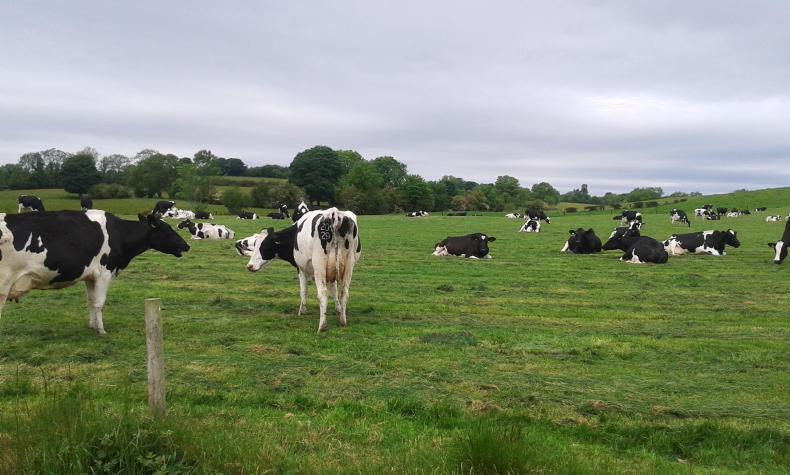
Milk yields are already dropping on farms as cows come off peak, go back in calf and in many cases are now grazing poorer quality grass.
I was on two farms last week that had only 40 units/acre of nitrogen spread on the grazing ground so far this year. This is about 120 units/acre less than the target. The reason was that ground was too wet to graze early on and then when conditions improved, grass growth was very high so it was felt that fertiliser wasn’t needed.
Looking at the swards now, they are pale green and yellow with a huge amount of stem and grass gone to seed, even in light covers. It is clearly stressed because it is short of nitrogen. When grass is stressed, the survival mechanism kicks in and it goes to seed. The grass plant thinks to itself: “I mightn’t survive the next few weeks, so I better produce seed now so my species survives.”
And in order to support the seed head the stem gets thicker with more lignin and tough fibre which, if the cows are hungry enough to eat, will greatly reduce digestibility. That said, producing seed is what the grass plant is designed to do, and seed head emergence is normal for this time of year. But grazing pastures that are gone to seed can be avoided by going in at the right pre-grazing cover. There’s no avoiding seed heads in stressed pastures. The other thing that causes stress in perennial ryegrass at this time of year is too much or too little rainfall.
The rule of thumb for the summer is to spread the equivalent of one unit of nitrogen per day. So that’s 30 units per month. If you follow the cows with nitrogen and are on a 21 day round length then spread 21 units/acre after grazing. This is enough to keep grass growing well and to stop it from getting stressed and stemmy.
Control
We are where we are and there’s nothing we can do now about the quality of grass that is on farms at the moment. But we can influence the grass that will be on the farm in the next three weeks. Where grass quality is poor and stemmy, and cows are leaving high residuals and very big dungpads, some form of mechanical intervention will be needed.
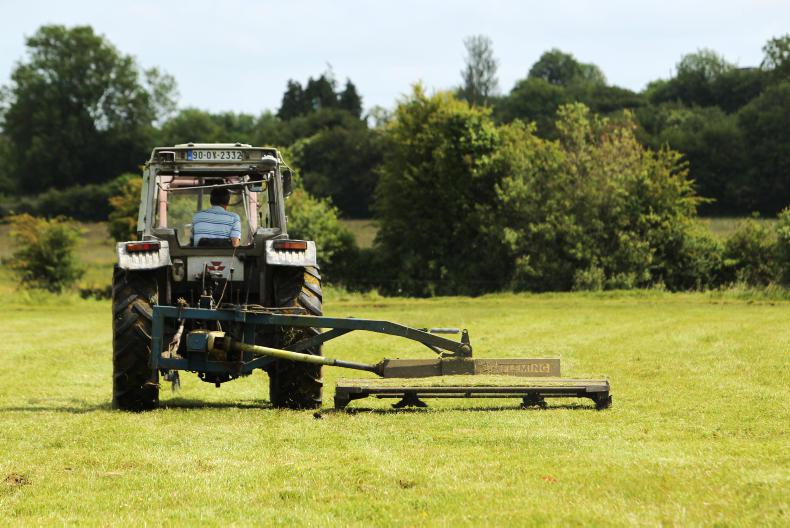
This is either topping after grazing or mowing before grazing or silage. By far the best method is to mow for silage. This has a few benefits: it reduces wastage as there are no rejected areas, it increases the amount of feed available for the winter and it ensures excellent quality regrowth.
Topping, if done correctly, will ensure good quality regrowth too. But the problem is, most topping is not done properly. Flail mowers don’t leave a clean cut and disc mowers are usually not set low enough. By right, fields should be topped to less than 4.5cm. This is tight, especially on fields that were poorly grazed, meaning there will be a lot of grass wasted and left to rot.
The other big problem with topping is that it will nip off some shoots of re-growth. All of the plant’s energy resources have been put into sending up the new shoot and if this is removed, either by topping or grazing, then that tiller will probably die. So if fields are to be topped after grazing, it must be done as soon as possible after cows go out of the paddock.
But even then, some regrowth will be nipped and that is why growth rates are slower on paddocks that have been topped. Growth will be slower on paddocks mowed for silage too as the growing point will be lowered so recovery will be slower. Farmers who cut a high proportion of their farm in one rotation need to be careful to avoid a grass deficit in the next round because of slower than expected growth rates.
Pre-mowing trial results
Dairy NZ, the Teagasc equivalent in New Zealand, recently published a research update on its pre-mowing trial at Lincoln University in New Zealand. The trial ran for five summer months in the 2016/2017 season.
The trial looked at four treatments: pre-mowing a high and a low grass cover and grazing a high and a low grass cover. The pre-mowed paddocks were mowed as late as possible before the cows went into the paddock and cows got around 24 hours in each treatment.
The reason for the higher pre-grazing covers (2,000kgDM/ha) was to see what effect it would have on grass growth and milk production of grazing grass at the three-leaf stage. The target pre-grazing and pre-mowing yield for the lower treatment was 1,400kgDM/ha.
The early results show that the cover of the fields being pre-mowed was slightly lower than planned. Importantly, this study involved pre-mowing for the whole summer so it showed up the cumulative effects of pre-mowing. The pre-grazing and pre-mowing yields for the high treatment were 1,946kg and 1,656kg, respectively, while it was 1,390kg and 1,205kg for the pre-grazing and pre-mowing yields in the low treatment. The two mowing treatments had to be topped up with silage at various times because cover was too low.
There was more grass left behind in the mowed paddocks than expected. On average, 190kgDM/ha was left behind in the high treatment while 143kg/ha was left behind in the low treatment. On average over the experiment, this was equivalent to 2kg DM/cow/day and shows that pre-mowing is not superior to topping for preventing wastage.
There was no difference in rotation length between the mowing or grazing treatments but there was a seven- to eight-day difference between the high and low covers with the low covers averaging 21 days, while the high covers were 28 to 29 days. The average growth rate was similar for the two high covers at 84kg/day. It was lower for the low pre-grazing yield treatment at 81kg/day but significantly lower for the low pre-mow treatment at 72kg/day.
More silage was made in the grazing treatments and more silage was fed out in the mowing treatments. When the researchers looked at the net silage made, (silage made minus silage fed out) there was a surplus in the grazed treatments and a deficit in the mowed treatments. Across the experiment, silage fed in the grazed treatments averaged 0.2kgDM/day while it was 1.2kgDM/day in the mowed treatments, which backs up the fact that growth was lower and wastage was higher after mowing.
Rotation length and milk solids
There was no difference in dry matter intake or milk solids production between the mowing or grazing treatments but cows on the high grazing and high mowing treatments produced 5% less milk solids over the experiment. There was no difference in body condition score between any of the treatments.
To conclude, the results show that pre-mowing a large part of the farm will have no benefit on milk solids production or grass growth. In fact, cutting a high proportion of the farm will actually reduce grass growth rate.
Read more
Milk league: gap widens between big players
Investment ideas for surplus cash
The last few weeks have seen an explosion in grass growth. This burst in growth has happened much later than other years and it has also coincided with seed head emergence. By themselves, both of these things reduce grass quality, but together they can really screw up grass quality and subsequently milk production.
Milk yields are already dropping on farms as cows come off peak, go back in calf and in many cases are now grazing poorer quality grass.
I was on two farms last week that had only 40 units/acre of nitrogen spread on the grazing ground so far this year. This is about 120 units/acre less than the target. The reason was that ground was too wet to graze early on and then when conditions improved, grass growth was very high so it was felt that fertiliser wasn’t needed.
Looking at the swards now, they are pale green and yellow with a huge amount of stem and grass gone to seed, even in light covers. It is clearly stressed because it is short of nitrogen. When grass is stressed, the survival mechanism kicks in and it goes to seed. The grass plant thinks to itself: “I mightn’t survive the next few weeks, so I better produce seed now so my species survives.”
And in order to support the seed head the stem gets thicker with more lignin and tough fibre which, if the cows are hungry enough to eat, will greatly reduce digestibility. That said, producing seed is what the grass plant is designed to do, and seed head emergence is normal for this time of year. But grazing pastures that are gone to seed can be avoided by going in at the right pre-grazing cover. There’s no avoiding seed heads in stressed pastures. The other thing that causes stress in perennial ryegrass at this time of year is too much or too little rainfall.
The rule of thumb for the summer is to spread the equivalent of one unit of nitrogen per day. So that’s 30 units per month. If you follow the cows with nitrogen and are on a 21 day round length then spread 21 units/acre after grazing. This is enough to keep grass growing well and to stop it from getting stressed and stemmy.
Control
We are where we are and there’s nothing we can do now about the quality of grass that is on farms at the moment. But we can influence the grass that will be on the farm in the next three weeks. Where grass quality is poor and stemmy, and cows are leaving high residuals and very big dungpads, some form of mechanical intervention will be needed.
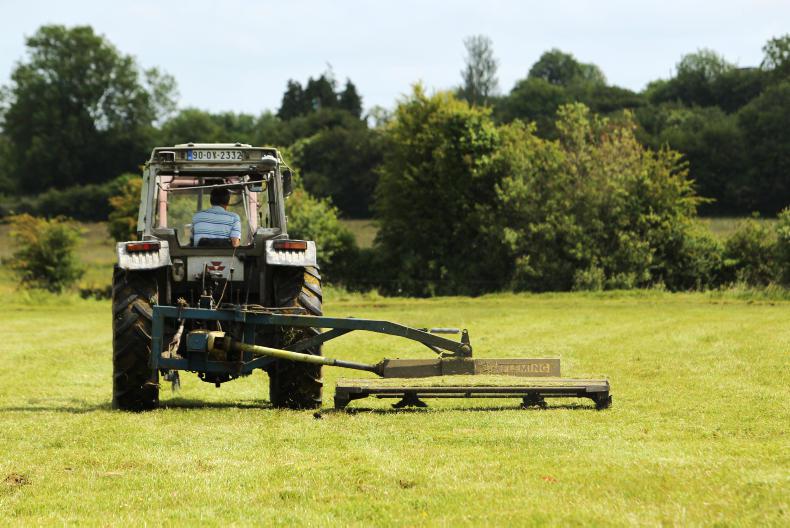
This is either topping after grazing or mowing before grazing or silage. By far the best method is to mow for silage. This has a few benefits: it reduces wastage as there are no rejected areas, it increases the amount of feed available for the winter and it ensures excellent quality regrowth.
Topping, if done correctly, will ensure good quality regrowth too. But the problem is, most topping is not done properly. Flail mowers don’t leave a clean cut and disc mowers are usually not set low enough. By right, fields should be topped to less than 4.5cm. This is tight, especially on fields that were poorly grazed, meaning there will be a lot of grass wasted and left to rot.
The other big problem with topping is that it will nip off some shoots of re-growth. All of the plant’s energy resources have been put into sending up the new shoot and if this is removed, either by topping or grazing, then that tiller will probably die. So if fields are to be topped after grazing, it must be done as soon as possible after cows go out of the paddock.
But even then, some regrowth will be nipped and that is why growth rates are slower on paddocks that have been topped. Growth will be slower on paddocks mowed for silage too as the growing point will be lowered so recovery will be slower. Farmers who cut a high proportion of their farm in one rotation need to be careful to avoid a grass deficit in the next round because of slower than expected growth rates.
Pre-mowing trial results
Dairy NZ, the Teagasc equivalent in New Zealand, recently published a research update on its pre-mowing trial at Lincoln University in New Zealand. The trial ran for five summer months in the 2016/2017 season.
The trial looked at four treatments: pre-mowing a high and a low grass cover and grazing a high and a low grass cover. The pre-mowed paddocks were mowed as late as possible before the cows went into the paddock and cows got around 24 hours in each treatment.
The reason for the higher pre-grazing covers (2,000kgDM/ha) was to see what effect it would have on grass growth and milk production of grazing grass at the three-leaf stage. The target pre-grazing and pre-mowing yield for the lower treatment was 1,400kgDM/ha.
The early results show that the cover of the fields being pre-mowed was slightly lower than planned. Importantly, this study involved pre-mowing for the whole summer so it showed up the cumulative effects of pre-mowing. The pre-grazing and pre-mowing yields for the high treatment were 1,946kg and 1,656kg, respectively, while it was 1,390kg and 1,205kg for the pre-grazing and pre-mowing yields in the low treatment. The two mowing treatments had to be topped up with silage at various times because cover was too low.
There was more grass left behind in the mowed paddocks than expected. On average, 190kgDM/ha was left behind in the high treatment while 143kg/ha was left behind in the low treatment. On average over the experiment, this was equivalent to 2kg DM/cow/day and shows that pre-mowing is not superior to topping for preventing wastage.
There was no difference in rotation length between the mowing or grazing treatments but there was a seven- to eight-day difference between the high and low covers with the low covers averaging 21 days, while the high covers were 28 to 29 days. The average growth rate was similar for the two high covers at 84kg/day. It was lower for the low pre-grazing yield treatment at 81kg/day but significantly lower for the low pre-mow treatment at 72kg/day.
More silage was made in the grazing treatments and more silage was fed out in the mowing treatments. When the researchers looked at the net silage made, (silage made minus silage fed out) there was a surplus in the grazed treatments and a deficit in the mowed treatments. Across the experiment, silage fed in the grazed treatments averaged 0.2kgDM/day while it was 1.2kgDM/day in the mowed treatments, which backs up the fact that growth was lower and wastage was higher after mowing.
Rotation length and milk solids
There was no difference in dry matter intake or milk solids production between the mowing or grazing treatments but cows on the high grazing and high mowing treatments produced 5% less milk solids over the experiment. There was no difference in body condition score between any of the treatments.
To conclude, the results show that pre-mowing a large part of the farm will have no benefit on milk solids production or grass growth. In fact, cutting a high proportion of the farm will actually reduce grass growth rate.
Read more
Milk league: gap widens between big players
Investment ideas for surplus cash






SHARING OPTIONS