



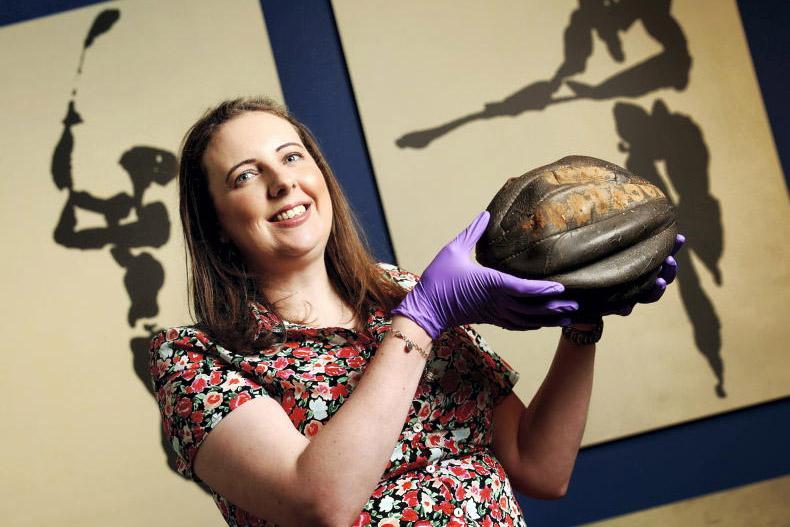
When Siobhán Doyle reflects back, history was all around her growing up on the family farm in south Wexford. Her home at Wellingtonbridge is close to Carrig-on-Bannow, where the Normans landed in 1169, and from their land you can see the ruins of the medieval town of Clonmines.
But it’s fair to say Siobhán didn’t envisage during her school days that she would later become one of Ireland’s leading cultural historians and the author of two books – the latest, Irish Sport in 100 Objectsis out now.
Speaking to Irish Country Living from her home in Dublin, Siobhán recalls that history wasn’t even her best subject in school. She actually wanted to be a radio DJ.
“I got a D in history in the Junior Cert, and I couldn’t drop it quick enough for the Leaving Cert,” she remembers. “I think that’s just because it didn’t suit me to learn off dates and retain information word-for- word.
“I was still unknowingly engaging with history throughout my life though – our land and the Doyles go back generations. There was always a strong sense of the past in our house,” she says, and like many farmers, her father, Pat, and mother, Margaret, were very conscious of that.
“I think the past was very much prominent in the present for me, even though I wasn’t learning history formally through books,” she observes.
Growing up the youngest of four on a dairy and tillage farm meant the household was “a busy place”, and their home was, and still is, the family hub where relatives gather even though her father Pat is no longer farming.
While Siobhán candidly admits she had no interest in the farm, she muses on a question of whether it influenced her in other ways.
“I couldn’t imagine growing up anywhere else,” she replies thoughtfully, after a slight pause. “Now that I live in the city, I’m more appreciative of the freedom that I had when I was growing up on the farm – you could just go down the fields or walk the land and not even think about it. To have all that space and fresh air, it really is a privilege.”
Finding her path
Uncertain about the future, Siobhán opted to move to Waterford after school to do a one-year PLC after her Leaving Cert in Media Production and Photography, which “she couldn’t recommend highly enough” to others. “The PLC really suited me – I was just committing to something for a year – because I really wasn’t sure what I wanted to do.”
Afterwards she worked for five years for Mulligan’s Pharmacy in Waterford city and Clonmel, first as a photo lab assistant and then as a photo lab manager developing photos.
At 24, Siobhán decided she wanted to go to college as a mature student and moved to Dublin to do a degree in Arts at what was then DIT, now TU Dublin. She identifies a 12-week placement in Glasnevin Cemetery and Museum as a “gamechanger” for her.
“That’s where I was steeped in Irish history because you have political leaders and well-known names and people from Irish history all buried there, and you have people from all over the world coming to visit. I think that probably sparked or re-sparked my interest in history,” she recalls.
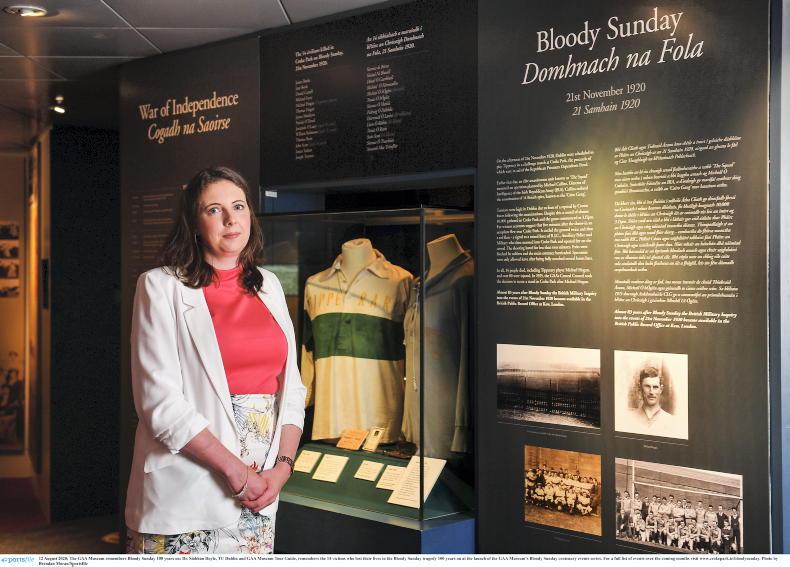
It was also at this point that she thought history could be her future career. Siobhán got a job as a tour guide in Croke Park that summer and spent four years there. Looking back now, she believes they were some of the best summers of her life.
“Just being at the matches every weekend and talking all day about the GAA, I loved it,” she says, laughing.
With her degree done, the Wexford native later toyed with doing a master’s because she enjoyed the research element so much but just couldn’t afford it.
Crucially, she kept in touch with her lecturers, and they knew of her hope to go further in education. In March 2016, after several applications, Siobhán was lucky enough to be offered a four-year scholarship to do a PhD at TU Dublin, linked to the 1916 centenary.
“So I skipped the master’s,” she tells Irish Country Living, smiling. “The PhD was never really on my radar,” she says, but she went for it.
It’s contemporary collecting, so it’s trying to keep up with events that are happening now. For instance, at the top of my list, whether I can get it or not, I’m not sure, would be Gavin Bazunu’s kit from the Ireland-Israel match
“It was difficult. I think it was very obvious in the first six months to a year that I didn’t do a master’s, so it was a big jump from level 7 to level 10,” recalls Siobhán, but after a rocky start she found her feet.
Her research, which she concedes sounds dark, had roots in her time in Glasnevin. She examined how death was represented in museums and the ethics of displaying items like the bog bodies. It had a particular focus on 1916.
“It sounds really grim spending four years on the subject of death, but I was really happy doing the research,” explains Siobhán, who handed in her PhD thesis on time just as the country went into lockdown. Her graduation ended up being “very special” even though she was wearing her cap and gown at home in Wexford because of COVID.
In November 2020, the now Dr Siobhán Doyle started work as an inventory assistant in the National Museum of Ireland (NMI) cataloguing items. This is important work when you factor in there are an estimated 5m objects in the national collection. She also spent time doing research for an exhibition called Changing Ireland, which opened in Collins Barracks last year, before taking up the role of curator of contemporary Irish history, a title she has held for the last three years.
As part of that post, she jokes that she often has her “reeling in the years hat” on searching for items that will represent 2026 in the future.
“It’s contemporary collecting, so it’s trying to keep up with events that are happening now. For instance, at the top of my list, whether I can get it or not, I’m not sure, would be Gavin Bazunu’s kit from the Ireland-Israel match,” she explains.
“What I’m trying to do is put myself in the shoes of a curator in the museum in 50 or 100 years time and what would they want me to be collecting now?
First book
The “lightbulb moment” for her first book, A History of the GAA in 100 Objects, came from her time in the GAA museum working on a Bloody Sunday exhibition. It became her “COVID project”, collecting quirky stories nationwide for the 2022 book, which was shortlisted for the An Post Irish Book Awards.
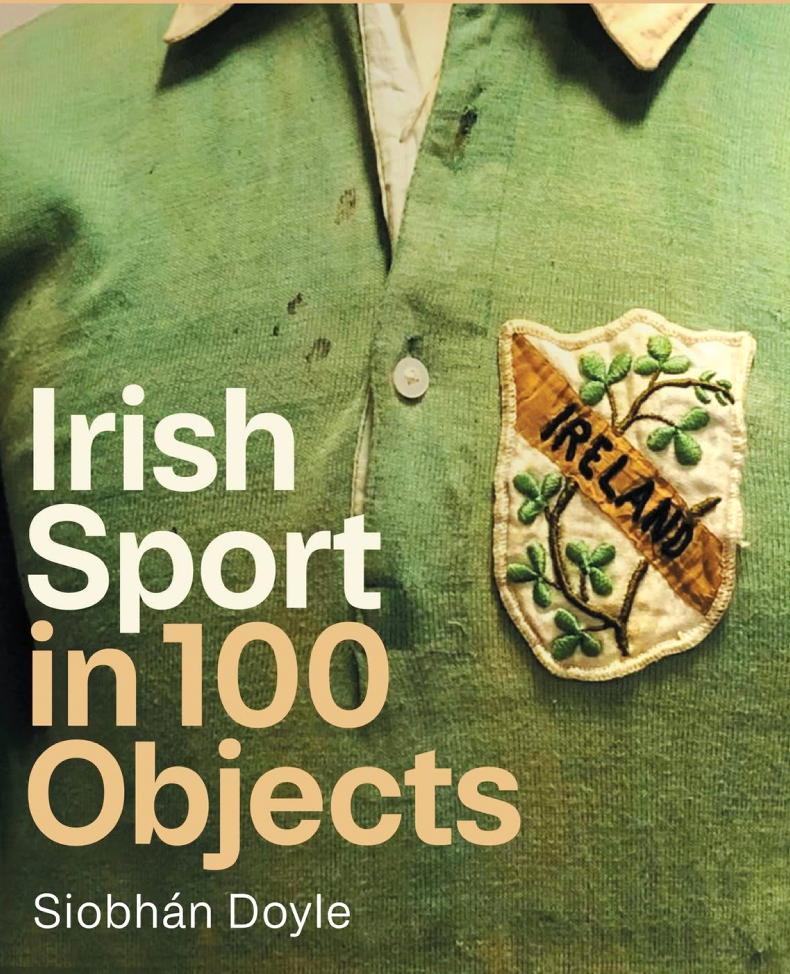
During that journey, Siobhán saw the potential for a second centring on stories from other sports. Out now, Irish Sport in 100 Objects is full of “interesting anecdotes” from pursuits as diverse as cockfighting to road bowling and freediving to bob sleigh or roller derby. Then there are the more well-known items like Packie Bonner’s iconic 1990 jersey or Rhasidat Adeleke’s hair ribbons from the Paris Olympics.
One with rural resonance is Pat Taaffe’s racing hat, showing the strong and successful connection between the jockey and horse.
“Pat has a great quote in the book saying that Arkle was much more intelligent than many of the humans that he met.”
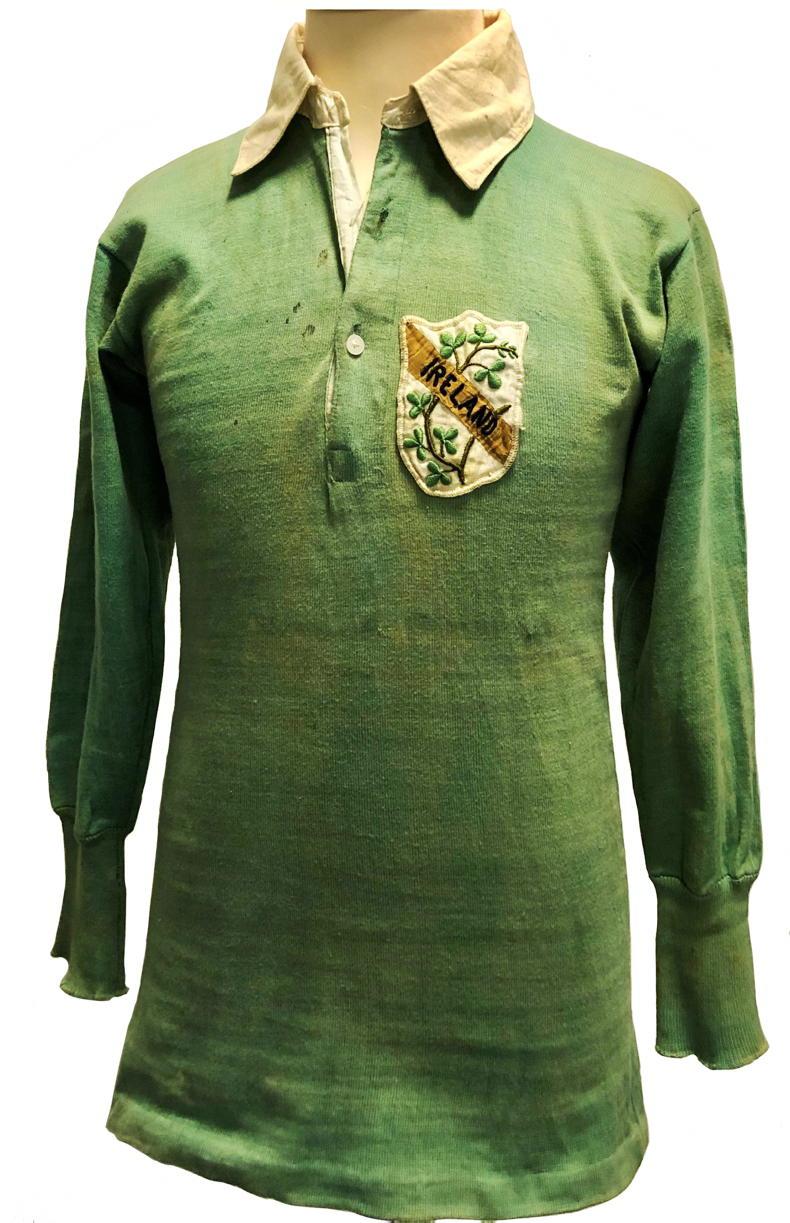
Asked what surprised her most, Siobhán quickly replies that she never envisaged having an Ireland lacrosse jersey from the 1880s on the front cover.
“It was a really fascinating story,” she enthuses. The jersey was worn when Ireland went to America to play the game.
“They were getting the slow boat over, and they were playing lacrosse on the deck of the boat. They lost their ball; it went overboard, but they continued playing with an onion from the kitchen!”
Joking that she must be “addicted” at this stage, Siobhán has already begun work on her third book examining Irish music in 100 objects.
It’s a far cry from the farm in Wexford to Brendan Bowyer’s hucklebuck shoes, but she is travelling a fascinating historical road.



SHARING OPTIONS