



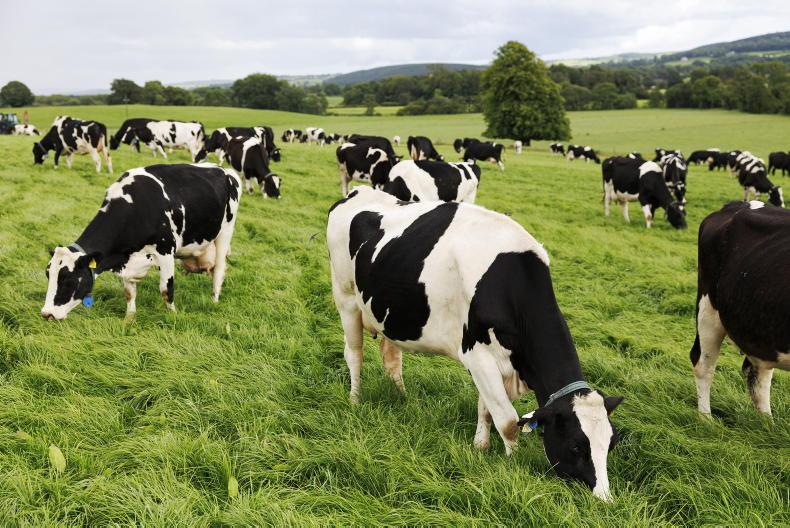
The last couple of weeks have been challenging from a grazing point of view on dairy farms. Cows are still unhappy grazing what look like perfect covers, they are empty in themselves and clean-outs are poor.
The reason for this is the high level of nitrogen in the grass. The flush of nitrogen following the drought has caused grass to sour.
There’s no immediate fix for this and, within another week, grass should begin to return to normal and the problem should resolve itself.
In the meantime, many farmers are reporting high milk urea levels, with some cases of nitrate poisoning and bloat also being seen. There are steps farmers can take to reduce the risk.
Solutions
Using a 12-hour strip wire will help prevent cows selectively grazing the lushest grass in the paddock, forcing them to eat some of the more fibrous stem.
Another option is to feed 1kg to 2kg of silage to increase fibre intake and slow the passage rate of grass through the rumen. This may be particularly useful on farms still grazing low pre-grazing covers of less than 1,400kg DM/ha.
High milk urea can also coincide with lower milk yields, which is likely a sign that cows are short on energy. Where energy intake is low, other problems such as grass tetany and milk fever can become a greater concern.
Even where cows are grazing what appear to be ideal covers, the grass can be low in dry matter and pass through the animal too quickly.
This is where feeding a couple of kilos of silage can be particularly useful, adding fibre to the diet and helping cows make better use of the grass available. Extra meal won’t solve the problem as there is not enough fibre.
The high urea is normal in a grass-based diet and higher levels at this time of year are not uncommon. The urea is coming from proteins in the grass being broken down rapidly, converted to ammonia then urea and excreted as milk urea. This process can also use up energy, diverting it away from milk production.



SHARING OPTIONS