On Sunday, TUS Gaelic Grounds in Limerick hosts the finals of Division 1A and 1B of the Allianz Hurling League.
The fact that the stadium was sold out well in advance is indicative of the levels of anticipation for the Limerick v Cork and Clare v Dublin clashes – we would posit the opinion that the top-flight decider could have gone close to filling Croke Park on its own, such was the demand.
But of course, at the end of it all, league is league and championship is championship. Come Monday, the outcomes will have been parsed and quickly parked as the opening salvos of the provincial championships will be just 12 days away.
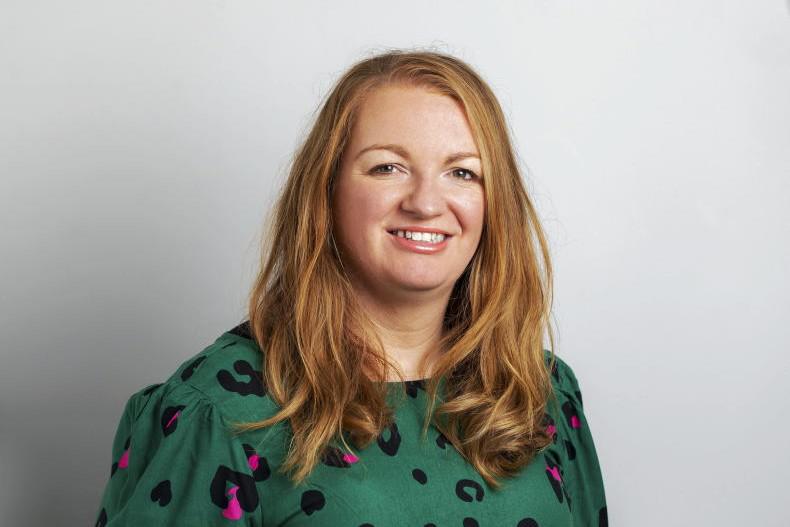
Leo McGough will be following the championship as keenly as anyone – probably more than most – but before that, he will box off the league by assiduously recording the starting lineups, substitutions and scorers from all five finals (Divisions 2, 3 and 4 concluded last weekend).
The Carlow native has, over the course of more than a quarter-of-a-century, built up the most comprehensive database of hurling facts and figures that exists – he has more than once been able to answer an obscure query or two from Irish Country Living in prompt fashion.
As with most hobbies that become passions, Leo’s immersion into data collection was something that happened gradually.
“I’m 66 now, so I’m officially retired,” he says, “but I was a freelance journalist, so I was always kind of retired!
“My parents moved to Carlow from Clare, so we used to spend our summers back in Clare in the late 1960s and early 1970s.
“An older cousin used to bring me to matches and that’s where it all started – then, when I was going to the local CBS here, they were pushing hurling, so I’ve been a fanatic since then.”
That fanaticism has extended to attending 31 county hurling finals – Fermanagh doesn’t have one at present, but if and when one is held again, he’ll be there ready to record the vital details.
“I started getting the Gaelic Sport magazine when I was around 10,” he says, “and a man called Owen McCann used to have a monthly piece on scoring statistics and that helped to grow that interest. At the time, you heard of these things far more in soccer or rugby – if Mike Gibson was getting his 50th cap for Ireland or someone was scoring to 100 goals, you were aware of it, but there was very little for hurling and football.
“I started keeping records here in Carlow, hurling and football, and we had the ‘100 Club’, where players would be honoured if they reached that many games for the county.
“Then I got involved with the Clare Supporters’ Club – not a fundraising vehicle but just a group of fans that used to arrange buses to matches and also produced a magazine – and I started to do the Clare statistics, too.”
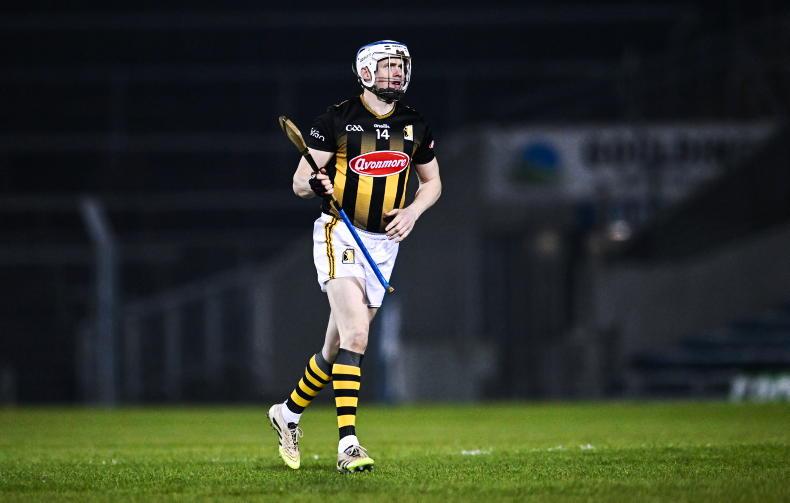
Kilkenny's TJ Reid, who will almost certainly become hurling's all-time top scorer during the 2026 championship season./Ben McShane/Sportsfile
He recalls writing to the weekly ‘Question Box’ in the Irish Independent as a 10-year-old in 1970 to find out who played on the Clare team that won the 1914 All-Ireland, and learning how misinformation could leave a footprint and that even reputable sources needed to be questioned.
“The answer was given on the paper but then about a week later I got a letter from a man who was on the team, Jim Spellissy from Ennis, telling me that they had listed an ‘E Grady’, which should have been ‘E Grace’ and that two subs came on but any official records given since then had just gone with the starting 15.
“So you had these two fellows who had won an All-Ireland on the field of play but they were essentially forgotten about for more than 50 years.”
From those early foundations, he began to research further, building up to the resource he has now. The online Irish News Archive (of newspapers) makes life easier, but there was a six-month period when Leo would be a regular visitor to the National Library, trawling local and national papers to ensure that his information was as correct as it could be.
“Sometimes, there might be discrepancies,” he says, “but you check different reports. By and large, the local paper would be more likely to have it right.
“And of course, you have to make judgements. In the Gaelic Sport, Owen McCann used to include challenge matches, but you might have a report from one of those and others wouldn’t be known or, for instance, in the 1960s the Oireachtas hurling matches had 20,000 people at them whereas in the 1990s, they had 150 attending. It’s the same competition, but can you say that it was competitive in one period and not in another?”
During the coming championship, Leo is almost certain to note TJ Reid definitively passing out Patrick Horgan as hurling’s all-time top scorer. There will be some fanfare, but not much, and such landmarks are something he feels that the GAA could make more of. He will leave that to others, though – for the moment, he is working on a project he has christened ‘Flagship Hurlers’. This focuses on the history of each county’s ‘senior team’ – some counties have operated at intermediate or junior levels over the years and so ‘flagship’ conveys the fact that it is the ‘first 15’ in each case rather than focused solely on the senior championship. It’s likely to be a website – a book carrying such info might need to be split into more than a few volumes.
On Sunday, TUS Gaelic Grounds in Limerick hosts the finals of Division 1A and 1B of the Allianz Hurling League.
The fact that the stadium was sold out well in advance is indicative of the levels of anticipation for the Limerick v Cork and Clare v Dublin clashes – we would posit the opinion that the top-flight decider could have gone close to filling Croke Park on its own, such was the demand.
But of course, at the end of it all, league is league and championship is championship. Come Monday, the outcomes will have been parsed and quickly parked as the opening salvos of the provincial championships will be just 12 days away.
Leo McGough will be following the championship as keenly as anyone – probably more than most – but before that, he will box off the league by assiduously recording the starting lineups, substitutions and scorers from all five finals (Divisions 2, 3 and 4 concluded last weekend).
The Carlow native has, over the course of more than a quarter-of-a-century, built up the most comprehensive database of hurling facts and figures that exists – he has more than once been able to answer an obscure query or two from Irish Country Living in prompt fashion.
As with most hobbies that become passions, Leo’s immersion into data collection was something that happened gradually.
“I’m 66 now, so I’m officially retired,” he says, “but I was a freelance journalist, so I was always kind of retired!
“My parents moved to Carlow from Clare, so we used to spend our summers back in Clare in the late 1960s and early 1970s.
“An older cousin used to bring me to matches and that’s where it all started – then, when I was going to the local CBS here, they were pushing hurling, so I’ve been a fanatic since then.”
That fanaticism has extended to attending 31 county hurling finals – Fermanagh doesn’t have one at present, but if and when one is held again, he’ll be there ready to record the vital details.
“I started getting the Gaelic Sport magazine when I was around 10,” he says, “and a man called Owen McCann used to have a monthly piece on scoring statistics and that helped to grow that interest. At the time, you heard of these things far more in soccer or rugby – if Mike Gibson was getting his 50th cap for Ireland or someone was scoring to 100 goals, you were aware of it, but there was very little for hurling and football.
“I started keeping records here in Carlow, hurling and football, and we had the ‘100 Club’, where players would be honoured if they reached that many games for the county.
“Then I got involved with the Clare Supporters’ Club – not a fundraising vehicle but just a group of fans that used to arrange buses to matches and also produced a magazine – and I started to do the Clare statistics, too.”

Kilkenny's TJ Reid, who will almost certainly become hurling's all-time top scorer during the 2026 championship season./Ben McShane/Sportsfile
He recalls writing to the weekly ‘Question Box’ in the Irish Independent as a 10-year-old in 1970 to find out who played on the Clare team that won the 1914 All-Ireland, and learning how misinformation could leave a footprint and that even reputable sources needed to be questioned.
“The answer was given on the paper but then about a week later I got a letter from a man who was on the team, Jim Spellissy from Ennis, telling me that they had listed an ‘E Grady’, which should have been ‘E Grace’ and that two subs came on but any official records given since then had just gone with the starting 15.
“So you had these two fellows who had won an All-Ireland on the field of play but they were essentially forgotten about for more than 50 years.”
From those early foundations, he began to research further, building up to the resource he has now. The online Irish News Archive (of newspapers) makes life easier, but there was a six-month period when Leo would be a regular visitor to the National Library, trawling local and national papers to ensure that his information was as correct as it could be.
“Sometimes, there might be discrepancies,” he says, “but you check different reports. By and large, the local paper would be more likely to have it right.
“And of course, you have to make judgements. In the Gaelic Sport, Owen McCann used to include challenge matches, but you might have a report from one of those and others wouldn’t be known or, for instance, in the 1960s the Oireachtas hurling matches had 20,000 people at them whereas in the 1990s, they had 150 attending. It’s the same competition, but can you say that it was competitive in one period and not in another?”
During the coming championship, Leo is almost certain to note TJ Reid definitively passing out Patrick Horgan as hurling’s all-time top scorer. There will be some fanfare, but not much, and such landmarks are something he feels that the GAA could make more of. He will leave that to others, though – for the moment, he is working on a project he has christened ‘Flagship Hurlers’. This focuses on the history of each county’s ‘senior team’ – some counties have operated at intermediate or junior levels over the years and so ‘flagship’ conveys the fact that it is the ‘first 15’ in each case rather than focused solely on the senior championship. It’s likely to be a website – a book carrying such info might need to be split into more than a few volumes.
SHARING OPTIONS