


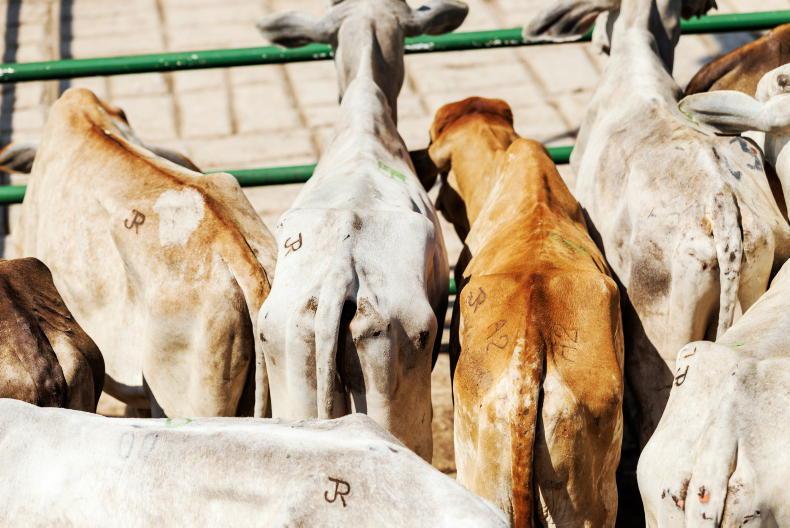
The European Commission has signalled that Brazilian meat products, including beef, could banned from entering EU markets from this September as Brussels has accused the South American country of failing to abide by antibiotic rules.
Tuesday saw member states back an updated list of countries that are eligible to export meat and animal products to EU, with Brazil not appearing on this list.
The Commission welcomed the vote, stating that the countries that do appear on the list “have proven their compliance with the EU restrictions on antimicrobial use in food-producing animals”.
“Under EU rules, the use of antimicrobials in livestock for growth or yield purposes is not allowed, nor can animals be treated with antimicrobials reserved for human infections,” the Commission said.
“The list of third countries which comply with EU requirements, and therefore can export food-producing animals to the EU, will be formally adopted in the coming days, and the rules on imports will apply from 3 September 2026.”
The Commission added that antimicrobial resistance is “one of the biggest public health threats of our time”.
It said that “by ensuring prudent use of antimicrobials in animals, the EU is safeguarding the health of EU citizens”.
2025 hormone beef shock
The shock move to delist Brazil from the EU’s meat import-eligibility list comes just months after it emerged that Brazilian beef containing a hormone banned in the EU – due to it being a carcinogen – had entered the food chain.
The revelation had not been notified to the EU by authorities in Brazil and was only found out during a boots-on-the-ground inspection of Brazilian beef farms by Commission auditors.
What ensued was a scramble among EU food safety authorities to issue recall notices to the member states that were impacted.
The Food Safety Authority of Ireland subsequently confirmed that 128kg of tainted beef had entered the food chain in Ireland, but that by the time authorities were notified, this beef had already been consumed.
Trust essential, Commission had said
The scandal had been lambasted by farming organisations and even Minister for Agriculture Martin Heydon had criticised the delay taken for a recall notice to issue at EU-level.
However, last month saw a top Commission official claim to the Irish Farmers Journal, that the fact that EU citizens know that banned hormone beef was consumed in the EU “at least partially shows that the [food safety control] system works”.
This official had said that: “If European consumers don't have trust in our systems, then we've nothing. European consumers have to have trust in our systems.”
“We've made the commitment to have more boots on the ground, not just on our own customs posts to make sure that we spot things in an even more detailed way, but also in cooperation with, notably, the Brazilians,” the official said.
“And so, it's not a question of ‘do we trust, do we not trust’. It's a question of making sure that we have enough structures in place that we can be sure, and if that's the case, then hopefully we can maintain the trust of European consumers.”
Threat to ban ‘important first step’ – IFA
The Irish Farmers’ Association’s (IFA) president Francie Gorman has welcomed the Commission’s announcement that an all-out ban of Brazilian meat imports is on the table, but he criticised Brussels for the time taken for action on concerns around Brazilian beef.
“The Commission is finally taking the antibiotic and anti-microbial resistance (AMR) threat posed by Brazilian beef production somewhat seriously,” Gorman said.
The IFA leader said that the starting point of Brazilian compliance with EU food safety rules must be the creation of a database of all cattle animals in the country and the incorporation of prescribing, dispensing and treatment records similar to the system in play in Ireland, which he added would take years to complete.
“Until this happens, not one ounce of Brazilian beef should be allowed enter the EU if the Commission are serious about AMR and if today's announcement is to have any credibility.”


SHARING OPTIONS