




It has been eight years since Ireland introduced a pause on mid-urethral sling surgery to treat stress urinary incontinence. The surgery was paused in 2018 following reports of complications related to the use of mesh products for continence and prolapse surgery.
Frustrated by the pause, one Irish gynaecologist has made the decision to provide this surgery for Irish patients in Spain and has been performing mid-urethral sling surgery one weekend every six weeks since November last year. That means that Irish women are travelling to Spain to be seen by an Irish surgeon for an operation that was performed in Ireland up to 2018.
Professor Barry O’Reilly, consultant obstetrician and gynaecologist and subspecialist in urogynaecology at Cork University Maternity Hospital and the Mater Private Cork, has secured a contract with a Spanish hospital (Vithas Medimar Hospital in Alicante) with Healthcare Abroad and is fully registered as a specialist with the Spanish Medical Council.
Professor O’Reilly used to perform these surgeries on a daily basis (“I did thousands of these before the pause”) but he did some retraining with an English colleague and one of his Dutch colleagues mentored him. Professor O’Reilly is also working with a Spanish gynaecologist in Alicante.
Stress urinary incontinence (SUI) is a very particular type of urinary leakage that affects nearly one in two women. It might start as leakage with coughing and sneezing, but can deteriorate to such an extent that women can no longer walk without leaking.
“It happens to women as they have babies and get older,” Professor O’Reilly explains. “The pelvic floor weakens and the support structure to the outlet of the bladder and the urethra is weakened, so that every time they move or cough, there is no support of the urethra and they leak urine. It impacts women’s quality of life hugely.”
Mid-urethral sling surgery became “the gold standard” for treatment for SUI because it can be done quickly and there is little recovery required.
“It is like a sling or a hammock that sits like a U-shape underneath the urethral tube, and it creates support for the urethra. When women cough, sneeze, exercise, jump or laugh, the urethra is supported, and they don’t have leakage of urine anymore,” explains Professor O’Reilly. “It’s made of a material called polypropylene that is also used as a permanent suture or stitch material in many other forms of surgery. That sling is used in every country in the world now except for Ireland and New Zealand.”
The surgery is a minimally invasive operation that takes around 30 minutes to perform, but it is highly technical. “The fact that it’s quick does not make it easy for anyone to do. That’s why it is important that the right surgeon does it for the right patients, for the right reason."
It was while talking to a colleague in the Netherlands that Professor O’Reilly was motivated to set up the option of surgery abroad. “He’d done at least 50 or 60 Irish patients at that point in the Netherlands.”
Professor O’Reilly thought there had “to be a better way" where patients could be operated on by their gynaecologist with continuity of care.

According to Paul Byrne, CEO of Healthcare Abroad, 25 women have been out to Spain for surgery with Professor O’Reilly to date. Healthcare Abroad is a company that supports patients to access surgery through the Cross Border Directive, which entitles Irish citizens to access treatment in any EU country. The patient pays for the treatment up front and claims reimbursement upon return to Ireland.
Kay Flynn (58)
Kay Flynn (58) travelled to Alicante for surgery in January. SUI affected all aspects of Kay’s life for five years, including her ability to exercise – “I started wetting the seat in spin classes”– to her job, “at work, I was always sitting by the door of meetings. I needed to leave probably every hour. And then I started noticing the pads I needed were just getting bigger. It was more than urgency. I would not make the bathroom.”
As a senior executive in a multinational company, Kay’s work is demanding and involves travel, but she soon had to tell her manager what was going on. “I got to a stage where I was very conscious of trying to have meetings where I would be sitting in a chair, a high stool, where I wouldn’t have to stand up.
“For me, the movement of sitting to standing, there’s just a complete leak with that movement.”
Kay has memories of delivering presentations to large audiences, and at the same time, she would be wetting herself. She recalls one International Women’s Day event: “I remember I needed to go to the bathroom, and there was a queue of four or five people, and I wet myself. Literally, it just went.”
Kay saw a menopause specialist in 2024 who referred her to Professor O’Reilly after six months. “Even at that first appointment Barry said, ''I think you’re so far gone, the only thing that’s going to work is surgery''. But before we’d even go there, we’re going to go try everything.”
Kay did urodynamics testing, pelvic floor exercises, Emsella chair [to strengthen pelvic floor muscles], medication and tried Bulkamaid twice [a urethral bulking agent used to treat bladder leaks]. None of it worked for her.
“At that stage it was October 2025, and I started researching, what am I going to do now? I researched everything, including travelling abroad.

“Then I had a consultation with Barry in January, and he told me he was starting surgery abroad. I said, yes, I’m up for it.”
Kay travelled to Spain on a Friday at the end of January for surgery, along with seven other women and Professor O’Reilly. The treatment and the entire logistics of their stay was organised by Healthcare Abroad. The patient must have a letter from their GP.
Paul Byrne of Healthcare Abroad says that the mid-urethral sling surgery in Spain costs around €8,000. Some patients use their own money or go to a Credit Union for a loan (later reimbursed by the HSE).
Others pay for the surgery with private health insurance.
It can take “four to six months” for the HSE to reimburse the cost of surgery. Travel costs and accommodation are not covered by the Cross Border Directive. Paul advises that accommodation costs €95 to €125 per night for a room in one of their partner hotels.
Once the women arrived in Alicante, they were transferred to the hospital for blood checks, and they had their surgery on Saturday morning. They stayed in hospital some days to recover, and flew home between Monday and Wednesday.
It was necessary for the women to empty their bladders fully before being discharged from hospital. After surgery, patients have to be very careful for the first six weeks. Professor O’Reilly says: "We ask patients to take it easy and let things set into place for six weeks.”
He sees the women for a check-up in Cork six weeks and six months post-surgery.
Speaking to Irish Country Living more than six weeks after surgery, Kay says that she is in “complete control”.
“I was in a three-and-a-half hour meeting last week at work. I did not need to leave the room once, and I didn’t have to change a pad. I was completely dry.”
On the question of whether the pause on mid-urethral sling surgery should be lifted in Ireland, Kay says: “I just feel that it needs to be brought back as an option. We need the choice. If you’re going into this, you’ve researched it, you know the possible side effects, you know there’s a possibility that this may not work for you, or that the mesh may not be the right answer, but at least have the choice.”
Michelle O’Dowd (49)
Michelle O’Dowd (49) was the next woman on the list for mid-urethral sling surgery before the pause was introduced in 2018. She also travelled to Alicante in January and says that she had been “suffering with leaking” for 17 years and “thinking about the operation for eight years”. She would have gone over abroad sooner. “I would have stopped this years ago but I didn’t have the money in my bank account to have the operation.”
What started as leaking when Michelle sneezed deteriorated to a point “where I was walking the dog in the park, and I was soaking".
“I just started sneezing, and it went on, it just got worse until I was in a nappy every day.” She stopped playing netball “because I’d be wet coming off the court”.
The Dublin woman “tried everything”, including physio, a vaginal pessary for pelvic support and bladder botox. She had decided to pursue surgery abroad in Amsterdam but changed her mind last October when she read an article that Professor O’Reilly was doing the same surgery in Spain. “I rang Healthcare Abroad straight away that evening.”
Having just signed up for a mini marathon in May, Michelle says she would recommend the surgery to anyone. “If anyone sat down to talk to me, I’d go through it and say they’re mad if you don’t do it."
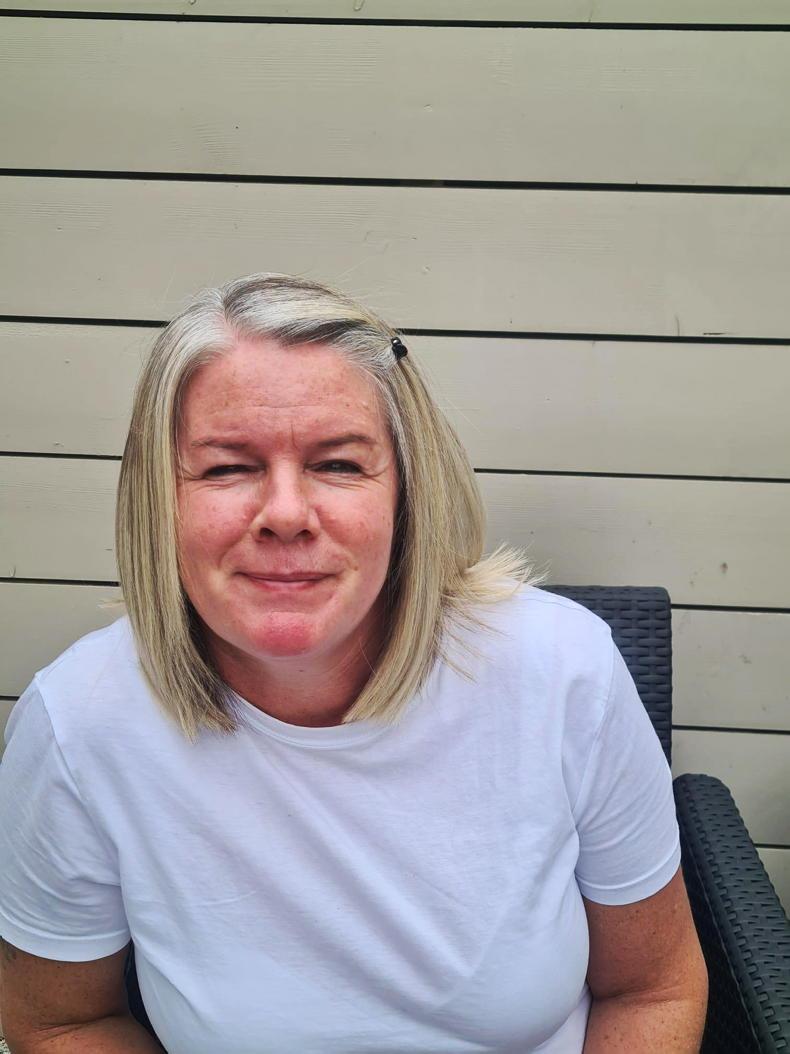
continence got so bad she had to stop
exercising.
The HSE told Irish Country Living that eight patients have been approved for Treatment Abroad Funding from 2024 to 2026, "with an associated cost of €29,063 in respect of mesh implants".
The Treatment Abroad Scheme provides funding for a public patient to access treatment which is not available in Ireland, in another EU/EEA country. The HSE is unable to provide data on the number of patients who have accessed treatment under the Cross Border Directive.
On the question of whether the pause on mid-urethral sling surgery will be lifted in Ireland, the HSE says that the report submitted by the HSE Vaginal Mesh Implant Oversight Group (set up in 2023) "is currently under consideration by the Department of Health".
The HSE is working with the Department of Health’s National Patient Safety Office to determine whether the findings of the report could be "adopted into an evidence-based actionable framework for potentially reintroducing uro-gynaecological mesh for the treatment of SUI. This work is ongoing".
1. In July 2018, the HSE introduced a pause on the use of mesh for urinary stress incontinence and pelvic organ prolapse surgeries in Irish public hospitals, following reports of complications related to mesh products. These included chronic groin and pelvic pain, bladder and bowel problems.
2. The Minister for Health at the time, Simon Harris, requested Dr Tony Holohan, chief medical officer, to draft a report on the use of these medical devices. It was recommended the pause remain in place until 19 recommendations made by Dr Tony Holohan in his 2018 report were completed.
3. Some of the recommendations in the 2018 report include: surgical professional training and multidisciplinary expertise in units carrying out mesh procedures; and the development of information systems to monitor the ongoing use of mesh devices.
4. In 2023, the HSE established a National Vaginal Mesh Implant Oversight Group to review and assess the implementation of the 19 recommendations in Dr Holohan's report. All 19 recommendations have been completed, but the report submitted by the HSE Vaginal Mesh Implant Oversight Group is still under consideration.






SHARING OPTIONS