



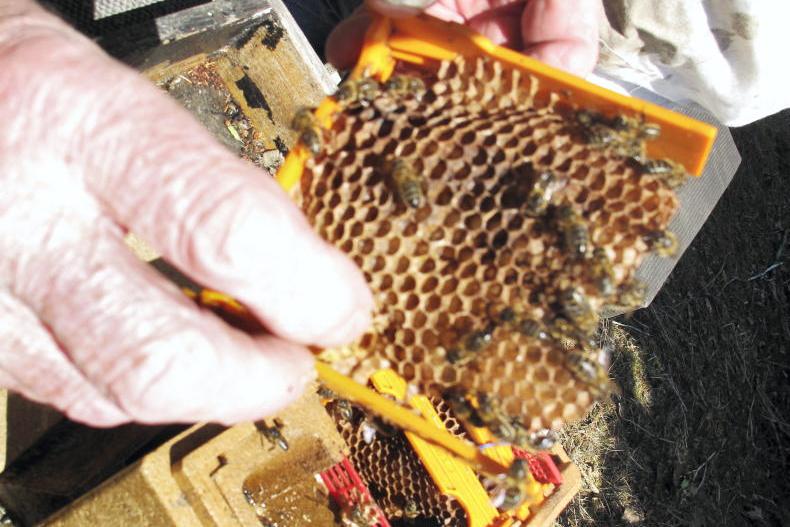
The past 12 months will not be remembered as a vintage year for Irish beekeepers, but rather as one where the honey gods smiled at the right time and saved the season.
The two-week heatwave in July salvaged a potentially disastrous year for Ireland’s beekeepers, bringing a surge in temperatures just at the right time.
Beekeepers on the continent were not as lucky. A bad year in 2020 was compounded by another disastrous season in 2021.
Drought in parts of Scandinavia and the eastern Mediterranean, as well as heavy rains and floods in Germany and the low countries, resulted in a 10% to 15% drop in honey output.
However, this summer’s good fortune in Ireland was not lost on south Tipperary honey producer Aoife Nic Giolla Coda.
Luck
“It was a real bit of luck,” said Aoife, who operates Galtee Honey Farm in Burncourt outside Cahir, where she specialises in keeping native Irish honeybees.
“We had a really bad start to the year. It was such a bad May - cold and dry. Everything was running behind. Going into June, we had only five or six days above 18C,” she explained.
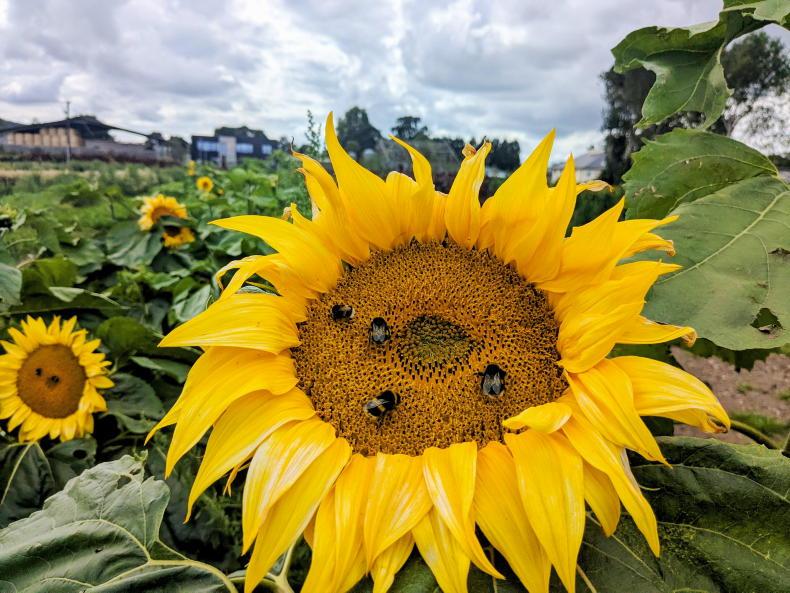
When the weather turned for the better in July, beekeepers really hit the jackpot, as it coincided with the flowering of the blackberry blossom and white clover, which are among the primary nectar sources for bees in the summer.
Aoife explained that the bees went into overdrive during the heatwave and produced 70% to 80% of the year’s honey crop during that three-week window.
Fine weather
“When the bees get fine weather they will make the most of it. They have no switch-off button. As long as the sun is shining and it is warm, they will keep going,” she said.
Unfortunately, the opposite is also true; bees rarely venture out of the hive when the weather is cold or wet.
Aoife said this year illustrated the extent to which honey production is entirely weather dependent and, given the vagaries of Ireland’s climate, can be a lottery.
Cahir-based beekeeper Redmond Williams agreed.
Redmond explained that warm, dry, bright weather where the temperature is ideally above 20C is required for bees to produce excess honey.
The good weather must also coincide, as it did this year, with the blooming periods for the bees’ primary nectar sources.
Along with the blackberry blossom and white clover in the summer, bees feed on whitethorn, sycamore and horse-chestnut in the spring, as well as heather and ivy in the autumn.
There is growing demand for locally-produced honey. Redmond describes himself as a hobby beekeeper who supplies three or four local shops around Cahir.
For commercial operators such as Aoife – Galtee Honey Farm has around 170 hives and supplies four local supermarkets, as well as an online distribution service – the trick is to hold stocks in the bumper years and use these to balance low output in the fallow seasons.
However, for now, Irish beekeepers are not recalling past troubles. They are just thankful for July’s heatwave and the sweet bounty it delivered.



SHARING OPTIONS