



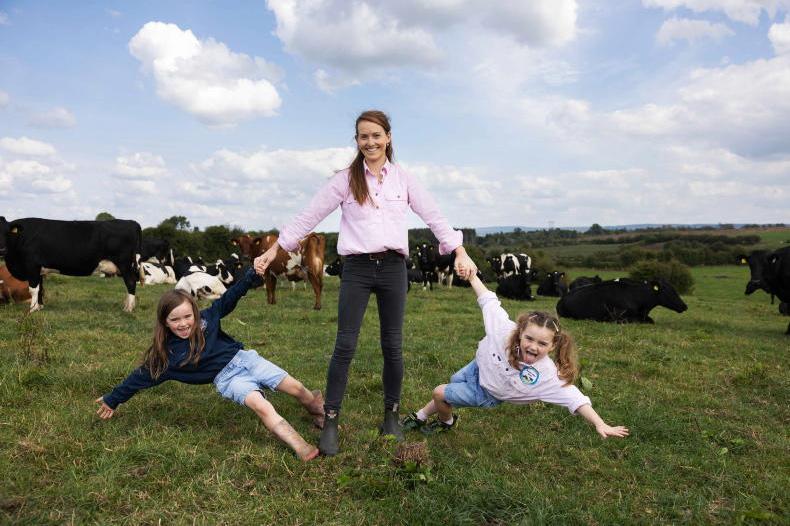
There’s a lot you’d expect from the woman chosen to be the Irish ambassador for the International Year of the Woman Farmer – a good business head, financial acumen, innovative ideas paired with practicality, and a passion to improve the landscape for female farmers. Most of all, you’d expect a love of farming – one that came at an early age for Carina Roseingrave from Burren View Farm in Crusheen, Co Clare.
“I still remember the first time I saw my dad calve a cow,” says Carina. “She was a white head heifer calving out in the field, before there were sheds. And I remember re-seeding fields with him, everyone throwing in stones behind the tractor. We’d have relations home from Australia, and Dad would be showing them the land and the stock. He had great pride in what he did.”
Sadly, those childhood memories are tinged with sadness, as her father Gerry passed away from cancer when Carina was only 12 years old.
“Dad was sick but still farming. He was getting chemo treatment, but then he’d be back down the road and just lay into the farm. The day before he died, he moved all the cattle into fields that had grass, it’s like he knew he was going,” says Carina, softly. “What he showed me in the short space of time he was around, I want to show my girls and hopefully, they’ll continue on [farming].”
Heartache and resilience
With the heartache also came resilience and strength. When her mother, also named Carina was widowed, she had five children under the age of 12 and her Granny Christina, her father’s mother, also lived with the family.
“We had to get on with it. Mam worked in Clare Marts, but she wasn’t a farmer – only for we were so involved from a young age with Dad, we helped her keep the farm going,” she says.
“Granny was home with us everyday to help out. We also had great neighbours. Mam never had to ask them for help – when they heard the contractor cutting the grass, they’d be ready to bring in the silage.”
Carina now farms in partnership with her brother Gerry. Farming on 350ac between their own land and rented land, they have close to a 300-strong herd.
“We were always suckler farming and then we also got into dairy. Now we have a spring and autumn-calving herd, pedigree Charolais and pedigree Limousins, the dairy herd – and free-range hens.”
The dairy enterprise came about when Gerry was contracting in New Zealand about nine years ago. At the time, Carina was doing her Green Cert and farming at home with 60 suckler cows. But when a block of land came up for sale next to the family farm, they rang Gerry who replied that he’d come home, “and sure, we’ll do dairy so”.
The egg enterprise was Carina’s idea. “I got a few hens during COVID and was selling the eggs in an honesty box. Granny always had backyard hens. She’d give away the eggs for free – although I’d be asking her why she wouldn’t sell them. I always thought it could be an interesting business. When she passed away, I wanted to do something to remember her, and the eggs seemed fitting. A few months later, myself and my sister Mary were at the Ploughing Championships and it started raining, so we went into the ACORNS tent for shelter. After that Mary had me annoyed to apply and develop the egg business. I remember going to the first day in Mullingar and feeling like a total imposter. I thought, ‘I’m going to leave at lunchtime’, but thankfully I stayed and we were given a mentor for six months.
“Now thanks to ACORNS, I have over 500 hens, a recognised department shed and I’m selling eggs in local shops and cafés. It’s something I want to continue to expand – it’s the only part of the business where you can control your price. You’re not relying on the variant nature of the milk cheque or beef prices, and it gives more stability to our business.”
International Year of the Woman Farmer
While the eggs was her own venture, Carina says she wouldn’t farm with anyone but her brother. “We’ve grown up together farming, and we’re very like-minded – you breed for the highest-quality cattle, you’re always trying to tailor your genetics to what the consumer wants, we want to do it 100% right. And we both have our own strengths – Gerry is focused on the farm buildings, the infrastructure, the roadways, and for me its more the business, the financials and the animals. But we both have a common goal for Irish agriculture.”
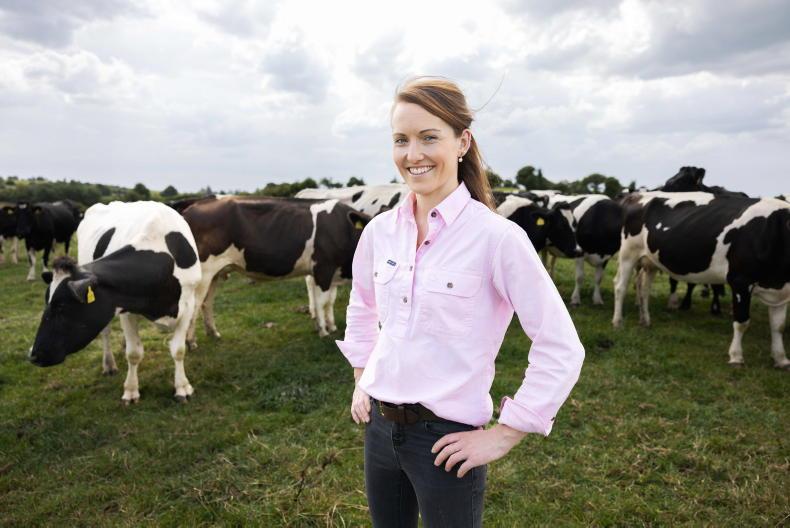
It was Gerry that initially encouraged her to apply to be the ambassador for the International Year of the Woman Farmer. Her reply was, “are you joking me? We don’t have the time”. But when she also got a call from Paula Fitzsimons in ACORNS, she knew she had to consider it more carefully.
“I was shocked when I was picked, but it’s been great. To be honest, I didn’t realise how much I was involved in agriculture until so many people I knew from the different organisations started ringing me, congratulating, asking me to sit on panels. It [the ambassador role] was supposed to be a few events, but because the sector has gotten so behind this and behind me, I haven’t stopped since March.”
When my daughters were born, I fired myself back into things, especially after having Arlie who was born in April – a very hectic time on the farm. You get on with it, you do what women did years ago, but without Mam and the support of my brother taking on the extra work, it wouldn’t have worked
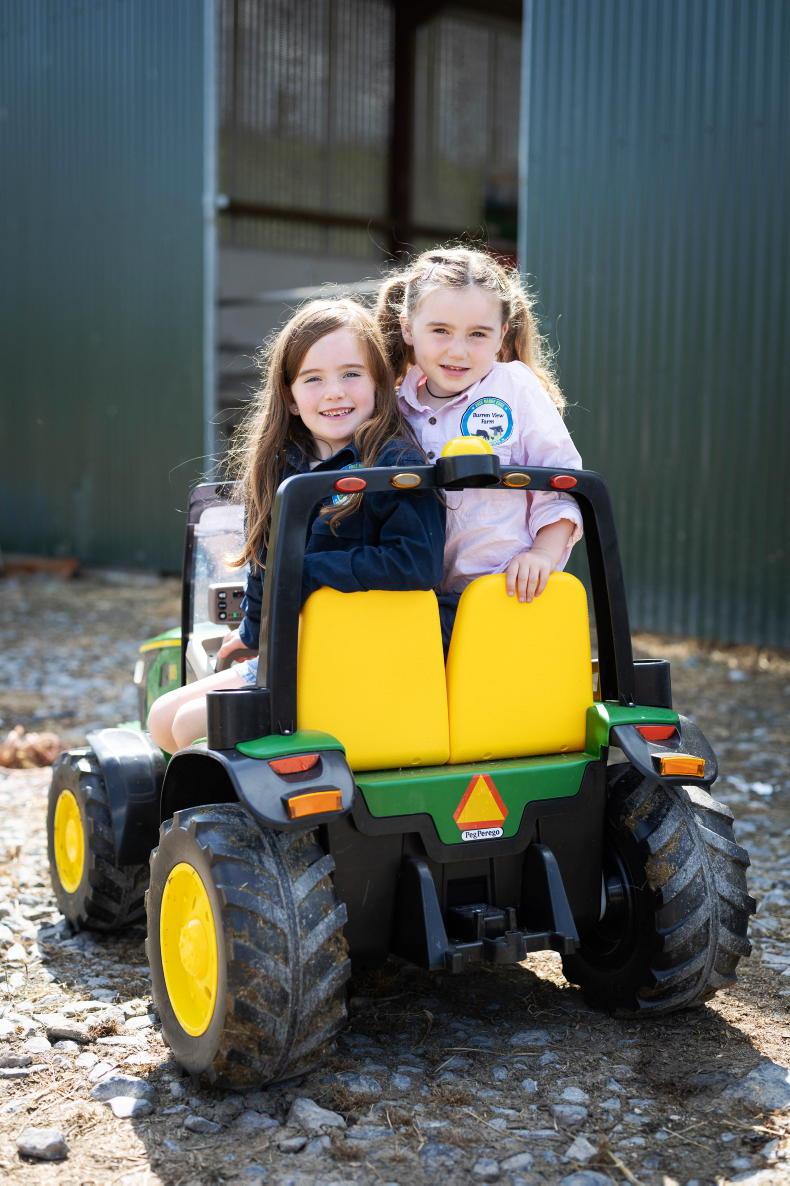
Her ambassadorship starts at home and her daughters CJ (6) and Arlie (5) are already young female farmers.
“My biggest struggle is getting them to school, they want to be on the farm all the time,” says Carina with a laugh. “They love showing cattle as young handlers. Arlie, for her fifth birthday all she wanted was baby chicks, so I got her 10 and they’re now birds and practically talk to her. Their attention to detail is fantastic – they’d go into the sheds in springtime and be able to pick out the smaller, weaker calves before we would and make sure they get the bottle first. They’re growing up seeing and experiencing farming.”
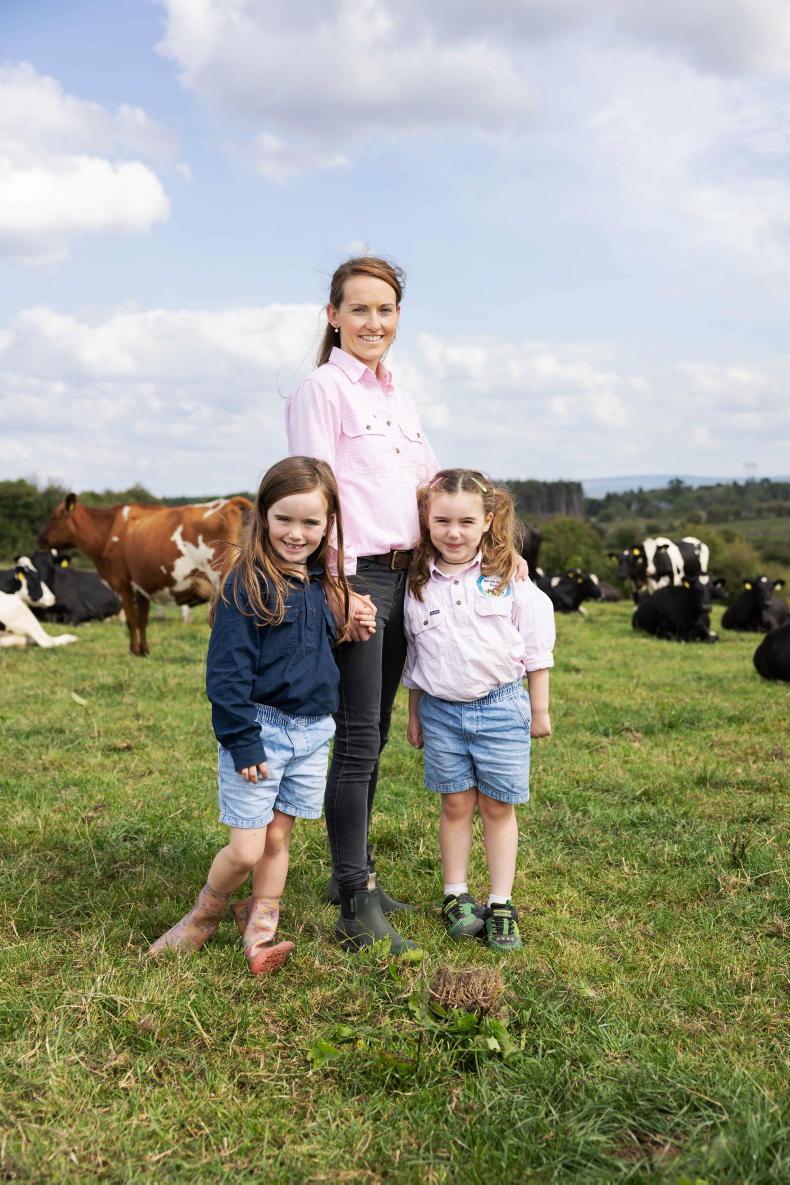
Carina also loves to see young girls arriving to the farm on school tours.
“When I went to school in Ennis, ag science just wasn’t an option; so I did journalism and Montessori teaching, there was even a time when I considered forensic science, but farming always had my heart. Now I have ag science students coming to my farm. Those girls are talking openly about farming and agriculture, something that just didn’t happen for me when I was growing up, it’s massively different and great to see.”
There are still plenty of challenges ahead for female farmers, but one area Carina is particularly passionate about is support for young mothers who are farming.
“A woman could be working on a farm 24/7 but not taking an income, and then she decides to have a child. How do you replace yourself on that farm, or get support? This is a subject I’ve brought forward at [farming] discussion groups – there needs to be some sort of maternity leave put in place for women working on farms, so they can have time with their babies.
“When my daughters were born, I fired myself back into things, especially after having Arlie who was born in April – a very hectic time on the farm. You get on with it, you do what women did years ago, but without Mam and the support of my brother taking on the extra work, it wouldn’t have worked.
“And what I have found from being an ambassador is that some women have even decided not to have children because it’s not financially affordable and that’s sad. We’re stopping the next generation coming on. They’re either picking a future as a parent or as a farmer. Your personal life shouldn’t be put on hold because you want a career in agriculture. And it’s not talked about.”
Carina would like to see more women at the marts, saying, “if we’re breeding and producing animals, that is where we sell them”, as well as more consideration for some of the practical elements of farming. “Many say a 25kg bag of nuts is too heavy, 20kg would be better – and it would suit older farmers as well. And if it’s brought more to the attention of the co-ops, I think they’ll make it happen.”
A work life balance and a focus on mental health is something Carina is also passionate about.
“Farm life is so busy. There is a lot of buzz around generational renewal but unless we slow down and bring young farmers with us, in the same way my own dad did, we won’t have the next generation interested in [farming].”
Carina Roseingrave is be one of the speakers at this year’s Women & Agriculture conference, taking place at the Radisson Blu Hotel, Little Island, Co Cork, on Thursday 29 October. Tickets go on sale on Tuesday 8 September and once again, we are delighted to have the support of FBD Insurance.



SHARING OPTIONS