



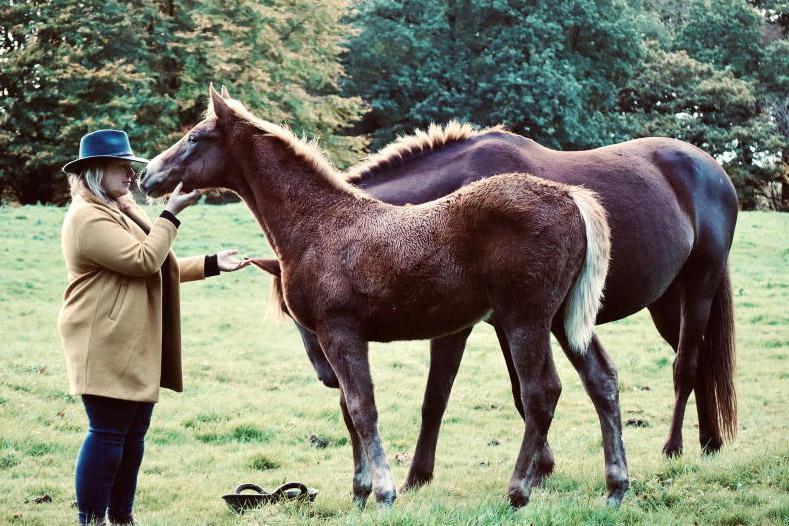
Banishing the taboo around gender-based violence is starting to gain momentum as efforts continue to work towards a society that protects its most vulnerable from domestic and sexual abuse.
Survivors and victims are encouraged to seek help, yet taking that first step is beyond the capabilities of many who find themselves trapped in abusive relationships or in a difficult situation.
Cuan, the Government agency established in 2024 to tackle and reduce domestic, sexual and gender-based violence, has run prominent campaigns since its launch to reassure victims that help is always available.
The current campaign, Always Here, conveys the message that should someone want to take that difficult step to seek help, from either An Garda Síochána and the Courts Service, Sexual Assault Treatment Units, or from any community or voluntary support organisation, they will be listened to, they will be taken seriously and they will be given the support they need.
Irish Field columnist Dr Helen Sharp credits the charity Women’s Aid with helping her rebuild her life after she was sexually assaulted in her 20s, and violently attacked by a former partner some years later.
Hard-earned recovery
“I can safely say the furthest distance I have ever travelled is between the young woman I was after surviving rape in my twenties to the 51-year-old woman I am now,” she says.
“Today, I have a caring husband and fabulous friends, I love my work as a journalist and my life in Co Fermanagh with my nine horses. Securing that good life has been a battle; there has been no shortcut. Recovery, like most things worthwhile, is hard-earned.
“As a child, living on a tiny island in the Outer Hebrides [off the Scottish coast] with a population of 48, I spent a lot of time alone, outside with whatever animal I could find, whether it was lobster fishing with my Dad, or roaming empty white beaches to see the seals with just our dog and my thoughts.
“Those often-intrusive thoughts weren’t always helpful; they became increasingly hostile as my teens unfolded. As it transpired, my mental health was being battered by a condition which saw me go through the menopause at 17. Not fun while you’re sitting your A-levels, let alone trying to digest the news that I would never have children. How does a 17-year-old really absorb that grief?”
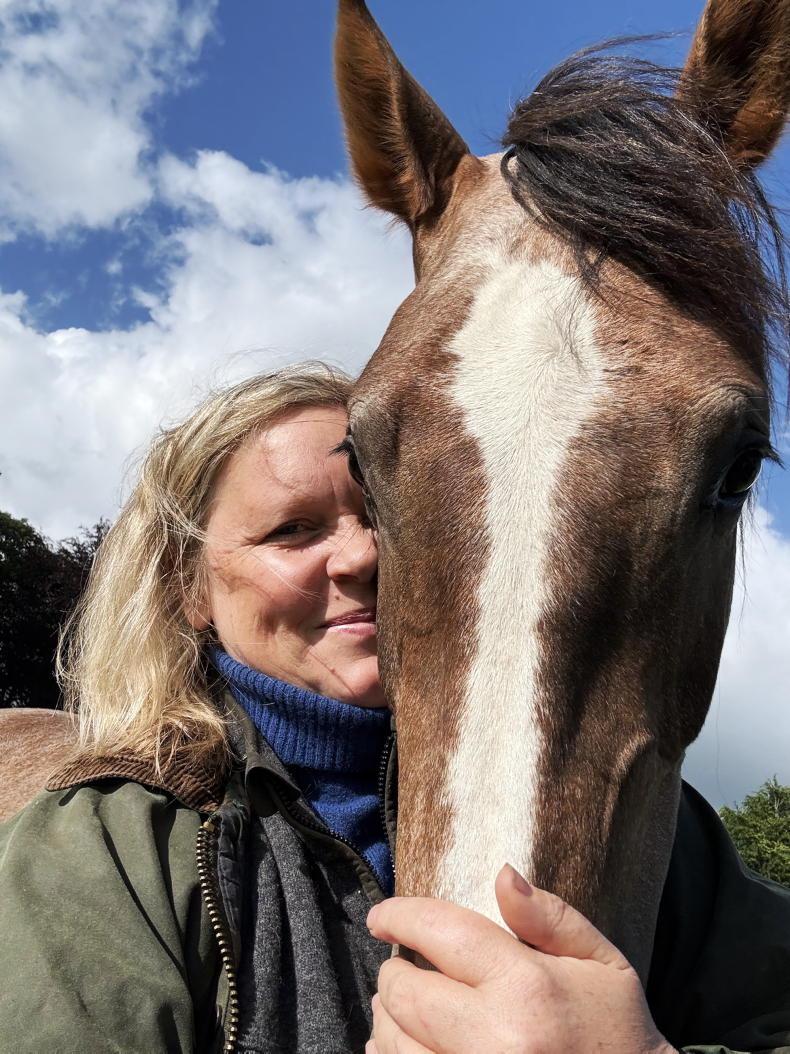
A decade later, Helen was attacked while holidaying in Gran Canaria when she was the victim of a sexual assault.
“Following the rape, my default was always to turn in on myself, and this was the form I maintained into adulthood as I lived through other challenges, including a partner who broke my jaw and knocked me unconscious several times.
“But bruises fade, and grief finds a place to exist quietly. Today, I celebrate my rise, not my fall. I’ve learned to shake those shadows.
“Needless to say, it’s a slow process. I spent my 30s struggling with depression, anxiety and compulsive behaviours, while I was specialising as an arts facilitator in Northern Ireland, where I learned a lot about other people and the complexities of healing. I learned it mostly begins with hope and courage.
“Accepting what has happened to you – that can be the hardest thing. I didn’t breathe a word of my rape to anyone for three years, not a soul; fear, anxiety, guilt, all put pay to finding the words.
“During a recent press interview, the interviewee recounted a colleague telling him, “Hope is not a strategy.” The blood went cold in my veins. If I had not mustered hope in some of my darkest times, then I’m not sure I’d be here telling my story. Hope is the fuel for recovery. Just as courage is the engine.
Following the rape, my default was always to turn in on myself, and this was the form I maintained into adulthood as I lived through other challenges, including a partner who broke my jaw and knocked me unconscious several times
Life changing support
“Women’s Aid was my first port of call in seeking help and I can honestly say they saved my life. They put me in contact with psychologists whose support proved life changing. It feels like a thousand years ago now, but friends encouraged me to reach out, one of whom had witnessed one of the attacks I endured from my former partner. Everything else unravelled once I took that first step.
“Finding solace in time with animals was my other route to recovery. Animals are great alchemists, turning psychological muck to gold for me.
“In my mid-thirties, I became weary of working in the arts, and my love of horses led me to apply for and win a €50,000 PhD scholarship, which I used to move to Co Fermanagh and to buy the first horse I’d had since the wild ponies of my youth, one of which, old Misty, dished out many a lesson in hope, perseverance and courage.
“The scholarship was my ticket to ride, quite literally. I completed the PhD, but my real goal was always the horses and a life in the country. My first horse cost me €1; he was an 18-year-old former point-to-pointer named King. A sound investment – King and his gentle soul started me on a journey to a whole new career.
Healing with horses
“I began writing about horses for free for anyone who wanted me to, and from there, I eventually became a full-time equine journalist.
“I also trained as an equine physical therapist and spent a few years travelling across the country, treating horses of all sizes. In doing that, I spent a lot of time with owners, who so often began to talk, or cry, or let off steam, as their horses were being treated.
“Something was happening in the stable when the horse relaxed, the owners often seemed to unfurl a little too.
“I am now an equine-assisted practitioner and am also training to be a counsellor. The charity I set up, Groundwork Equine Assisted Services is thriving. Robust scientific research, along with proven embodied evidence worldwide, substantiates the healing power of the horse/human partnership as a most powerful therapeutic intervention.
“I found healing with horses by accident, but social prescribing and professional referrals play a huge role in connecting people to health and well-being, and to equine-assisted services and nature-based therapies across the island of Ireland.
“When I see the transformative power of the horse-human connection unfold before me every day, it gives me the strength to share my own story with pride and without fear.”
If you have been affected by the contents of this article, please see helplines panel below.
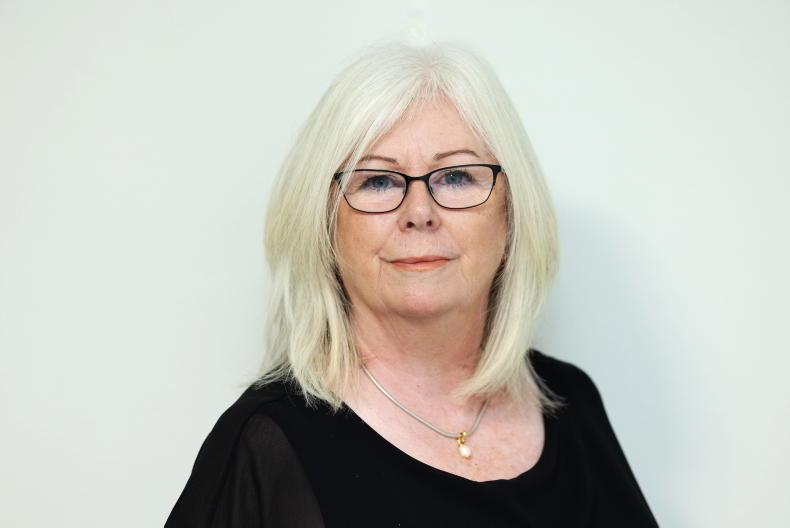
Rural Affairs reporter Jacqueline Hogge talks to Linda Smith, head of National Helpline Services with Women’s Aid. She says the helpline offers victims the space to talk about their experience.
“When a victim contacts the helpline, they aren’t met with a list of questions, we don’t ask for their name or their location, we just actively listen to what they say – in many cases it is the first time the person has ever spoken of what is happening to them,” she explains.
“Every call is different but, on every call, the caller takes the lead. Often, it’s a case of what isn’t said that is the most significant part of that first call, but we also affirm the situation that person is in. We reflect back the strength and courage the person has shown in making that call and we empower her to trust that she is the expert in her own experience.”
Linda says the increase in calls reporting coercive, financial and emotional abuse has led to a lot of victims second guessing themselves as to whether it is in fact abuse.
“Many victims will minimise their experience if physical violence isn’t the issue and that first call can be an attempt to understand the dynamics of abuse and the situation, they’re in. We tune into the nuances of each situation and are sensitive and mindful not to force any realisations for the caller, which can be overwhelming,” she says.
“We find that victims are prompted to call after hearing something on the radio, like an ad, or watching a TV show where domestic abuse is a plot and they recognise themselves in that situation. We also get calls from family, friends, even neighbours of a victim who want to know how to support them. But they all have an emotional involvement and are more likely to tell the victim to leave the perpetrator, as if it was that simple.
“When we get the call from the victim, we take the time to meet her where she is at. We discuss the impact of domestic violence on other aspects of life and we are a non-judgmental, non-directive service.
“Probably the most important part of that first call is for the victim’s courage to be validated and to recognise the fact that in contacting us, they have moved past the shame and the fear of not being believed. That is hugely affirmative.”
There are 37 domestic abuse services located all over Ireland. Services are free and available in every county. The full range of services, many of which offer outreach support in smaller towns and villages can be found on safeireland.ie.



SHARING OPTIONS