



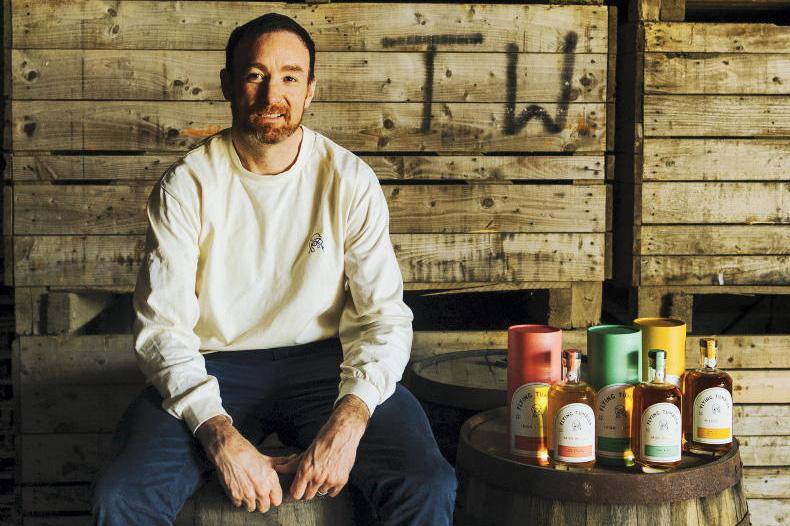
Flying Tumbler is a small Irish whiskey brand, founded by Carlow brothers Thomas and Patrick Walsh, who oversee every stage of production – from sourcing and maturing, to blending and bottling. Now they are on a mission to return to where their story began: Larch Grove, where their family has farmed since 1940.
“We are currently doing work on-site to bring the farm up to spec to be our brand’s home,” says Patrick.
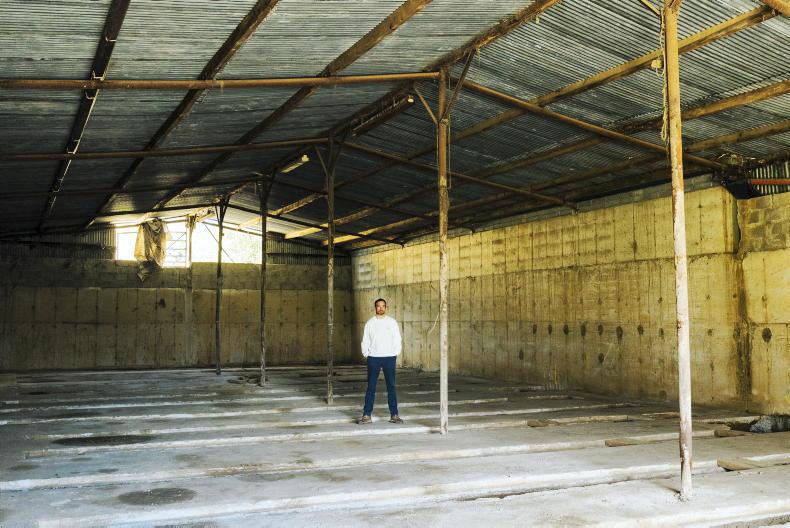
“All our whiskey will mature here, in the old potato warehouse where we once graded and stored potatoes before they were shipped off. We’ve come full cycle – the story is about returning home,” he says.
Flying Tumbler Irish Whiskey draws its name and spirit from the adventurous Flying Tumbler pigeon; a bird celebrated for its daredevil acrobatics and unwavering homing ability.
“Tumblers are native to Ireland,” Patrick explains. “We have some on the farm. They leave home to explore, in search of adventure, but always find their way back, regardless of the storms, sun or wind.
“Like that, we left Ireland in the ’90s and 2000s, but we returned. Now we are returning to our family farm to create something truly different,” he says.
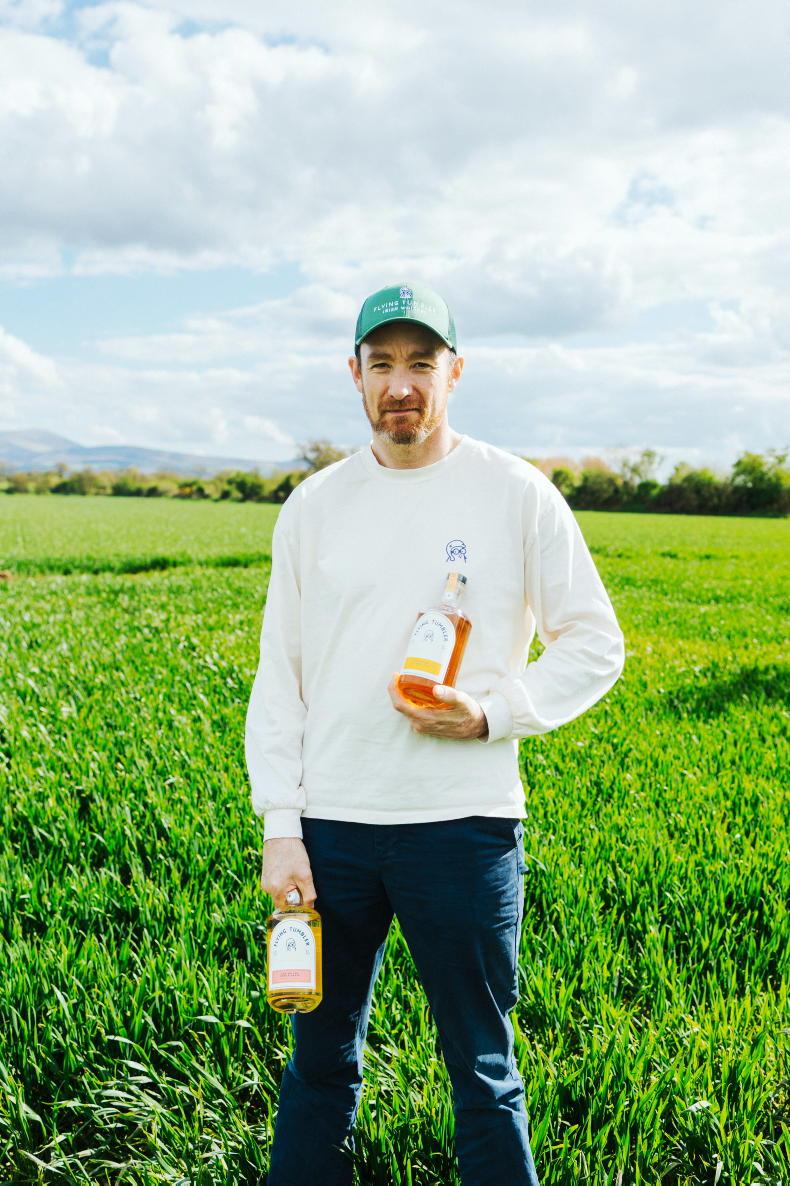
For Patrick, the journey to building an Irish whiskey brand began long before the first bottle was produced. It was shaped by family, farming, entrepreneurship and, ultimately, the desire to return home.
Having trained and worked as a solicitor in Ireland, Patrick moved to London, where he established and ran a successful law firm between 2013 and 2019. However, after spending a decade in the UK, and with his wife Jill having lived there for 15 years, the arrival of their first child prompted them to move home, as they wanted to raise their children in Ireland.
For a period, Patrick balanced working as a lawyer in London while living in Ireland, but when the opportunity arose to exit the business in 2020, he seized it.
At the same time, another venture was beginning to gather momentum.
“From 2017, I had been working on this small whiskey idea and from 2020, I was able to devote more time to it,” he says.
The foundations of the business were built through family connections and complementary skills. Patrick’s brother Thomas, who had already spent 15 years working in sales in Boston, became involved at an early stage, while his cousin Eric worked on the brand’s design and building an identity.
“Between sales, brand design and operations, we had a good basis for a company,” says Patrick.
By 2023, Patrick had also secured a place on the LEADER programme, while the business had already begun establishing itself in the United States, with the support of a number of American investors.
Family roots in Carlow
The story of the business is deeply connected to Patrick’s family farm at Ballytarsna, Carlow.
In the early 1940s, Patrick’s grandparents purchased Larch Grove Farm, developing it as a traditional mixed farm with livestock, horses, sheep, cattle and tillage crops, which included sugar beet.
“During the 1970s, my dad Tom took over the enterprise and switched things up, in favour of more tillage, it was even an award-winning malting barley farm. Tom focused on potatoes, which really took over. At one point he was farming about 200ac of potatoes,” says Patrick
The potato enterprise expanded significantly, eventually producing more than 1,000 tonnes annually and supplying wholesale markets around the country.
Like many family businesses and farms, however, succession became a challenge, as the next generation pursued different careers.
“I went to London and there was no real succession plan for that tillage business. We looked at different options and ultimately that business was successfully wound down on Dad’s own terms,” says Patrick
Today, Tom is semi-retired but continues to farm some of the land through grain and crop production, with the support of contractors.
The farm’s historic buildings and potato storage units are now being transformed into an important part of Flying Tumbler’s future.
Standing among an active construction site, Patrick can already see the finished vision taking shape.
“It looks really raw at the moment, because construction only started in February,” says Patrick.
Supporting local businesses has been a key priority throughout the project.
“I love working with local people. The main contractors and electrical workers are all local and I really wanted to do that through this project.”
Significant reclamation and renovation work has already been completed, including site preparation, demolition and rebuilding sections of the existing structures.
“We have done reclamation work around the two units, carried out some demolition work and rebuilt firewalls where required. As we progress, one of the units will effectively be dropped onto the existing floors.”
Parick is hoping to have construction work complete by September.
“The first thing we had was a footprint and existing units, and wanted to work with what we had. We brought them up to the standard required to be home for our business, for whiskey maturation and storage approval. It’s an expensive job, but at the end of it we will have two large storage units, with all the required infastructure and installations.”
Preserving the buildings originally developed by previous generations of the family has been particularly meaningful.
“Being able to walk into the space and remember it from the 80s when it was something completely different, and then see it completed as part of this project, is something very special,” he says.
Flying Tumbler was created around a shared sense of place and belonging.
We wanted something adventurous and fun that reflected the spirit of the brand. We call him Paddy the Pigeon, he flaps off on daily adventures, gets himself into a little bit of mischief
“The three original founders were all living abroad at different stages, but we always found our way back here. It became a place that shaped our youth,” says Patrick.
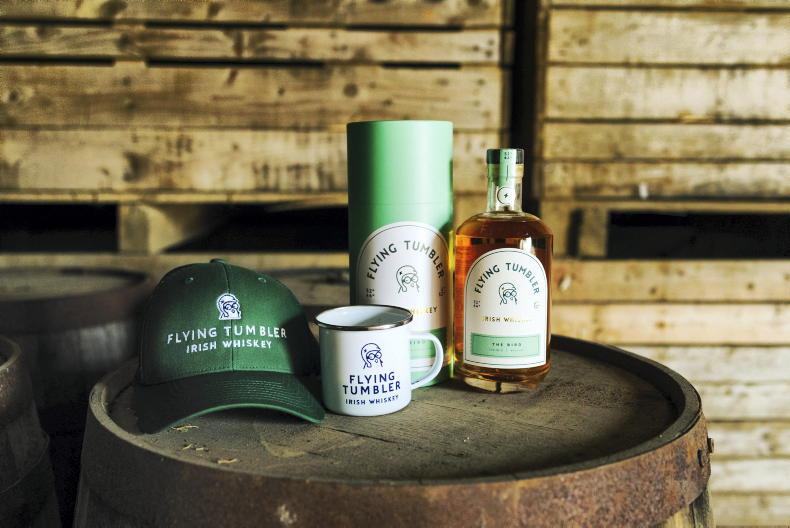
The brand’s mascot, Paddy the Pigeon, was designed as a modern and playful interpretation of one of Ireland’s most familiar birds.
“We wanted something adventurous and fun that reflected the spirit of the brand. We call him Paddy the Pigeon, he flaps off on daily adventures, gets himself into a little bit of mischief. He’s called Tumbler because, like most busy pigeons, he doesn’t always fly straight – he tumbles,” says Patrick.
The Flying Tumbler has continued to expand it’s portfolio, with three distinct whiskey expressions.
The first released was ‘The Bird’, a bright and balanced Irish whiskey created from a blend of triple-distilled single grain and single malt whiskey, matured in ex-bourbon casks.
“The Bird is designed to travel well. It’s smooth, but has plenty of character.”
The Roller, a single grain whiskey matured in first-fill, ex-bourbon barrels and finished in Jamaican rum casks, offers a completely different experience.
“It’s a real party starter as we like to call it, super smooth, with loads of vanilla and banana notes on that Jamaican rum cask finish.”
The final whiskey is ‘The Tippler’, named after another breed of pigeons.
“It’s a blend of pot still and grain whiskeys matured over nine years and aged in three different kind of casks, first fill bourbon, sherry and rye casks. It has a distinctive spicy note, which is ideal for a whiskey base for a cocktail,” explains Patrick.
Growing the range
The company’s latest developmental project is expected to create 15 jobs, while supporting agricultural diversification and rural enterprise in Co Carlow.
Backed by €200,000 in LEADER funding, the investment represents a significant milestone for both the business and the local economy.
For Patrick, however, success is measured by more than commercial growth.
His motivation remains closely tied to the family and preserving a connection to a place he calls home.
“My belief is you have to have a really strong north star goal, for me, it’s always been where we are now and doing something that ensures we can continue to come back here and bring people here.”
“Everything I do is about the return home and Flying Tumbler for me is about making that happen.”
See flyingtumbler.com



SHARING OPTIONS