


In the past, most people, when they began to grow old and lose their independence, expected to be cared for by their families or take up residence in a nursing home. However, times, society and family structures have changed. People are living longer and adult children live far away or may have emigrated. So, a care gap exists. One way to fill this is with homecare.
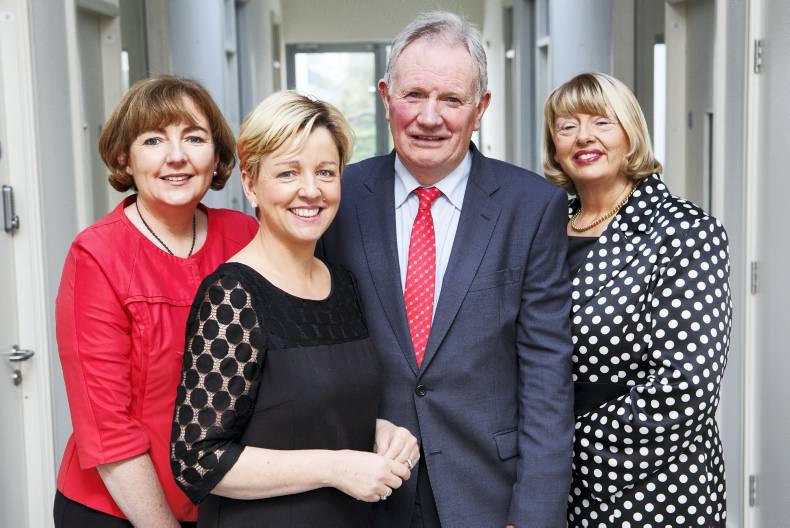
Much like the GAA and the credit union, some homecare services are community-based, with voluntary boards, staff that are paid a proper wage and reserves that go back into community projects. One such social economy business is CareBright, which is based in Limerick and manages its care service from a base in Croom Community Enterprise Centre, which is located on Hospital Road in Co Limerick.
According to CareBright general manager Colette Ryan, the concept of homecare hasn’t been around for long. In the case of CareBright, its foundations go back 18 years to a government white paper on elder care. Following that, Ballyhoura Development, IRD Duhallow, FAS and the Local Enterprise board came together to do something about rural isolation and a severe lack of locally based employment.
Small beginnings
The care service began as a small CE scheme based in Churchtown in north Cork and Hospital in east Limerick. Local contacts provided the clients. The CE scheme developed into the Rural Community Care Network (RCCN) in Ballyhoura and the Meals on Wheels initiative in IRD Duhallow.
Then, in the mid-2000s, Mary Harney established the first homecare programme. That initiative allowed this community project to move from being a CE scheme to becoming a service provider for the HSE. And it’s been on a growth curve ever since. Colette says much of the credit for this goes to its voluntary board members, led by Richard Kennedy, Limerick farmer and chair of CareBright, the management team and staff who were both great innovators and drivers of the project.
“Today, we employ 250 carers and six chiropodists, a management and admin team. We provide over 130,000 hours of care to over 600 clients across Limerick city and county, all of north Cork and as far as Toomevara in north Tipperary.
Individual plans to suit individuals Monica Hanley is one of five care managers with CareBright. Similar to each of them, she is a qualified nurse with long experience in the homecare sector.
“I coordinate the care plan for each person in our care and reassess it, as required, along with the primary care team.
“That team includes the public health nurse, the occupational and physiotherapists, the speech and language therapist, the GP and family members. The care needs of every person are constantly monitored and changed according to their needs. As far as possible, the client would have the same carer every week,” says Monica.
“All our clients live in their own home but may be losing some independence. Their ability to wash and dress themselves may be deteriorating. Their mobility mightn’t be as good as it once was.
“Many of them are very isolated, with families living far away or abroad. They fear the future and losing independence and are reluctant to let strangers into their homes. In some cases, their living conditions are very poor. We have people who suffered financial hardship during the recession. Many are not aware of the supports available to them. And, of course, the fear of break-ins and attacks is huge. Without the support our carers give, nursing homes would be jammed.”
Needs not means-based system
What some people might not know is that everyone is entitled to homecare. It is needs rather than a means-based system. The maximum is 21 free hours and family members can top up these hours at an affordable cost, which is subject to a maximum 40% tax relief. Colette says that this year the HSE has granted more hours, which means they can react faster to need.
However, small social economy businesses such as CareBright can find it hard to compete against commercialised international franchises with big budgets.
“Social economy businesses like ours find it hard to win HSE tenders because we are local rather than national. Next year, CareBright has big plans for expansion in Cork and Kerry. We are also embarking on a new and exciting project on dementia care.
“This innovative concept is unique to Ireland,” says Majella Murphy, business development manager.
It is based on the Scandinavian household model which allows people to live well with dementia, while enabling them to continue their daily activities.
Support and training for carers
CareBright employs 250 carers, all trained to FETAC Level 5. It has its own training manager and training academy for both internal and external use. It also trains family members in caring and manual handling and, in most cases, this training is free.
When taking on a carer, CareBright likes them to have a minimum of two of the eight care modules completed, along with experience in a community/clinical setting. Some experience, including helping an aged relative, would be useful. Both men and women of all ages are welcome to apply.
“Carers have been professionalised and now, instead of earning some pin-money, many are the main breadwinners in their family. This includes farming families who, because of low farm incomes, are on Farm Assist. We give them the opportunity to work locally. The work suits their lifestyle and we have very good retention levels,” says Colette.
However, the carers do face some challenges.
“If the care-client is hospitalised or goes into respite, the HSE no longer grant aids that client. This has a knock-on effect on the carer who may not be able to sign on for unemployment benefit as they may still have some care hours. The social welfare system needs to recognise this.”
>> Case study
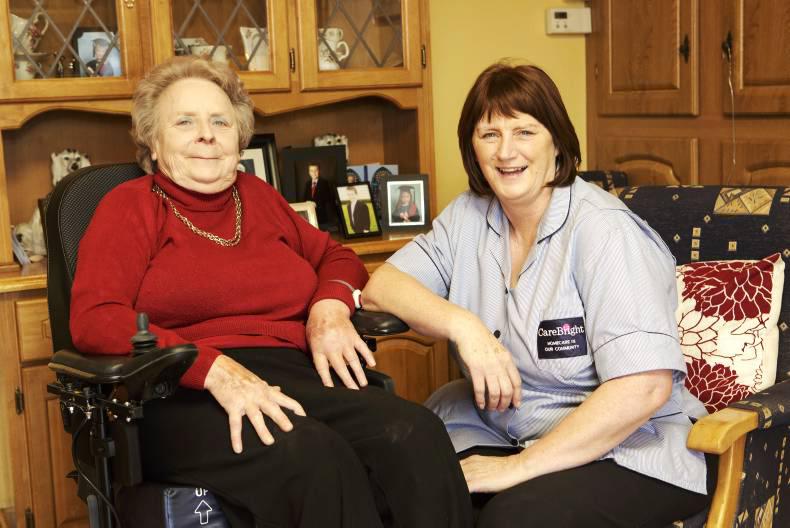
Joan Finn has seen both sides of the care equation, first as a carer and now as someone who is being cared for.
“I’m 53 years living in this house and I sincerely hope that when the Man above calls me it will be from my own home.”
However, Joan didn’t always feel this way. Her husband Frank died in 2013 and shortly after she fell and broke her elbow.
“I was in respite and I didn’t want to come home. I miss Frank terribly as we’d been very happy together. I have great sons and daughters-in-law and neighbours, but having a carer makes all the difference.”
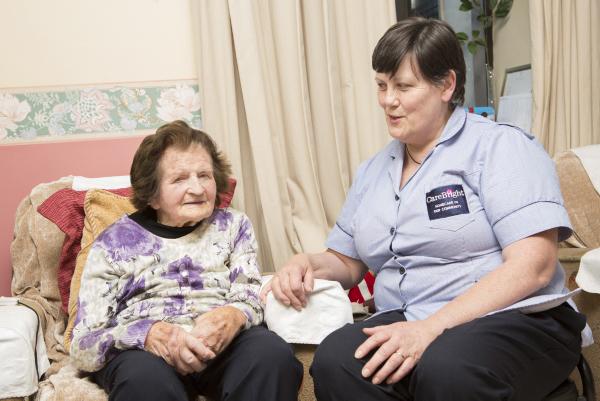
Her carer is Helen O’Sullivan and she has known Joan all her life. Helen calls in every morning and again at 8pm and they get on very well together.
Helen has worked as a carer with CareBright for eight years. She previously worked with Kerry Agri Business. She’s nothing but good to say about the job.
“I love it and I get great satisfaction from it. People trust you and rely on you and you get to know all the family. I did all my courses and all of us constantly upskill. It’s just a great job.”
For further details call 1800-303-412 or look up www.CareBright.ie



SHARING OPTIONS