



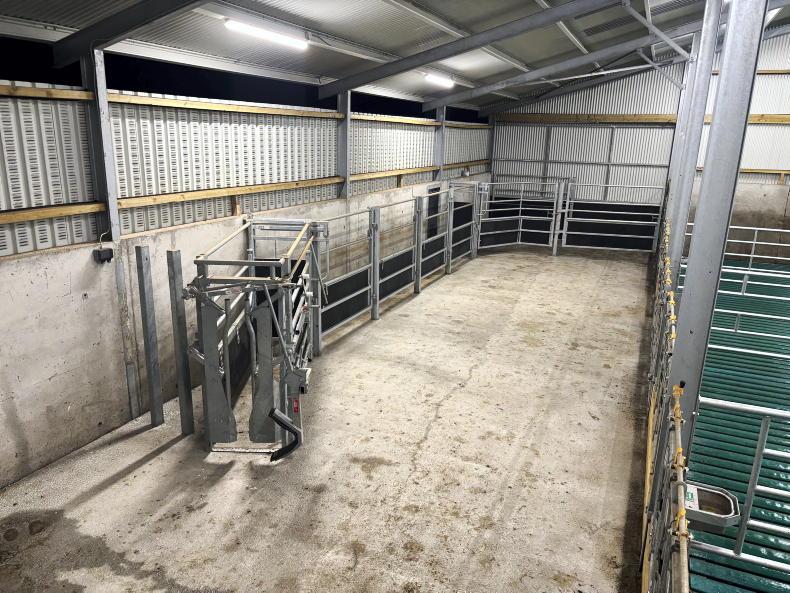
More and more farmers are coming to the realisation that the day of sub-standard handling for cattle is gone. TAMS III has played its role in this, and for its faults, one of the great things about the scheme is the 60% grant that is available for cattle and sheep handling facilities, which has prompted many farmers to invest money back into their farms. It’s also hoped that farmers who have been benefitting from increased farm gate price for beef cattle will also invest.
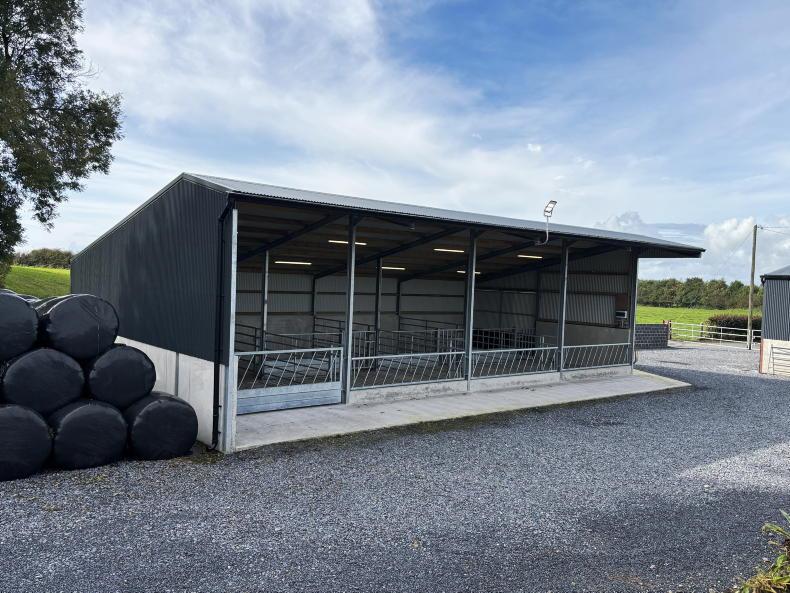
I was lucky to visit one such farmer who has invested in some top-class facilities of late, located in the northwest. Featuring a double, four-bay, slatted shed, which is impressive in its own right, a bespoke handling unit located under roof is the crown jewel of this impressive build.
While the farmer was happy to have the Irish Farmers Journal to visit, they preferred to remain anonymous.
Out with the old
An older slatted shed was on-site alongside an external handling unit, both of which the farm had outgrown. The external handling unit in particular was past its prime, and with operator safety in mind, it was decided that whatever development was to happen, a new, safer handling unit would be incorporated. This older handling unit was removed and placed in another area of the farm for light use.
The shed that had been previously in use before the new build was just a two-bay single.
Space was tight and having no room for a sick or injured animal to be isolated was another factor that prompted the farmer to invest.
The farmer didn’t rush the development, spending time on the road looking at other buildings and attending the Ploughing; gathering ideas on what would work best for them, while also attending Athenry Mart to view the work that Niall Barrett Engineering was completing there at the time.
This is something I’d recommend to any farmer, and the results speak for themselves; there are no snags in the new build that the farmer wished they had done differently, because they put time and consideration into everything.


Layout
The new build has been completed to TAMS specification. Originally, the farmer drew up the plans to have a five-bay shed; the three middle bays would be a standard 4.8m in width, with the other two bays at the end being 3m.
The initial plan was to use these shorter bays to move cattle around the shed to and from the handling area, but this idea was ultimately scrapped. Instead, an external area to the rear of the shed is to be developed that will allow for the easy and safe movement of cattle from one side of the shed to the other.
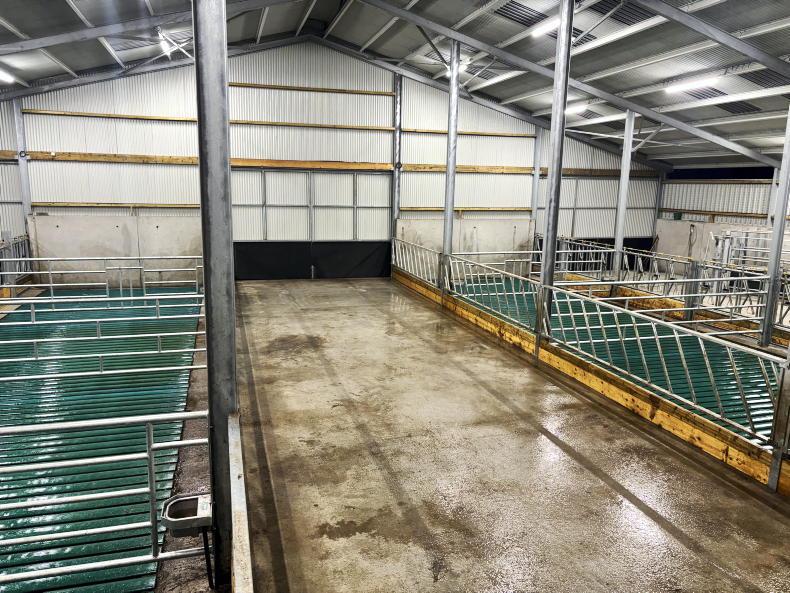
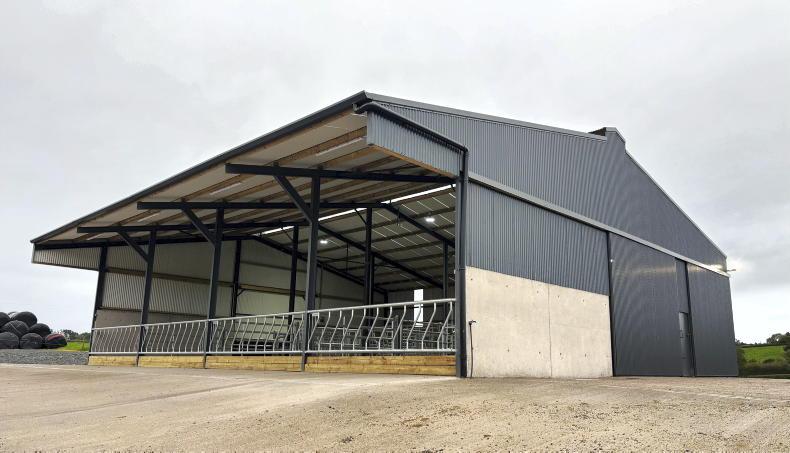
As it stands now, the shed is laid out in four bays; the two bays at each end measure your standard 4.8m, with the two inside bays measuring 5.1m in length, which keeps the floor area the same as the former plan.
A large 6m-wide central passage runs through the middle of the shed, with straight feed barriers feeding off this. The passageway has been kept several inches higher than the slatted ones are, as per advice from Damien Ryan, Cong, who was the main contractor on the job.
Inside the pens, there is 450mm of toe space facing the central passageway with a 14ft 6in slat behind this, overlayed with Comfort slat mats. Pens are divided with a five-rail gate, with the two end bays also incorporating creep gates in them. While the farmer is currently operating a store to beef system, they wanted the flexibility to change enterprise down the road if they wished. Condon drinkers with rump rails are fitted, with an additional 150mm of toe space to the rear of the pen, facing out on to the dry lie back/feed passage.
Facing out onto this area are head locking barriers that have been split in two to provide a shorter gate to allow for the easy removal of animals for pens. This feed area is primarily used for meal feeding, with silage fed from the central feed barrier.


Handling unit
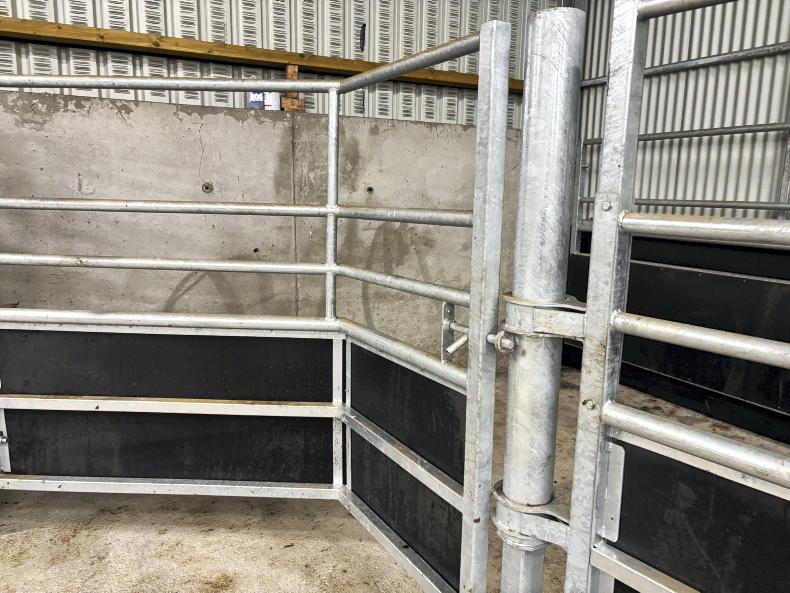
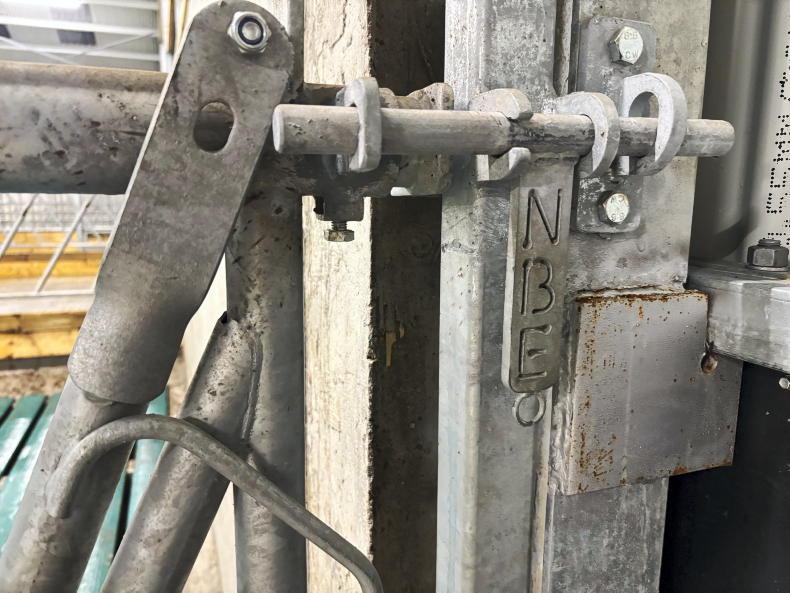
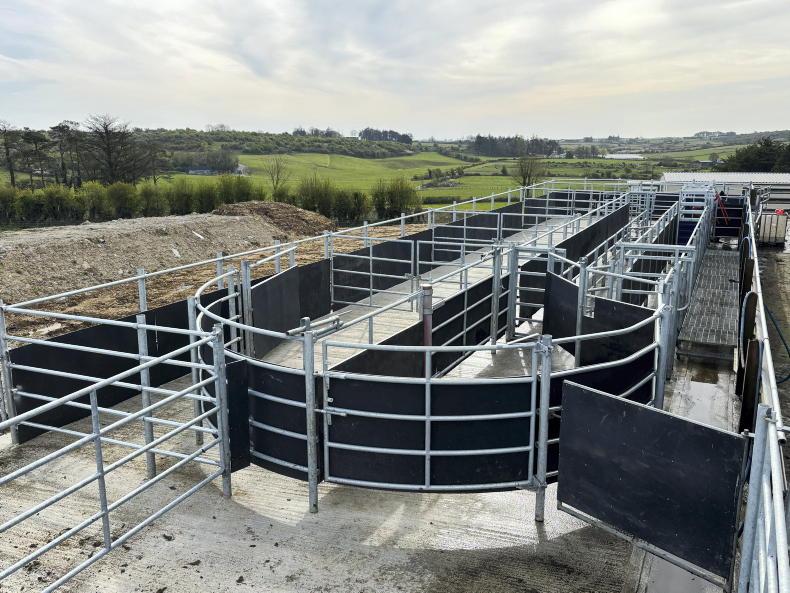
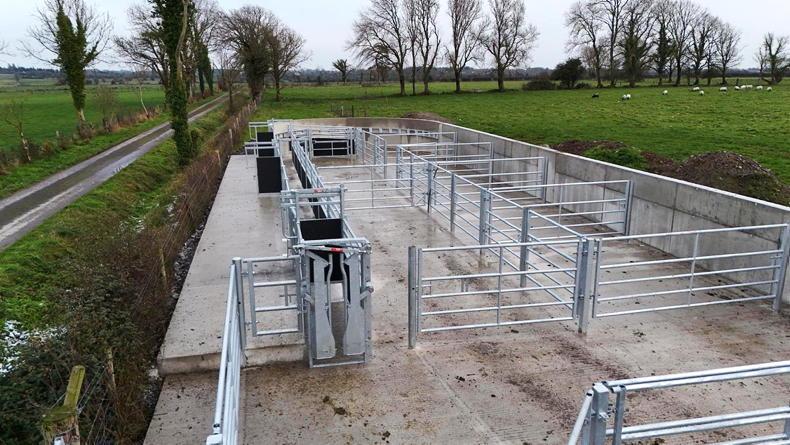
A seriously impressive and robust handling unit has been installed in one of these passageways, each measuring 5.4m in width. The farmer worked carefully with Niall Barrett Engineering to design this bespoke unit to fit the farmer’s needs. Cattle are funnelled in to the chute at one end through a 360° forcing gate, hung off a round post and fitted with grease points. An angled gate between the chute end and this post directs cattle into the chute with ease, with cattle moving in an anti-clockwise way. This round post is removable to allow access with a tractor if necessary.
Five-panelled gates make up the chute. The chute height is unusually tall, at 2m to the top rail, but this is what the farmer wished for and it makes working with strong, finished animals very safe. Bars in the middle of these gates can be removed if necessary for clipping or injecting, with the bottom three bars fitted out with stock board to prevent kicks or animals getting their feet caught in bars.
A hinged step for working along the length of the chute is currently being designed that will fold out of the way when not in use.
The headstock of the chute is again designed by Niall Barrett Engineering and has been angled out from the wall to give access to both sides of the animal. One particular feature I like about this is that two heavy-duty posts have been installed on the inside to create a safe working/refuge area for the farmer.
A guillotine gate allows animals to enter the headstock, with a size-adjustable skulling gate being operated by a lever from the rear. A ratcheted head scoop that tucks neatly out of the way has also been fitted.
Stock board covers the bottom three rails in a similar way to the chute, but this time this panel can be removed for access to the underside/legs of the animal, while again the middle bars along the body of the animal can be removed.
These combined offer unparallel access to all areas of the animal, with the unit being able to function as a caesarean gate down the road, if required.


Other features of note
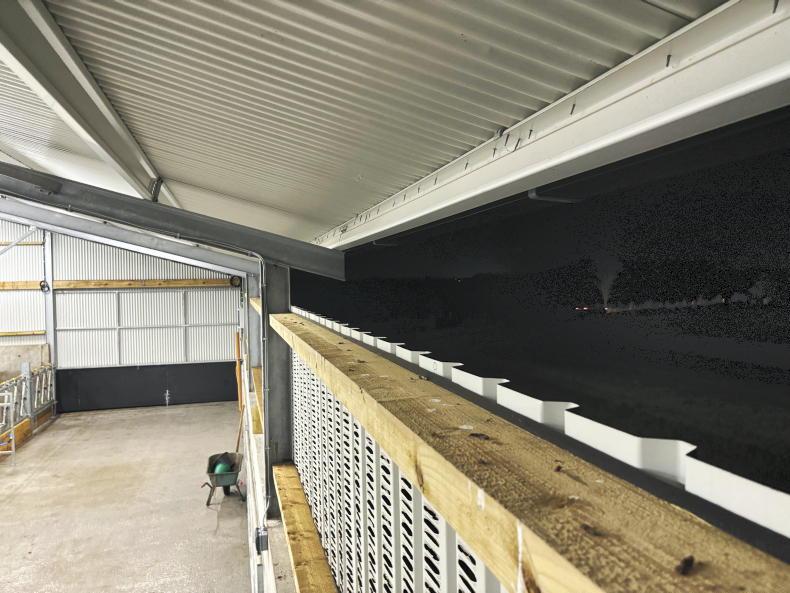
The overall height of the shed extends to 8.31m to the top of the raised canopy which lies over the central feed passage, with this acting as the air outlet. Ample air inlet space has been created by way of an overhand and eave gap along both sides, with vented sheeting affixed underneath. All structural steel is hot-dipped galvanised, while PVC-coated steel purlins have been used in the roof owing to the span of the bays, with the underside of the steel cladding on the roof also PVC-coated. LED lighting is fitted throughout the shed and over the handling area, which makes it pleasant to work in, completed by Malachy Gallagher Electrical, while a total of 32 reinforced skylights allow ample light to get in during the day.


Rolls Royce drystock handling
A hat tip must go to Damian Ryan and Niall Barrett and their crews for a top-class finish. Both worked well together and the results speak for themselves. The handling unit in particular is not something you see every day on a drystock farm, but it is one of the safest ones I have come across, and safety is everything when it comes to handling stock. A thank you must go to the farmer in question who was kind enough to invite me on-site, but humble enough to wish to remain anonymous. I wish them every success in using their impressive new build.









SHARING OPTIONS