Inheritance tax is rarely at the forefront of people’s minds until it lands, suddenly and brutally, on a grieving family.
For more than three years, campaigners with End Discrimination in Inheritance Tax for Childless Citizens (EDIT) have been pressing Ireland’s political leaders to confront what they describe as one of the country’s most overlooked forms of inequality: the treatment of those who do not have children and their loved ones under the inheritance tax system.
EDIT spokesperson James Sexton estimates this issues affects around one million childless citizens across the country.
“The rules as they exist at the moment are not fair. They are levied disproportionately at the families and loved ones of childless citizens, and that has to be reformed,” says James.
Their argument is straightforward: the current inheritance tax regime is structurally discriminatory, and only a radical shift – not small tweaks – will address that.
With a series of high-level political meetings completed and more scheduled in the coming weeks, pressure is mounting on party leaders to move beyond more general statements and set out a clear position on inheritance tax reform.
At the heart of the campaign is one clear reform that EDIT is calling for; an index-linked lifetime tax-free threshold of €460,000 for every citizen, regardless of whether they have children.
“That €460,000 hasn’t just been plucked out of thin air. That number is the combined thresholds that currently exist that a child could potentially inherit,” explains James.
Under the current system, a child in Ireland can receive:
1. €400,000 tax free from their parents;
2. €40,000 tax free from an uncle or aunt;
3. €20,000 tax free from a ‘stranger’ or non relative.
The rules as they exist at the moment are not fair, they are levied disproportionally at the families and loved ones of childless citizens
Combined, this amounts to €460,000 but is only available if the person happens to be a child beneficiary, and only in specific relationship bands.
Childless citizens, and those whose closest relationships fall outside the parent-child category, can face a significantly higher tax burden when leaving their assets to siblings, nieces, nephews, lifelong friends or carers.
“We believe that €460,000 should be available to every citizen, regardless of whether you are lucky enough to receive it from your parents or not,” says James.
Core proposal
The difficulty in implementing this, from a political point of view, is the current tax system brings in over €1bn in revenue for the State. James emphasises that a progressive tax system could be applied to anything above the €460,000 to still bring in revenue while making it fair for those without children.
“It would treat every single citizen in this country equally. Increasing the current group thresholds isn’t going to remove the discrimination that exists in our inheritance tax regime. The only way that you can do it is a lifetime tax rate threshold that would be available to every citizen and anything above that could be a progressive tax system,” says James.
The group has suggested bands rising in increments of €100,000 with rates stepping up by 5%, 10%, 15% and so on, up to 40%, replacing the current flat 33% rate.
“The rules as they exist at the moment are not fair, they are levied disproportionally at the families and loved ones of childless citizens,” says James.
The group is not advocating for the removal of Agricultural Relief or Business Relief.
“We’re absolutely not advocating for the removal of agricultural tax reliefs,” James stresses.
“Why would anyone build up a successful business if you couldn’t pass it onto the next generation, inheritance tax is a really good thing,” he explains.
While the campaign represents citizens without children all across society, this debate has particular resonance in rural Ireland, where succession, land and property remain deeply sensitive topics.
Farm families already navigate a complex landscape of agricultural reliefs and specific thresholds, and many are acutely aware that poor planning can be costly.
“For farmers, it is something they have to think about, what the succession plan is, because the farm is a business. People who are not farming and might just have a home as an asset, they keep putting it on the long finger. It isn’t something they think about; 70% of adults in Ireland do not have a formal will,” says James.
There is a huge amount of work to be done on that issue, according to James. He believes when anyone buys a house or a significant asset, it should be mandatory for people to make a will.
A need for change
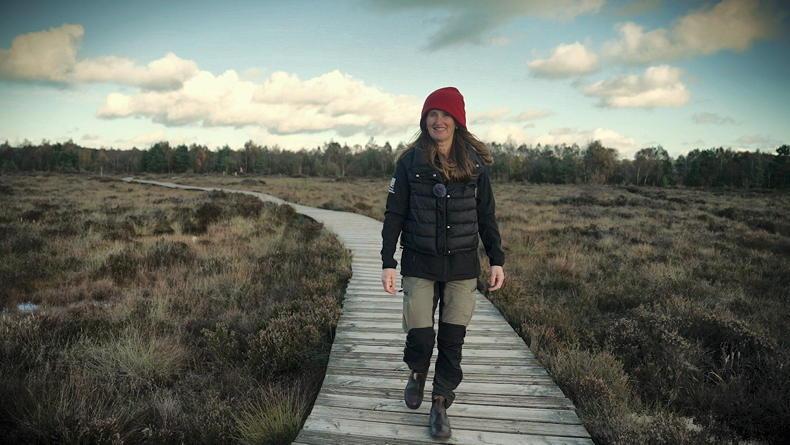
Fiona Dunne from the Abbeyleix Bog Project in Co Laois is also calling for change, “We need action, this legislation is 50 years old.
“I am married, I have no children, managed to buy my own home as a young woman, in spite of the odds. I had a teacher’s salary and was a normal PAYE worker but at the time, I couldn’t buy my own home without the signature of a male guarantor,” says Fiona.
While trying to organise her affairs and be responsible, ‘not to leave any messes behind for people’ Fiona met with a solicitor and realised the impact of the inheritance tax.
“I actually call this a taxation on childless people,” says Fiona.
“That’s what it is in effect, it’s a tax on being childless, and people don’t realise that until they get to a stage of their life where they are trying to organise their affairs,” she explains.
Inheritance tax and succession is so challenging to try and resolve in a way that you think is fair, fair to your family and people you might want to care for, especially adult dependents.
“One of the things that I think happens sometimes when people hear the word inheritance tax is that they think about wealthy people.
In EDIT, we are really against the idea of a favourite niece or nephew as we all know how that plays out in families. Especially in rural communities with a home or a small bit of land, it causes incredible anguish and stress and family breakup
“Unfortunately, in the country we’re living in nowadays, it is considered almost wealthy to have a home of your own privately owned,” says Fiona.
One of the other stressful aspects for her is the system encourages favouritism of certain family members which can cause breakdown in relationships.
“In EDIT, we are really against the idea of a favourite niece or nephew as we all know how that plays out in families. Especially in rural communities with a home or a small bit of land, it causes incredible anguish and stress and family breakup.
“Every day of the week you hear about the impact, so we want a system that allows us the fairness and choice that people with children have by default,” says Fiona.
EDIT have had success in bringing this issue to the attention of politicians and political groups since Irish Country Living covered this issue last year during our succession series.
The group has met with Taoiseach Micheál Martin and Tánaiste Simon Harris along with several other ministers including Minister Seán Canney, Minister Jerry Buttimer and other political parties.
They have also reached out to Minister Norma Foley through repeated requests and welcome the opportunity to meet with her and her department.
James says when meeting Government officials, the numbers speak for themselves.
“Let’s take a €600,000 home, bought and paid for over a lifetime by a childless person, and inherited by a much-loved brother, sister, lifelong friend or carer; that will see them write a cheque to Revenue for €184,800,” explains.
“A parent with children will get to pass that same home on tax free. We are saying to Government officials, where is the fairness in that?”