



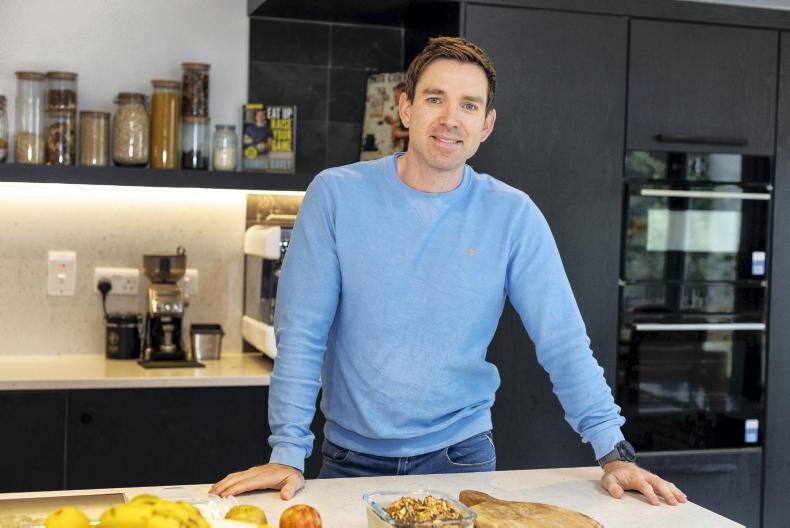
Storm Amy was just starting to pick up when Daniel Davey welcomed Irish Country Living into his Dublin home last week. This performance nutritionist, coach and author is always focused on the job at hand – and not even a mad dash to rescue some garden furniture from being blown away by the winds could distract him from our interview.
A kitchen may be the heart of the home, but in Daniels’ house, it is also the most hard-working room. It is here where he films food and nutrition videos for his 190,000 followers on social media (@danieldavey), takes calls with clients, and cooks dinner for his wife, Sandra, and his two young daughters.
The kitchen, complete with matte black cupboards, white countertops and wooden flooring, is flooded with natural light, and it’s a space that may already be familiar to viewers of RTÉ Room to Improve.
In an episode aired in January 2024, architect Dermot Bannon and quantity surveyor Claire Irwin helped transform Davey’s four-bed house in Knocklyon, turning the D-rated property into an A-rated energy efficient home – all with a budget of €130,000 and a grant from the SEAI. Participating in the show was different to what Daniel expected.
“I had thought that the Room to Improve experience was about being handed a design, and them leading the way. But the purpose is to understand what is right for you. I actually started thinking about: what do we want? What’s important to us?”
The monochrome kitchen tiles – handmade by a stonemason in Stradbally using cuttings from the stone wall of his family farm in Co Sligo – gesture towards what is important for Daniel. That is his agricultural roots, which feature very early on in our conversation. Daniel’s grandparents were dairy farmers and he grew up on a sheep and cattle farm in the Sligo townland of Chaffpool. The sheep farm is now run by his mother.
“I’m still very connected to it,” Daniel says. “People talk an awful lot about where your heart is. I have a feeling of presence at home in Sligo, on the farm, like nowhere else. I can’t travel anywhere in the world that gives me that same feeling, a proper sense of what it feels to be grounded.”
There’s a pause. “I couple that with being insanely ambitious and competitive,” Daniel continues. “This energy and drive in me that’s insatiable, that never stops, it never goes away.”
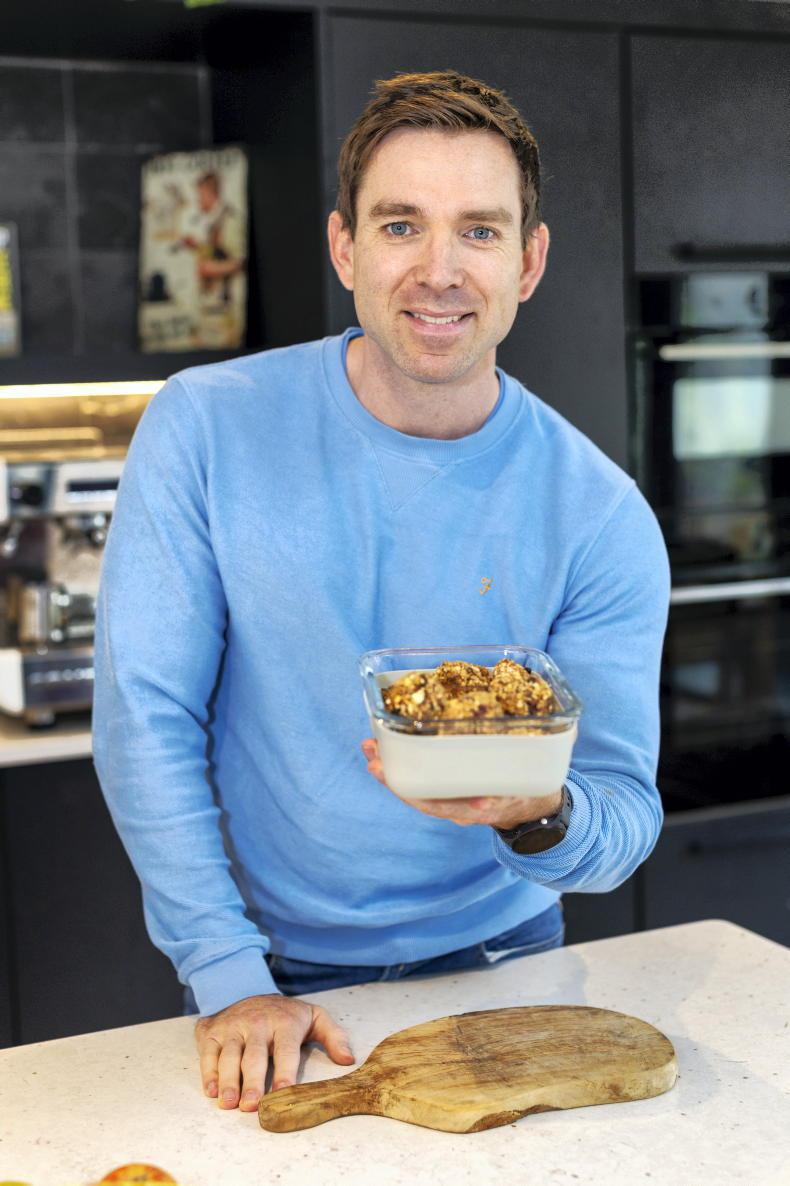
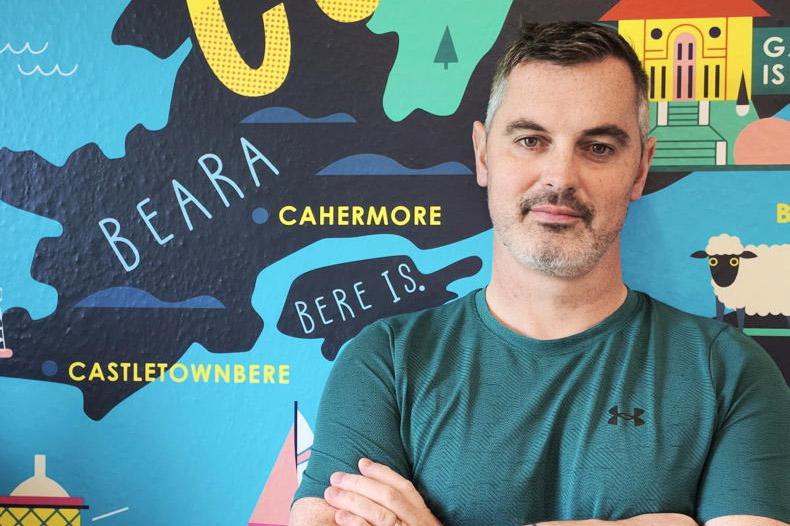
his home in Dublin. \Justin Lynch
Grounded approach
If Sligo is where Daniel finds his peace, sport is where he finds his drive. “My career has always been focused on sport. It gets my blood flowing, my energy up,” he explains.
The performance nutritionist spent 10 years working with two of the top teams in the country, Leinster Rugby and Dublin’s senior footballers. “Over the last three years, I’ve been trying to figure out what is the next phase,” he adds.
The transition out of elite sports was a natural one. Daniel wanted a change and he also wanted to express his creativity, which he has done by writing two cookbooks, sharing recipes and making videos. He also continues to work with a variety of clients, including athletes, on their nutrition and performance mindset, and he has just started a Masters in Sport and Exercise Psychology.
“So much of my work is about peoples’ mindset – their mindset towards their health and their goals and how you can help them better understand what influences their decisions day-to-day.”
Daniel’s views on health are rounded and balanced, with a focus on “the four pillars of performance”. Exercise, nutrition, sleep and mindset. Explaining what is a well-known concept in sport, Daniel holds that “none of these pillars work in isolation.”
‘Recovery’ is another word brandished in sport. “It’s so much more than physical. It’s about giving yourself space. You need fun, enjoyment, downtime, and recovery to be at your best in sport. Yet, in modern society, it’s achievement and success focused and always about the outcome.”
It can be difficult for professionals like Daniel to translate their nuanced messaging about health and wellness on social media, especially when online nutrition is notorious for pedaling the latest trends and faddy diets.
“I’m trying to do as much as I can to use social media as a vehicle for good, but I don’t want in any way to dilute the integrity or the credibility of my messaging,” Daniel says firmly. “I want to get as much credible information out into the world as I possibly can. I want it to be used to impact people’s health and their ability to perform, and I will use whatever options I have to do that.”
Daniel’s passion for positive nutrition is as relevant to sportspeople as it is to school children, as his latest interventions have shown. In September, Daniel used his online platform to investigate school lunches – not their nutritional value, but the actual time dedicated to eating.
Spurred on by a conversation with a friend about the time allocation for school lunches, particularly in primary schools, Daniel decided to look into it. “I found out very quickly that, in Ireland, there’s a discretionary 30-minute period of time for recreation and food. Most schools divide that time into 10 minutes for lunches and 20 for outdoor play. So I put it out on social media and I got the most insane response.”
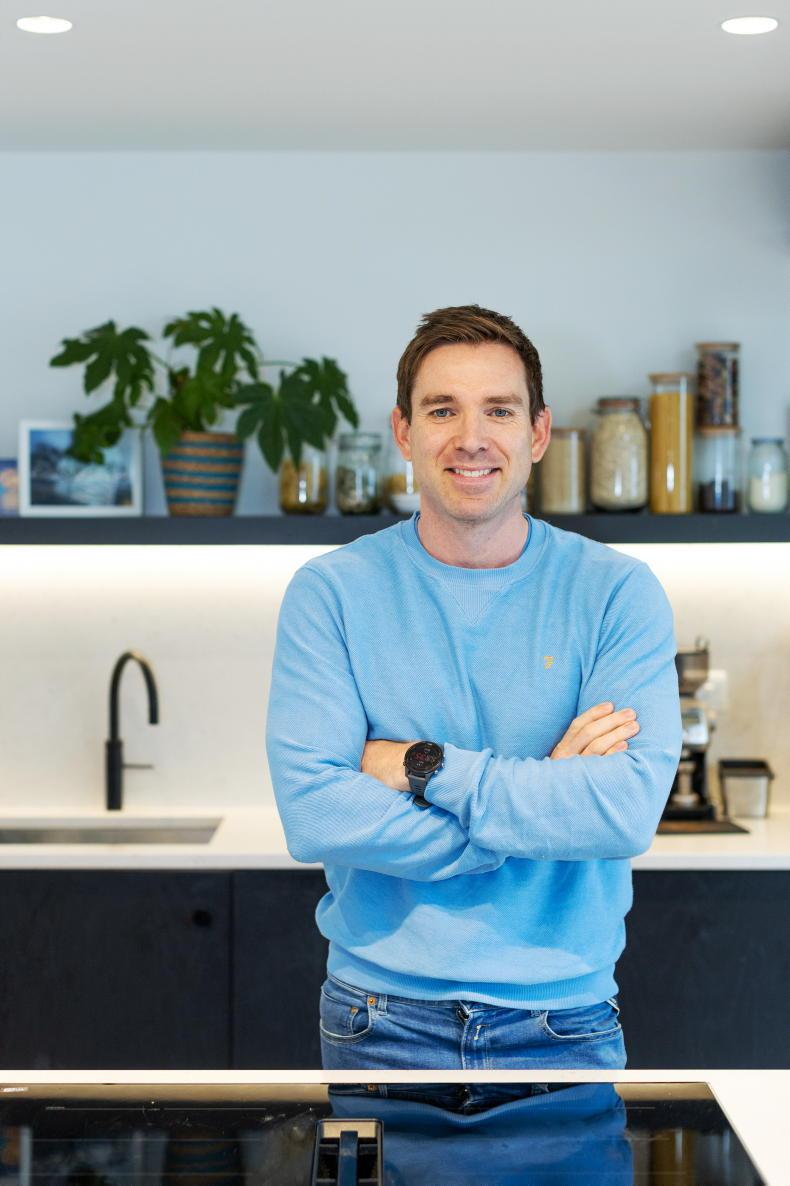
his home in Dublin. \Justin Lynch
The key headline finding, he explains, is that lunchtime at school is very rushed for children, meaning they do not have enough time to eat comfortably. As a result, food is often left uneaten, brought home crumpled and soggy in the corners of a lunchbox. In fact, 1,600 teachers and 2,934 parents responded to Daniel’s call-out on social media, with 56% of teachers reporting that lunchtime feels rushed for children while 90% of parents said their child regularly brings food home uneaten.
It’s an issue that Daniel is passionate about, not only as a nutritionist, but also as a father of two girls, with whom he cooks for every day.
“In modern society now, it’s about convenience,” he explains. “It’s about speed, and people will ask me about the slow cooker, the air fryer, every single thing that will shorten the amount of time invested in food prep, whereas the whole culture of wellbeing and health is about how you position food and how you position this within your life.”
The same goes for exercise, says Daniel. “People say, I don’t have time. But it’s a process. This is how you live.”
Women & Agriculture
Daniel will be bringing these messages home to his native Sligo for the Women & Agriculture conference on 23 October, where he will be speaking about mindset, nutrition, health and performance.
“I work with some female farmers, and an awful lot of women will have seen themselves as the carers and the minders. Somehow there’s this guilt that’s associated with taking time for yourself and that is the mentality that’s undermining people’s ability to be healthy.
“But it’s never too late to invest in your health, to invest in your nutrition, to invest in your movement, and to see that as a really valuable time that’s been allocated for you.”




SHARING OPTIONS