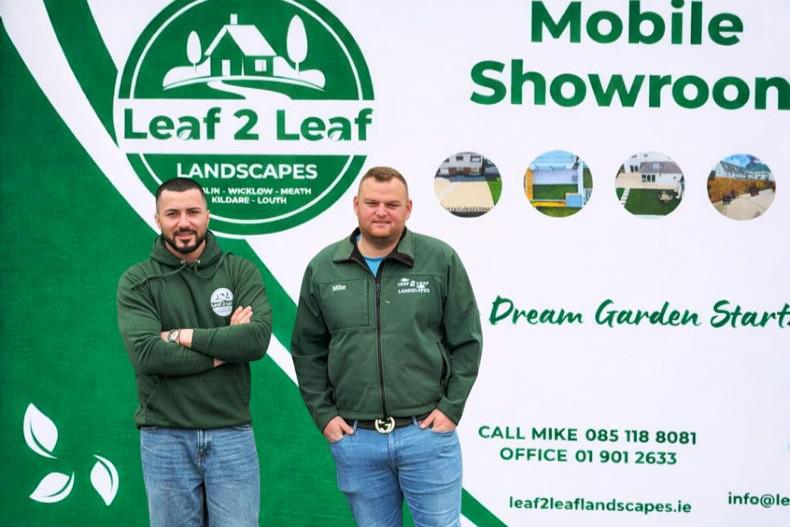
1. Michael O’Connor and Kakha Gigauri: New to Bloom, A Moment for Myself, sponsored by Leaf 2 Leaf Landscapes
Try to create at least one view in the garden that naturally makes you pause for a second, often the feeling of a space matters more than the size of it.
2. David Negus: Rooted in Resilience, sponsored by Myeloma Ireland
When I’m planning large beds, I use a series of kids’ hula hoops to help me with layouts. I arrange them (50cm diameter – 1m) to reserve space for shrubs. Then you can see where you can place your ground cover and perennials in between the hoops.
3. Scott D Renwick: Where Trust Takes Root, sponsored by Marks & Spencer
Good design isn’t about showing off, following trends, or pushing boundaries for the sake of it. Good design is about listening. Every garden tells you what it wants to be if you pay attention. Light, soil, drainage, topography, assess the client’s brief and consider how the space will actually function. The quality of the design is directly reflected in the designer’s ability to listen.
4. Daibhí Mac Domhnaill: Fingal Nurturing Communities Through Nature, sponsored by Fingal County Council
It’s simple, design for wildlife. There’s nothing more entertaining than bird watching from the couch.
5. Tom Bradford: The Plant Collector’s Balcony
For indoor plants, water with warm rain water to give them an outdoor shower in summer where possible. Rainfall gathers nutrients from the atmosphere as it falls and feeds your plants.
6. Joe Eustace: The ‘Future In Mind’ Garden, sponsored by The Mental Health Commission
I try to encourage clients to remove their lawns and integrate planting instead, which provides enclosure to seating areas and a whole host of ecological benefits. Kids can then use the green at the centre of a housing estate to play with other kids.
7. Linda McKeown: Nature in Balance, sponsored by Bord Bia and the Dept of Agriculture, Food and the Marine (DAFM)
Think about who will actually be using the garden that you’re designing to make sure it aligns, and remember to create a design that is functional and beautiful too.
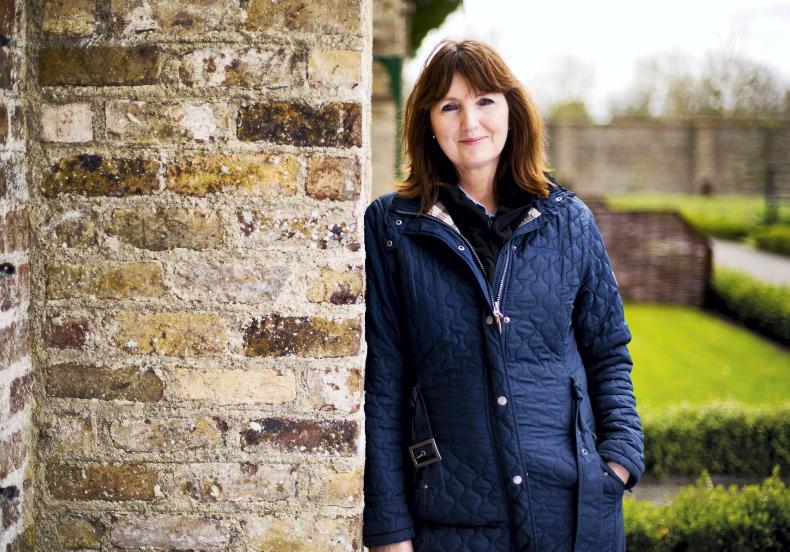
Linda McKeown. / Chris Bellew/ Fennell Photography
8. Robert Moore: Empowering at
Every Step, sponsored by Marie Keating Foundation
Look at the space in 3D – you need low, middle and high elements to complete a design. So, whether that’s hard structures, planting, or different textures, you want something at ground level, mid-level and then something that draws your eye upward for balance.
9. Declan McKenna: Celebrity Dream Garden, inspired by Brendan Courtney – sponsored by Bord Bia
Think about design that will look good year-round. That could include evergreen planting, ornamental grasses, raised beds and even colourful feature pots for plants.
10. Kerrie Gardiner: Show garden and horticulture content manager, Bord Bia Bloom
First, think of the orientation of your plot and where the sun is going to be when you’re most likely to use it. Next, try and have a design that will adapt with your lifestyle not just for now but to future-proof your garden for different life stages. Finally, where you can use as many trees and hedges as possible.
11. Josh Fenton: Citroën Family Flexible Garden
If you’re working with a smaller area, try to make your spaces adaptable to different uses.

Joshua Fenton.
12. Jack Donovan: Alltar – Bord Bia Bloom’s 2026 Cultivating Talent Winner
Leave room for spontaneity in your garden. Some of the most atmospheric space comes from those that embrace change and natural succession as plants self-seed. Work with nature as it will always produce the most resilient and beautiful planting schemes.
13. Carleen Osbourne: I Can Create That Garden with Q102
Know where you’re planting. Look at the aspect of the garden: is it a sunny or shady spot? Plants are expensive, so it’s important to make sure that you select ones that go with the most suitable part of the garden so that it will grow well. If you’re planting under a tree, you obviously need a shady plant, and keep plants watered as this is often overlooked in the early stages.
14. Benny Magennis: The Minions
& Monsters Garden, sponsored by Universal Pictures
Try out a green wall and experiment with foliage plants, such as Heuchera varieties, to create a living picture. This is a really impactful way to add colour, texture and visual interest to small and large spaces alike. Just make sure to pick plants that suit the orientation.
15. Paraic Woods: Met Éireann’s 90th Anniversary: Past, Present and Future
Something beneficial for new-build homeowners to consider is the garden before they even design the house. It tends to be an afterthought, but spending time in advance means that you won’t have doors or walls that are in the wrong place, or even driveways that end up limiting design solutions.
16. Barry Kavanagh: The Birdwatcher’s Balcony Garden, sponsored by RTÉ Radio 1 and ‘Mooney Goes Wild’
Not everyone has a large outdoor space, but this shouldn’t hold people back from making it a nice area to be in. This year I’m designing a balcony garden at Bloom which is only 5m x 2m, so my biggest tip when designing a small space is not to be afraid to go big and bold with it.
17. Debbie Brophy: The Master
Gardener’s Balcony
Definitely start by building up your structure – you want to add volume, whether with trees or hard materials. Then make sure to add lots of plants for colour, texture, groundcover or height.
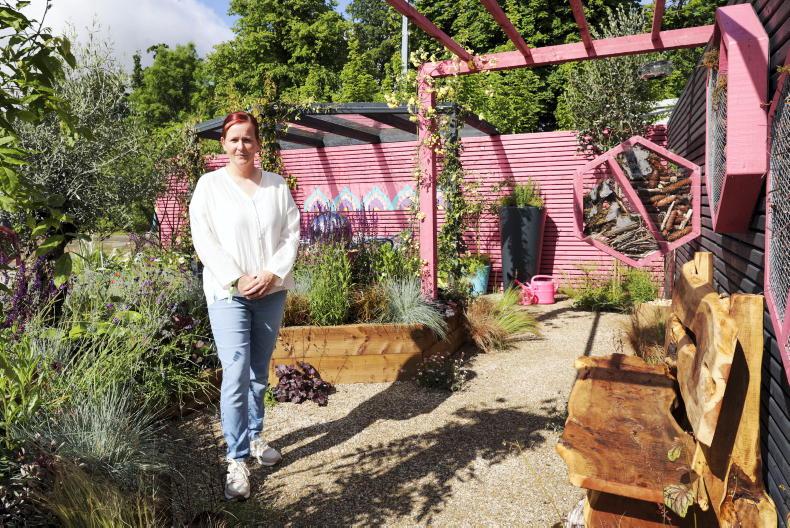
Debbie Brophy. / Fennell Photography
18. Oliver Schurmann: Shared Roots, Common Shade, sponsored by the European Commission
Instead of adding formal edging between paved surfaces and planting areas, skip this step altogether and let plants create a natural edge over time. This creates a much more interesting look and feel, and is better for biodiversity.
19 James Purdy: ‘Recycled, Reused and Refilled’ Sculptural Garden, sponsored by Repak
You can’t have a garden without being a gardener, so make sure the design works for you. Even a lawn can be intense time-wise so you have to be active. For those starting out with gardening or looking to get more involved, don’t worry if something doesn’t work, the following year you can replace it. Failure is part of the learning process in gardening. Make sure to get the basics right, like trees or landscaping and you can experiment with the rest.
20. Maeve O’Neill: 20th Edition Gallery Garden
Different animals and insects need different habitats: log piles, rough corners, small sand mounds in sun and shade. These are all simple things to create at home. Right now, our nesting blue tits are feeding their chicks relying on the tiny insects the garden supports. Even small actions can make a real difference.
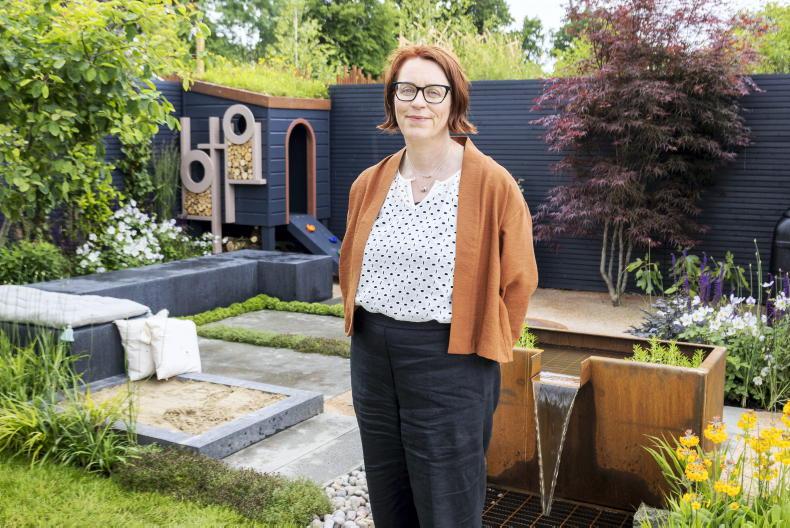
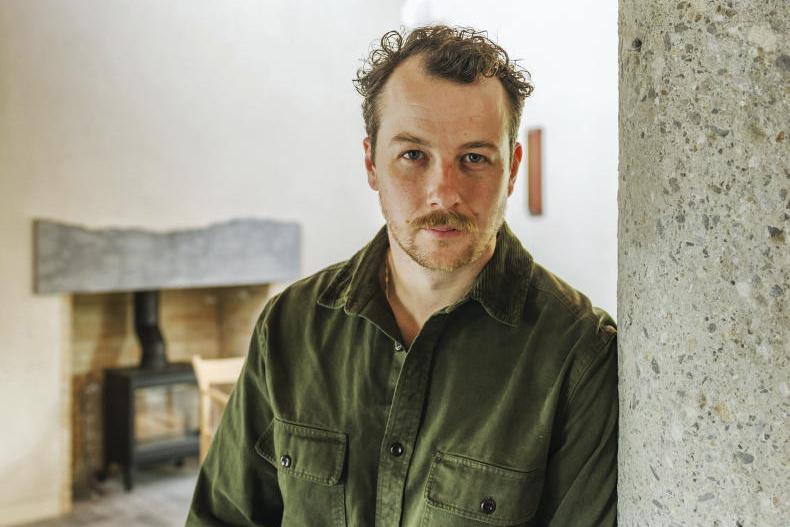
Maeve O'Neill. / Fennell Photography
1. Michael O’Connor and Kakha Gigauri: New to Bloom, A Moment for Myself, sponsored by Leaf 2 Leaf Landscapes
Try to create at least one view in the garden that naturally makes you pause for a second, often the feeling of a space matters more than the size of it.
2. David Negus: Rooted in Resilience, sponsored by Myeloma Ireland
When I’m planning large beds, I use a series of kids’ hula hoops to help me with layouts. I arrange them (50cm diameter – 1m) to reserve space for shrubs. Then you can see where you can place your ground cover and perennials in between the hoops.
3. Scott D Renwick: Where Trust Takes Root, sponsored by Marks & Spencer
Good design isn’t about showing off, following trends, or pushing boundaries for the sake of it. Good design is about listening. Every garden tells you what it wants to be if you pay attention. Light, soil, drainage, topography, assess the client’s brief and consider how the space will actually function. The quality of the design is directly reflected in the designer’s ability to listen.
4. Daibhí Mac Domhnaill: Fingal Nurturing Communities Through Nature, sponsored by Fingal County Council
It’s simple, design for wildlife. There’s nothing more entertaining than bird watching from the couch.
5. Tom Bradford: The Plant Collector’s Balcony
For indoor plants, water with warm rain water to give them an outdoor shower in summer where possible. Rainfall gathers nutrients from the atmosphere as it falls and feeds your plants.
6. Joe Eustace: The ‘Future In Mind’ Garden, sponsored by The Mental Health Commission
I try to encourage clients to remove their lawns and integrate planting instead, which provides enclosure to seating areas and a whole host of ecological benefits. Kids can then use the green at the centre of a housing estate to play with other kids.
7. Linda McKeown: Nature in Balance, sponsored by Bord Bia and the Dept of Agriculture, Food and the Marine (DAFM)
Think about who will actually be using the garden that you’re designing to make sure it aligns, and remember to create a design that is functional and beautiful too.

Linda McKeown. / Chris Bellew/ Fennell Photography
8. Robert Moore: Empowering at
Every Step, sponsored by Marie Keating Foundation
Look at the space in 3D – you need low, middle and high elements to complete a design. So, whether that’s hard structures, planting, or different textures, you want something at ground level, mid-level and then something that draws your eye upward for balance.
9. Declan McKenna: Celebrity Dream Garden, inspired by Brendan Courtney – sponsored by Bord Bia
Think about design that will look good year-round. That could include evergreen planting, ornamental grasses, raised beds and even colourful feature pots for plants.
10. Kerrie Gardiner: Show garden and horticulture content manager, Bord Bia Bloom
First, think of the orientation of your plot and where the sun is going to be when you’re most likely to use it. Next, try and have a design that will adapt with your lifestyle not just for now but to future-proof your garden for different life stages. Finally, where you can use as many trees and hedges as possible.
11. Josh Fenton: Citroën Family Flexible Garden
If you’re working with a smaller area, try to make your spaces adaptable to different uses.

Joshua Fenton.
12. Jack Donovan: Alltar – Bord Bia Bloom’s 2026 Cultivating Talent Winner
Leave room for spontaneity in your garden. Some of the most atmospheric space comes from those that embrace change and natural succession as plants self-seed. Work with nature as it will always produce the most resilient and beautiful planting schemes.
13. Carleen Osbourne: I Can Create That Garden with Q102
Know where you’re planting. Look at the aspect of the garden: is it a sunny or shady spot? Plants are expensive, so it’s important to make sure that you select ones that go with the most suitable part of the garden so that it will grow well. If you’re planting under a tree, you obviously need a shady plant, and keep plants watered as this is often overlooked in the early stages.
14. Benny Magennis: The Minions
& Monsters Garden, sponsored by Universal Pictures
Try out a green wall and experiment with foliage plants, such as Heuchera varieties, to create a living picture. This is a really impactful way to add colour, texture and visual interest to small and large spaces alike. Just make sure to pick plants that suit the orientation.
15. Paraic Woods: Met Éireann’s 90th Anniversary: Past, Present and Future
Something beneficial for new-build homeowners to consider is the garden before they even design the house. It tends to be an afterthought, but spending time in advance means that you won’t have doors or walls that are in the wrong place, or even driveways that end up limiting design solutions.
16. Barry Kavanagh: The Birdwatcher’s Balcony Garden, sponsored by RTÉ Radio 1 and ‘Mooney Goes Wild’
Not everyone has a large outdoor space, but this shouldn’t hold people back from making it a nice area to be in. This year I’m designing a balcony garden at Bloom which is only 5m x 2m, so my biggest tip when designing a small space is not to be afraid to go big and bold with it.
17. Debbie Brophy: The Master
Gardener’s Balcony
Definitely start by building up your structure – you want to add volume, whether with trees or hard materials. Then make sure to add lots of plants for colour, texture, groundcover or height.

Debbie Brophy. / Fennell Photography
18. Oliver Schurmann: Shared Roots, Common Shade, sponsored by the European Commission
Instead of adding formal edging between paved surfaces and planting areas, skip this step altogether and let plants create a natural edge over time. This creates a much more interesting look and feel, and is better for biodiversity.
19 James Purdy: ‘Recycled, Reused and Refilled’ Sculptural Garden, sponsored by Repak
You can’t have a garden without being a gardener, so make sure the design works for you. Even a lawn can be intense time-wise so you have to be active. For those starting out with gardening or looking to get more involved, don’t worry if something doesn’t work, the following year you can replace it. Failure is part of the learning process in gardening. Make sure to get the basics right, like trees or landscaping and you can experiment with the rest.
20. Maeve O’Neill: 20th Edition Gallery Garden
Different animals and insects need different habitats: log piles, rough corners, small sand mounds in sun and shade. These are all simple things to create at home. Right now, our nesting blue tits are feeding their chicks relying on the tiny insects the garden supports. Even small actions can make a real difference.
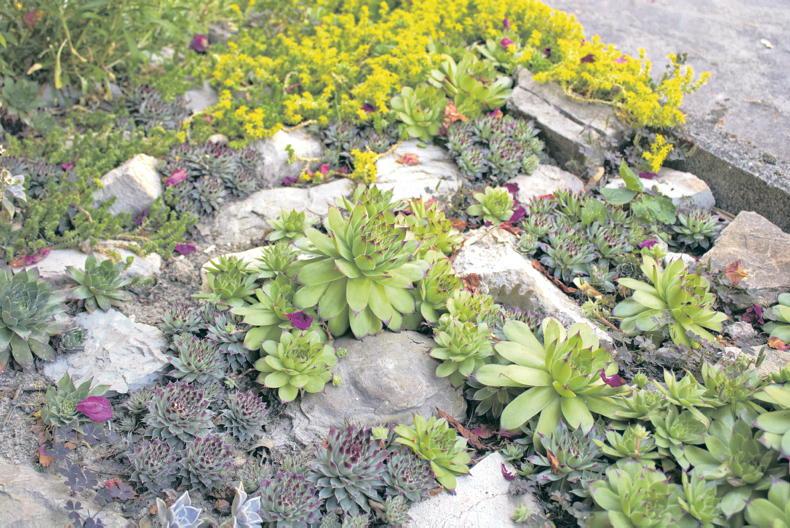
Maeve O'Neill. / Fennell Photography
SHARING OPTIONS