



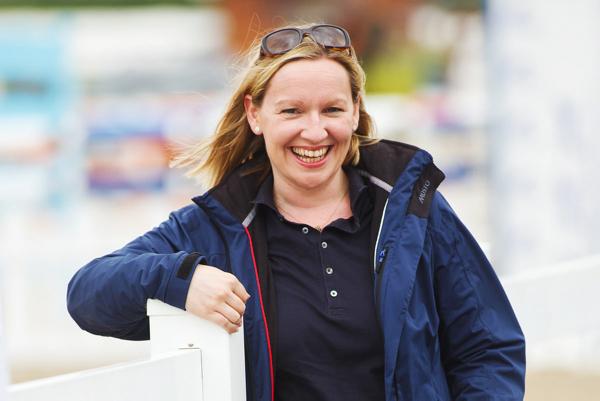
Lucinda Creighton has a lot to say and isn’t afraid to say it. She wouldn’t vote for Ming Flanagan “in a fit” (“but I can absolutely appreciate why others did”). She describes the Fine Gael vote in the European elections as “abysmal” and “cataclysmic”– pointing out it has collapsed by 14% since the last general election – and says she has no time for the “tribalism” in FG.
The only topic she reigned back on in her interview with Irish Country Living was specific details on the activities of the Reform Alliance.
On her relationship with her former Fine Gael colleagues, she notes: “I’m still very friendly with some, and some of them won’t speak to me.
“I always joke there’s a red light that goes off in the office of one of Enda Kenny’s particularly important advisers any time anybody [in FG] is seen speaking to me.”
She says some TDs “love to be publicly seen to be denouncing me – that’s how they curry favour with the leadership or whatever – it’s like something that you’d see in kindergarten. Frankly, I’d just have no interest in it.”
When asked if Enda is polite when she meets him along the corridors of power, she hesitates before saying that she has barely seen him since she was expelled, apart from across the Dáil chamber.
Country girl
Lucinda Creighton grew up in Claremorris, east Mayo. Her late father, John, was a bookie who she used to clock for and her mother, Mary, was a teacher in the boys’ primary school. Lucinda had “a normal upbringing” and while her parents were very engaged and interested in current affairs, their political activity didn’t extend beyond that, but it was enough to create a significant interest in Lucinda who is a TD for the Dublin South East constituency in the Dáil.
But how did a country girl break into such an urban constituency?
“Often in politics it’s about the right time and the right place. I would have a strong work ethic and when I put my mind to something, I tend to do it. The interesting thing though about politics is that country people have a much greater propensity to be involved in it, so most of the members of Fine Gael in Dublin South East are not from Dublin.”
The demands of her Dublin constituency mean Lucinda doesn’t get down to Mayo much, but she is a rural girl at heart.
Last year she bought a German-bred horse named Dee Dee who is in a livery in Stepaside, near the Dublin mountains. She’s hoping to return to the years of her youth which saw her riding her uncle Andy’s racehorses from the age of two, as well as riding ponies in Hanley’s Equestrian Centre in Claremorris and show jumping competitively until she went to college. Her passion is shared by her husband, Paul Bradford, who’s interested in breeding horses and who was nominated to the Seanad by the Irish Thoroughbred Breeders’ Association.
Finding time for horse riding must be difficult for a woman who is in the process of developing a new political movement, not to mention being the mother of a three-month-old girl.
Lucinda says that if an election does take place even as early as this year, the Reform Alliance will be ready to run candidates.
Reform Alliance
Does Lucinda think the Reform Alliance will attract a very conservative voter?
“I can only talk about the people who vote for me in my constituency and I don’t think that it’s one particular category of person. I have broad-based support in my constituency and I think I can say the same for the others as well.”
In terms of the economic direction the Reform Alliance is heading in, Lucinda highlights two key strands: “There’s a lot of emphasis on startup companies at the moment, but there’s not a whole lot of emphasis on scaling up and helping SMEs to expand and grow. I think there’s a lot that can be done with our tax code simplification to encourage more people to invest in Irish companies and businesses.
“Another issue we have focused on very much is the worrying move in the last two Budgets by this Government to try and stimulate another property bubble. We launched a proposal a number of weeks ago called Fair Value, which is all about banks lending fairly and at a fair rate to people who want to buy houses, so that you essentially put a limit or a restriction on how much a person can borrow in order to purchase a house.”
Lucinda is slow to go into specifics on the future announcements we’re likely to hear from the Reform Alliance: “I wouldn’t like to be prescriptive, but they’re certainly gathering momentum, because, I think if you look around, you see the fallout from the local elections.
“There’s a lot of volatility in Irish politics. There’s the rise of the extreme left, the independent ranks and the socialist ranks, who made gains either in the local or European elections. My view is very, very frankly that this is not a positive development for the country.”
She goes on to describe Sinn Féin’s economic policy as “potentially catastrophic”.
Lucinda thinks Sinn Féin’s success has been exaggerated by the media.
“They did a lot worse than the opinion polls, so I wouldn’t get carried away completely. It’s not the 22% that was predicted, it’s 15%, which is pretty much where Martin McGuinness’s vote was in the Presidential election, so you could say they’re on a par with where they were in November 2011.”
Taking responsibility
In terms of the election results for Fine Gael and Labour, Lucinda wasn’t surprised.
“You have to take responsibility for your own actions and the actions of the party you represent. There’s huge public frustration out there, and the elections provided the means of channelling that frustration. I think the Irish public have made up their mind on this Government. I don’t mean to be harsh, but it smacks, to a certain extent, of the rearranging of the chairs on the Titanic.”
She says Fine Gael and Labour are paying the electoral price for “breaking a whole raft of promises”. And she doesn’t think the shake-up in the Labour leadership is going to help their cause.
“Joan Burton is not going to be able to do anything radical. The only radical thing she can do is cause a fight with Fine Gael and try and salvage the party by having an election, and that won’t work either. Alex White is supposed to be the new young face of the Labour party and he’s 55 years of age. I’m friendly with Alex, but I mean, come on.”
Broken promise
Lucinda feels that Fine Gael’s broken promise on the issue of abortion affected the party in rural areas especially.
“I know from talking to councillors in rural areas, Fine Gael was punished on that basis and was also punished on the basis that Enda Kenny personally staked his reputation and the reputation of our party on a so-called democratic revolution.”
Lucinda doesn’t hide her dismay and anger: “Those people in the parliamentary party, the people who sat with me at different stages in the six months leading up to it, who said: ‘I could never, in conscience, vote for this.’ I would have hoped that some of those people would have shown a bit more backbone. I think had they, then Enda Kenny wouldn’t have been able to force this through.
“It’s a scandalous situation really. It’s scandalous that Enda Kenny felt that he could dictate to me or anybody else, especially on an issue that he personally committed to not implementing before he was elected Taoiseach, so there was a double deception there,” she says.
Lucinda does not paint a pretty picture of Enda as leader: “He’s always been a very centralised kind of leader. Since I was in the parliamentary party, it was always a big frustration of mine. There was no interest in engaging or involving parliamentarians in policy making, it was always centred around the leader’s advisers and a small few people. Unfortunately, the Government is being run the same way – and that’s undemocratic.”
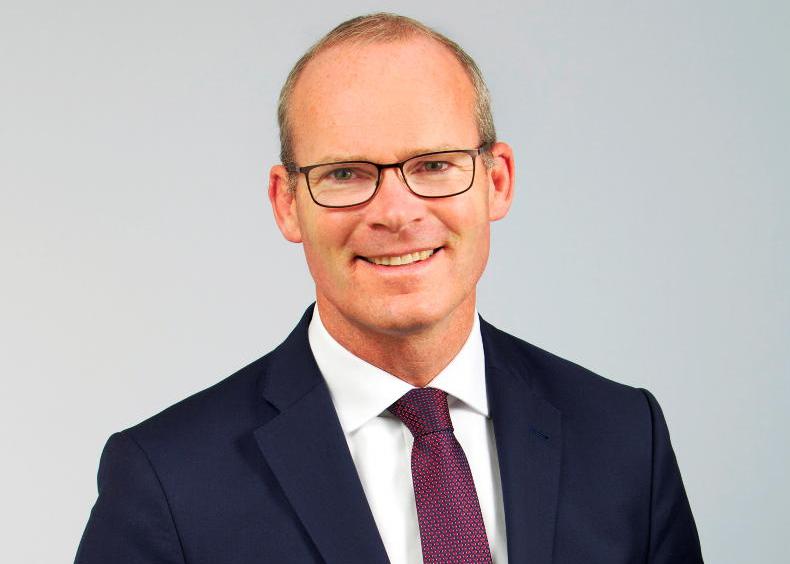
(She opines that Simon Coveney will be the next leader of FG – narrowly getting it ahead of Leo Varadkar.)
She describes the economic management council of Eamon Gilmore, Enda Kenny, Brendan Howlin and Michael Noonan as “the four wise men”, before a quick quip where she repeats the statement but leaves out the word wise.
“They are not preparing economic policy for cabinet meetings, but actually deciding economic policy and then just pushing it through at cabinet, so even cabinet members don’t have the sort of control they should have. It’s totally wrong.”
On the issue of conscience, which came to the fore during the abortion debate, Lucinda contends: “We are the only country, in any democratic nation that I’m aware of, that would force people to vote on an issue like that under a three-line whip.”
But when it comes to this issue, Lucinda is not just all talk. The Reform Alliance has published a private members’ bill – freedom of conscience bill – on the issue (spearheaded by Peter Mathews), which follows the German model. It puts in the constitution an obligation for elected representatives and law makers to act according to their conscience on all issues. It is something that was enshrined in the German constitution after the rise of Nazism.
Switching off
While Lucinda has a range of strong views on contentious matters, there comes a time in the day where she has to switch off because she has a baby daughter, Gwendolyn, at home. She says she can’t do everything she could pre-baby and remarks: “It’s definitely not easy.” She does say things are made easier by the fact Gwendolyn is sleeping at night though and is “a really good baby”, “a very content baby” and “that makes life a lot easier”.
“I see parents who have babies that are colicy or are crying all the time – that is really difficult, so we’re very lucky. I’m trying to be a lot more organised and manage my time a lot better, unlike in the past where I’d say I’ll go home and do X, Y and Z. Now I go home and it’s completely consumed by the baby – there’s just no prospect of doing things.”
There’s no doubting Lucinda is tough, but when talking about her daughter we see her softer side and she doesn’t hide her emotions when talking about her late father, who died in 2011.
“It was really difficult and I was really close to him. Maybe, in a way, I still haven’t fully grieved for him because things moved on so quickly. It’s strange going home and he’s not there. I miss him terribly, I have to say.”
There is no doubt Lucinda Creighton has gone through trying times in recent years, both personally and politically, but if there was ever a person to emerge stronger and more determined, it’s her.
For her supporters, she has restored their faith in the Irish politician – while the naysayers will probably grudgingly admit that, at the very least, she has brought a new dimension to Irish politics.


SHARING OPTIONS