


For such remarkably beautiful flowers, most kinds of rhododendrons are disappointingly without scent. It is true that some of the deciduous azaleas, which are botanically rhododendrons, are nicely scented with a tang of resin. The Loderi group and a few hard-to-find Himalayan species are sweetly scented, but most ordinary rhododendrons are not scented.
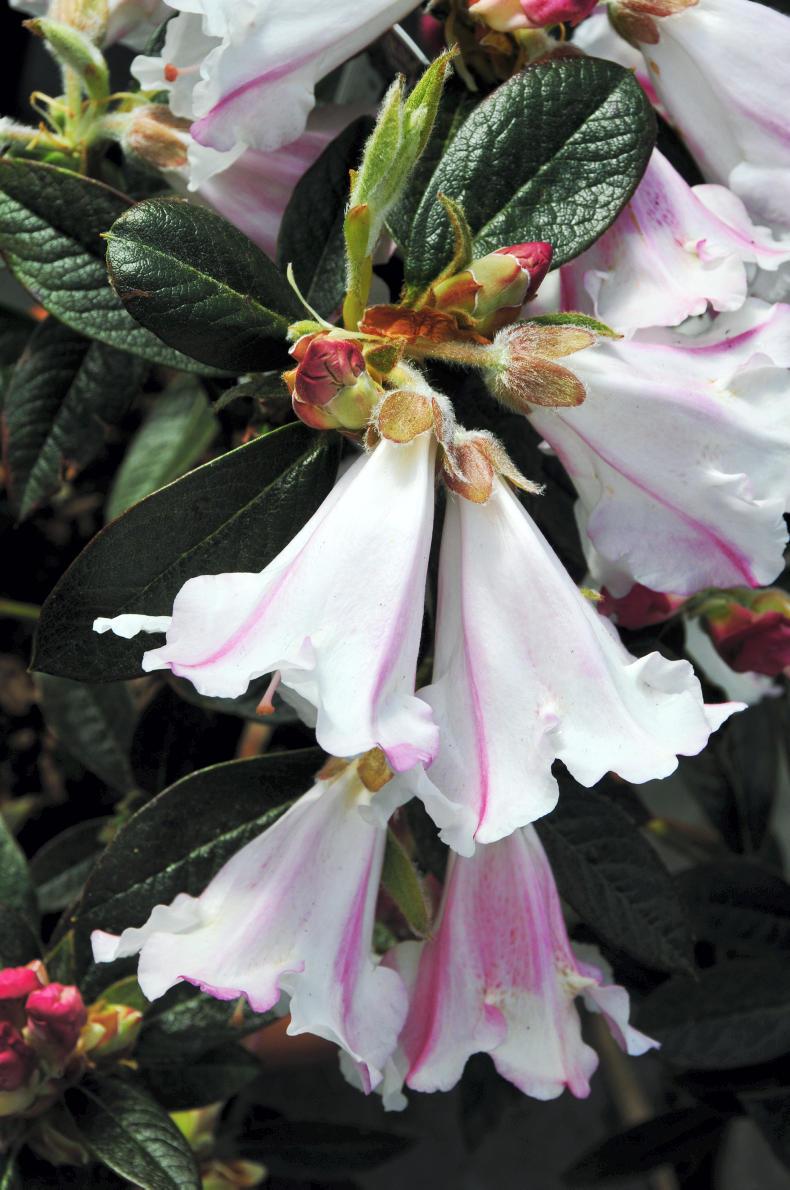
The fragrant rhododendron has a most haunting perfume, and it is reasonably available to buy. The first time you smell it is a revelation, as it is very distinctive, quite unlike any other familiar garden scent. Any time you smell it after the first time is to be instantly reminded.
The botanical name of the fragrant rhododendron is Rhododendron ‘Fragrantissimum’, the word “fragrantissimum” means “most fragrant”, and it is most fragrant, with a rich but sweet and light scent.
This variety has been used mainly as a conservatory plant, and it can fill a conservatory for weeks with its exotic scent. It is not a house plant, because it does not get enough light indoors, and can become scorched if placed in a hot sunny window, but it can be taken indoors when in flower.
The plant is a hybrid of two Himalayan species: Rhododendron edgeworthii and Rhododendron formosum. The “edgeworthii” part of the name honours Michael Pakenham Edgeworth, an amateur botanist, who worked for the East India Company in the middle of the 19th century and who had family connections with Edgeworthstown, Co Westmeath.
It has a mass of very fine roots and can fill the pot and still grow well. The plant is a bit straggly with lanky stems that flop about. This can be addressed by shortening the longer shoots immediately after flowering. After flowering, the plant can be kept under a greenhouse bench or in a part-shaded area.
It can be placed outdoors in summer from mid-June to late August, given regular watering to keep it moist and a liquid feed with acid-loving plant food about every three weeks or so.
As the plant gets bigger, it will need to be re-potted every two or three years and this can be done with a mixture made of acidic soil and leaf mould or peat. The soil should be unsterilised as it contains natural enemies of vine weevil grubs which can trouble potted rhododendrons.
Apart from ‘Fragrantissimum’, there are several closely related named varieties, some of them hybrids of ‘Fragrantissimum’ or Rhododendron edgeworthii. ‘Actress’ has a red flush to the outside of its flowers. ‘Lady Alice Fitzwilliam’ is pink with red stripes. ‘Princess Alice’ is white with a yellow eye. ‘White Wings’ is also white with a yellow eye and heavily scented. These related varieties are occasionally seen for sale when in flower, but they are not a standard item. They all root readily from cuttings taken of new growth from mid-summer, covered with a plastic bag until new growth is active and the new plants can be grown on in small pots.
Use lime-free water, rainwater if necessary in a limy area. The plants are remarkably long-lived in pots and can grow, with potting into a large pot, to be 1m tall and as wide – quite a sight and wonderful scent.CL
Blackthorn winter
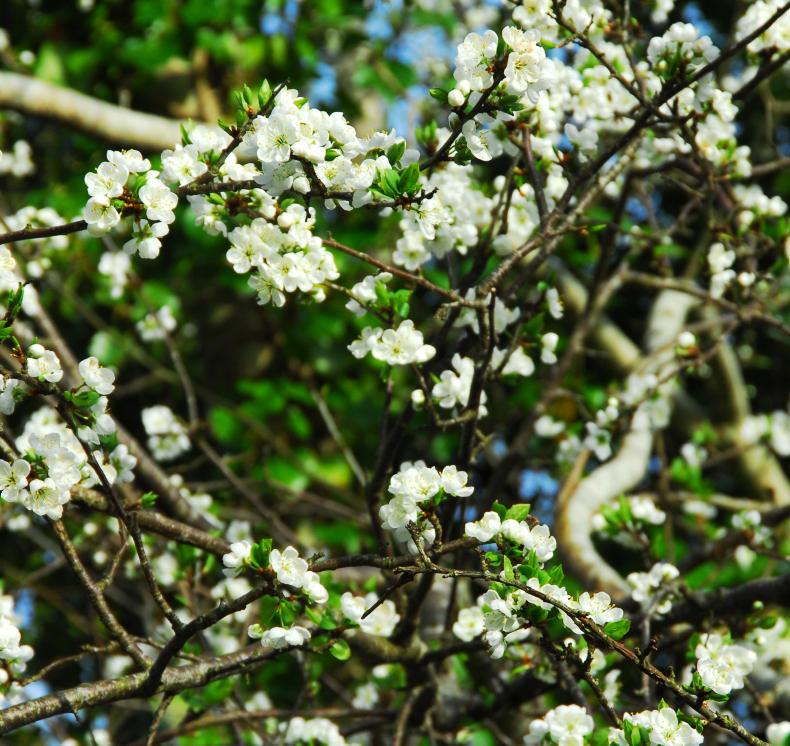
The show of flower on blackthorn in the hedgerows has been remarkable. Many people have remarked on it and on how early it was, and it was relatively early – but not as early as it was given credit for. The really early flowering, mostly on plants beside roadsides, was not wild blackthorn at all but myrobalan or cherry plum, very similar in appearance but a bigger plant, taller and not as bushy. Cherry plum can flower in January but blackthorn only flowers in March or April. The phrase, a blackthorn winter, refers to cold weather in March or April, when the blackthorn is in flower. Towards the end of March, there was snow in many parts of the country, but the blackthorn flowered anyway and a crop of sloes will result.
>> This week
Fruit, vegetables and herbs
All kinds of vegetable seeds can be sown outdoors when soil conditions allow, or start vegetables off in celltrays under cover to plant out in a few weeks. Sow maincrop carrots and peas. Sow French beans if the soil has warmed up. Sow cabbage and cauliflower now for autumn and winter.
Lawns
Despite mixed weather, lawns have been making reasonable growth and regular mowing needs to begin now. Moss has been plentiful this winter and a mosskiller might be required, such as sulphate of iron. Apply some garden lime if the soil is acidic, because acid conditions favour the growth of mosses.
Trees, shrubs and roses
Container-grown trees or shrubs can be planted still, with close attention to watering for the first few weeks at least. Spring-flowering shrubs, such as kerria, forsythia and flowering currant, can be pruned as they go out of flower, if necessary, but if there is plenty of space, just let them grow.
Flowers
Many flower plants are attacked by snails and slugs as the new shoots come through the soil, and this can be difficult to spot until it is too late. Tall-growing perennial flowers, such as lupins and delphiniums, growing on rich soil and a windy site will have to be staked before they blow over.
Greenhouse and houseplants
Greenhouse plants should be fed on strongly and watered well to make rapid early-season growth. Spray a grapevine for mildew with Roseclear before it flowers if it had the disease last year. Houseplants and potted greenhouse plants can be re-potted now.





SHARING OPTIONS