Now is a good time to look at what catches the eye through your windows. Being indoors, we should be able to look out at beautiful scenes in our gardens. I like to focus on winter trees and shrubs that provide colour or shape especially when they catch low winter sunshine. It brings your garden to you in the comfort of your living space. It is about creating a focal point and trees provide this.
Birch with its bright white bark is one that I recommend to all gardeners even those with small gardens. Betula utilis subsp. jacquemontii, the Himalayan birch, is renowned for its whitewashed coloured bark that gleams back at you. It is a medium sized tree, about 15m in height, so it is suitable for larger spaces. A tip I give to gardeners in smaller spaces is to purchase a multi-stemmed specimen which will be smaller in stature. It is also lovely in autumn with the foliage turning yellow before falling.
Acer griseum native to China is a wonderful plant, growing to a height of about 7m. It has russet brown coloured limbs with peeling bark that is its most charming feature. It has beautiful foliage too throughout the summer months which is heightened by its autumn colour of reds and orange before falling. It is a slow grower so patience is needed.
Acer palmatum ‘Sango-Kaku’ is a Japanese maple that I consider a year-round performer. When it comes into leaf it has magnificent salmon pink coloured foliage. These then become light green with leaves that are very typical of Japanese maples.
In autumn, the leaves turn yellow before falling, revealing bright red twiggy stems over the winter period. There is always something to behold with this small tree which attains a height of 6m.
Corylus avellana ‘Contorta’ – commonly called the Corkscrew Hazel – is a large shrub or small tree. Again, it is of interest all year round with its curious twisted branches. In late winter, it comes into its own with its tracery of corkscrew twigs. This is heightened by a display of yellow male catkins in spring. It is useful for indoor decoration in flower arrangements.
There are several willows worth mentioning, Salix alba var. vitellina, The Golden Willow with its yellow stems that light up the winter garden and Salix alba var. vitellina ‘Britzensis’ The Coral Bark Willow with its red stems. The best way to grow these two willows is to pollard them, which means training a young plant on a single stem to about six feet in height, then you remove the top growth with a pruning saw in winter.
The following spring vigorous growth arises from this point giving you a multitude of colourful stems. You must remove these stems every spring at the onset of new growth.
In winter, the stems produce a show that is wonderful in low light. You also have the benefit of harvesting willow rods.
Pink willow
A much smaller willow is Salix gracillistyla ‘Mount Aso’ commonly called Pink Pussy Willow. This grows to a height of 1.5m and has rich green leaves with grey undersides. In early spring it produces what might be described as mini pink powder puffs – it is a magnificent display.
In smaller spaces you should consider large shrubs as opposed to trees as a feature. Garrya elliptica is an evergreen shrub with deep green leaves with a grey underside. It will slowly attain a height of 3m. Its main feature are the wonderful catkins that hang tassel-like from the branches in winter and resemble a decorated Christmas tree.
Strawberry tree
Arbutus unedo, the Strawberry Tree is an intriguing large shrub or small tree which has its fruit from the previous year and flower at the same time.
An evergreen, it is a slow steady grower, its bright lustrous leaves are pleasing all year round.
It gets its common name from the fruit which resemble strawberries. They are not in any way palatable.
Choosing any one of these plants will bring that extra interest into your home on those days when being outside may not be possible.
Q&A: Is it too late for bare root trees?

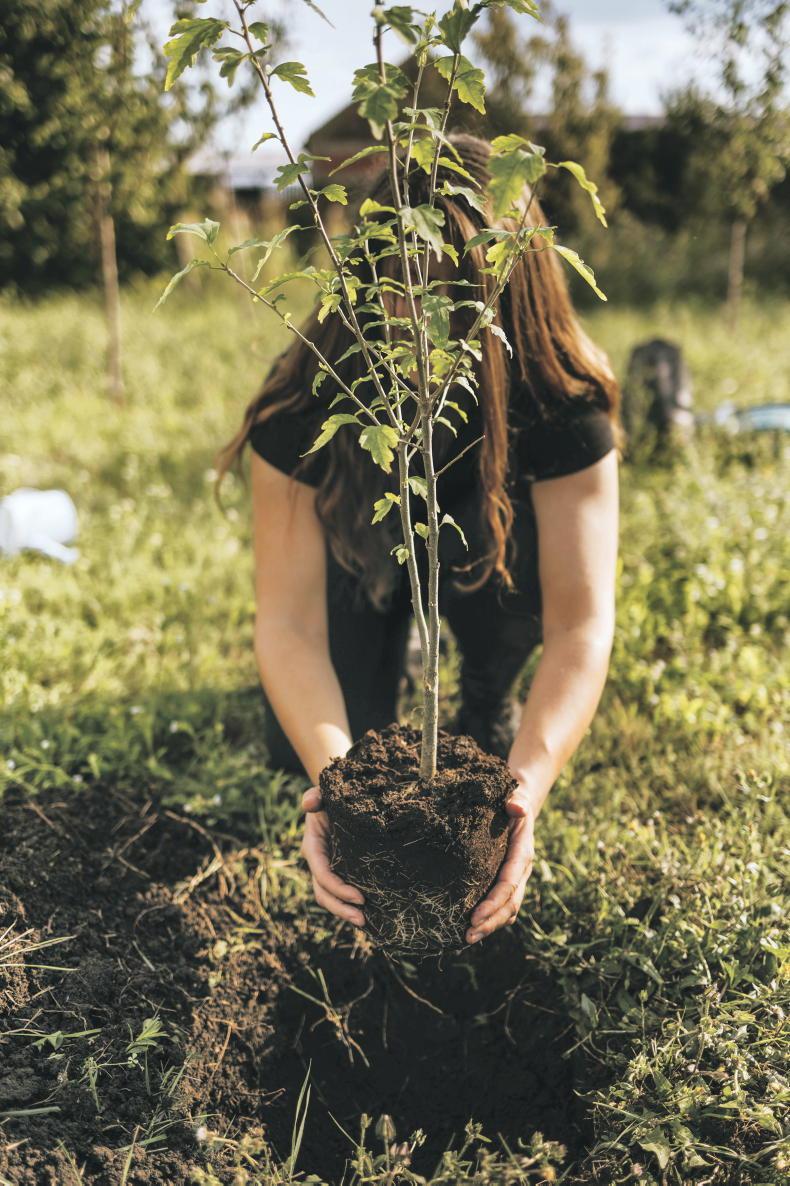
Planting bare root trees. \iStock
Is it too late to plant bare root trees? There’s a special offer in my local nursery.
– Mary, Mullingar, Co Westmeath
There is still time to plant bare root trees and the sooner it is done the better because growth has not started yet. Make sure you do some research in relation to what your requirements like eventual height and other features.
Be certain as to where you will plant and do some preliminary preparation. Also make sure that the trees are kept in moist sand beds before your purchase and wrap them on their homeward journey ensuring the roots do not dry out.
Talk to the nursery staff and purchase a suitable stake and tree tie to support the tree. It is best to plant straight away. Lastly, keep a note of the name of the tree, where you purchased it and price.
Trees, shrubs and roses: There is still time to do some pruning to trees and shrubs to keep them in shape. In particular, remove any crossing branches. Continue with rose pruning removing old woody stems, leaving young fresher growth.
Fruit, vegetables and herbs: Continue with apple pruning. Shorten leggy growth to encourage flower buds. Seed potatoes are now in the garden centres.
Greenhouse and house plants: With the onset of longer days and warmer sunshine ventilate your greenhouse well and open doors. Check house plants for repotting. Look at drainage, if is blocked it is a sign to repot.

Now is a good time to look at what catches the eye through your windows. Being indoors, we should be able to look out at beautiful scenes in our gardens. I like to focus on winter trees and shrubs that provide colour or shape especially when they catch low winter sunshine. It brings your garden to you in the comfort of your living space. It is about creating a focal point and trees provide this.
Birch with its bright white bark is one that I recommend to all gardeners even those with small gardens. Betula utilis subsp. jacquemontii, the Himalayan birch, is renowned for its whitewashed coloured bark that gleams back at you. It is a medium sized tree, about 15m in height, so it is suitable for larger spaces. A tip I give to gardeners in smaller spaces is to purchase a multi-stemmed specimen which will be smaller in stature. It is also lovely in autumn with the foliage turning yellow before falling.
Acer griseum native to China is a wonderful plant, growing to a height of about 7m. It has russet brown coloured limbs with peeling bark that is its most charming feature. It has beautiful foliage too throughout the summer months which is heightened by its autumn colour of reds and orange before falling. It is a slow grower so patience is needed.
Acer palmatum ‘Sango-Kaku’ is a Japanese maple that I consider a year-round performer. When it comes into leaf it has magnificent salmon pink coloured foliage. These then become light green with leaves that are very typical of Japanese maples.
In autumn, the leaves turn yellow before falling, revealing bright red twiggy stems over the winter period. There is always something to behold with this small tree which attains a height of 6m.
Corylus avellana ‘Contorta’ – commonly called the Corkscrew Hazel – is a large shrub or small tree. Again, it is of interest all year round with its curious twisted branches. In late winter, it comes into its own with its tracery of corkscrew twigs. This is heightened by a display of yellow male catkins in spring. It is useful for indoor decoration in flower arrangements.
There are several willows worth mentioning, Salix alba var. vitellina, The Golden Willow with its yellow stems that light up the winter garden and Salix alba var. vitellina ‘Britzensis’ The Coral Bark Willow with its red stems. The best way to grow these two willows is to pollard them, which means training a young plant on a single stem to about six feet in height, then you remove the top growth with a pruning saw in winter.
The following spring vigorous growth arises from this point giving you a multitude of colourful stems. You must remove these stems every spring at the onset of new growth.
In winter, the stems produce a show that is wonderful in low light. You also have the benefit of harvesting willow rods.
Pink willow
A much smaller willow is Salix gracillistyla ‘Mount Aso’ commonly called Pink Pussy Willow. This grows to a height of 1.5m and has rich green leaves with grey undersides. In early spring it produces what might be described as mini pink powder puffs – it is a magnificent display.
In smaller spaces you should consider large shrubs as opposed to trees as a feature. Garrya elliptica is an evergreen shrub with deep green leaves with a grey underside. It will slowly attain a height of 3m. Its main feature are the wonderful catkins that hang tassel-like from the branches in winter and resemble a decorated Christmas tree.
Strawberry tree
Arbutus unedo, the Strawberry Tree is an intriguing large shrub or small tree which has its fruit from the previous year and flower at the same time.
An evergreen, it is a slow steady grower, its bright lustrous leaves are pleasing all year round.
It gets its common name from the fruit which resemble strawberries. They are not in any way palatable.
Choosing any one of these plants will bring that extra interest into your home on those days when being outside may not be possible.
Q&A: Is it too late for bare root trees?

Planting bare root trees. \iStock
Is it too late to plant bare root trees? There’s a special offer in my local nursery.
– Mary, Mullingar, Co Westmeath
There is still time to plant bare root trees and the sooner it is done the better because growth has not started yet. Make sure you do some research in relation to what your requirements like eventual height and other features.
Be certain as to where you will plant and do some preliminary preparation. Also make sure that the trees are kept in moist sand beds before your purchase and wrap them on their homeward journey ensuring the roots do not dry out.
Talk to the nursery staff and purchase a suitable stake and tree tie to support the tree. It is best to plant straight away. Lastly, keep a note of the name of the tree, where you purchased it and price.
Trees, shrubs and roses: There is still time to do some pruning to trees and shrubs to keep them in shape. In particular, remove any crossing branches. Continue with rose pruning removing old woody stems, leaving young fresher growth.
Fruit, vegetables and herbs: Continue with apple pruning. Shorten leggy growth to encourage flower buds. Seed potatoes are now in the garden centres.
Greenhouse and house plants: With the onset of longer days and warmer sunshine ventilate your greenhouse well and open doors. Check house plants for repotting. Look at drainage, if is blocked it is a sign to repot.

SHARING OPTIONS