


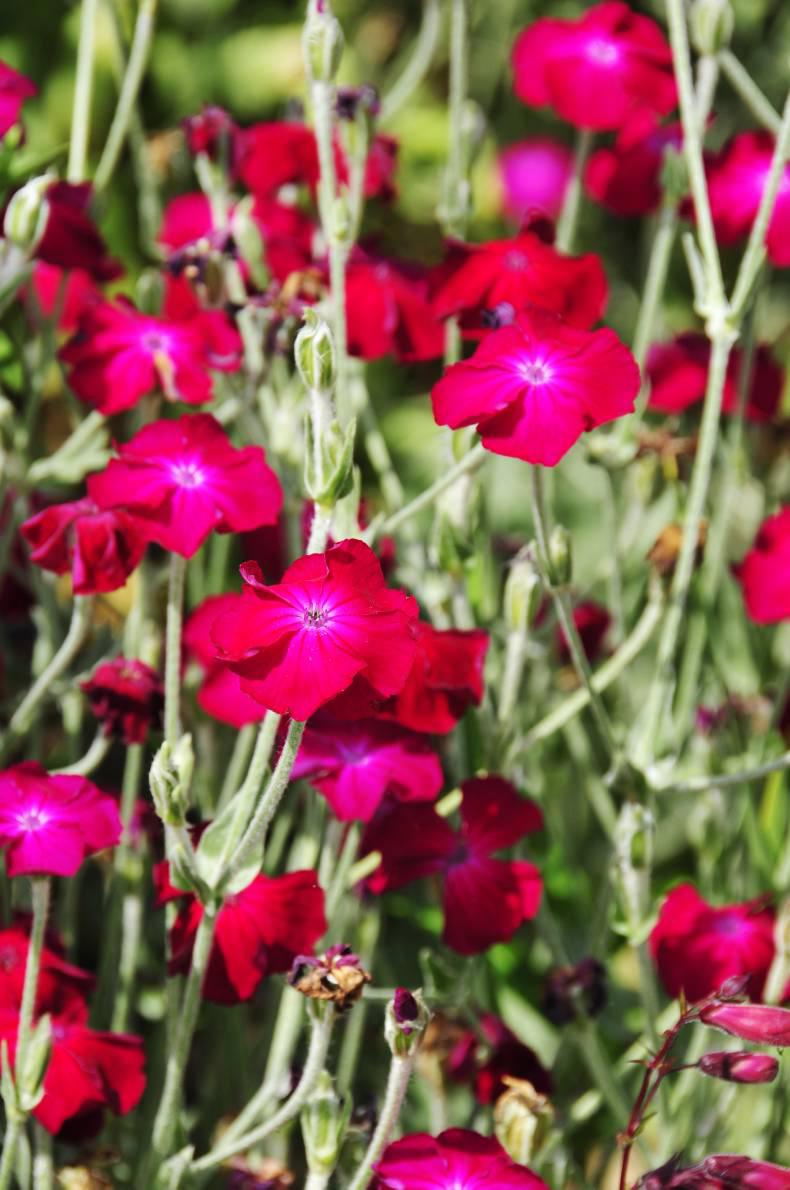
Dusty miller gets its common name from the white-grey coating that covers all its leaves and stems, even the slender flower stems, all the way to the flower itself. The botanical name is Lychnis coronaria. The grey coating is composed of a covering of fine hairs. These white hairs are dense enough to cover the green leaves and stems underneath, but the greenery sends a dark shadow throughout the cover to leave a greyish finish.
In full sunshine the white hairs look their brightest silver. The silver background is perfect for the flowers, which are usually deep magenta-red over most of the flower, fading towards the centre to bright magenta and a tiny ‘eye’ of light pink, almost white. The contrast of colours is very eye-catching and seems to shimmer in the sunlight.
The hairs protect the stems and leaves from strong sunshine and wind-exposure in their dry native region in southeastern Europe.
Apart from the most common magenta form, there is a pure white form, called Alba, which looks much more sophisticated. Its cold, white flowers float over the bush of silver-white foliage.
There is also the variety called Angel’s Blush, which has a tiny eye of pink-magenta at the centre of each flower. It is not as cool as the pure white, but not as brilliant as the magenta kind.
All kinds have their place, each one suiting some gardens better than others. With all kinds in their rush to flower, they lend a certain exuberance to a border. Dusty miller is one of those plants that commonly finds its way into gardens. Typically, it appears as a small seedling, unsown and mysterious as to its origins. However, there is no great mystery – dusty miller is a prolific producer of seeds.
These seeds are tiny, not much bigger than a grain of salt and round in shape, so they easily fall into neighbouring soil or into pots. They can be washed to new places by rainwater flowing and they can be carried on soil on boots or tools. It is not unusual to see seedlings of dusty miller growing in pots at garden centres and at plant sales. Sometimes these can be 10cm tall and very obvious.
If these are planted, they can flourish in a new location, or a seed carried in a pot can sprout and grow. Quite often, the new owners have no idea of the plant they have inadvertently acquired. Because it is so easy to grow, often self-sowing, dusty miller was traditionally popular in cottage gardens.
At first, dusty miller forms a rosette or silvery leaves, often a bit ragged. After rapid growth the following spring, the plant produces tall flower stems, which mesh together, helping to hold themselves in place, although strong winds can still blow them over.
New flowers keep opening for several weeks in summer and are followed quickly by seed pods and seed production. If you want them to appear in new areas, just shake out a few stems with open seed pods.
The plants usually flower the second year and wither slowly after flowering, lasting just a few years, which is why they so readily self-sow. They grow best and look best in light, well-drained soil in a sunny spot. They make a useful filler in a new border until other, more permanent, plants can take their place.
Florence fennel
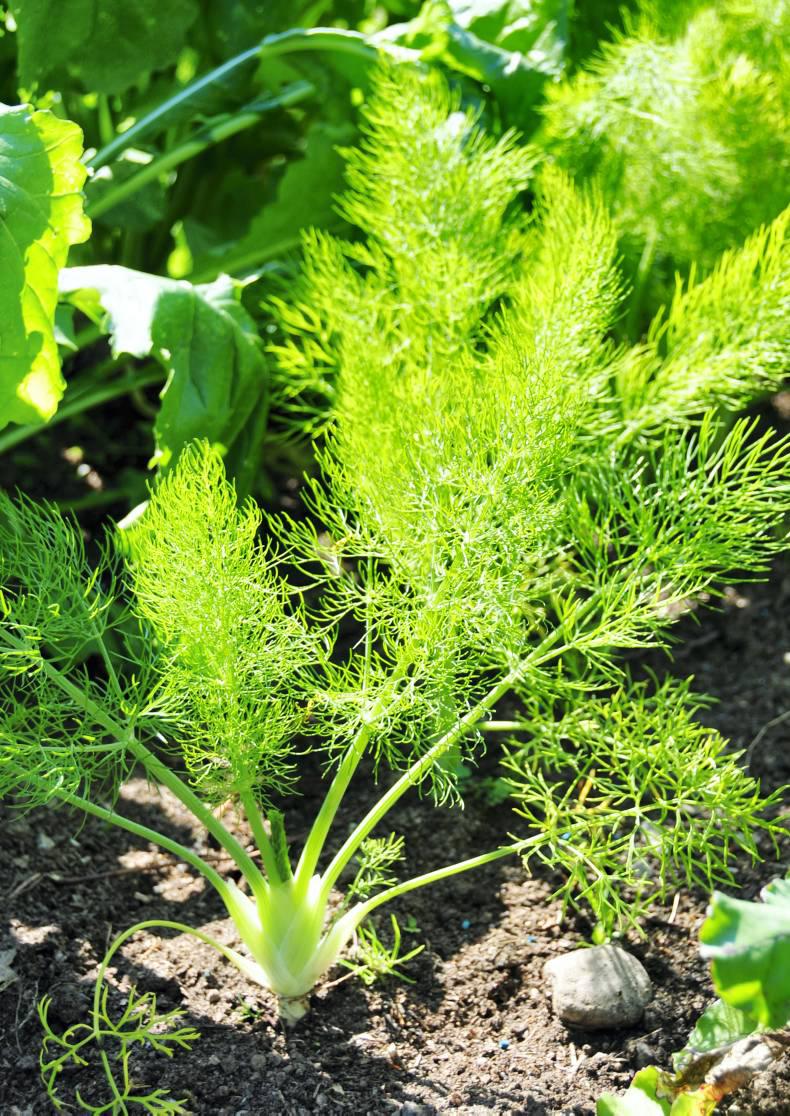
Florence fennel is an excellent vegetable with many uses in cooking, but it can be tricky to grow. Like some other vegetables, such as spinach, rocket, beetroot, lettuce and Chinese green vegetables, it is notorious for bolting – that means flowering prematurely – before a fennel bulb of good size is formed. The resulting hard flower stem is not much good for anything.
Sowing in July can get around the problem of bolting, but make sure the little plants are watered during any dry spell of more than a few days. Sow in a sunny place, in soil that has plenty of organic matter incorporated. The bulbs will be ready for use in October.
Flowers
Flower beds and borders are looking well, though flagging somewhat on dry soils due to low rainfall. Containers of all kinds will need frequent watering, perhaps each day if the weather is hot. Make sure the pots do not dry out at any stage, because the plants can get a severe setback.
Trees, shrubs & roses
Roses have suffered plenty of blackspot disease, but spraying will encourage late flowering. Soil moisture has been adequate to keep young trees growing, but check newly planted trees and shrubs. It is time to clip hedges of all kinds before the wood gets tough.
Fruit, veg & herbs
Make some late sowings of lettuce, Chinese greens, rocket and radish. Remove vegetables that have gone over or have bolted. There has been good growth recently of sweetcorn, which likes sunny weather. If the soil is dry, peas and cabbage should be watered to keep the plants growing.
Lawns
Lawns are generally looking dry as growth that followed cool weather has slowed down. If there is a good bout of rain, and strong new growth, a lawn that looks tired can get a feed with high-nitrogen fertiliser, but be careful not to feed a dry lawn as more damage can be done than good.
Greenhouse & house plants
Take cuttings of all kinds, especially roses and clematis now. Pot up house plants during the good growing period to allow them to settle before winter. Continue watering and feeding greenhouse plants. Remember to water plants in pots or grow-bags regularly.


SHARING OPTIONS