


Anybody who has ever hand-weeded a garden is familiar with weed spurges, such as the sun spurge (also called milk weed). Even if gardeners do not know the name, the milky-white sap of any broken stem or leaf is distinctive. This sap is called latex and there is a connection with rubber, because natural rubber is produced by a tropical tree of the same family, the euphorbia family, which has thousands of species, including poinsettia.
The true flowers of euphorbia are tiny and the flower-like parts are bracts, closer in structure to leaves, which is why flowering goes on for a longer period. The weedy spurges are common in gardens and on waste ground, especially on dry soil. The milky sap can cause skin burns and was used in folk healing to burn off warts. The name spurge comes from purge, as it was once used as a purgative.
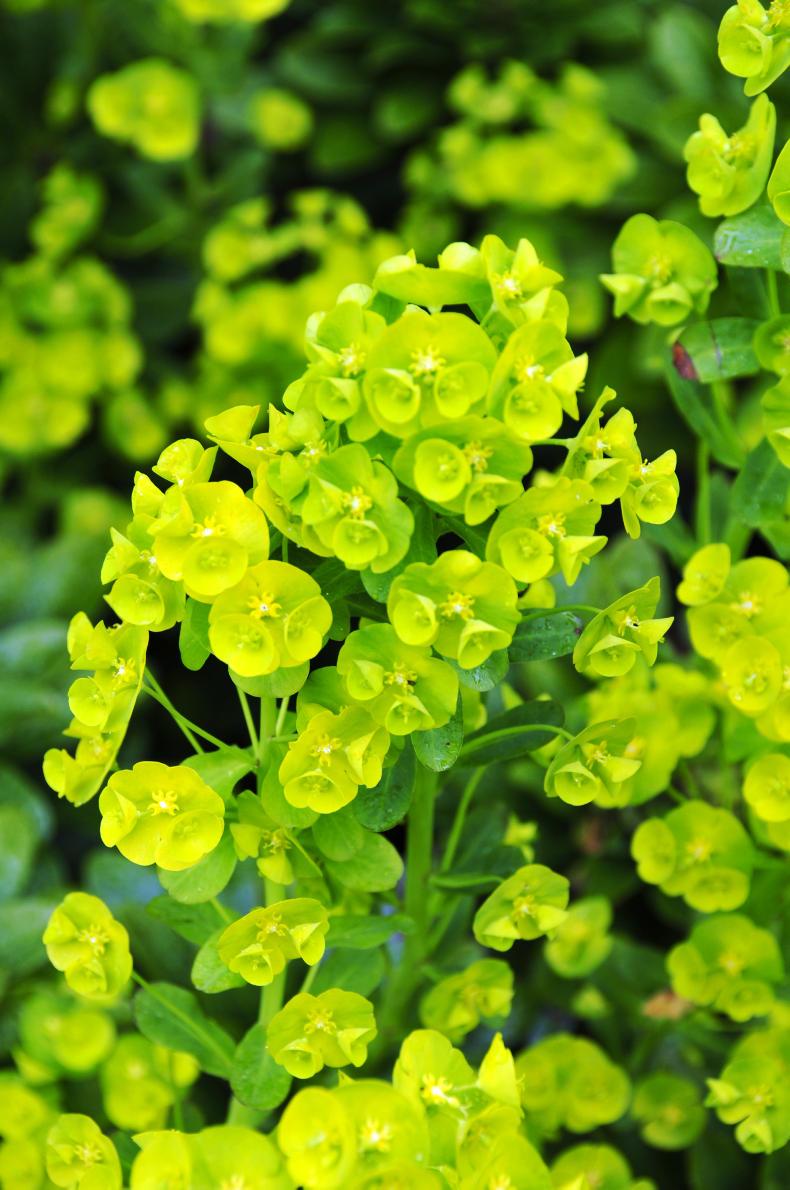
There is another wild native spurge, euphorbia hyberna, the Irish spurge. This plant makes a clump about 40cm tall, with flower heads of bright yellow-green bracts, in late spring and early summer, growing in open woodland, by roadsides and in rocky places in the southwest.
It is of great interest to botanists, because it also occurs in northern Portugal and Spain, and highlights a connection between Ireland and those areas before and after the last Ice Age. Although it is decorative and long-flowering, lovely with wild bluebells, it is rarely seen in gardens because it is not in commercial trade and it is illegal to dig it up.
Some euphorbias are excellent garden flowers, mainly from the Mediterranean region. These bring bright spring-green colour, which sets off the purple, yellow and white of other flowers of spring, and the copper, ochre, bronze and light green of emerging foliage of perennial flowers, trees and shrubs. They look stunning with tulips of any colour, but mainly blazing red, elegant white or pink.
Widely grown in gardens, Mrs Robb’s spurge has yellow-green bracts in spring over dark-green, evergreen leaves, about 40cm tall. It is a very durable plant for any kind of soil that is not wet, and tolerates light shade and dry soil well. It is good for ground cover in a rough corner, where it can be allowed to spread. It is definitely not for a border. Its flowers last for months and even when withered offer some decoration.
Euphorbia polychroma forms a neat little clump of stems, about 30cm tall, with very bright acid-yellow flowers. It likes full sunshine and good soil, not too rich. If the soil is too dry it can suffer from mildew disease. It is not a runner.
The cypress spurge, euphorbia cyparissias, has fine foliage and small flower heads, but it is a terrible runner by means of underground stems.
Euphorbia characias is a 1m tall species with leafy stems, topped with large heads of yellow green. This is not a runner, but the shrubby plants often weaken and go into decline after a few years, especially in heavy soil.
By contrast, euphorbia palustris actually likes moist soil and makes a great display of yellow flower heads. It needs space and spreads fast. Most spurges have yellow-green bracts, some more yellow than others. Unusual among the spring spurges is euphorbia griffithii (Fireglow), with reddish young shoots and bracts of bright orange-red. It is dramatic as its stems and first foliage grows and goes in-flower, but it also tends to spread too much in a border – better when it can be hemmed in.
There are other species, less well-known, such as euphorbia myrsinites, which is low growing with stems of blue-green leaves, evergreen, and tends to flop over. It is good for a dry area at a patio edge, its yellow flowers setting off dwarf red tulips.
Teasing out grasses
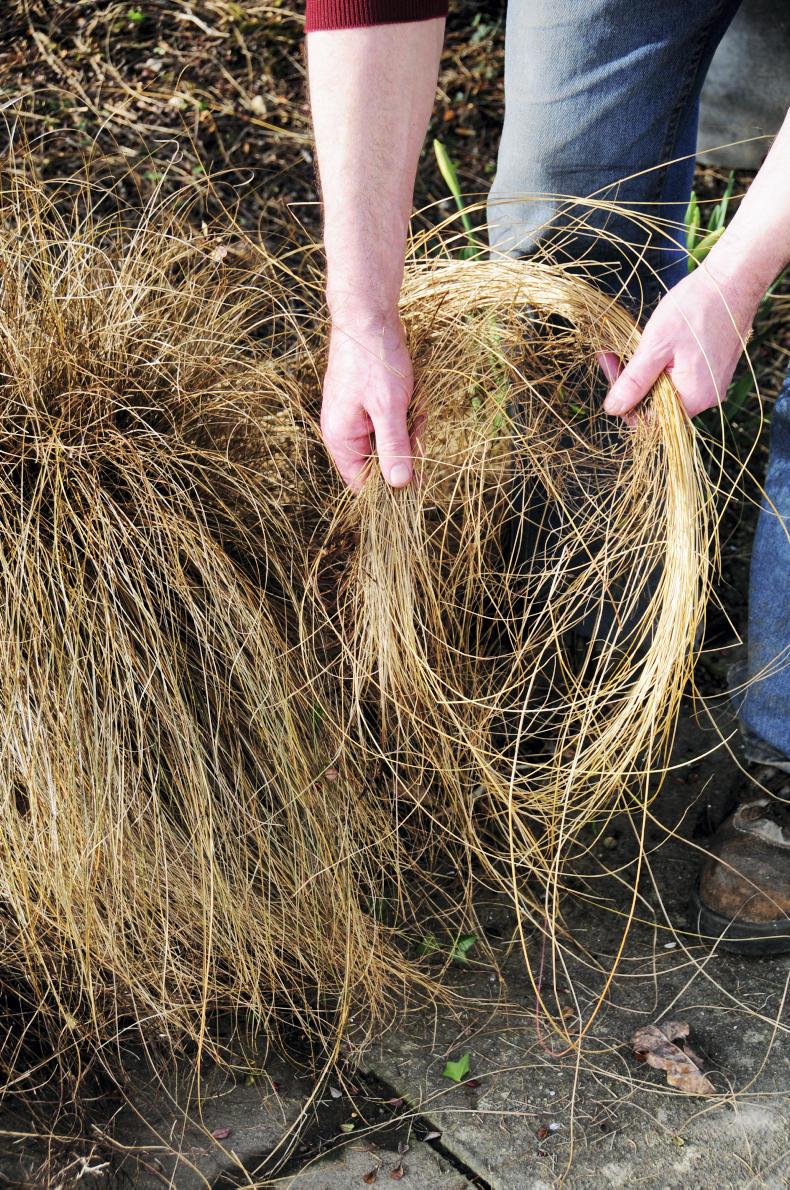
Ornamental grasses are often just cut back in winter and they sprout again in spring. For a time, only the bunch of cut-ends is on view, and it does not look very attractive. A better way, certainly for evergreen grasses and sedges, is to gently tease out the old grassy thatch from underneath.
The old, dead stems and foliage rot after a time and come away easily with a gentle tug. If they don’t come away, leave them in place as they’re not ready to part. There is no harm in leaving some of the old grass stems in place, as they act as weed control and help to retain moisture, but too much dead thatch can look messy.
Trees, shrubs and roses
Bare-root plants can be planted until bud-break. Evergreens, both broad-leaved and coniferous, can be planted, as the sap rises over the coming month or so. Bush roses and repeat-flowering climbers should be pruned now, if not already done. Rose bushes can still be planted from pots.
Flowers
Perennial flower plants that are not too advanced in growth can be still divided and replanted. Bedding flowers can be sown over the next couple of weeks or so. Start the seeds in warm conditions, in a propagator, on a heat mat in a greenhouse or in a warm kitchen.
Fruit, vegetables and herbs
Pruning of apple and pear trees and blackcurrant bushes should be completed now. Garlic and shallot sets should be planted as soon as soil conditions allow. Sow an early crop of peas and French beans in pots indoors, if a greenhouse or tunnel is available. Plant fruit trees right away.
Lawn
Grass growth has built up over winter and the earliest opportunity should be taken to mow the lawn, if not already done, as it will not become any easier. There was good dry weather for a time and then some very wet weather. Apply lawn mosskiller if there is heavy moss growth present.
Greenhouse and house plants
Feed and water all greenhouse plants, if not already done. Sow tomatoes for greenhouse growing, also sweet peppers and chilli peppers. These are easy to grow and fill the greenhouse during the summer months. Watch for greenflies on greenhouse plants, also scale insects on evergreens.




SHARING OPTIONS