



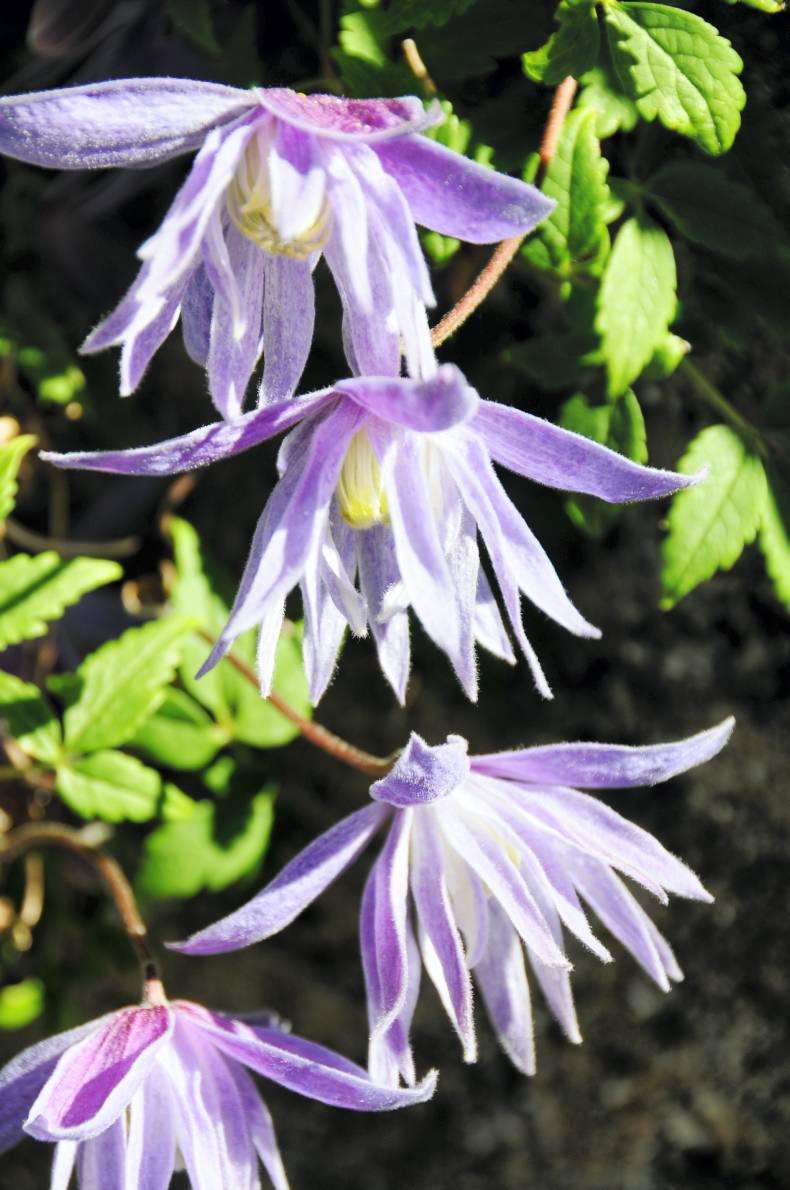
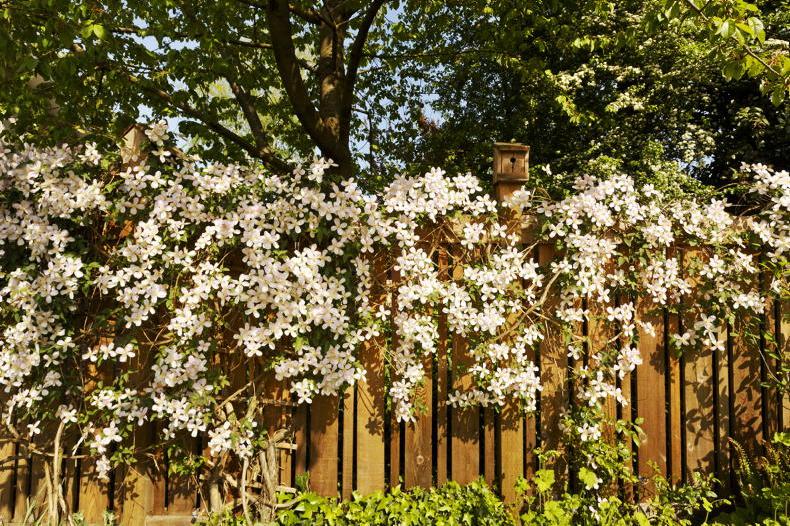
Being closely related, it is to be expected that these clematis species are very alike. These two, while different from each other, being of separate species, are similar in many ways, enough to consider them as a duo. And they could be used interchangeably as decorative, small-size garden climbers.
The alpine clematis, Clematis alpina, is native to European mountains. It flowers early in this country because the relatively mild winters here fool it into acting as though spring was on the way. Although it is deciduous, it comes into growth as soon as there are some mild spells in late winter. It flowers with the fresh new leaves as a backdrop in spring.
The flowers are blue on the outer petal-like sepals and white inside, but they can be darker or lighter with a touch of purple. The pointed sepals are slightly twisted and nodding. The flowers are so dark that they might not always be seen at first glance, but, when noticed, they are a delightful surprise.
There are four hooded sepals and, under the hood of the sepals, there is a round group of white staminodes. These are modified stamens that look like small, narrow, ladle-shaped petals. Though petal-like, they are not true petals, but are adapted stamens that protect the true stamens within.
This is a nice example of evolution to protect the flowers in an exposed habitat in the mountains. The flowers seem so delicate that they would be destroyed by the harsh spring weather, but this is not at all the case.
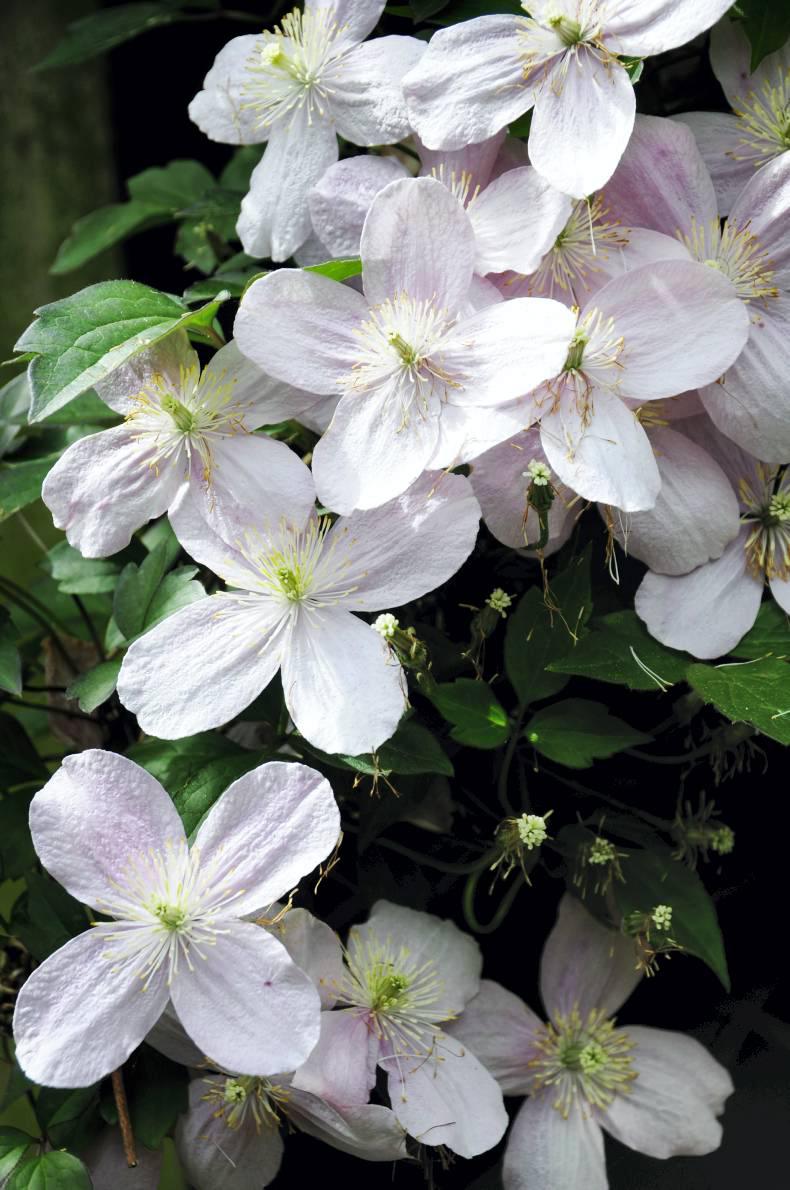
The second clematis, Clematis macropetala, shown, occurs in northern China, Mongolia and Siberia. It is not dissimilar to the alpine clematis, having much the same growth habit and size, around two metres or a bit more, with similar divided leaves, and it is deciduous too. Its flowers are also nodding but are fuller than the alpine clematis, having a bunch of petal-like stamens within the flower, but these staminodes are usually coloured and point outwards in a starry shape, not held together as a nest of spoons like the alpine clematis.
The alpine clematis flowers are dominated by the four coloured sepals while Clematis macropetala makes a larger flower. It generally carries more flowers too, and there are several selected kinds in a range of colours: pink, mauve and white. ‘Markham’s Pink’ is a well-known soft pink beauty. ‘Maidwell Hall’ has deep blue flowers with a hint of purple. ‘Wesselton’ has larger staminodes and a very attractive frilly look to the flower. There are some hybrids of the two species, notably the very pretty ‘Rosy O’Grady’, which is intermediate between the two parents in a bright purple-pink colour.
Being originally from a cold mountain habitat, both species are very hardy, although the flowers can be caught out by very cold, dry winds in April. They are not large or vigorous plants but they are good growers, needing only ordinary soil that is well-drained, with some light shelter and good sunshine to encourage prolific flowering.
They need to grow on a trellis or wires on a wall for support. Any pruning done is just to tidy them and should be done after flowering. These species are sometimes grown on climbing rose plants, and while it might work for a time, the roses are likely to get too vigorous and over-shade the clematis. Other, more vigorous kinds of clematis are better able to cope. Plant these little clematis species near the house, where they can be enjoyed. CL
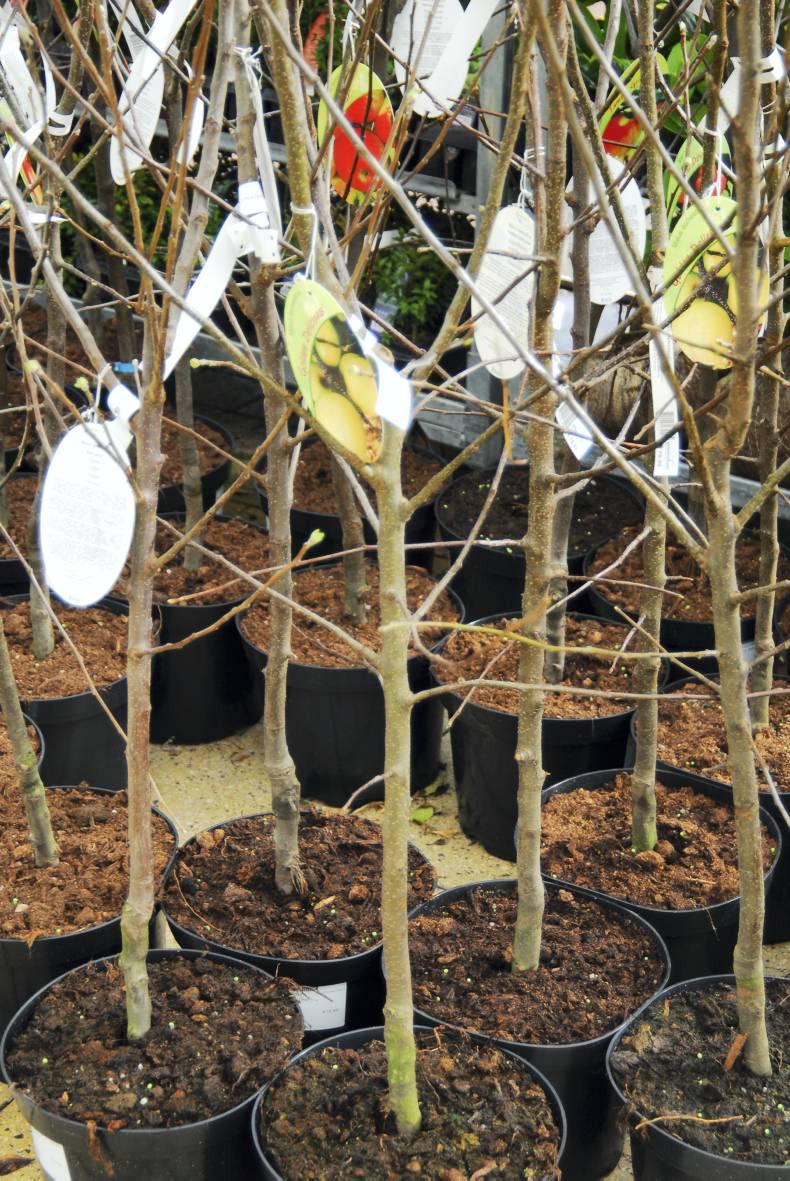
Plant fruit trees
The best time of year to plant fruit trees and bushes is from November to March: the traditional planting season, when the plants are dormant and move successfully. However, that planting tradition has been somewhat overtaken by the fact that most fruit trees are now sold in plastic pots and can be planted, without risk, at any time of year, as long as they are watered to get them going. Planting as the leaves appear can be good, because new roots are being made at that time too and these get rooted into the soil right away. Planting now means the trees get the benefit of a full growing season, but be sure to water occasionally until there active new growth.
>> This week
Fruit, vegetables and herbs
As soon as soil conditions allow, sow maincrop vegetables, such as carrots, broccoli and peas. Sow French beans as the soil warms up. Sow cabbage and cauliflower now for autumn and winter. Sow herb seeds if the soil is warm and plant out new plants. Spray apple and pear trees for apple scab and pear scab disease and check for greenflies.
Lawn
Mow regularly, reducing the blades to the normal level. If the grass is pale and slow-growing, it would benefit greatly from some lawn fertiliser or high-nitrogen fertiliser. Sow a new lawn or over-seed a patchy old one. Re-cut all edges at borders if these have been breaking down or grass has grown into the flower bed or border.
Trees, shrubs and roses
Spring shrubs, such as forsythia and flowering currant, should be pruned as they go out of flower, if necessary. Roses will need regular spraying, monthly, against blackspot disease. The disease needs fairly warm conditions to really develop strongly. Only container-grown trees or shrubs should be planted now, and watered until established.
Flowers
Watch for slug and snail damage during these weeks. Tubers of begonias and dahlias can be potted up, or planted out towards the end of the month, and corms of gladiolus can be planted out where they are to flower. Tall-growing perennial flowers such as lupins and delphiniums growing on rich soil and a windy site will have to be given suitable supports.
Greenhouse and house plants
Bedding plants should be grown on strongly by regular watering and feeding to get good size, spacing the plants well to give them light and space to grow. Sweetcorn and runner beans can be sown in the greenhouse for planting out later, but do not delay any longer. All greenhouse plants should be grown on strongly now and watered well.


SHARING OPTIONS