It’s a very common condition and can affect people of any age – men, women and children,” says Dublin-based pharmacist Bernard Duggan.
But what are the sinuses?
“They are air-filled holes or cavities that are found behind our cheekbones, forehead, eyes and nose.
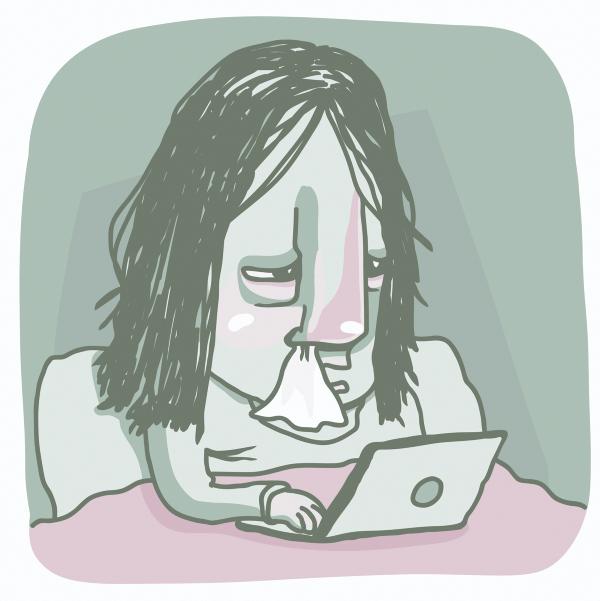
“When someone gets sinusitis they would typically have pain in those areas of their face. A blocked or runny nose is also likely too and sometimes the person may have a raised temperature as well.”
The main cause is usually viral.
“It’s usually triggered by a common cold or flu, where the infection spreads to these areas – the sinuses.
“Hay fever can set it off too and you can also get sinusitis if you inhale something that irritates your nose – air pollution or household detergents, for example.”
Four kinds of sinuses
There are four pairs of sinuses, he states.
“Two are behind the forehead (frontal sinuses), two behind the bridge of the nose (ethnoid), two behind the eyes (sphenoid) and two behind the cheekbones (maxillary sinuses).
With sinusitis, you can have pain and tenderness in that whole area and sometimes pain can worsen when you move your head.”
Antibiotics not appropriate
Because it is usually caused by a virus, which is a self-limiting condition, ie it usually clears itself up after one to two weeks, antibiotics are not appropriate, Bernard Duggan adds. However, symptom relief can be found in over-the-counter products.
What may help
• For pain: “For pain we would suggest non-prescription, over-the-counter pain relief like paracetamol or ibuprofen.”
• Blocked nose: “If the person has a blocked nose, a decongestant can help open up airways and relieve congestion, eg Sudafed tablets or spray, Vicks sinus spray or the Otrivine sprays.”
Remember, though, you should only use these products for a maximum of seven days.
“That’s because they can cause a rebound congestion, making the nose block up again, so they are only for short-term treatment. Oils like Vicks or Olbas oil also help open up the airways. Essential oils (also known as volatile oils) can also help – products like eucalyptus oil or camphor oil will open up nasal passages and release congestion.”
The traditional way of putting a towel over your head and leaning over a bowl of warm water that contains a decongestant can be used, he says.
“Be careful that the water isn’t too hot though and that you don’t burn your nasal passages. An alternative is to simply put the essential oil on a piece of tissue paper and inhale it that way.”
• Runny nose: Antihistamine tablets may help in this situation.
“If your nose is very runny, you could take an antihistamine tablet to dry it up. There are many on the market. Remember to dispose of tissues properly after you sneeze though and wash your hands after blowing your nose, so that you don’t transfer the infection to others.”
• Bacterial infection: Occasionally, a patient can get a bacterial infection on top of the viral one, so the sinusitis doesn’t clear up.
“In that case, you should go to your doctor,” he says. “Some people may have an obstruction in their sinuses like a polyp (a growth) which could be blocking the affected sinus. Surgery for sinusitis is rare, but if your sinusitis doesn’t clear up, you may be referred to an ENT (ear, nose and throat) specialist by your GP.”
Note: Some decongestants should not be used in children under six years of age.
Difference between catarrh and sinustis
Confusing sinusitis with catarrh? What’s the difference?
Sinusitis is the inflammation of one or more of the air-filled cavities of the face. Catarrh is the excessive secretion of mucous by the lining of the nose, sinuses, back of the throat and/or air passages.
Did you know?
• Headache early in the morning can be a sign of sinusitis.
• Loss of sense of smell, eyelid swelling and earache can also be symptoms.
• Chronic sinusitis is when it lasts more than three weeks.
Healthbytes
COPD Day
Concerned about a persistent cough? About being breathless when you are climbing the stairs? That you are getting chest infections too often?
If so, you should see your doctor for a simple spirometry test which checks your lung function.
COPD (Chronic Obstructive Pulmonary Disease) includes conditions like bronchitis and emphysema, and results in shortness of breath and reduced exercise ability. That’s because the airways in the lungs are blocked.
It is a serious disease and more than 380,000 Irish people are living with it at present.
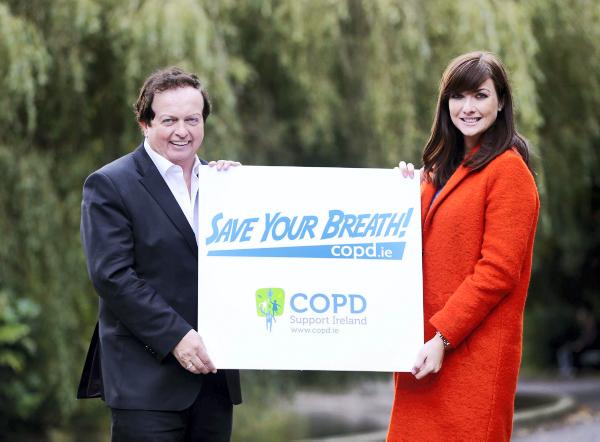
Early treatment is important. Between 17-23 November, a COPD Save Your Breath Screening Roadshow will visit key locations in Ireland to encourage people to know the symptoms of COPD and to seek diagnosis. Full information on the locations, dates and times are available on www.copd.ie
“For the most part, COPD is preventable,” says professor Tim McDonnell, consultant respiratory physician, St Vincent’s University Hospital.
“Smoking is the single biggest causative factor in developing the disease. The most effective thing that people can do to avoid COPD is to not smoke, or if they are already smoking, to stop with the help of one of the many smoking cessation programmes available throughout the country.
“I would strongly encourage people to check out www.copd.ie. Many people don’t know they have COPD. This campaign is about encouraging people to know the symptoms and to take the next step – have a spirometry test. Early treatment can make a big difference.”
• Chronic – means it won’t go away.• Obstructive – means partly blocked.• Pulmonary – means in the lungs.• Disease – means sickness.Take the ‘save your breath’ COPD test
Answer yes to four or more of the following questions and you should get checked out for COPD:
1. Do you cough several times every day, several days of the week?2. Have you been coughing like this for more than three months?3. Do you cough up mucous (phlegm) most days?4. Do you feel breathless from physical work or moderate exercise?5. Are you a current or former smoker?6. Do you work, or have you ever worked, in an environment where there is exposure to pollution, fumes, dust or smoke?7. Are you over the age of 35?Finding COPD early gives you the best chance to prevent further lung damage.
Time for your flu vaccination
With winter arriving, flu risk returns, but there is a vaccination available. If you have a medical card or GP visit card, it will be free from your GP if you are in one of the key risk groups outlined below.
If you don’t have either card, you will be charged a consultation fee in the region of €30 if the nurse administers the injection. Vaccinations are also available at many pharmacies. Shop around for prices.
Vaccines are the best line of defence against a flu virus, says Dr Brenda Corcoran of the HSE.
“Each year there is a new seasonal vaccine to protect against the circulating strains of flu virus. Flu is very infectious and can cause potentially serious illnesses, especially for older people, those who have a chronic illness and pregnant women.”
The flu vaccine can’t give you the flu as it doesn’t contain any live flu virus, she states.
At-risk groups
• Those aged over 65.• Those with diabetes, heart or lung disease.• Those with a BMI over 40.• Pregnant women (vaccination given at any stage of pregnancy).• Nursing home residents.• Carers.• Those with regular contact with poultry, pigs and water fowl.Note: Flu comes on very quickly and includes high temperature, severe headache, joint pains and sudden, extreme exhaustion.
Feeling tired all the time
Many people go to see their doctor because they are feeling TATT (tired all the time). What could cause this?
• Stress (most common cause).
• Poor diet.
• Anaemia.
• Undiagnosed diabetes.
• Depression.
If you’re stressed, stress hormones are present in your system and these reduce your energy.
Coffee or alcohol, taken to relieve the stress, only make the situation worse. Exercise, rest and a well-balanced diet that includes fish oils (to lift mood) and vitamin C (to increase iron absorption) can also help. A GP can do a simple blood sugar test to determine whether or not you have diabetes. If the tiredness has lasted several weeks, you should see your GP.
It’s a very common condition and can affect people of any age – men, women and children,” says Dublin-based pharmacist Bernard Duggan.
But what are the sinuses?
“They are air-filled holes or cavities that are found behind our cheekbones, forehead, eyes and nose.
“When someone gets sinusitis they would typically have pain in those areas of their face. A blocked or runny nose is also likely too and sometimes the person may have a raised temperature as well.”
The main cause is usually viral.
“It’s usually triggered by a common cold or flu, where the infection spreads to these areas – the sinuses.
“Hay fever can set it off too and you can also get sinusitis if you inhale something that irritates your nose – air pollution or household detergents, for example.”
Four kinds of sinuses
There are four pairs of sinuses, he states.
“Two are behind the forehead (frontal sinuses), two behind the bridge of the nose (ethnoid), two behind the eyes (sphenoid) and two behind the cheekbones (maxillary sinuses).
With sinusitis, you can have pain and tenderness in that whole area and sometimes pain can worsen when you move your head.”
Antibiotics not appropriate
Because it is usually caused by a virus, which is a self-limiting condition, ie it usually clears itself up after one to two weeks, antibiotics are not appropriate, Bernard Duggan adds. However, symptom relief can be found in over-the-counter products.
What may help
• For pain: “For pain we would suggest non-prescription, over-the-counter pain relief like paracetamol or ibuprofen.”
• Blocked nose: “If the person has a blocked nose, a decongestant can help open up airways and relieve congestion, eg Sudafed tablets or spray, Vicks sinus spray or the Otrivine sprays.”
Remember, though, you should only use these products for a maximum of seven days.
“That’s because they can cause a rebound congestion, making the nose block up again, so they are only for short-term treatment. Oils like Vicks or Olbas oil also help open up the airways. Essential oils (also known as volatile oils) can also help – products like eucalyptus oil or camphor oil will open up nasal passages and release congestion.”
The traditional way of putting a towel over your head and leaning over a bowl of warm water that contains a decongestant can be used, he says.
“Be careful that the water isn’t too hot though and that you don’t burn your nasal passages. An alternative is to simply put the essential oil on a piece of tissue paper and inhale it that way.”
• Runny nose: Antihistamine tablets may help in this situation.
“If your nose is very runny, you could take an antihistamine tablet to dry it up. There are many on the market. Remember to dispose of tissues properly after you sneeze though and wash your hands after blowing your nose, so that you don’t transfer the infection to others.”
• Bacterial infection: Occasionally, a patient can get a bacterial infection on top of the viral one, so the sinusitis doesn’t clear up.
“In that case, you should go to your doctor,” he says. “Some people may have an obstruction in their sinuses like a polyp (a growth) which could be blocking the affected sinus. Surgery for sinusitis is rare, but if your sinusitis doesn’t clear up, you may be referred to an ENT (ear, nose and throat) specialist by your GP.”
Note: Some decongestants should not be used in children under six years of age.
Difference between catarrh and sinustis
Confusing sinusitis with catarrh? What’s the difference?
Sinusitis is the inflammation of one or more of the air-filled cavities of the face. Catarrh is the excessive secretion of mucous by the lining of the nose, sinuses, back of the throat and/or air passages.
Did you know?
• Headache early in the morning can be a sign of sinusitis.
• Loss of sense of smell, eyelid swelling and earache can also be symptoms.
• Chronic sinusitis is when it lasts more than three weeks.
Healthbytes
COPD Day
Concerned about a persistent cough? About being breathless when you are climbing the stairs? That you are getting chest infections too often?
If so, you should see your doctor for a simple spirometry test which checks your lung function.
COPD (Chronic Obstructive Pulmonary Disease) includes conditions like bronchitis and emphysema, and results in shortness of breath and reduced exercise ability. That’s because the airways in the lungs are blocked.
It is a serious disease and more than 380,000 Irish people are living with it at present.
Early treatment is important. Between 17-23 November, a COPD Save Your Breath Screening Roadshow will visit key locations in Ireland to encourage people to know the symptoms of COPD and to seek diagnosis. Full information on the locations, dates and times are available on www.copd.ie
“For the most part, COPD is preventable,” says professor Tim McDonnell, consultant respiratory physician, St Vincent’s University Hospital.
“Smoking is the single biggest causative factor in developing the disease. The most effective thing that people can do to avoid COPD is to not smoke, or if they are already smoking, to stop with the help of one of the many smoking cessation programmes available throughout the country.
“I would strongly encourage people to check out www.copd.ie. Many people don’t know they have COPD. This campaign is about encouraging people to know the symptoms and to take the next step – have a spirometry test. Early treatment can make a big difference.”
• Chronic – means it won’t go away.• Obstructive – means partly blocked.• Pulmonary – means in the lungs.• Disease – means sickness.Take the ‘save your breath’ COPD test
Answer yes to four or more of the following questions and you should get checked out for COPD:
1. Do you cough several times every day, several days of the week?2. Have you been coughing like this for more than three months?3. Do you cough up mucous (phlegm) most days?4. Do you feel breathless from physical work or moderate exercise?5. Are you a current or former smoker?6. Do you work, or have you ever worked, in an environment where there is exposure to pollution, fumes, dust or smoke?7. Are you over the age of 35?Finding COPD early gives you the best chance to prevent further lung damage.
Time for your flu vaccination
With winter arriving, flu risk returns, but there is a vaccination available. If you have a medical card or GP visit card, it will be free from your GP if you are in one of the key risk groups outlined below.
If you don’t have either card, you will be charged a consultation fee in the region of €30 if the nurse administers the injection. Vaccinations are also available at many pharmacies. Shop around for prices.
Vaccines are the best line of defence against a flu virus, says Dr Brenda Corcoran of the HSE.
“Each year there is a new seasonal vaccine to protect against the circulating strains of flu virus. Flu is very infectious and can cause potentially serious illnesses, especially for older people, those who have a chronic illness and pregnant women.”
The flu vaccine can’t give you the flu as it doesn’t contain any live flu virus, she states.
At-risk groups
• Those aged over 65.• Those with diabetes, heart or lung disease.• Those with a BMI over 40.• Pregnant women (vaccination given at any stage of pregnancy).• Nursing home residents.• Carers.• Those with regular contact with poultry, pigs and water fowl.Note: Flu comes on very quickly and includes high temperature, severe headache, joint pains and sudden, extreme exhaustion.
Feeling tired all the time
Many people go to see their doctor because they are feeling TATT (tired all the time). What could cause this?
• Stress (most common cause).
• Poor diet.
• Anaemia.
• Undiagnosed diabetes.
• Depression.
If you’re stressed, stress hormones are present in your system and these reduce your energy.
Coffee or alcohol, taken to relieve the stress, only make the situation worse. Exercise, rest and a well-balanced diet that includes fish oils (to lift mood) and vitamin C (to increase iron absorption) can also help. A GP can do a simple blood sugar test to determine whether or not you have diabetes. If the tiredness has lasted several weeks, you should see your GP.





SHARING OPTIONS