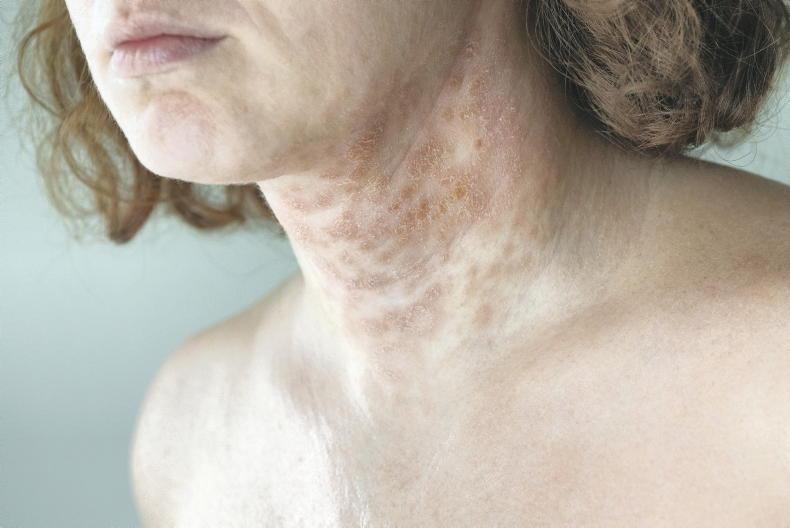
Caroline Irwin was nine years old when she first experienced psoriasis, a chronic inflammatory skin disorder that affects at least 73,000 people in Ireland. Psoriasis causes the immune system to become overactive, and there is an increase in the rate at which skin cells are produced and shed from the skin. This leads to a build-up of thick, red, scaly patches that can be dry and itchy.
Psoriasis first appeared on Caroline’s scalp as a crusty scale that was itchy and thick. “My mum took me to our local GP at the time, and it was in the days before any internet. He took down a huge encyclopedia and showed me horrendous pictures of psoriasis,” she says. “Within three weeks, mine spread down into my forehead and all over my body.”
For five decades, Caroline, who lives in Ballyfoyle, Co Kilkenny, did not know what life was like without psoriasis.
“I’ve never not had it,” she explains. “Mine never went away. And then in those days, there was no information about treatments. It was steroid creams, and that was it.
“I was just covered in it for all those years. I just ignored it. We were told it was a skin condition and not contagious, and off you go.”
Decades on, there is much more information publicly available about psoriasis, including what causes it and how to manage it.
Professor Caitriona Ryan, consultant dermatologist at the Institute of Dermatologists and Blackrock Clinic explains that the condition affects people of all ages.
“It develops due to a combination of genetic, immune, and environmental factors. If you have a family history of psoriasis, you may be more likely to develop it.
“Certain triggers such as stress, infections, alcohol, smoking, some medications, and seasonal changes can activate the immune system and bring on flare-ups,” says Professor Ryan.

Professor Caitriona Ryan, consultant dermatologist at the Institute of Dermatologists and Blackrock Clinic.
Living with psoriasis
Living with psoriasis day-to-day “was terrible”, according to Caroline. “You’d never try on clothes in a shop, because you’d be leaving flakes all over the place. It was horrible. And then when you scratch it, the skin just shed all over the place and it bled a lot. If you stayed in a hotel room, it was a nightmare, because you’d leave blood on the sheets like somebody had been shot.”
Caroline was hospitalised on three different occasions for psoriasis: once in Cork when she was 18 years old and twice in Holland, where she lived for seven years. “That’s when it hit me,” says Caroline. “They used to let me go in and out as a day patient but then one day, they took my temperature and said: you can’t go home, you’re seriously ill.”
Caroline had developed erythrodermic psoriasis, which is very dangerous. It is where the red flakes spread across the entire skin surface; and with so much skin flaking off, it can lead to lower body temperature, infections and even heart failure.
“I could have gone into kidney or liver failure. I never had a clue of how serious was. You’re losing all your body heat. I was sitting there shivering and it was roasting,” Caroline recalls.
When she moved back to Ireland from the Netherlands in the 1990s, Caroline set up the Psoriasis Association – now part of the Irish Skin Foundation – to increase awareness of psoriasis and support those living with the condition.
“I just came back here to Kilkenny with a tube of cream and I thought, I can’t be doing this,” she says. “We started off with about six people in a hotel, but it grew over the years – we now have nearly 1,000 people.”
Caroline also registered with a dermatologist in Waterford who helped her to try the new range of treatments that had become available. Now Caroline uses biologic treatments, a medication that targets the part of the immune system that is overactive because of psoriasis, and is administered by injection.
“The treatment stops the psoriasis in its tracks. I was worried about trying these because they were new, but I had no choice.
“I inject myself twice a week and I am completely clear,” says Caroline. “It happened around my 60th birthday. I got my ears pierced for my 60th birthday. I bought swimming togs, I bought dresses, shorts. I can’t believe the change in my life. I’m now 65 and I wake up every morning and I still look at my arms. I can’t believe this is my body I’m looking at.”
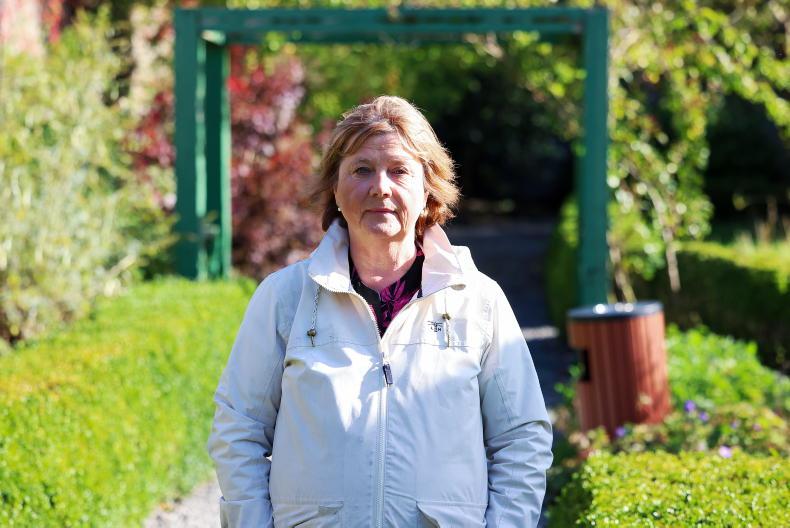
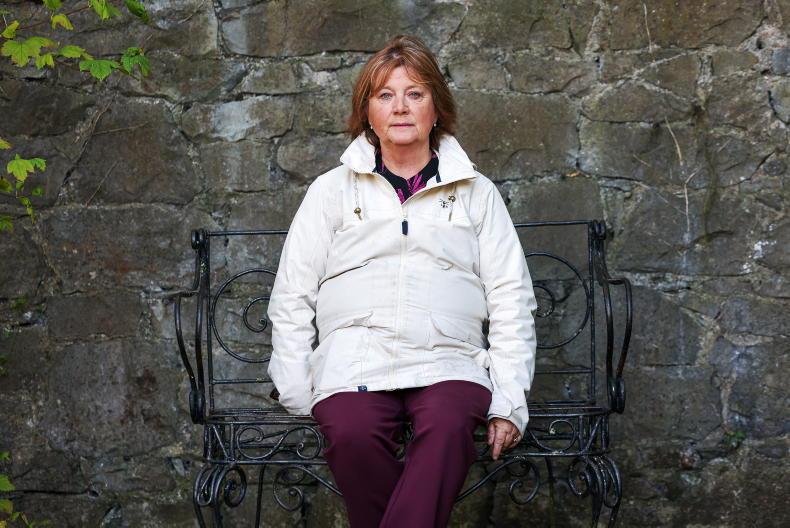
Caroline Irwin at Butler Garden in Kilkenny. \ Odhran Ducie
Managing your psoriasis
Professor Ryan is keen to reassure that psoriasis can be effectively managed with the right treatment and lifestyle strategies.
“Options range from topical creams and ointments for milder cases, to light therapy with controlled doses of ultraviolet light, and systemic medications or biologic injections for more severe cases. A healthy lifestyle can also help reduce flare-ups.
“Maintaining a balanced diet, regular exercise, avoiding smoking and excess alcohol, and practising stress management techniques all support skin health. Working closely with a dermatologist allows treatment to be tailored to each individual so that psoriasis can be kept well controlled and quality of life can be restored.”
Caroline’s skin may be much better now but she has developed psoriatic arthritis and Type 2 diabetes, which are common comorbidities [coexisting health conditions].
“Beyond the skin, psoriasis is now recognised as a systemic condition, meaning it is linked with inflammation throughout the body and can sometimes be associated with arthritis, as well as other health conditions such as cardiovascular disease and diabetes,” explains Professor Ryan.
In her work as psoriasis advocate serving on the board of Skin Foundation Ireland, Caroline is raising awareness about the condition and potential complications. “I’m trying to get it out there that people could develop Type 2 diabetes and arthritis with it.”
With autumn now here, many people may notice their psoriasis flaring up due to less ultraviolet (UV) exposure.
“Many people with psoriasis notice their skin is better in the summer and worse in the autumn and winter months,” explains Professor Ryan.“This is partly because natural sunlight contains ultraviolet light, which helps to reduce inflammation in the skin. In summer, people are often more relaxed, outdoors more frequently, and may experience lower stress levels, all of which can improve psoriasis.
“As the days shorten and temperatures drop, reduced UV exposure, cold dry air, central heating, and seasonal infections such as colds or sore throats can all trigger flare-ups.
“It is so important to prepare as we move into the colder months. Keeping skin well moisturised, managing stress, and staying consistent with treatment can all help keep psoriasis in check.”
The Irish Skin Foundation provides free, specialist guidance for people struggling to manage skin conditions such as psoriasis via their ‘Ask-a-Nurse’ helpline. Seek advice about your skin condition at irishskin.ie/ask-our-dermatology-nurse.
Find out what you need to know about psoriasis and how to manage scalp psoriasis at irishskin.ie/psoriasis.
The Irish Skin Foundation has launched a nationwide survey for people living with psoriasis in Ireland. The aim of the survey is to paint a more complete picture of the lives of people with psoriasis. The information gathered will be used for the Irish Skin Foundation’s advocacy work to support people living with psoriasis. It takes about 20 minutes to complete and is available at irishskin.ie.
Caroline Irwin was nine years old when she first experienced psoriasis, a chronic inflammatory skin disorder that affects at least 73,000 people in Ireland. Psoriasis causes the immune system to become overactive, and there is an increase in the rate at which skin cells are produced and shed from the skin. This leads to a build-up of thick, red, scaly patches that can be dry and itchy.
Psoriasis first appeared on Caroline’s scalp as a crusty scale that was itchy and thick. “My mum took me to our local GP at the time, and it was in the days before any internet. He took down a huge encyclopedia and showed me horrendous pictures of psoriasis,” she says. “Within three weeks, mine spread down into my forehead and all over my body.”
For five decades, Caroline, who lives in Ballyfoyle, Co Kilkenny, did not know what life was like without psoriasis.
“I’ve never not had it,” she explains. “Mine never went away. And then in those days, there was no information about treatments. It was steroid creams, and that was it.
“I was just covered in it for all those years. I just ignored it. We were told it was a skin condition and not contagious, and off you go.”
Decades on, there is much more information publicly available about psoriasis, including what causes it and how to manage it.
Professor Caitriona Ryan, consultant dermatologist at the Institute of Dermatologists and Blackrock Clinic explains that the condition affects people of all ages.
“It develops due to a combination of genetic, immune, and environmental factors. If you have a family history of psoriasis, you may be more likely to develop it.
“Certain triggers such as stress, infections, alcohol, smoking, some medications, and seasonal changes can activate the immune system and bring on flare-ups,” says Professor Ryan.

Professor Caitriona Ryan, consultant dermatologist at the Institute of Dermatologists and Blackrock Clinic.
Living with psoriasis
Living with psoriasis day-to-day “was terrible”, according to Caroline. “You’d never try on clothes in a shop, because you’d be leaving flakes all over the place. It was horrible. And then when you scratch it, the skin just shed all over the place and it bled a lot. If you stayed in a hotel room, it was a nightmare, because you’d leave blood on the sheets like somebody had been shot.”
Caroline was hospitalised on three different occasions for psoriasis: once in Cork when she was 18 years old and twice in Holland, where she lived for seven years. “That’s when it hit me,” says Caroline. “They used to let me go in and out as a day patient but then one day, they took my temperature and said: you can’t go home, you’re seriously ill.”
Caroline had developed erythrodermic psoriasis, which is very dangerous. It is where the red flakes spread across the entire skin surface; and with so much skin flaking off, it can lead to lower body temperature, infections and even heart failure.
“I could have gone into kidney or liver failure. I never had a clue of how serious was. You’re losing all your body heat. I was sitting there shivering and it was roasting,” Caroline recalls.
When she moved back to Ireland from the Netherlands in the 1990s, Caroline set up the Psoriasis Association – now part of the Irish Skin Foundation – to increase awareness of psoriasis and support those living with the condition.
“I just came back here to Kilkenny with a tube of cream and I thought, I can’t be doing this,” she says. “We started off with about six people in a hotel, but it grew over the years – we now have nearly 1,000 people.”
Caroline also registered with a dermatologist in Waterford who helped her to try the new range of treatments that had become available. Now Caroline uses biologic treatments, a medication that targets the part of the immune system that is overactive because of psoriasis, and is administered by injection.
“The treatment stops the psoriasis in its tracks. I was worried about trying these because they were new, but I had no choice.
“I inject myself twice a week and I am completely clear,” says Caroline. “It happened around my 60th birthday. I got my ears pierced for my 60th birthday. I bought swimming togs, I bought dresses, shorts. I can’t believe the change in my life. I’m now 65 and I wake up every morning and I still look at my arms. I can’t believe this is my body I’m looking at.”

Caroline Irwin at Butler Garden in Kilkenny. \ Odhran Ducie
Managing your psoriasis
Professor Ryan is keen to reassure that psoriasis can be effectively managed with the right treatment and lifestyle strategies.
“Options range from topical creams and ointments for milder cases, to light therapy with controlled doses of ultraviolet light, and systemic medications or biologic injections for more severe cases. A healthy lifestyle can also help reduce flare-ups.
“Maintaining a balanced diet, regular exercise, avoiding smoking and excess alcohol, and practising stress management techniques all support skin health. Working closely with a dermatologist allows treatment to be tailored to each individual so that psoriasis can be kept well controlled and quality of life can be restored.”
Caroline’s skin may be much better now but she has developed psoriatic arthritis and Type 2 diabetes, which are common comorbidities [coexisting health conditions].
“Beyond the skin, psoriasis is now recognised as a systemic condition, meaning it is linked with inflammation throughout the body and can sometimes be associated with arthritis, as well as other health conditions such as cardiovascular disease and diabetes,” explains Professor Ryan.
In her work as psoriasis advocate serving on the board of Skin Foundation Ireland, Caroline is raising awareness about the condition and potential complications. “I’m trying to get it out there that people could develop Type 2 diabetes and arthritis with it.”
With autumn now here, many people may notice their psoriasis flaring up due to less ultraviolet (UV) exposure.
“Many people with psoriasis notice their skin is better in the summer and worse in the autumn and winter months,” explains Professor Ryan.“This is partly because natural sunlight contains ultraviolet light, which helps to reduce inflammation in the skin. In summer, people are often more relaxed, outdoors more frequently, and may experience lower stress levels, all of which can improve psoriasis.
“As the days shorten and temperatures drop, reduced UV exposure, cold dry air, central heating, and seasonal infections such as colds or sore throats can all trigger flare-ups.
“It is so important to prepare as we move into the colder months. Keeping skin well moisturised, managing stress, and staying consistent with treatment can all help keep psoriasis in check.”
The Irish Skin Foundation provides free, specialist guidance for people struggling to manage skin conditions such as psoriasis via their ‘Ask-a-Nurse’ helpline. Seek advice about your skin condition at irishskin.ie/ask-our-dermatology-nurse.
Find out what you need to know about psoriasis and how to manage scalp psoriasis at irishskin.ie/psoriasis.
The Irish Skin Foundation has launched a nationwide survey for people living with psoriasis in Ireland. The aim of the survey is to paint a more complete picture of the lives of people with psoriasis. The information gathered will be used for the Irish Skin Foundation’s advocacy work to support people living with psoriasis. It takes about 20 minutes to complete and is available at irishskin.ie.

SHARING OPTIONS