



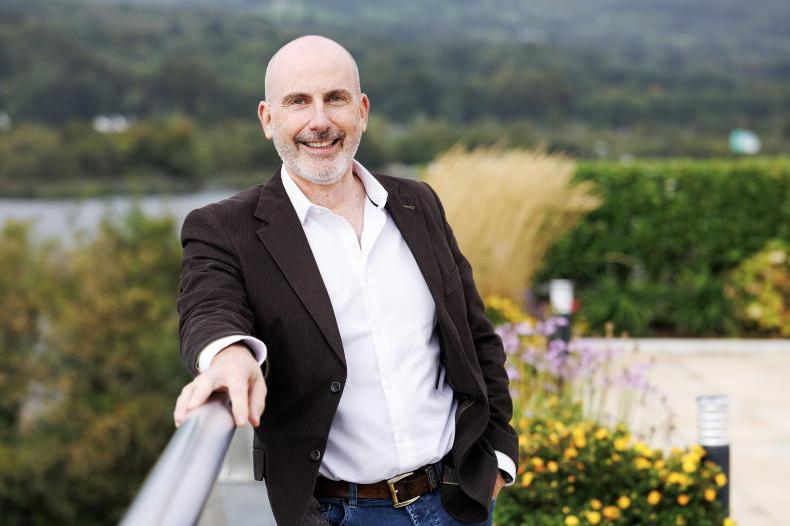
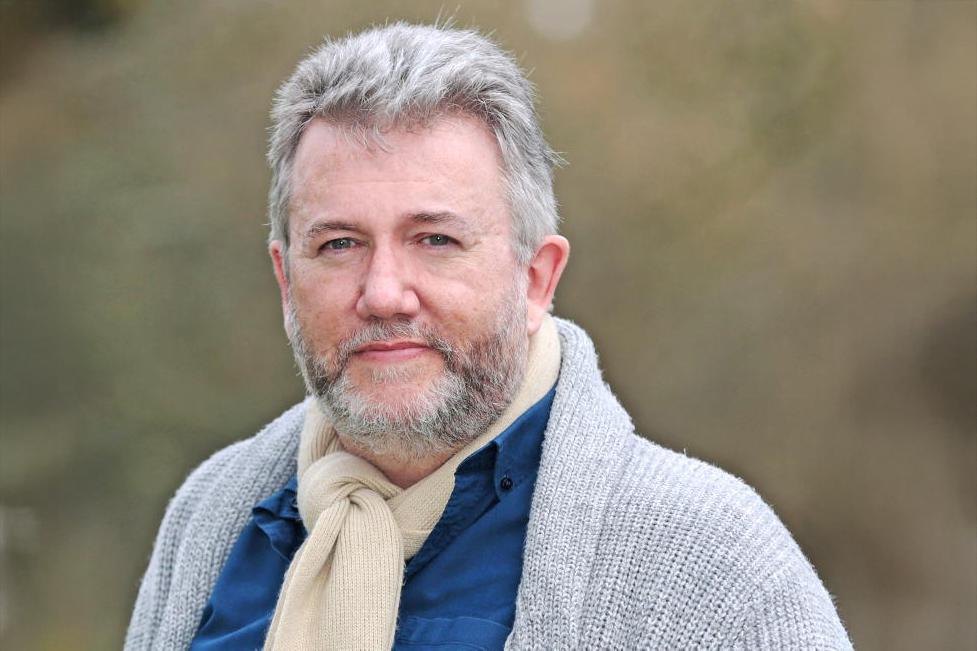
Dr David Coleman needs no introduction, but as he strolls into the Lakeside Hotel in Killaloe in Co Clare for his interview with Irish Country Living, he introduces himself in a way that is both warm and down-to-earth.
The clinical psychologist, author and broadcaster has been a familiar presence on Irish airwaves and screens for more than two decades, presenting programmes including Families in Trouble, 21st Century Child, Teens in the Wild and the IFTA-winning Bullyproof, as well as writing four books on parenting and family life, including his most recent title: Fear Less: The Ten-Step Guide to Helping Kids Take Charge of Anxiety.
Now, after more than 30 years working with children, teenagers and their families, David is heading back on the road with Ready for Anything: Building Emotional Resilience in Children and Teenagers, a nationwide tour beginning in October.
The tour’s theme is resilience, something David says has come up frequently in conversations with parents in recent years.
“I think parents have become a little more anxious about their children and about them being out in the world and the challenges that they might face,” he says.
“But I think the consequence of that is parents are probably protecting their kids a bit more and maybe overprotecting them.
“By protecting kids too much, we disempower them. And that’s really the theme for the tour. It’s: how do we actually empower them? How do we give them those skills for coping and knowing that even when times are tough, they can cope, or when they’ve had a knock back or some setback, that they can overcome it?”
Drawing on decades of experience, he brings up an example of a young boy forgetting his packed lunch and the parent driving into the school with it instead of letting him figure it out for himself.
“They won’t die of hunger,” he says, with a laugh.
In fact, the worst thing that could happen, he suggests, is the teacher and kids rally round and he’s offered a bruised apple from the bottom of a school bag, or a few stale Rich Teas from the staffroom.
“It does definitely give a clearer sense that his actions have consequences,” David says.
“Not that the consequence was horrendous, it wasn’t, but he can cope with the consequences and so that’s learning and that’s where resilience comes from.”
David also discusses the language around anxiety and, while he welcomes the greater focus on children’s emotional wellbeing, he worries that normal feelings are sometimes being turned into something bigger.
“There’s a big discourse on mental health, which is largely positive in as much as it brings the issue to the fore about children’s emotional wellbeing,” he says.
“But I never use the phrase mental health because I don’t know that it’s ultimately helpful.”
Being nervous about starting school, giving a presentation, or playing a big match can be an entirely appropriate childhood experience.
Yet David sees teenagers in his clinic who tell him very definitively, “I have anxiety”, as though it is fixed and unmanageable.
“They need to know that a feeling is there for sure, that you can feel anxious in a situation, but it’s going to pass. That anxiety is going to go. It might come back another time, but it’ll go again.”
There’s a big discourse on mental health, which is largely positive in as much as it brings the issue to the fore about children’s emotional wellbeing
When asked if children have their own fixed temperaments which will affect their anxiety levels, he says that of course, children come with their own temperaments.
Some are fiercely independent from an early age, while others may be more unsure or timid. Either way, David says, they need guidance and the opportunity to make mistakes, while those mistakes – and their consequences – are still relatively small.
As the conversation turns to the prevalence of smartphones in our society, David doesn’t hold back.
“I would love it if we could make it illegal for under-18s to own a smartphone.”
He draws an important distinction between children having a phone and having a smartphone.
“There is a difference: a 12 or 13-year-old starting secondary school having a phone in their pocket so they can contact their parents is useful,” he says. “But it doesn’t need to be a smartphone. It’s having the internet in their pocket – that’s the big issue. It’s so engaging, it’s so entertaining and, ultimately, so addictive, because of the way we know that the apps are designed.”
David would much rather children could call and text their friends and parents without having unlimited entertainment constantly available to them. He also worries about the impact on their ability to concentrate and sustain attention: “I just think they’re a disaster. They’re an absolute disaster.”
Parents struggling
For all his talk of allowing children to experience manageable difficulties, however, David isn’t suggesting parents should tell them to toughen up or dismiss their feelings.
“I think sometimes as parents we are reluctant to let our kids get upset,” he says. “I think it’s always good for children to be able to express their feelings and to have those feelings heard and understood.
“Younger children may not have the vocabulary to tell us exactly what they are feeling, so it comes out through their behaviour, tears or tantrums.Teenagers may be perfectly capable of telling us what is wrong, but that doesn’t necessarily mean adults always want to hear it.”
David’s approach is to acknowledge the feeling without necessarily fixing the problem. A child or teenager might desperately want to stay in bed on a dark, cold morning. A parent can understand that and say so, while still making it clear that they must get up and go to school.
After 30 years as a clinical psychologist, Irish Country Living asks if there is anything David once advised parents to do that he no longer recommends.
“Time out,” he says. “When I started as a psychologist, I would have just assumed that that was a wise behavioural technique to use with kids when they’re small.”
Having his own children and watching them grow changed his thinking: “I started to realise that that kind of emotional distress that we put kids through is desperate for them, so definitely I would change that – or I have changed that – and I do think differently about that.”
Much else, he says, has remained steady, despite the world around children changing enormously over those 30 years.
In his private practice, much of his job still involves listening to children, helping them make sense of what they are feeling and giving them another perspective on what is happening in their lives.
Younger children may not have the vocabulary to tell us exactly what they are feeling, so it comes out through their behaviour, tears or tantrums.Teenagers may be perfectly capable of telling us what is wrong, but that doesn’t necessarily mean adults always want to hear it
Parents can struggle with knowing when it is time to seek that kind of professional help. For David, a marked change in a child can be a useful signal. A child or teenager who was doing fine suddenly becoming angry at home, fighting with siblings or behaving completely out of character may be reacting to something that has changed elsewhere in their world.
If parents have tried to understand what is happening and help their child through it but things aren’t improving, he says, “absolutely reach out”. He advises that sometimes an outside perspective is all that is needed to shed a different light on what is going on.
“Kids need one good adult, whether that be their parent, coach, teacher, somebody who can just be present and solid, and be that kind of oasis of support or calm when the world is turbulent. This is so critical for them.”
David returns this autumn with Ready for Anything: Building Emotional Resilience in Children and Teenagers, visiting eight venues around the country. The tour opens at An Grianán Theatre, Letterkenny, on Thursday 8 October. Further dates include Draíocht in Blanchardstown and VISUAL in Co Carlow, where the show is scheduled for 20 October. Each evening also includes an open-forum questions and answers. Strictly over-18.
The tour addresses how today’s children and teenagers are growing up in a world that feels faster, louder and more pressurised than ever, covering academic demands, social media pressures and everyday challenges.
Let small mistakes happen: give children the chance to deal with manageable consequences while the stakes are low, rather than immediately stepping in to rescue them.
Listen before trying to fix things: children need to know their feelings have been heard and understood. A parent doesn’t always have to provide a solution.
Separate feelings from identity: help children understand that feeling anxious, nervous or upset is temporary. An emotion is something they experience, rather than something that defines them.
Watch for changes in behaviour: a sudden change – anger, fighting with siblings or behaviour that is out of character can be a sign that something else is going on.
Be a steady presence: children benefit enormously from having a reliable adult who remains calm and supportive when things around them feel difficult.
Know when to seek help: if you’ve tried to understand what is happening and things aren’t improving, don’t be afraid to seek professional support.
See tour dates and ticket booking details on davidcoleman.ie/tour. Tickets are €32 (inclusive of booking fee). Fear Less: The Ten-Step Guide to Helping Kids Take Charge of Anxiety, €15.99.




SHARING OPTIONS