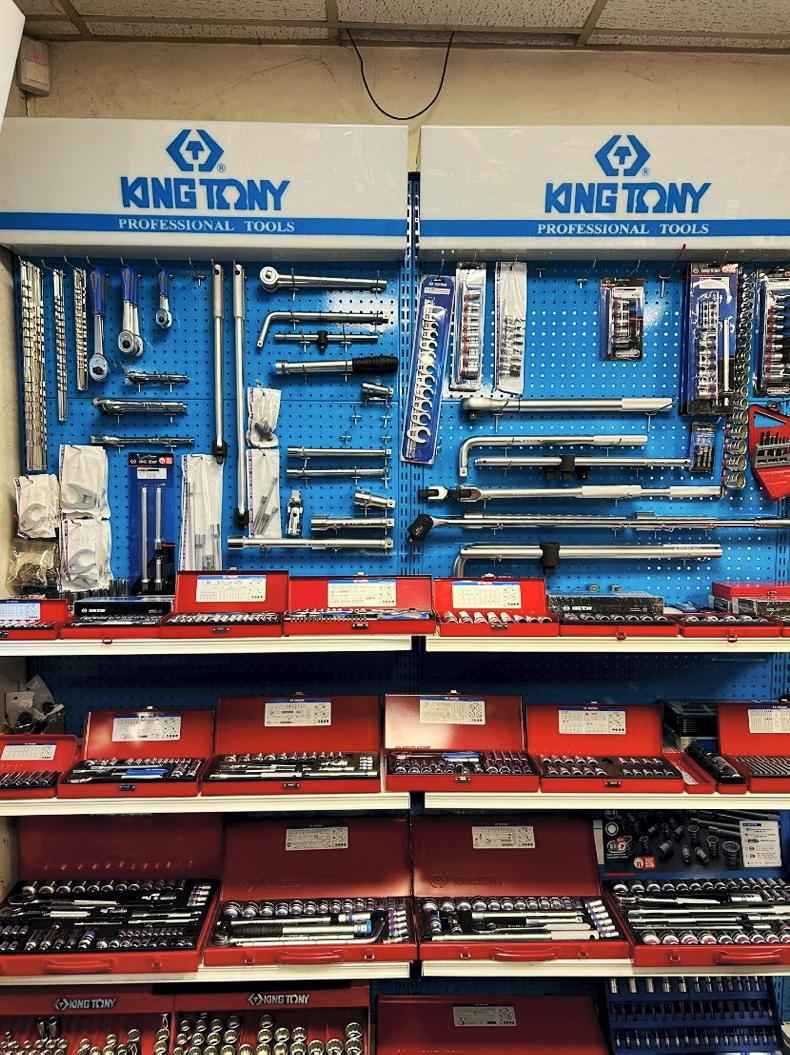
Central Bearing Supplies Ltd (CBS) is today recognised as the leading Irish distributor for bearings and farm machinery transmission parts across Ireland.
It was established by Joe Bannon in 1982 and, more than four decades later, Joe remains actively involved in the business.
CBS today operates from two premises in Athlone and Galway, with the former serving as the company’s headquarters. Darren Herbst recently joined the company as general manager, working alongside several long-serving CBS employees who have accumulated considerable technical knowledge and product experience over the years.
“That experience becomes particularly valuable when working with both new and older agricultural equipment,” according to Darren, adding that it is crucial to the business. “The retail customer standing at the counter may not have a current part number, but what the customer may have is an old bearing, chain, belt or damaged component removed from a machine that could itself have been working for many years.
“Identifying the right replacement can, therefore, involve measurements and application of knowledge, as well as understanding the conditions in which the component is expected to operate. It’s our staff that have this expertise.”
Machinery refurbishment is coming back into focus
Darren sees this as being more relevant than ever to the agricultural parts side of the business.
With the cost of replacing agricultural machinery putting greater focus on maintaining and restoring existing equipment, carrying a large range of top-quality spare parts is essential.
CBS has an extensive range of driveline parts to help its dealers and retail customers with general maintenance or when breakdowns do occur.
Darren highlights that, rather than simply replacing the component that has failed, the starting point is often to establish why it failed and whether there are other issues that need to be addressed.
“For an older machine that is otherwise mechanically sound, that approach can make considerable sense. A worn bearing, chain, belt, gearbox or damaged thread does not necessarily mean the end of the machine.
“The question is whether the underlying equipment has a useful working life remaining and whether the proposed repair represents good value,” he says.
With machine prices and operating costs skyrocketing, farmers and contractors should examine critical components on their machinery. Identifying parts for replacement is the way to approach next season.
For farmers and contractors, downtime during a narrow weather window can quickly become more damaging than the cost of the failed component itself. At the same time, the cost of replacing agricultural machinery is being more closely scrutinised, with many assessing whether existing machines can be economically repaired, refurbished and kept working for longer.
“A bearing, chain or belt can be a relatively small part of an agricultural machine, but when one fails in the middle of silage or a grain harvest, the consequences can be anything but small,” he adds. The economics of machinery ownership make the repair-versus-replace decision particularly relevant.
“A machine that is structurally and mechanically sound may still have years of useful working life ahead, even though individual components need to be replaced or repaired. It’s that time of year now when lots of machines are being washed and backed into sheds and this is where customers tend to make parts lists.
“Some really smart guys realise a certain belt or bearing is critical; they grasp its worth, ordering a second, as during harvest it’s in their own shed and it’s like an insurance cover and peace of mind knowing they will have little downtime if anything happens down the line.”
Bearings: a small part with a big job
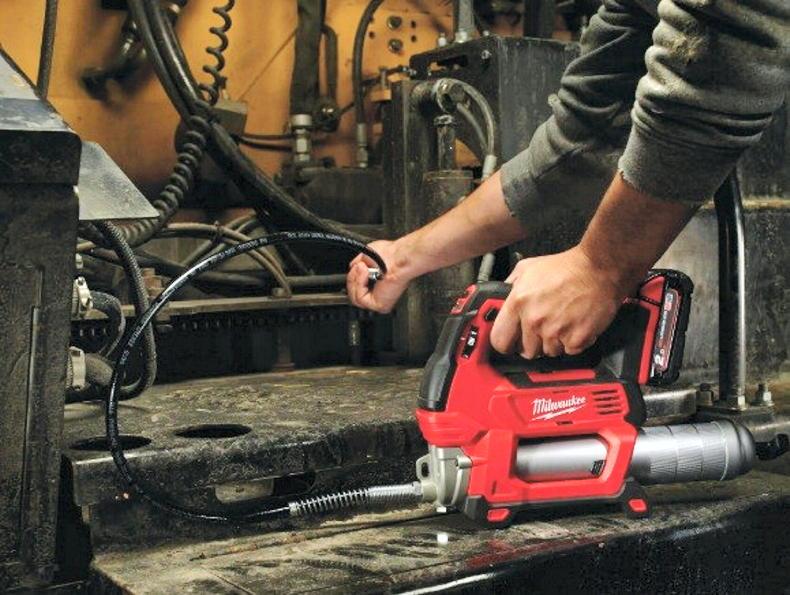
Be mindful when using electric grease guns as they can easily overfill bearings and damage seals.
“The five most common reasons for bearing failure are contamination, incorrect lubrication, water ingress, misalignment and excessive loading,” says Darren. Bearings are used throughout agricultural machinery, including mowers, balers, tedders, combines, feeding equipment, conveyors and augers, but the conditions in which they operate can be particularly demanding.
“An electric grease gun typically operates at a maximum pressure range of 7,000 to 10,000 PSI. Forcing grease into bearings like this can overfill them and damage seals, opening the way for contamination, so they must be used with due diligence.
“People can assume the bearing is taking grease; the bearing itself is often hidden but the grease might be just leaking out if the rubber seal is blown out. Dust, crop residue, moisture and other contaminants can all enter, affecting bearing performance, particularly when combined with the loads and vibration encountered in agricultural machinery.
“A failed bearing, however, does not automatically mean that the bearing itself was the underlying problem. The condition of the shaft or housing, alignment, loading, sealing and lubrication can all contribute to premature failure. If that underlying problem is not addressed, fitting another bearing may simply begin the same cycle again. CBS carries a huge range of top-quality branded bearings.
“Among the solutions CBS offers are DODGE agriculture duty mounted bearings, featuring a shielded triple-lip sealing arrangement designed to provide additional protection in demanding operating environments.
“The practical message is to select the bearing for the conditions in which it will work and, particularly where repeated failures are occurring, to look beyond the bearing itself.”
Chains: look at the complete drive
The rule of thumb for accepted wear limit for most agricultural roller chains is 1.5% to 2% elongation. Exceeding 3% wear will cause the chain to ride up on the sprocket teeth, leading to severe damage and wear, jumping or breakage.
The regular wear limit for an agricultural sprocket is a 10% reduction in tooth thickness or visible “hooking” depth on the face of the teeth.
As it wears, the chain drags against one side of the tooth, carving out a hook shape and sharpening the tip; they are noticeably sharp, hooked.
“A worn or broken chain may appear to present a straightforward job, but putting a new chain onto badly worn sprockets can drastically shorten the life of the replacement.
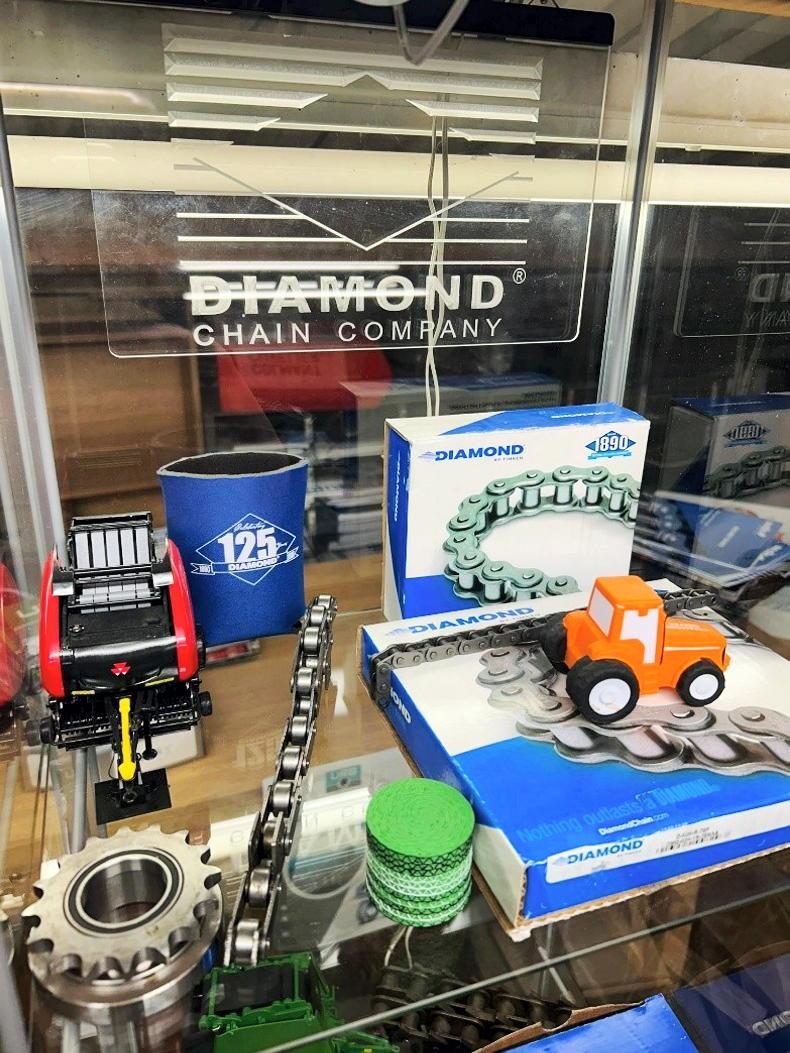
“Alignment, tension, contamination and lubrication also need to be considered. CBS supplies the world-renowned Diamond chain products, a chain now famous for demanding agricultural applications such as baling equipment, dung spreaders, combines etc.
“For a farmer or workshop carrying out a refurbishment, examining the complete drive rather than focusing only on the failed part can help avoid doing the same job for a second time,” Darren says.
Repeated belt failure can tell a similar story
The same rules apply to rubber belts – as simply fitting another replacement belt may not address incorrect tension, pulley misalignment or worn pulley grooves, according to Darren.
Selecting a belt that is suitable for the application is very important. CBS stocks Colmant Cuvelier Evolution belts for appropriate agricultural and industrial applications.
“There is a very large range of belts in-house, different styles and sizes for most machines, from V-belts (HA, HB, HC, HD) to multi-V belts, cogged belts, double-sided hexagonal V-belts and variable speed/variator belts, to name a few.”
Older machinery
This has relevance for older machinery being refurbished.
“Replacing a belt is relatively inexpensive compared with replacing a complete machine, but repeated failures mean additional parts, labour and downtime.
“My advice would be to concentrate on finding the underlying problem, which is an important part of making the repair economical,” Darren says.
Correct belt selection, alignment, pulley condition and tension can all influence service life on any agricultural machine.
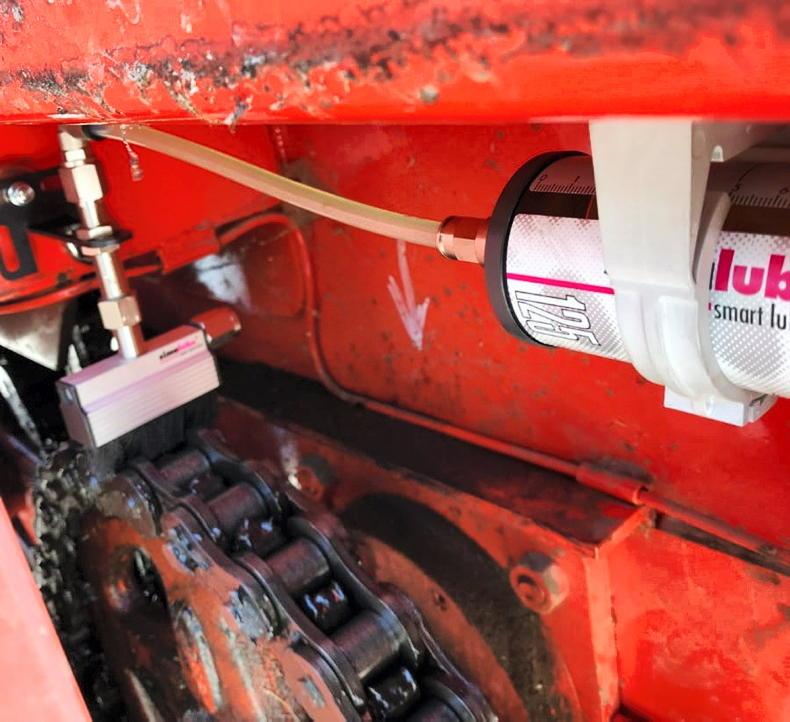
Simalube automatic lubricator retrofitted to a machine which provides controlled lubricant delivery over time
One of the newer product areas CBS is developing for agricultural customers is automatic lubrication. Greasing machinery is one of the most familiar farm maintenance jobs, but the assumption that more grease must provide more protection is not necessarily correct.
Under-lubrication can leave bearings inadequately protected, but over-greasing can also cause problems, including additional heat and potential seal damage. Using the correct quantity of lubricant and at suitable intervals is therefore very important and cannot be underestimated.
CBS has added Simalube automatic lubricators to its offering.
“These are designed to provide precisely controlled delivery of grease or oil over a defined period in suitable applications. The range includes solutions for bearing lubrication as well as oil dispensing arrangements using brushes for appropriate chain applications.
“For agricultural machinery with numerous lubrication points or points that are difficult to access, the potential benefit is consistency. Rather than removing the need for machinery checks or relying on drivers to grease or oil components, an automatic lubrication system becomes part of the maintenance regime, with visual inspection and other servicing requirements continuing as normal. It is working very well for farmers as a retrofit for older balers, combines and silage harvesters and it is just a fantastic, reliable solution.
“There is a more advanced offering called Simalube Impulse connect that has digital monitoring and configuration of the lubrication points via Bluetooth.
“Information such as general status, fill level, lubricant, start and change date is displayed to the user and easy to read in the app. It just enables the customer to manage the lubrication points digitally.”
Hydraulics/PTOs/gearboxes
The agricultural range extends further with driveshafts, gearboxes and hydraulic hoses. CBS provides an in-house hydraulic hose service from its Athlone facility and stocks PTO universal-joint components.
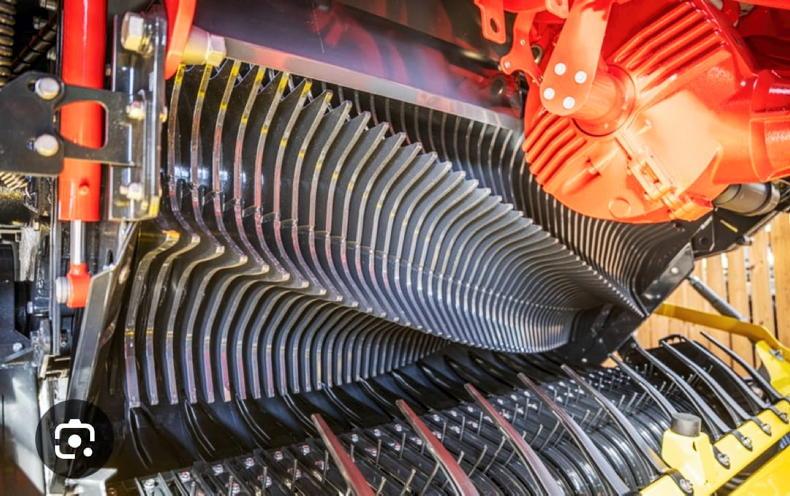
Darren says farmers and contractors need to realise that the tractor size and power are quite large today. It’s not uncommon to see 200-plus hp in front of a round baler, and the swath of grass is often 30ft.
“That does put additional pressure on the machinery driveline from the PTO shaft, gearbox, chain and sprockets to the bearings.”
CBS supplies DODGE gearboxes, including Quantis and Torque-Arm II ranges. For a farmer investing in the refurbishment of existing machinery, choosing the correct gearbox specification is an important part of ensuring that the money spent produces a reliable repair rather than simply the quickest one.
For seasonal machinery, winter is an opportunity to find problems when there is still time to do something about them. Cleaning machinery before storage can make it easier to inspect components and identify wear or damage.
Bearings, chains, belts and pulleys can be examined, while seals, hydraulic hoses, PTO shafts and universal joints can also be checked before the machine is parked for an extended period. After washing down, chains and sprockets can be properly inspected for wear and correct lubrication. The same applies to gearbox issues or pulleys that have become noticeably worn during the season.
“The advantage is straightforward: a problem found during winter is a maintenance job, but the same problem discovered when a contractor is trying to start work during a two-day weather window is a breakdown,” according to Darren.
CBS and the future
“We are keeping an eye on the future; we are always expanding our range. We work closely with the major manufacturers around the world of driveline components, so we have our finger on the pulse in that regard,” Darren says.
“Also, we want to make our website more user-friendly and we also recognise AI (artificial intelligence) will play a role in parts identification and stock ordering etc. in the not-too-distant future and we are going to explore all this to move with the times.”
Darren says they are currently looking for more dealers and distributors for the southeast and southwest of the country.