



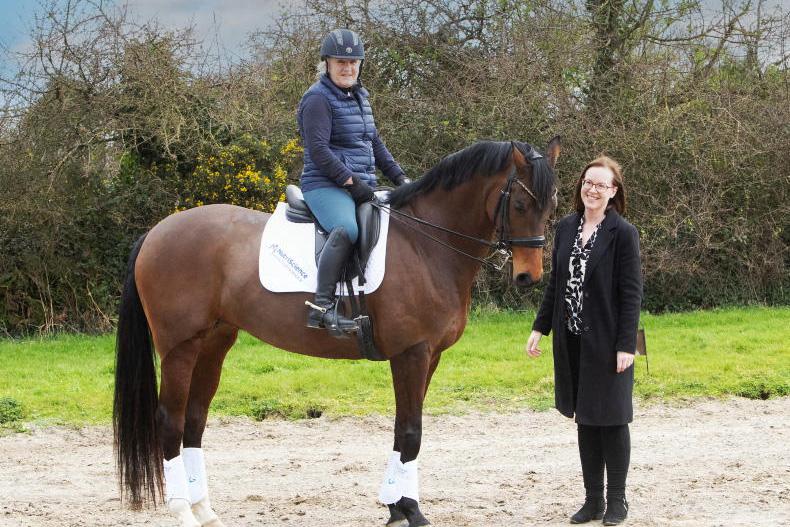
Paralympic athlete, Rosemary Gaffney was doing a routine fitness session last summer when her trainer noticed that something was wrong. “He said to go and have my blood pressure taken,” Rosemary says. “So, I went.”
Like many people, the para equestrian dressage rider confesses she “wouldn’t be great at going to the doctor”, but she paid a visit to the chemist and got her blood pressure taken. She was sent straight to the nearest hospital.
“I felt really bad because I didn’t think there was anything wrong with me,” says Rosemary, who is based in Piltown, Co Kilkenny. There was, however, cause for concern. The athlete was told that she needed a triple bypass and mitral valve repair.
Dr Niamh Keenan of the Mater Private Cork explains that: “People may need a bypass if they have narrowing in their coronary arteries, leading to a reduced blood supply to the heart muscle.
“They may need a valve repair if their own valve is leaking, or if it is narrowed.”
Rosemary experienced very few symptoms in the lead-up to her major heart surgery. Dr Keenan – who was also Rosemary’s cardiac surgeon – says that chest pain, shortness of breath, or reduced exercise tolerance can be symptoms of a heart problem.
“Chest pain can feel very different for different people,” Dr Keenan says. “Some people describe it as a heaviness or a tightness, some people feel it’s a burning sensation or indigestion. Most commonly, these chest symptoms are noticeable when you’re exerting yourself, like going up the stairs or walking up a hill.
“Some people might feel tiredness, or that they’ve had to reduce what they’re able to do. Others sometimes notice light-headedness or dizziness or collapse, if they have valve disease in particular.”
Patient education
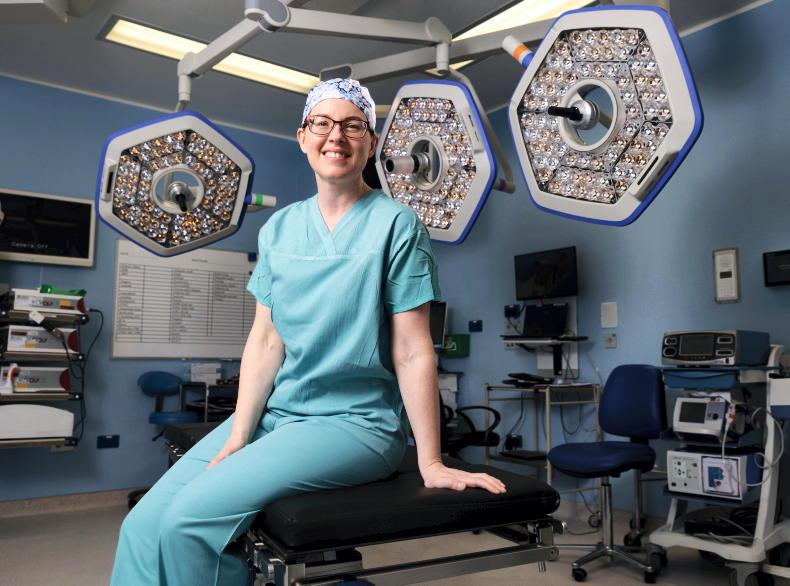
As her cardiac surgeon, Dr Keenan planned, arranged and ultimately performed Rosemary’s operation. “I looked after Rosemary’s care before the surgery, discussing what that will look like for her in terms of the operation and the recovery.
“We spend quite a bit of time before the surgery, educating our patients,” Dr Keenan explains. “Upon our first meeting, we go through a lot of information. I’m always happy to talk to patients again afterwards, because I know it’s a lot to take in on the first visit. We also do a pre-admission clinic visit where they meet not only me but also other members of the team.
“What is important to me is that they don’t feel it’s something that’s just happening to them. Their understanding and participation in their recovery is very important.
“Their attitude around the time of surgery makes such a difference, in terms of their participation in their recovery, working well with the nurses and the physiotherapists afterwards, really following their programme when they go home, and then engaging in cardiac rehab and the lifestyle changes that will make such a big difference in the long term.”
I always tell patients that after that period of recovery, which really is about three months in total, that they should get back to everything that they want to do
Dr Keenan says that after major heart surgery, most patients are in hospital for about one week. “When they go home, they usually still feel tired and a bit floored from the surgery. But they tend to feel pretty good after about three to four weeks. By the time they come back to see me in six weeks, they feel about 90% themselves.
“It also very much depends on what they were like before the surgery in terms of their general fitness.
“Young people, or people who are very active, tend to get back to things quicker.”
After six weeks, patients embark on cardiac rehabilitation.
This is led by a multidisciplinary team, which usually includes a cardiac nurse, physiotherapist, dietitian, and psychotherapist.
Recovery from surgery
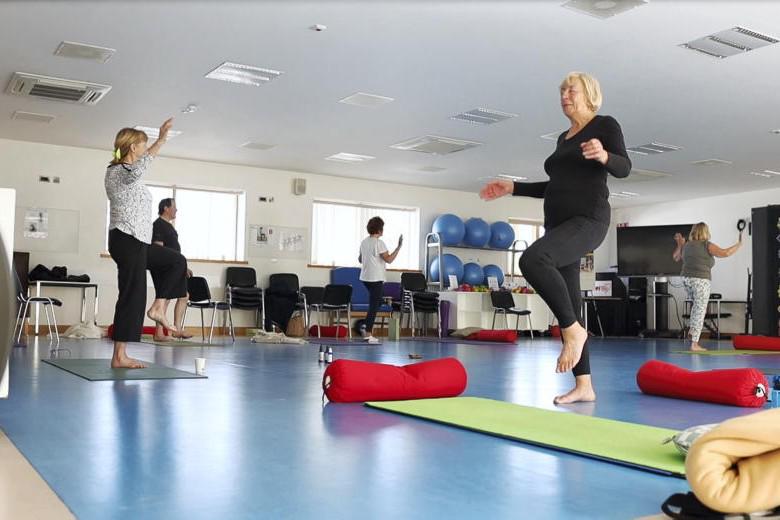
Dr Keenan says that patients derive “huge benefit” from cardiac rehabilitation – physically, emotionally and from a social perspective. “They’re meeting other people who’ve been through similar journeys, so it can be nice to get that support. And most people find cardiac rehab really phenomenal. By the end of the 12 weeks, they feel really good.
“Cardiac rehab pushes patients on. They’re doing more and more in terms of activity with the physios and the cardiac nurses there, and they’re being challenged physically but supported in a great way. And that gives them huge confidence. They know that they can get back to normal.
“I always tell patients that after that period of recovery, which really is about three months in total, that they should get back to everything that they want to do. That’s the point of doing the operations: to get people back to their lives and to what they love doing.
“It just happens to be high level competitive sport for Rosemary. But for other people, it might be getting back to running or gardening.”
Three months after the major heart surgery, Rosemary is back in the saddle and she says it was her motivation to return to dressage that motivated her through recovery.
“It takes a bit of work to get fit again, but I was determined that I was going to ride. I had a lovely mare, so I wasn’t going to waste my horse. Dr Keenan asked me to promise her that I wouldn’t ride before 12 weeks, just in case I burst the ribs. I have to laugh, because to the hour 12 weeks later I was back up [in the saddle] again.”
Rosemary admitted that she found the recovery “harder than expected”. For someone who has ridden since she was five years old, having to take a break from the activity that has sustained her for six decades was very difficult.
“I thought I was very fit going in, so I wouldn’t lose the fitness after an operation, but the breathing was difficult, and I also suffer with asthma and chronic obstructive pulmonary disease (breathing-related problems), so it wasn’t a great thing to be going on.
“But I’m back to normal, or very nearly normal – if I was ever normal!” jokes Rosemary. “I really believe I always had an adage. You never give up, and you never give in. That helped me through this, and having something to work at.”
Irish Country Living speaks to Rosemary in the middle of training, just before she heads out to England and Germany to compete in the qualifiers for the World Equestrian Games in August. She is back riding Norabel, her eight-year-old Dutch warm blood, who she rides six days a week in Cahir, Co Tipperary with her trainer, Sue Smallman.
Cardiac rehab pushes patients on. They’re doing more and more in terms of activity with the physios and the cardiac nurses there, and they’re being challenged physically but supported in a great way. And that gives them huge confidence. They know that they can get back to normal
Heart health advice
Dr Keenan says that regular checks and having a good relationship with your GP is important for staying on top of your heart health. “But what’s really important are the lifestyle factors,” she emphasises, “making sure that you’re exercising, that you’re not smoking, that you have a healthy diet, that you’re getting enough sleep, and that you’re managing stress in your life. Looking after those factors is hugely important.
“It’s worth seeing your GP and getting your blood pressure checked, getting your cholesterol levels checked, and doing a test for diabetes to see if that’s developing over time. But I still think lifestyle factors are hugely important, and it’s very important for people to take ownership of that.
“What makes a huge difference as well is people’s attitude,” Dr Keenan continues. “Rosemary was so determined and committed to her recovery. Her love of sport just shone through all the time, and her determination to get back to it was just phenomenal.”



SHARING OPTIONS