Where you live in Ireland matters when it comes to accessing health services. A stark fact, but also something that the 860,000 people living with a neurological condition in Ireland are too well aware of. One-quarter of these people are unable to access neuro-rehabilitation services.
Neurological conditions affect the brain, spinal chord and nervous system and neuro-rehabilitation is critical to managing the condition. Put simply, “neuro-rehabilitation is a fancy word for the service that people need to live well with the neurological condition,” explains Magdalen Rogers, executive director of the Neurological Alliance of Ireland [NAI].
“These teams treat people that are in the community already living with the neurological condition. People also being discharged from hospital with a stroke or a brain injury would go under the care of these teams.”
The NAI represent nearly 40 non-profit organisations to advocate for the rights of the people in Ireland living with a neurological condition, including the Alzheimer Society of Ireland, Epilepsy Ireland and Spinal Injuries Ireland.
To mark World Brain Day on Tuesday, 22 July, the organisation continues to call for further investment in neuro-rehabilitation services.
According to a new survey published by the NAI as part of their pre-budget 2026 submission, critical neuro-rehabilitation services are still missing in key parts of the country. Of those surveyed, 78% of respondents in the north-west, 73% in the south-east, 58% in the midlands, and
62% in Dublin reported they had been unable to access neuro-rehabilitation in the past year.
Postcode lottery
Magdalen says that there is a postcode lottery with regards to access to community neuro-rehabilitation across the country. “The launch of our pre-budget submission really showed that there’s an arc from the north-west through the midlands and to the south-east where the service access is really poor for people with neurological conditions. That’s where we’re asking for the intervention in this year’s budget.”
NAI want to see a national rollout of nine community neuro-rehabilitation teams. There are currently two teams up and running – one in the mid-west and one in the north-west. The latter is only partially staffed, with two and a half people.
There are four other teams coming on board this year: in Cork/Kerry, Kildare and west Wicklow, south Dublin and Wicklow and in Roscommon/Mayo.
The NAI is seeking funding in this year’s Budget to uplift the team in the north-west from two and a half staff to the required 12 staff and to fund teams for areas that have no team: north Dublin, the midlands and the south-east.
They’re coming back into an acute hospital in a worse state. They’re spending longer in hospital and it is costing [the State] more because they’re coming back into the system
“Community neuro-rehabilitation teams are a team of 12,” explains Magdalen. “It’s a multidisciplinary team: physiotherapists, speech and language therapists, occupational therapists, and psychologists that work in the community. They provide a one-stop shop of specialist care for people with neurological conditions.”
Neuro-rehabilitation lasts 12 weeks but the teams are effectively a resource that users in the area can draw upon at any stage.
Due to the inaccessibility of neuro-rehabilitation services in the community, individuals who are discharged from hospital are currently going into a general community setting where they are not receiving specialist care. “We know that over 17,000 people are discharged from hospital each year with a neurological diagnosis who will require neuro-rehabilitation.
“They might be able to get a few hours of physiotherapy, they might not,” says Magdalen, “and it’s not specialist, so they’re going into their primary care physiotherapist who is dealing with hips and fractures and doesn’t specialise in a brain condition.”
Magdalen explains that the current system adopts “a revolving door” approach to neurological care. “We’ve been told by the hospitals that they’re seeing the same people three or six months later because they haven’t got the physiotherapy that they need.”
Without treatment, there is a risk that a neurological condition will worsen, especially as patients age.
“They’re coming back into an acute hospital in a worse state. They’re spending longer in hospital and it is costing [the State] more because they’re coming back into the system,” Magdalen explains.
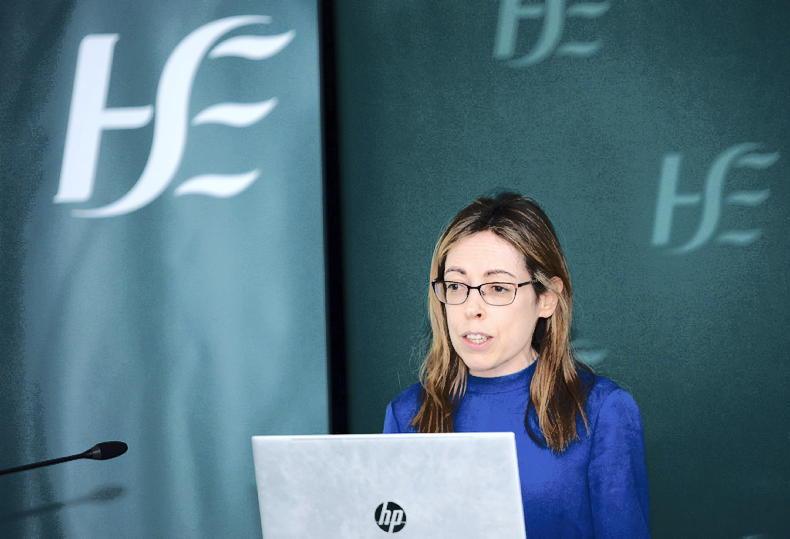
Magdalen Rogers, executive director of the Neurological Alliance of Ireland.
Waiting game
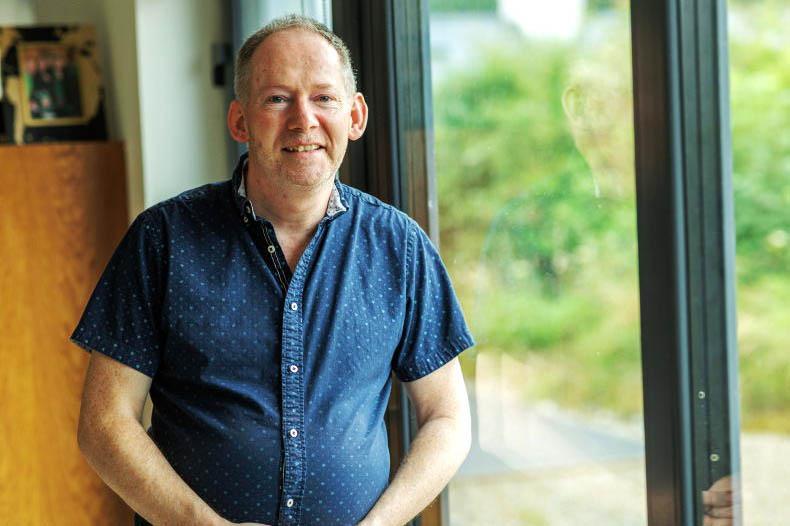
Patient Eamon McPartlin, is about 40 minutes from the community neuro-rehabilitation service in Ballybofey Co Donegal, which has two and a half staff members. But as he lives in Manorhamilton in Co Leitrim, he falls outside the catchment area of that team. “At the moment, in relation to treatment, I’m doing nothing bar waiting. I’m basically advocating,” Eamon tells Irish Country Living.
Eamon lives with two neurological conditions: functional neurological disorder [FND] and dystonia.
Dystonia is a neurological movement disorder with uncontrollable muscle contractions. “Prior to me getting diagnosed with dystonia, I would have found it very difficult to look at you here today,” Eamon says. “My neck would have been pulling to one side.” Eamon now receives medical Botox injections every few months that helps relax the muscles in his neck as part of his treatment.
Eamon’s symptoms for dystonia started appearing around 2011 but it wasn’t until 2017 that he was diagnosed. “I had a small movement in my neck, but by 2016, it just gradually ramped up. Then one night I was lying in bed and my neck was literally twisting into the pillow. That’s how forceful the twisting was. So that’s really when I found out about dystonia, because my GP had never heard of the condition.”
Four years later, Eamon was diagnosed with FND, a condition which affects how the brain and nervous system works. FND has many symptoms, including paralysis, seizures and walking difficulties, but Eamon’s manifestation is what he describes as “the motor version”.
He says: “I have a hesitation of freezing-up movement, in particular with my legs. It’s kind of a loss of automatic movement.”
Just last week, country music singer Lisa McHugh revealed that she has been diagnosed with FND. Posting about her diagnosis and recovery on social media, Lisa said: “I’ve a good bit to go on the healing front, going from walking into hospital with a very bad headache and severe facial pain, to losing function in both legs and then trying to walk again using a zimmer frame.”
There is no record of how many people live with FND in Ireland but Eamon says it is “as common as MS in relation to numbers.
“It’s very unheard of as a neurological condition but there’s about 9,000 odd people in Ireland living with it.”
The lack of research into FND is why Eamon founded a new charity called FND Ireland in April last year.
Eamon says, “FND Ireland social media went into overdrive with the news that country music singer Lisa McHugh shared about her recent diagnosis of FND.”
There is currently no specialist FND clinic in Ireland, the only country in western Europe without a specialised FND service. This means that patients have no choice but to travel overseas to avail of specialist FND treatment. In 2021, Eamon travelled to England for his diagnosis.
I have a hesitation of freezing-up movement, in particular with my legs. It’s kind of a loss of automatic movement
“I went to London and met a specialist neurologist in FND; he started going through my symptoms and explaining how FND can affect movement.”
Eamon was funded through the Treatment Abroad Scheme. He then received approval to do specialist rehabilitation treatment in London, which he is still waiting to start three and a half years on.
Muddling through years without a diagnosis or clear understanding of what was happening to his brain and body took a massive toll on Eamon’s health as well as his personal life. He had to take early retirement from his career in engineering as project director managing a large team of engineers and technicians in Galway.

Lisa McHugh was recently diagnosed with FND. \Lorraine Teevan
In 2023, back in Ireland with no coordinated community care, Eamon went back to London to see a private specialist physio. The one-week programme cost €4,632 excluding travel and accommodation and Eamon was fortunate to get some funding from a Benevolent Fund. The specialist programme gave Eamon “certain tools to help me live with the condition,” he adds.
He stresses that neuro-rehabilitation teams are “massively important” for managing his own condition as well as for “people with other rare conditions where they don’t have access typically to a specialist clinic or they don’t have access to inpatient rehabilitation at the National Rehabilitation Hospital in Dún Laoghaire.”
“When all these new rehab teams are rolled out, people with neurological conditions will get access in their community to a multi-disciplinary team with a neurologist, a psychologist, occupational therapist, and speech and language therapist. It will make a massive difference, especially for those that don’t have access to inpatient rehab.”
He hopes the north west neuro-rehabilitation team will soon expand to serve Leitrim, but is not entirely convinced.
“That team was approved to be expanded two years ago and never was,” he says.
See nai.ie and fnd.ie

Where you live in Ireland matters when it comes to accessing health services. A stark fact, but also something that the 860,000 people living with a neurological condition in Ireland are too well aware of. One-quarter of these people are unable to access neuro-rehabilitation services.
Neurological conditions affect the brain, spinal chord and nervous system and neuro-rehabilitation is critical to managing the condition. Put simply, “neuro-rehabilitation is a fancy word for the service that people need to live well with the neurological condition,” explains Magdalen Rogers, executive director of the Neurological Alliance of Ireland [NAI].
“These teams treat people that are in the community already living with the neurological condition. People also being discharged from hospital with a stroke or a brain injury would go under the care of these teams.”
The NAI represent nearly 40 non-profit organisations to advocate for the rights of the people in Ireland living with a neurological condition, including the Alzheimer Society of Ireland, Epilepsy Ireland and Spinal Injuries Ireland.
To mark World Brain Day on Tuesday, 22 July, the organisation continues to call for further investment in neuro-rehabilitation services.
According to a new survey published by the NAI as part of their pre-budget 2026 submission, critical neuro-rehabilitation services are still missing in key parts of the country. Of those surveyed, 78% of respondents in the north-west, 73% in the south-east, 58% in the midlands, and
62% in Dublin reported they had been unable to access neuro-rehabilitation in the past year.
Postcode lottery
Magdalen says that there is a postcode lottery with regards to access to community neuro-rehabilitation across the country. “The launch of our pre-budget submission really showed that there’s an arc from the north-west through the midlands and to the south-east where the service access is really poor for people with neurological conditions. That’s where we’re asking for the intervention in this year’s budget.”
NAI want to see a national rollout of nine community neuro-rehabilitation teams. There are currently two teams up and running – one in the mid-west and one in the north-west. The latter is only partially staffed, with two and a half people.
There are four other teams coming on board this year: in Cork/Kerry, Kildare and west Wicklow, south Dublin and Wicklow and in Roscommon/Mayo.
The NAI is seeking funding in this year’s Budget to uplift the team in the north-west from two and a half staff to the required 12 staff and to fund teams for areas that have no team: north Dublin, the midlands and the south-east.
They’re coming back into an acute hospital in a worse state. They’re spending longer in hospital and it is costing [the State] more because they’re coming back into the system
“Community neuro-rehabilitation teams are a team of 12,” explains Magdalen. “It’s a multidisciplinary team: physiotherapists, speech and language therapists, occupational therapists, and psychologists that work in the community. They provide a one-stop shop of specialist care for people with neurological conditions.”
Neuro-rehabilitation lasts 12 weeks but the teams are effectively a resource that users in the area can draw upon at any stage.
Due to the inaccessibility of neuro-rehabilitation services in the community, individuals who are discharged from hospital are currently going into a general community setting where they are not receiving specialist care. “We know that over 17,000 people are discharged from hospital each year with a neurological diagnosis who will require neuro-rehabilitation.
“They might be able to get a few hours of physiotherapy, they might not,” says Magdalen, “and it’s not specialist, so they’re going into their primary care physiotherapist who is dealing with hips and fractures and doesn’t specialise in a brain condition.”
Magdalen explains that the current system adopts “a revolving door” approach to neurological care. “We’ve been told by the hospitals that they’re seeing the same people three or six months later because they haven’t got the physiotherapy that they need.”
Without treatment, there is a risk that a neurological condition will worsen, especially as patients age.
“They’re coming back into an acute hospital in a worse state. They’re spending longer in hospital and it is costing [the State] more because they’re coming back into the system,” Magdalen explains.

Magdalen Rogers, executive director of the Neurological Alliance of Ireland.
Waiting game
Patient Eamon McPartlin, is about 40 minutes from the community neuro-rehabilitation service in Ballybofey Co Donegal, which has two and a half staff members. But as he lives in Manorhamilton in Co Leitrim, he falls outside the catchment area of that team. “At the moment, in relation to treatment, I’m doing nothing bar waiting. I’m basically advocating,” Eamon tells Irish Country Living.
Eamon lives with two neurological conditions: functional neurological disorder [FND] and dystonia.
Dystonia is a neurological movement disorder with uncontrollable muscle contractions. “Prior to me getting diagnosed with dystonia, I would have found it very difficult to look at you here today,” Eamon says. “My neck would have been pulling to one side.” Eamon now receives medical Botox injections every few months that helps relax the muscles in his neck as part of his treatment.
Eamon’s symptoms for dystonia started appearing around 2011 but it wasn’t until 2017 that he was diagnosed. “I had a small movement in my neck, but by 2016, it just gradually ramped up. Then one night I was lying in bed and my neck was literally twisting into the pillow. That’s how forceful the twisting was. So that’s really when I found out about dystonia, because my GP had never heard of the condition.”
Four years later, Eamon was diagnosed with FND, a condition which affects how the brain and nervous system works. FND has many symptoms, including paralysis, seizures and walking difficulties, but Eamon’s manifestation is what he describes as “the motor version”.
He says: “I have a hesitation of freezing-up movement, in particular with my legs. It’s kind of a loss of automatic movement.”
Just last week, country music singer Lisa McHugh revealed that she has been diagnosed with FND. Posting about her diagnosis and recovery on social media, Lisa said: “I’ve a good bit to go on the healing front, going from walking into hospital with a very bad headache and severe facial pain, to losing function in both legs and then trying to walk again using a zimmer frame.”
There is no record of how many people live with FND in Ireland but Eamon says it is “as common as MS in relation to numbers.
“It’s very unheard of as a neurological condition but there’s about 9,000 odd people in Ireland living with it.”
The lack of research into FND is why Eamon founded a new charity called FND Ireland in April last year.
Eamon says, “FND Ireland social media went into overdrive with the news that country music singer Lisa McHugh shared about her recent diagnosis of FND.”
There is currently no specialist FND clinic in Ireland, the only country in western Europe without a specialised FND service. This means that patients have no choice but to travel overseas to avail of specialist FND treatment. In 2021, Eamon travelled to England for his diagnosis.
I have a hesitation of freezing-up movement, in particular with my legs. It’s kind of a loss of automatic movement
“I went to London and met a specialist neurologist in FND; he started going through my symptoms and explaining how FND can affect movement.”
Eamon was funded through the Treatment Abroad Scheme. He then received approval to do specialist rehabilitation treatment in London, which he is still waiting to start three and a half years on.
Muddling through years without a diagnosis or clear understanding of what was happening to his brain and body took a massive toll on Eamon’s health as well as his personal life. He had to take early retirement from his career in engineering as project director managing a large team of engineers and technicians in Galway.

Lisa McHugh was recently diagnosed with FND. \Lorraine Teevan
In 2023, back in Ireland with no coordinated community care, Eamon went back to London to see a private specialist physio. The one-week programme cost €4,632 excluding travel and accommodation and Eamon was fortunate to get some funding from a Benevolent Fund. The specialist programme gave Eamon “certain tools to help me live with the condition,” he adds.
He stresses that neuro-rehabilitation teams are “massively important” for managing his own condition as well as for “people with other rare conditions where they don’t have access typically to a specialist clinic or they don’t have access to inpatient rehabilitation at the National Rehabilitation Hospital in Dún Laoghaire.”
“When all these new rehab teams are rolled out, people with neurological conditions will get access in their community to a multi-disciplinary team with a neurologist, a psychologist, occupational therapist, and speech and language therapist. It will make a massive difference, especially for those that don’t have access to inpatient rehab.”
He hopes the north west neuro-rehabilitation team will soon expand to serve Leitrim, but is not entirely convinced.
“That team was approved to be expanded two years ago and never was,” he says.
See nai.ie and fnd.ie

SHARING OPTIONS