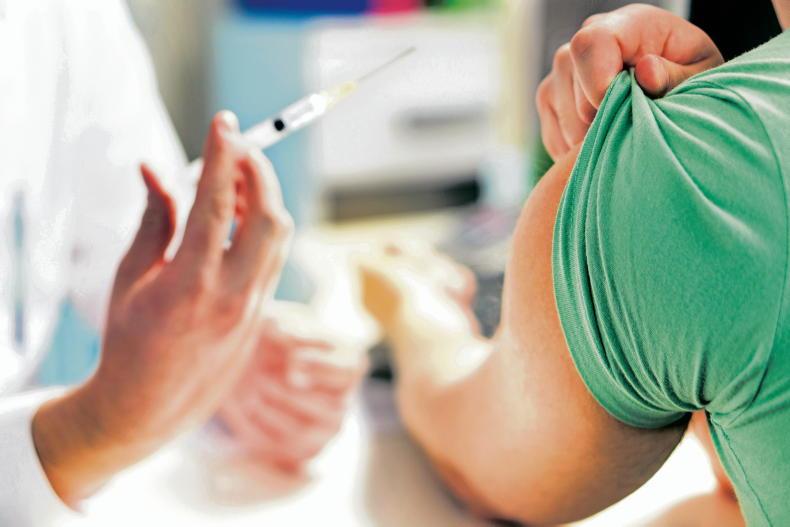
Free shingles vaccination is set to be introduced in Ireland from June 2027, following the announcement of funding in Budget 2027 by Minister for Health Jennifer Carroll MacNeill.
The vaccine, which is currently available privately is Shingrix, a non-live vaccine, which makes it suitable for people with weakened immune systems.
The Government’s decision to fund shingles vaccination follows years of discussion about making the vaccine more accessible.
Under the planned phased rollout, immunocompromised people will be prioritised, followed by adults over 80. The programme is intended to expand to other older age groups, eventually including those aged 65 and over.
Professor Eavan Muldoon, consultant in infectious diseases at Dublin’s Mater Misericordiae University Hospital and the HSE’s national clinical lead for infectious diseases, explains the effects of shingles are felt long after the rash appears.
“People can feel quite unwell with it. There’s the general malaise where you just don’t feel 100%, and the pain can be severe. If it goes on to post-herpetic neuralgia, the risk of which increases with age, that can be quite debilitating for some older patients.
“There can also be complications involving the eye, and because the spots and blisters can burst, they can become infected with bacteria. That can be problematic and require further antibiotic treatment.”
The infection can also leave people with prolonged nerve pain, serious eye complications and a possible increased risk of stroke. Research into a link between vaccination and reduced dementia risk is also attracting attention.
Shingles, also known as herpes zoster, is caused by the varicella-zoster virus, the same virus responsible for chickenpox. Although the initial infection usually clears during childhood, the virus can remain dormant in the nervous system for decades.
Prof Muldoon estimates that approximately one in four people who have had chickenpox will develop shingles during their lifetime, with the likelihood increasing as they get older.
“It’s an interesting virus in that you’re clear of the acute infection, but the virus can go and live in the end of your nerve roots and then reactivate.
“Our immune system weakens to some degree with age, but other at-risk patients would be people who are immunosuppressed for some reason. That might be somebody undergoing chemotherapy or a bone marrow transplant, or taking some of the newer drugs used to treat inflammatory conditions.”
Unlike chickenpox, which generally produces spots across the body, shingles usually affects a particular area on one side, following the path of an affected nerve.
“It starts off as pain usually. That’s the first thing people describe. Although it’s sometimes described as itching, it’s predominantly a shooting pain in that region.
“Over the next day or two, you’ll start to see the little spots coming up, and they’re usually only on one side of the body.”
Headaches, fatigue and flu-like symptoms can also appear before the rash develops.
Although the blisters generally heal within weeks, some patients develop post-herpetic neuralgia, a form of persistent nerve pain that can continue for months or longer.

Treatment can prove particularly difficult in older people, who may already be taking medication for other conditions.
“A lot of the medications used to treat that pain are medications we use for nerve-based pain, which can have significant side effects. That can become a challenge, especially in older patients who may already be on lots of other medication or may be more prone to side effects.”
Shingles affecting the nerves around the eye is another potentially serious complication, sometimes requiring hospitalisation to protect the patient’s sight.
“If it happens to be the nerve root that supplies the skin and nerves to the eye, it can be quite a serious complication.
“That’s something we take quite seriously, and we like to admit those patients to hospital and give them intravenous antiviral therapy because there’s a risk that the eye becomes involved, and then obviously there’s a risk to your sight.”
According to Prof Muldoon anyone who suspects they may have shingles should seek medical attention from their GP/pharmacy straightaway and keep the area covered if possible (to prevent transmission to anyone susceptible). Near the eye is more urgent, and she would advise going to your GP/out-of-hours GP or emergency department.
Scientific interest has increasingly turned towards the longer-term consequences of shingles, particularly the possible relationship between the infection and stroke.
“There is emerging evidence that there’s an increased risk of stroke after shingles, and the hope is that introducing vaccination will decrease that risk,” says Prof Muldoon.
Research has also suggested that people vaccinated against shingles may have a lower risk of developing dementia, although scientists have yet to establish whether the vaccine itself is responsible.
In May 2026, the Health Information and Quality Authority (HIQA) published a review examining the available evidence. It found that studies reported fewer cases of dementia among people who had received shingles vaccination, or were eligible for it, compared with those who had not.
However, HIQA cautioned that the findings demonstrated an association rather than proof that vaccination prevents dementia. Without randomised clinical trials, it could not establish a direct causal relationship.
Other factors, including healthier lifestyles and lower underlying health risks among vaccinated individuals, may help explain the findings.
When Irish Country Living contacted HIQA for an update, it said it had not been asked to review any new evidence on shingles vaccination and dementia risk since publishing its May report.
I think if people have the means, I have said that if it were me, I would pay. But it is quite expensive
Prof Muldoon acknowledges the emerging dementia research but says the evidence surrounding stroke is more established.
“There’s emerging evidence around dementia as well. It’s probably less robust evidence compared to stroke – there’s definitely an association between having shingles and a subsequent stroke.
“The hope is obviously that vaccination will have an impact on that risk.”
The National Immunisation Advisory Committee (NIAC) already advises that shingles vaccination may be considered for adults aged 65 and over as well as younger adults at increased risk because of immunocompromise.
Currently, most people in Ireland must pay privately for the Shingrix vaccine, with the two-dose course costing approximately €450-€500, depending on the provider.
Countries including the UK already offer publicly funded shingles vaccination to eligible groups, although the qualifying ages and arrangements vary.
That raises an obvious question: is it worth getting vaccinated now rather than waiting for the Government programme? Prof Muldoon says she has been asked that repeatedly, including by patients, colleagues and relatives.
“I think if people have the means, I have said that if it were me, I would pay. But it is quite expensive.”
The Shingrix vaccine is administered in two doses, generally between two and six months apart, and offers long-lasting protection.
“It’s different when you look at varying groups being studied, but it has been found to be long-lasting in terms of protection against the viral infection.
“In somebody with a normal immune system, the current estimates are up to 10 or 11 years. We don’t yet know whether people will need a booster. That isn’t clear yet from the studies that have been done.”
Misconceptions about shingles persist, particularly around its relationship with chickenpox.
“People sometimes think you can get shingles from chickenpox. You can’t, but somebody could get chickenpox from shingles.
“The shingles is your own chickenpox virus that has lain dormant and has reactivated.”
Someone who has never had chickenpox, or been vaccinated against it, can develop chickenpox through contact with the fluid in infectious shingles blisters.
Prof Muldoon also welcomes childhood chickenpox vaccination, which protects against the original infection and its complications.
“I’m a big supporter of vaccines, and I felt very strongly that the chickenpox vaccine was a requirement for rollout. “Not only do you impact children becoming unwell with chickenpox and the small number who get complications, but also parents having to take time off to look after them. And then there’s the longer-term piece of shingles when they’re older. That’s a lot of benefits.”
See hse.ie/conditions/shingles