On 29 April, Clare made the short journey to TUS Gaelic Grounds in Limerick. It probably felt like a fool’s errand.
The Banner had shipped five goals in their opening Munster SHC game against Tipperary the previous week, while the reigning All-Ireland champions had arm-wrestled their way past a sticky Waterford.
When Limerick went ahead by three points at half-time that Saturday night, the script felt easy to follow.
However, Clare dug deep in that second half and came out on the right side of a cracker, the final score 1-24 to 2-20 in favour of Brian Lohan’s side.
It was revenge of sorts for the previous year’s Munster final, which Limerick had won after extra time. All of a sudden, the Waterford win was easily recast as an under-performance and we were all left wondering if the Shannonsiders had passed the peak of their powers.
That’s no exaggeration, either – had Cork beaten Clare in Ennis on 21 May and Tipperary then overcome Limerick, the Treatymen would have been eliminated from the championship with a game to spare.
As it happened, Clare edged Cork by a point to guarantee themselves another Munster final and, while Limerick didn’t win in Thurles, they earned a draw after being three points down at half-time and set in train a pattern that would grow stronger as the campaign reached its denouement.
Of course, we know that Tipp’s failure to beat a Waterford side that were only playing for pride meant that Limerick were able to squeeze into the Munster final by beating Cork.
There, they broke Clare hearts again, winning by a point, before seeing off Galway and Kilkenny to become only third county ever to win four All-Ireland hurling titles in a row.
In those five matches after the Clare loss, Limerick never led at half-time – but they won the second halves by a cumulative tally of 30 points, a nice neat average of six points per game.
What will please Kiely and coach Paul Kinnerk so much is that that average was only rising – they outscored Clare by four points in the Munster final, then Galway by ten in the All-Ireland semi and saved the best for last by landing 21 points in the second period on Sunday and only allowing Kilkenny 1-6.
That 21-point haul would have won six All-Ireland hurling finals in the 1990s and three in the 2000s.
Their crown may have wobbled at times but it still remains in place.
Too much of a good thing?
You will have your own views on the way the inter-county calendar operates at present. As someone who reports on a lot of club games, I see plenty of positives on the whole, but one perhaps negative by-product of the tighter schedule is that the football final comes just a week after the hurling.
In the old days, the gap of a fortnight allowed a week of reflection on the hurling before the build-up to the football began, as well as allowing the camogie decider to slot in between.
There are those who will say that a Kerry-Dublin final is the height of footballing heritage; there are those who will say that it’s been done to death – they have 68 All-Irelands between them, with Dublin’s six-in-a-row bringing them seven behind Kerry before the Kingdom triumphed last year. There are probably merits to both arguments.
Sunday’s game will be the fourth final between the counties in the period beginning in 2011 – if it feels like more, they also met in semi-finals in 2013, 2016 and 2022 while their last decider, in 2019, went to a replay.

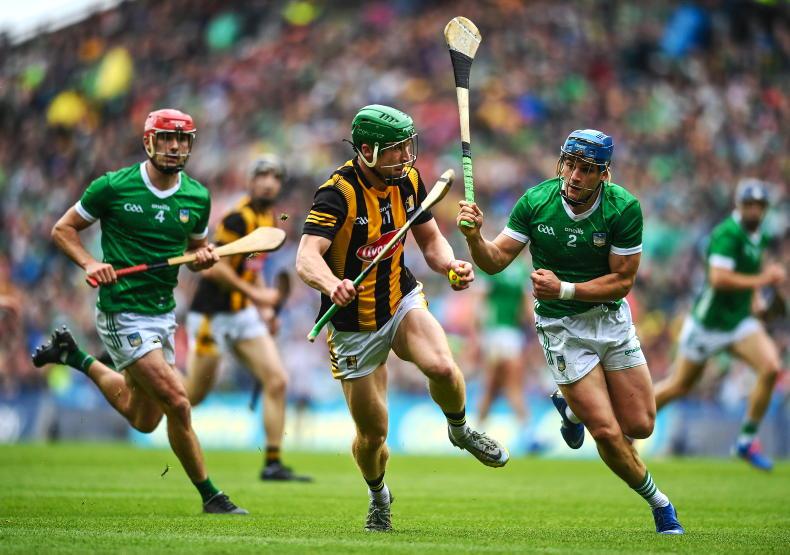
Aaron Gillane of Limerick in action against Huw Lawlor of Kilkenny during the GAA Hurling All-Ireland Senior Championship final match between Kilkenny and Limerick at Croke Park in Dublin. \ David Fitzgerald/Sportsfile
Last year’s semi-final win was the first time Kerry had triumphed against the Dubs in the championship since the 2009 quarter-final dismantling, after which Dublin manager Pat Gilroy said his players were like “startled earwigs”, such was the completeness of the mauling.
Dublin won five games in the interim, while there was also that aforementioned 2019 draw.
Now, Kerry face Dublin as All-Ireland champions for only the second time since 2007, seeking to beat them in a final for the first time since 1985.
Obviously, the importance of Seán O’Shea’s wonder-kick to win the semi-final last summer cannot be overstated because it helped Kerry to move to the final and beat Galway for their first title in eight years – but beating Dublin along the way was an important itch to scratch.
Both counties enjoyed similar semi-final wins against Ulster opposition. Dublin against Monaghan and Kerry against Derry faced tough questions for the best part of an hour, before then pushing on in the closing stages to stamp their authority.
We know that they are the best two teams in the country, but who is the best of the two?
Dublin are seeking to avoid going without an All-Ireland for the third straight year – the last time that happened was from 2008-2010, a world away even if Stephen Cluxton was, then as now, vital to their set-up.
That the 41-year-old goalkeeper was recalled was a sign that manager Dessie Farrell knew that they were lacking something, and he deserves credit for making such a call when it would have been easy to balk at something that seemed like a backward step.
In contrast, ever since Kerry won five minor All-Irelands on the trot, we’ve been hearing that the future would be green and gold and they are finally in a position to back that up.
With O’Shea and David Clifford in their ranks, they can beat anybody – and it’s frightening to think both are well off their peak years – but this will be a tougher test than anything the Kingdom have faced this year.
Equally, the same is true of Dublin but with more of their players pushing 30 and beyond, this may represent the last chance for that ninth All-Ireland.
Steering in the wrong direction
As mentioned above, the news cycle is fairly cluttered with GAA right now and last weekend saw the Open Championship and Tour de France come to their conclusions.
In such a landscape, it was perhaps unsurprising that a missive from the Gaelic Games Associations’ Steering Group on Integration didn’t exactly immerse itself in the public consciousness.
Essentially, the body charged with overseeing the merging of the GAA, Camogie Association and Ladies’ Gaelic Football Association said that it will “gauge the opinions of membersto assist in developing the pathway to integration”.
Forgive us if it sounds too simplistic, but shouldn’t this have already been done in the long period where talks about talks were being mooted?
The steering group is working towards the establishment of this pathway by February 2024 – it seems eminently doable but there have been a few false starts.
On 29 April, Clare made the short journey to TUS Gaelic Grounds in Limerick. It probably felt like a fool’s errand.
The Banner had shipped five goals in their opening Munster SHC game against Tipperary the previous week, while the reigning All-Ireland champions had arm-wrestled their way past a sticky Waterford.
When Limerick went ahead by three points at half-time that Saturday night, the script felt easy to follow.
However, Clare dug deep in that second half and came out on the right side of a cracker, the final score 1-24 to 2-20 in favour of Brian Lohan’s side.
It was revenge of sorts for the previous year’s Munster final, which Limerick had won after extra time. All of a sudden, the Waterford win was easily recast as an under-performance and we were all left wondering if the Shannonsiders had passed the peak of their powers.
That’s no exaggeration, either – had Cork beaten Clare in Ennis on 21 May and Tipperary then overcome Limerick, the Treatymen would have been eliminated from the championship with a game to spare.
As it happened, Clare edged Cork by a point to guarantee themselves another Munster final and, while Limerick didn’t win in Thurles, they earned a draw after being three points down at half-time and set in train a pattern that would grow stronger as the campaign reached its denouement.
Of course, we know that Tipp’s failure to beat a Waterford side that were only playing for pride meant that Limerick were able to squeeze into the Munster final by beating Cork.
There, they broke Clare hearts again, winning by a point, before seeing off Galway and Kilkenny to become only third county ever to win four All-Ireland hurling titles in a row.
In those five matches after the Clare loss, Limerick never led at half-time – but they won the second halves by a cumulative tally of 30 points, a nice neat average of six points per game.
What will please Kiely and coach Paul Kinnerk so much is that that average was only rising – they outscored Clare by four points in the Munster final, then Galway by ten in the All-Ireland semi and saved the best for last by landing 21 points in the second period on Sunday and only allowing Kilkenny 1-6.
That 21-point haul would have won six All-Ireland hurling finals in the 1990s and three in the 2000s.
Their crown may have wobbled at times but it still remains in place.
Too much of a good thing?
You will have your own views on the way the inter-county calendar operates at present. As someone who reports on a lot of club games, I see plenty of positives on the whole, but one perhaps negative by-product of the tighter schedule is that the football final comes just a week after the hurling.
In the old days, the gap of a fortnight allowed a week of reflection on the hurling before the build-up to the football began, as well as allowing the camogie decider to slot in between.
There are those who will say that a Kerry-Dublin final is the height of footballing heritage; there are those who will say that it’s been done to death – they have 68 All-Irelands between them, with Dublin’s six-in-a-row bringing them seven behind Kerry before the Kingdom triumphed last year. There are probably merits to both arguments.
Sunday’s game will be the fourth final between the counties in the period beginning in 2011 – if it feels like more, they also met in semi-finals in 2013, 2016 and 2022 while their last decider, in 2019, went to a replay.
Aaron Gillane of Limerick in action against Huw Lawlor of Kilkenny during the GAA Hurling All-Ireland Senior Championship final match between Kilkenny and Limerick at Croke Park in Dublin. \ David Fitzgerald/Sportsfile
Last year’s semi-final win was the first time Kerry had triumphed against the Dubs in the championship since the 2009 quarter-final dismantling, after which Dublin manager Pat Gilroy said his players were like “startled earwigs”, such was the completeness of the mauling.
Dublin won five games in the interim, while there was also that aforementioned 2019 draw.
Now, Kerry face Dublin as All-Ireland champions for only the second time since 2007, seeking to beat them in a final for the first time since 1985.
Obviously, the importance of Seán O’Shea’s wonder-kick to win the semi-final last summer cannot be overstated because it helped Kerry to move to the final and beat Galway for their first title in eight years – but beating Dublin along the way was an important itch to scratch.
Both counties enjoyed similar semi-final wins against Ulster opposition. Dublin against Monaghan and Kerry against Derry faced tough questions for the best part of an hour, before then pushing on in the closing stages to stamp their authority.
We know that they are the best two teams in the country, but who is the best of the two?
Dublin are seeking to avoid going without an All-Ireland for the third straight year – the last time that happened was from 2008-2010, a world away even if Stephen Cluxton was, then as now, vital to their set-up.
That the 41-year-old goalkeeper was recalled was a sign that manager Dessie Farrell knew that they were lacking something, and he deserves credit for making such a call when it would have been easy to balk at something that seemed like a backward step.
In contrast, ever since Kerry won five minor All-Irelands on the trot, we’ve been hearing that the future would be green and gold and they are finally in a position to back that up.
With O’Shea and David Clifford in their ranks, they can beat anybody – and it’s frightening to think both are well off their peak years – but this will be a tougher test than anything the Kingdom have faced this year.
Equally, the same is true of Dublin but with more of their players pushing 30 and beyond, this may represent the last chance for that ninth All-Ireland.
Steering in the wrong direction
As mentioned above, the news cycle is fairly cluttered with GAA right now and last weekend saw the Open Championship and Tour de France come to their conclusions.
In such a landscape, it was perhaps unsurprising that a missive from the Gaelic Games Associations’ Steering Group on Integration didn’t exactly immerse itself in the public consciousness.
Essentially, the body charged with overseeing the merging of the GAA, Camogie Association and Ladies’ Gaelic Football Association said that it will “gauge the opinions of membersto assist in developing the pathway to integration”.
Forgive us if it sounds too simplistic, but shouldn’t this have already been done in the long period where talks about talks were being mooted?
The steering group is working towards the establishment of this pathway by February 2024 – it seems eminently doable but there have been a few false starts.







SHARING OPTIONS