Four methods compared for applying slurry – which had the highest nitrogen loss?
Different slurry application methods mean different levels of slurry utilisation and loss of nitrogen to the atmosphere. Michael Collins reports on German research which shows the differences.
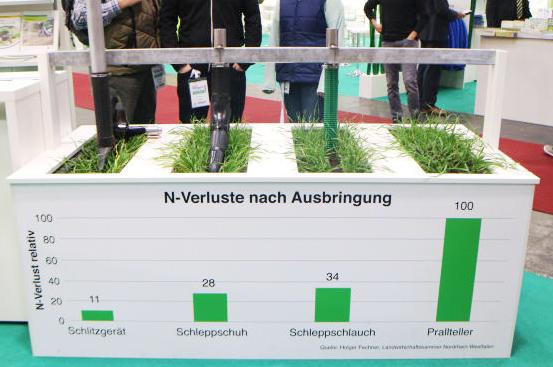
From left to right; Four different methods for applying slurry; disc-injector, trailing shoe, dribble-bar and splash plate. The green bar-graph underneath indicates the potential loss of nitrogen to the atmosphere with each system. Slurry that is applied to crops using a disc-injector has a far lower potential to loose nitrogen to the atmosphere compared to a splash plate. Both the trailing shoe and dribble bar method are also effective at reducing atmospheric loss of nitrogen post spreading acc
ADVERTISEMENT
Different slurry application methods greatly affect the atmospheric loss of nitrogen and leeching of nitrate into groundwater, according to the Westphalian University of Applied Sciences, Germany. Results of research completed by the university were displayed at Agritechnica last November.
The four most common methods used to apply slurry were compared in terms of the loss of ammonia (NH3) into the atmosphere within the first two hours post spreading. The disc-injector, trailing shoe, dribble bar and splash plate were all compared. The loss of ammonia into the atmosphere was lowest at 11% when a disc injector was used. The reason was the slurry was injected into the ground and absorbed by the roots of the crop, in this case grass. Also, the slurry had the least amount of exposure to air, reducing evaporation. The other advantage of the disc injector was the reduced smells associated with slurry spreading. The next most effective method was the trailing shoe with a 28% loss of ammonia. The dribble bar pipe had a slightly higher amount of ammonia lost within the first two hours at 34%. The researchers said the reason it is so high is there is nothing except crop cover to prevent the loss. The slurry is sitting on the soil and on the plant with contact to the air still very high. The big take-home message, though, was that the splash plate had the potential to lose 100% of ammonia within the first two hours of application.
ADVERTISEMENT
Register for free to read this story and our free stories.
This content is available to digital subscribers and loyalty code users only. Sign in to your account, use the code or subscribe to get unlimited access.
The reader loyalty code gives you full access to the site from when you enter it until the following Wednesday at 9pm. Find your unique code on the back page of Irish Country Living every week.
CODE ACCEPTED
You have full access to the site until next Wednesday at 9pm.
CODE NOT VALID
Please try again or contact support.
Different slurry application methods greatly affect the atmospheric loss of nitrogen and leeching of nitrate into groundwater, according to the Westphalian University of Applied Sciences, Germany. Results of research completed by the university were displayed at Agritechnica last November.
The four most common methods used to apply slurry were compared in terms of the loss of ammonia (NH3) into the atmosphere within the first two hours post spreading. The disc-injector, trailing shoe, dribble bar and splash plate were all compared. The loss of ammonia into the atmosphere was lowest at 11% when a disc injector was used. The reason was the slurry was injected into the ground and absorbed by the roots of the crop, in this case grass. Also, the slurry had the least amount of exposure to air, reducing evaporation. The other advantage of the disc injector was the reduced smells associated with slurry spreading. The next most effective method was the trailing shoe with a 28% loss of ammonia. The dribble bar pipe had a slightly higher amount of ammonia lost within the first two hours at 34%. The researchers said the reason it is so high is there is nothing except crop cover to prevent the loss. The slurry is sitting on the soil and on the plant with contact to the air still very high. The big take-home message, though, was that the splash plate had the potential to lose 100% of ammonia within the first two hours of application.
If you would like to speak to a member of our team, please call us on 01-4199525.
Link sent to your email address
We have sent an email to your address. Please click on the link in this email to reset your password. If you can't find it in your inbox, please check your spam folder. If you can't find the email, please call us on 01-4199525.
ENTER YOUR LOYALTY CODE:
The reader loyalty code gives you full access to the site from when you enter it until the following Wednesday at 9pm. Find your unique code on the back page of Irish Country Living every week.






SHARING OPTIONS