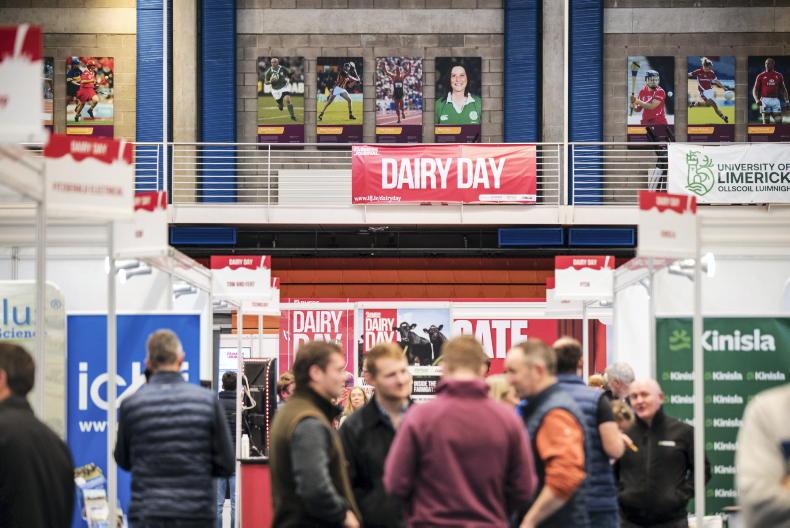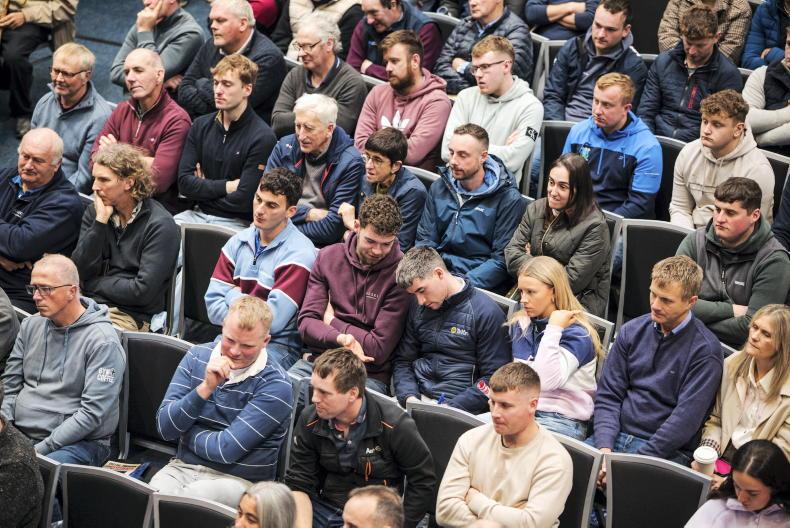
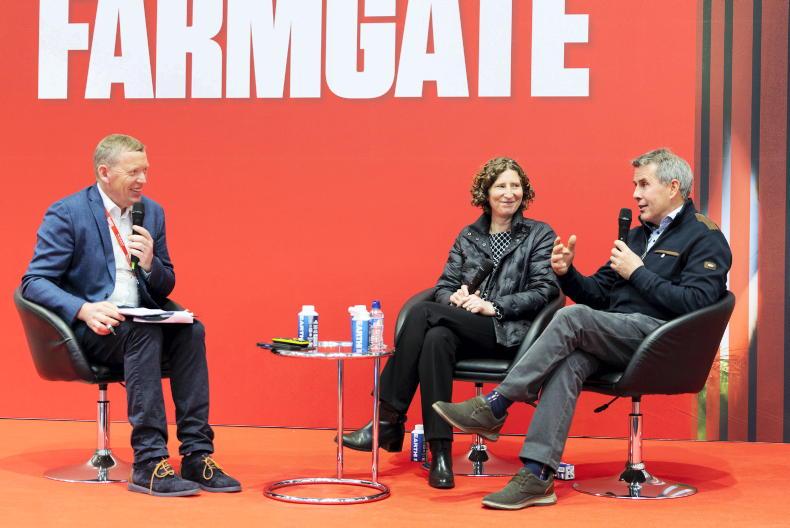
A presentation and discussion between Robert and Mary Troy and dairy editor Brendan Horan at the Irish Farmers Journal Dairy Day attracted keen interest from farmers eager to pick up some tips. This is not surprising, given the Troys' 400-cow dairy operation was crowned the overall winner at the recent NDC and Kerrygold Milk Quality Awards.
The farm is an excellent example of a vibrant family farm, with Robert and Mary, and their five children Eimear, Fiona, Orla, Robert Junior and Rory, all actively involved.
Herd statistics touched upon on the day are first rate. The current herd of 407 cows is operated at a stocking rate of 2.5LU/ha, and 3.1LU/ha on the milking platform.
Milk solids hit 498kg/cow or 961kg/ha in 2025 with this level of performance achieved, with grass growth of 15t DM/ha, a grazing season of 285 days and concentrate feeding of 950kg/cow.
Fertiliser use was 183kg N, 0kg P, 79kg K and 17kg S/ha, with over 75% of the farm at optimum soil fertility. Nitrogen surplus on the farm is 135kg/ha.
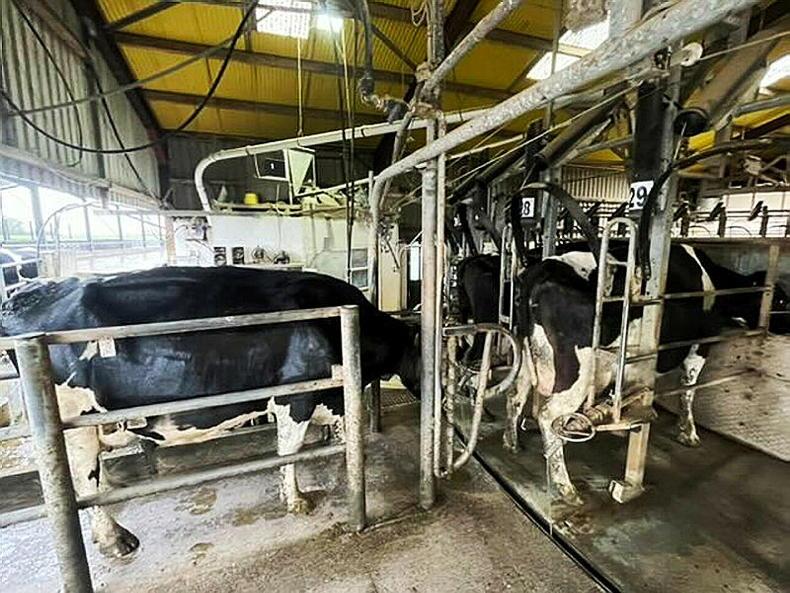
The dairy herd moved to a new land block in 2010 and a new rotary parlour.
Robert touched briefly on four labour-saving items or infrastructure investments that he says makes life easier for everyone working on the farm.
1. Cattle grids
The only tractor work generally carried out is feeding of silage, with contractors used for silage harvesting, slurry/fertiliser spreading, etc.
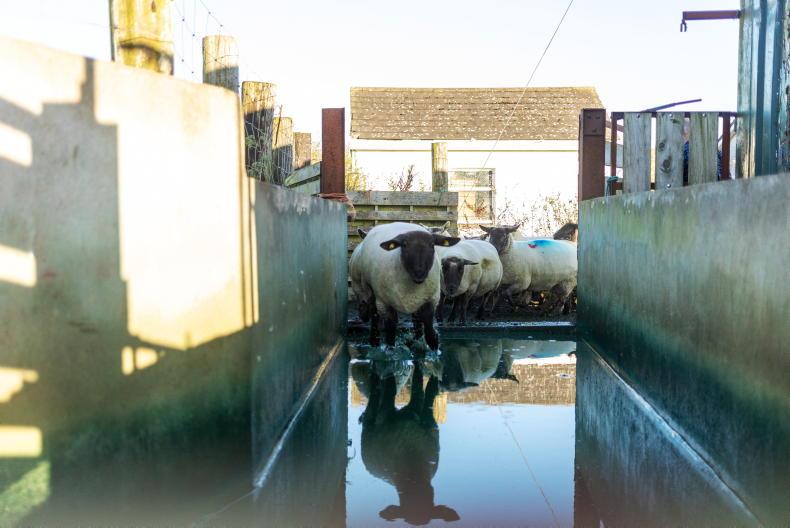
With people coming and going Robert says the farm entrances must be secure for livestock. Cattle grids are strategically located at entrances to the farm and on both sides of an underpass. This allows whoever is milking to drive to a paddock without having to stop to open a wire or gate, while contractors can drive near the yard without having to stop.
2. Cubicle sweeper / lime applicator
This is self-explanatory, with an automatic cubicle brush or sweeper and a lime applicator common items in many larger herds.
With in excess of 400 cubicles to sweep and lime, anything that cuts down on time doing this task is well worth the investment. Both are also credited for their role in helping to maintain milk quality at a high level.
3. Crush and leg lifter
There is a crush in the collecting yard with a homemade leg lifter, made from a cog of an old float machine for bringing in hay, that allows cows' legs to be lifted safely.
For Robert the big benefit in having the setup is that it allows lameness to be tackled immediately and safely. This avoids having to wait for a hoof paring technician to visit the farm and gives no chance for lameness issues to increase in severity.
Brendan Horan noted that when he visited the farm recently there was no lameness to be seen and no lame batch of cows – which is excellent given the size of the herd.
4. Rotary parlour counter
Robert says that during the main grazing season it often happens that a paddock is not fully grazed out and a smaller number of cows need to be sent back to graze it out during milking. An issue with a rotary parlour is that it is hard to monitor the number of cows milked in contrast to a herringbone parlour.
Robert Jnr designed an Arduino counter which is simply linked to a television screen mounted at a high point that can be seen easily. Every time a cow enters the rotary it is counted on the screen and allows management practices to be enacted seamlessly.
Robert says: “These are just simple things to help us run the farm every day and that’s important when dealing with numbers of cows and making life easier for everyone working on the farm.”