



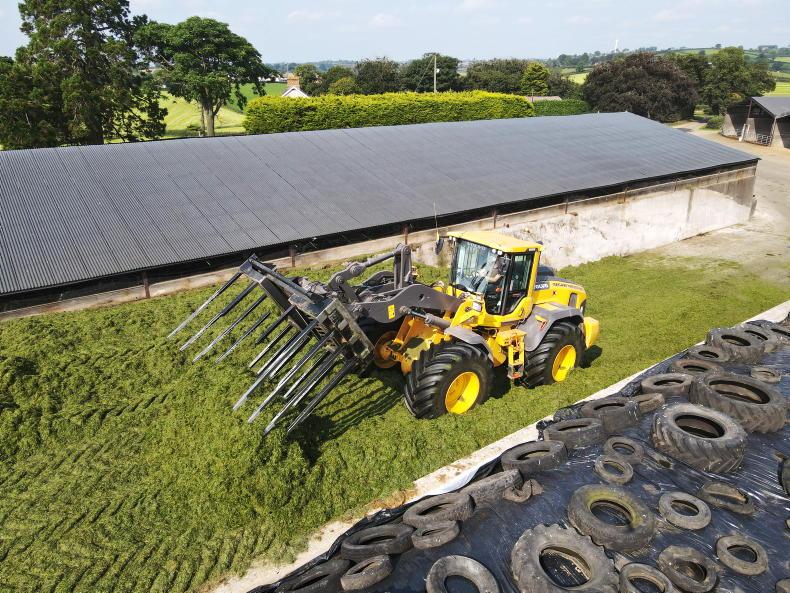
Silage production is often described as both an art and a science, but of particular importance is the role of the operator on the loader. Despite advancements in machinery size and power, the difference between high-quality silage and inferior winter fodder often relies on judgment, timing, and technique of the operator.
Every detail, from tyre pressure to packing methods, influences the fermentation process that ultimately preserves the crop and reduces waste.
The loader driver
The most underrated skill on the farm, the silage loader driver is arguably the most crucial individual during the harvest.
Competent drivers are adept at interpreting the flow of grass arriving.
Farmers loading silage themselves on their home farm is a completely different environment to that of a contractor’s operation, it’s as different to playing junior B football is to be playing a packed house in Croke park.
The fundamentals are the same, but the speed, skill and intensity are much more heightened.
If trailers are unloading rapidly, they recognise that density will be compromised. Should the pit become excessively steep or uneven, they make timely adjustments.
An inexperienced driver leaves ridges, air pockets, and loose edges.
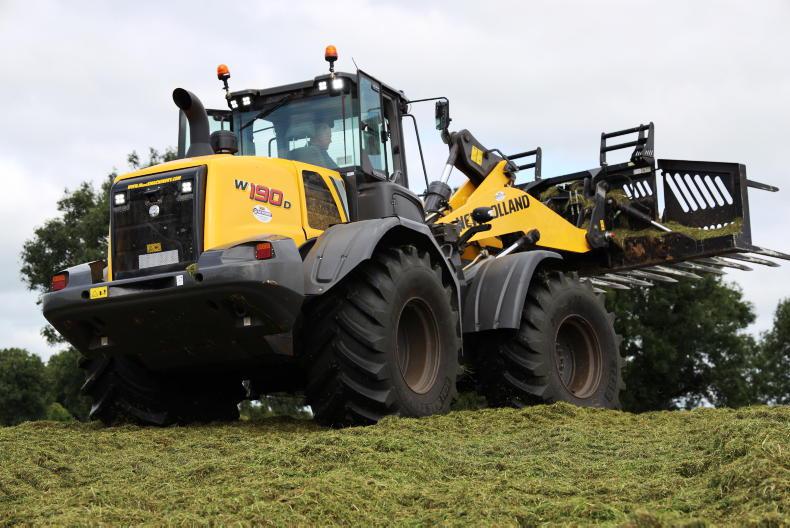
A great one leaves a tight, uniform, well-shaped pit that ferments evenly without any waste. Regardless of machine size, tyres or silage fork design, top operators don’t spin the wheels around the yard, this is wasted time, rubber and diesel.
They have an aptitude to judge how much grass to push, the speed to enter the heap and when to throttle.
The magic is the timing of joystick controls and balancing the foot throttle of when to lift and tilt the fork to load the front tyres and not lose traction.
This is all done seamlessly if done correctly and looks easy, but it is a unique skill.
Experienced drivers layer the pit lightly and keep packing, they don’t try to put it all up in one go.
The latter approach may clear the yard for the next trailer, but it doesn’t compact the grass appropriately or purge air pockets.
The work environment
Most industrial loaders that work in a quarry or construction site operate in a very controlled environment where they are in open spaces and perform their tasks in no entry exclusion zones with relatively level surfaces.
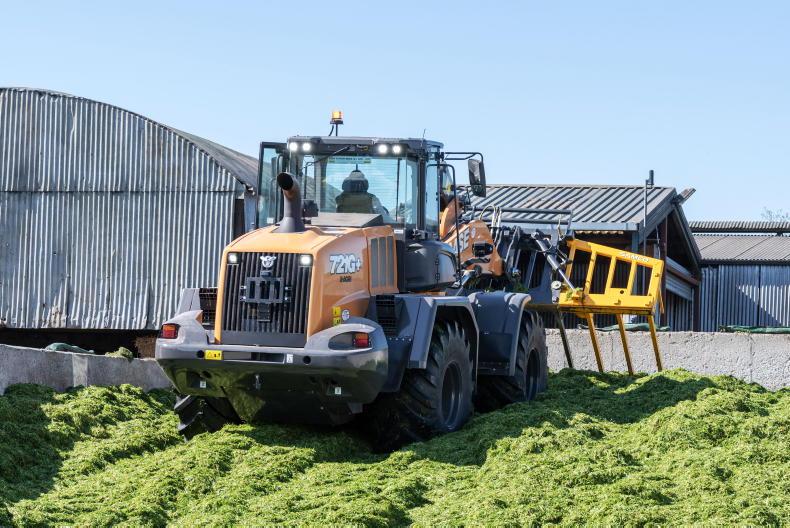
The silage pit environment can’t comply to these rules – the loader driver must often work in confined areas with walls, existing farm buildings all around them and sometimes operate at steep inclines under shed roofs.
The trailers tend to come fast nowadays often at 3-4 minute intervals with their operator’s objective being to get as close to the loaders work environment as possible to tip the grass.
The silage loaders underfoot operating conditions can change within a few meters of travel from hardcore outside the slab to polished concrete and then wet grass while trying to push and climb.
The concrete slab surface ideally needs a balance between smooth surface for easy cleaning and durability for the farmer but offering enough traction for the loader.
Acid resistant sealants are often used nowadays to protect the concrete from corrosive silage effluent penetrating but loaders on these surfaces especially when wet can struggle to get traction if polished too smooth.
Farmers may also want narrow pits so that – in winter at feed-out time – if the face of the pit is minimised, this reduces its exposure to oxygen and harsh weather elements.
Pushing up silage is a very specialised juggling act of keeping the yard clear, working in confined areas, but constantly compacting vital zones especially the edges and back of the pit, while rolling continuously and building the pit to accommodate the volume of grass being harvested and making sure the pit doesn’t slip and the machine doesn’t slide.
Machine size
There has been a long-standing debate: what brand of loading shovels, which model, what weight, etc?
The reality is they all can work under certain conditions – but weight matters more than brand especially when 700+hp harvesters are chopping in the field.
The size of loader should suit the harvester capacity and trailer sizes.
Heavier machines increase packing density. Studies have shown that a heavier wheel loader can improve dry matter density by around 9% compared to a lighter machine.
That added density reduces oxygen and improves preservation.
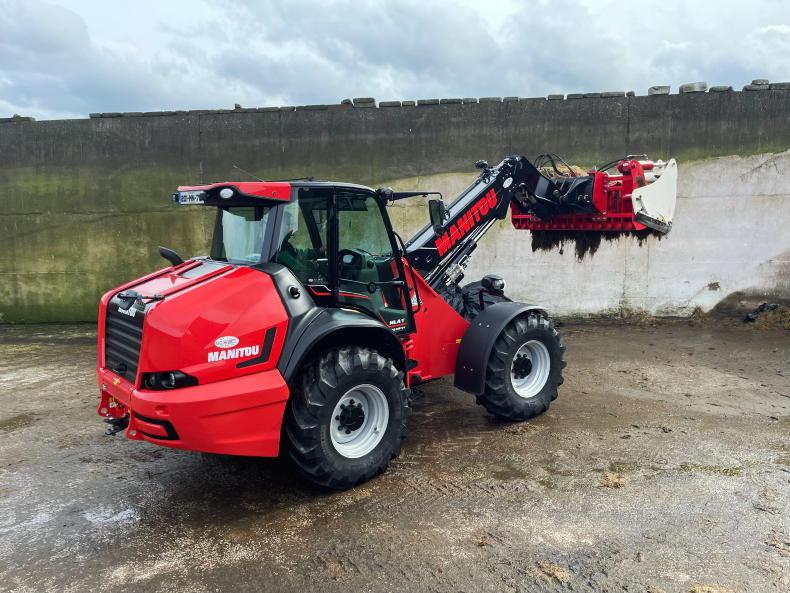
Loaders today typically range from 9t-13t on the lighter side, 13t-17t medium and 17-22t classified as a large silage loader with engine power ranging from 100 – 285hp.
But weight alone isn’t enough. Older loaders tend to be slow and may solve one problem but create another.
The power-to-weight ratio, transmission type, hydraulics, fork width and tyre size also plays a critical role.
A machine needs enough power and traction to climb and shape steep pits safely, maintain traction in wet conditions but push large volumes efficiently, Too much power with too little weight can lead to spinning.
Too much weight with too little power leads to sluggish operation and poor control. The best set-ups balance both – heavy, stable, and responsiveness but the key is to keep the loader moving and rolling.
Tyres
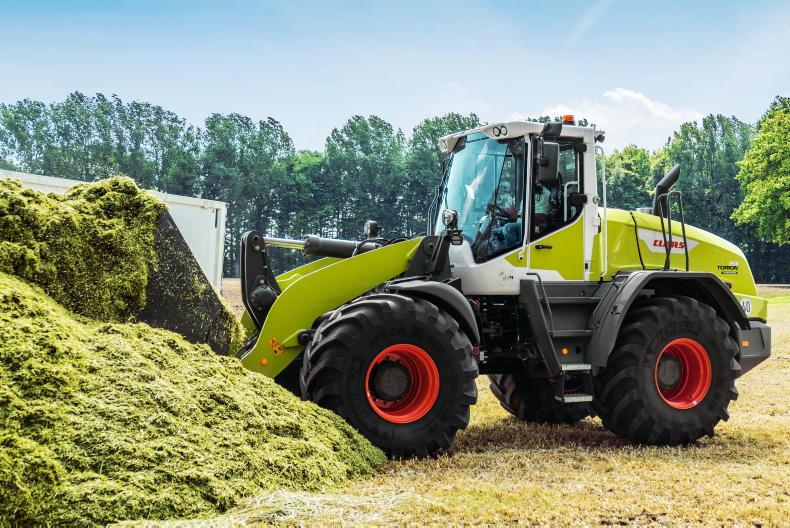
Tyres cannot be overlooked; they are the point of contact where compaction occurs.
Narrow tyres increase ground pressure and can improve compaction.
Wide tyres spread weight, cover more, better climbing ability while improving stability but reducing penetration.
Correct tyre pressure is critical as lower pressure increases footprint but can reduce effective compaction force.
Research shows that contact pressure is influenced by both tyre width and inflation, with narrower tyres concentrating force more effectively on the silage surface however they have less stability.
Some contractors use duals on the front to gain stability and roll even larger areas, but others feel penetration and compaction suffer.
Every tonne of compaction force must pass through a surprisingly small contact patch – the tyre footprint.
That means tyre configuration determines ground pressure, shear force, and compaction efficiency.
However, real-world behaviour is much more complex as chop length and moisture content are also factors too.
Tyres deform under load, and the contact patch is not uniform — pressure is highest under the centreline and lower at the edges.
This creates uneven compaction unless multiple overlapping passes are used.
Premium brand tyres can do over 4,000 hours on loaders with more than enough for another season, however with the wrong operator you may not even get close to 2,000 hours on the same machine.
Thread should be minimum 25% of the original height and the lug should not be too rounded at the edges.
Operators should often inspect the sidewalls for any cracks, deformation and bulges.
Some contractors have rims to accommodate duals for some customers and may use these if putting up silage and operating up against older walls for example or if the loader driver isn’t as experienced with steep narrow clamps or with whole crop and maize that is easier than long dry grass to compress.
Contractors that have flexibility to adapt their set-up and to suit the working environment, the yard and the operator is a smart play rather than a one-size-fits-all approach.
Final thoughts
When you strip silage loading back to fundamentals, the tyre is certainly a critical working component.
Everything the loader does from packing, climbing, pushing, shaping is transmitted through four relatively small rubber contact patches.
Loading silage correctly is an array of factors from operator skill, machine power and set up to tyre performance.
The experience of the operator and contractor is invaluable as is their knowledge of the various farmers yards they work in.
Loading silage correctly is an hugely under-appreciated skill due to the number of variables.
Farmers must always be mindful of how invaluable good pit operators are to their silage quality and fermentation process.



SHARING OPTIONS