Diesel has been a very hot topic all year, particularly in relation to price increases, but when does diesel really turn from friend to foe? While most talk is in relation to prices, carbon tax and its availability all over the world, users need to become better informed and more aware of the practicalities in storing fuel and cleanliness.
When modern diesel fuel technology like electronic injectors and HPCR fuel pumps fail, they leave a serious financial burden on the owners. Enemy number one for diesel is water, but other contaminants exist such as dirt and bacterial growth more commonly known as “diesel bug”. Traditionally, diesel storage tanks are placed high in a farmer’s yard (the tank is slightly elevated on the outlet), as this allows dirt and water to settle at the rear of the tank.
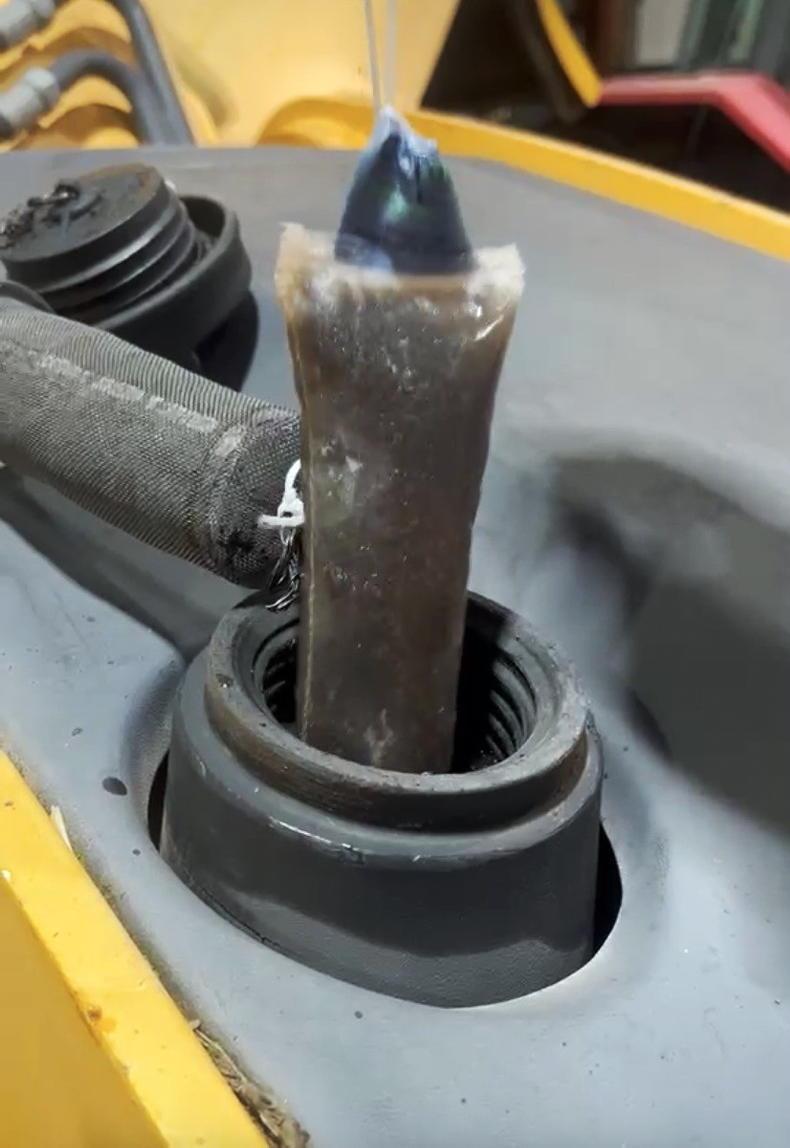
A slow, steady draw from the tank doesn’t tend to disrupt the contaminants and those that pass into the farm tractor settle in the tractor’s own diesel tank or get caught by its filtration system.
Good practice after a fill-up from the fuel truck delivery is to leave it settle for a while afterwards, as the large, forced volume entering the tank tends to disrupt the settled contaminants and water; this may then get suspended in the fuel for a short period. Diesel fuel is hygroscopic in nature, meaning it naturally attracts and absorbs moisture from the surrounding air at a molecular level.
Where is the water coming from?
The specification requires that today’s green diesel is ultra-low-sulphur diesel (ULSD) or EN590. This fuel may contain up to 7% fatty acid methyl esters (FAME), or just biodiesel percent. The “B” denotes the biodiesel content, so, for example, B20 fuel means 20% biodiesel and 80% derived from crude oil and B100 is 100% biodiesel.
The main issue with biodiesel is it absorbs significantly more moisture from the air than standard petroleum-based diesel (10 to 25 times) and draws it deeper into the machine’s fuel components. As surely as night follows day, day temperatures rise, meaning tanks expand and then cool in the evening. It’s this expansion and contraction of the tank, like it is breathing, that draws in air.
The moisture in this air causes condensation; hence, as the days go by, the farm tank is gradually adding more water internally. Diesel bug is a collective term for microbial contamination of diesel fuel caused by bacteria, moulds and yeasts. These organisms thrive specifically at the interface where water meets fuel inside a storage tank.
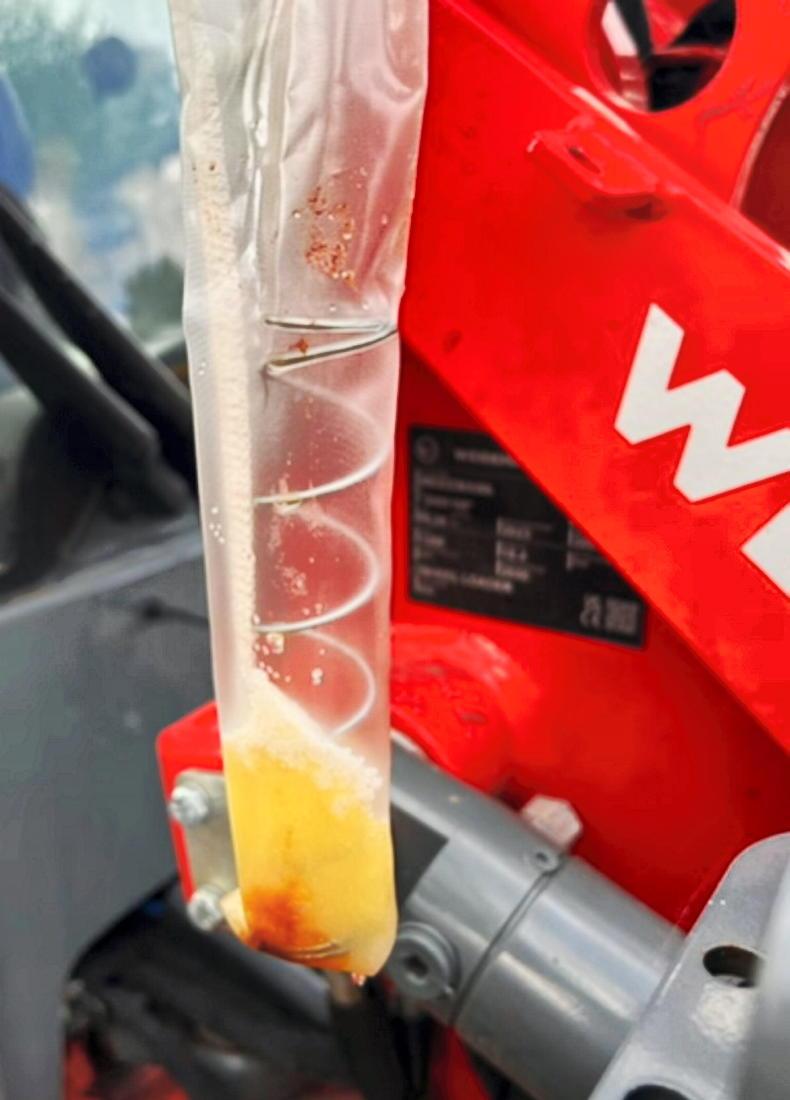
Under the right conditions, the microbial population can double every 20 minutes, rapidly creating a thick, dark slime or sludge that destroys fuel quality. While water in diesel fuel primarily harms the engine’s high-pressure fuel pump and injectors, it also degrades a machine’s exhaust after-treatment system and causes misfires, incomplete combustion and a surge of soot in the DPF and clogs the DOC and valves with carbon.
Summer-grade diesel can often remain in seasonal machines like forage harvesters and combines over the winter months.
DQTube – the technology
DQTube™ (Diesel Quality Technology) is an in-tank diesel fuel filtration system designed to actively capture and isolate water, bacteria and microparticles directly inside fuel tanks.
By trapping this water and particles before they can reach the machine’s fuel lines, it prevents common issues like fuel degradation, injector damage, the ‘diesel bug forming’ (bacterial growth) and tank corrosion.
The technology functions passively inside the tank, transforming captured moisture and dirt into a thick, solid gel so that it cannot remix with the fuel.
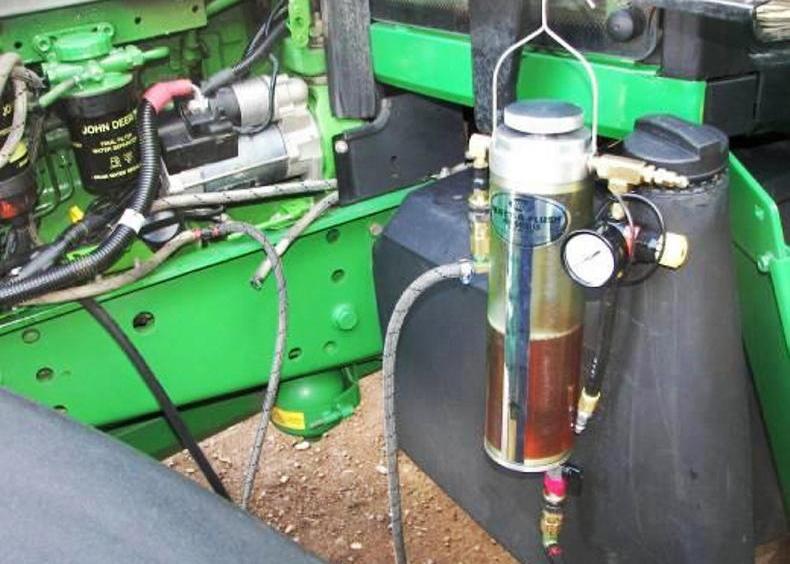
DQTube offers two main solutions to customers: either in stationary storage tanks in the yard or directly in the machine’s own fuel tank.
It is an in-tank diesel filtration and moisture-absorption system with a few different sizes to suit various applications which sit directly at the bottom of a fuel tank where water, condensation, rust and dirt naturally settle and then adhere to this tube.
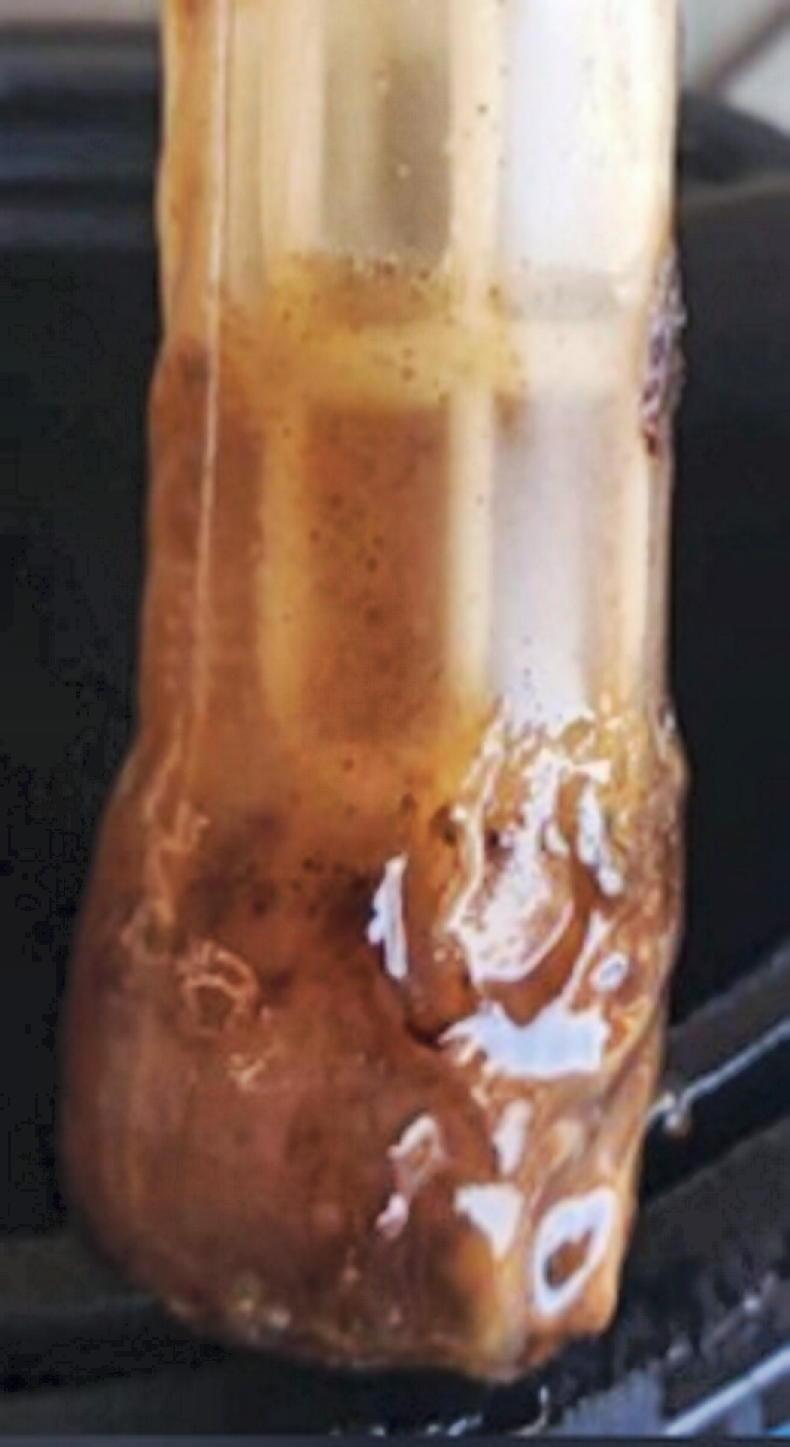
It remains inside the tank during regular operation for continuous everyday use without altering the chemical makeup of the diesel fuel and needs no power source but has a little cord attached to pull it out to check it.
When full, they should be disposed of safely like a standard fuel filter would be. It’s not for petrol.
DQTube Ireland
DQTube Ireland was set up by Gerry and Paula Creaven in Co Galway over the last few weeks. Today, they are the distributors for Ireland, the UK, France and Spain, as well as the owners of Oil Burner Technician Services.
Gerry was a HGV driver a few years ago before turning to servicing domestic oil boilers. He said that, in his youth, his family always had a tractor, so he had a good knowledge of how fuel can affect engines.
“Most of my experience with water and contamination is with domestic kerosene tanks and boilers. I was looking for a product that would help solve the issues arising in my customers’ tanks and while there were different products out there, nothing seemed to suit or they would only partly work on some issues but not all,” he said.
Water contamination in kerosene (home heating oil) tanks and boilers is also an issue that causes burner lockouts, rust and expensive system damage. It’s unfortunately the same story with diesel and farm machinery. “I was researching and emailing companies and one day we were contacted by DQTube in Denmark and after looking into the products and what they can do, we decided to bring the DQTube product range to Ireland,” said Paula.
“Our first step was to use the tubes ourselves to see if they do exactly what they claim they do.
“I don’t know how many times I have bought something online because it is going to be amazing and it doesn’t do what it’s supposed to.”
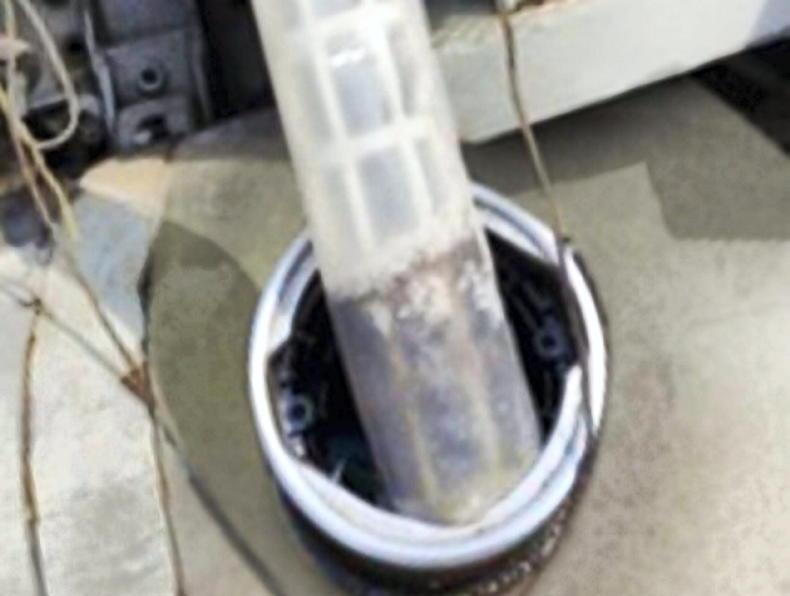
Gerry said his own home heating oil tank had a build-up of water in it, so he placed a DQTube into the tank.
“After it was in the tank overnight and, being impatient, I just had to check it out the following day. I could not believe the tube was already half full, no kerosene but water, particles and bacteria. It was just incredible to witness it.”
Lots of farmers and kerosene users are not aware of the issues in their own tanks, the damage this can cause over time and the potential repair bills.
Paula explained how they also did their own controlled experiment by adding 450ml of water to clean diesel. “We added a DQTube universal and it captured all the water,” she said.
“This was the convincing we needed; that these products do what they are designed to do. It will work well on most off-road machinery, once the filler neck is over 1.5 inches to get down and to be able to retrieve it.
“It doesn’t really suit cars currently, as the filler necks are small, they have a flap, they twist and turn, etc.”
The tubes are currently widely used in the Middle East, Southeast Asia and Africa.
DQTube – the science
The DQTube device is inserted through a tank opening and rests at the bottom of the fuel tank, where water and heavy particles naturally settle. It uses a proprietary diesel technology formula, known as DQT 3 polymer, housed inside a rigid cage that attracts water and isolates it and dirt as a solid gel so it can’t escape or mix with the fuel.
These superabsorbent polymers are hydro-functional but inert to hydrocarbons (diesel/kerosene). The water is polar, meaning it has a charge and is attracted like a magnet to the polymer where the diesel is not.
It operates completely passively without requiring external power, moving parts, or active maintenance while the equipment runs or sits idle.
It extracts emulsified, suspended, and free water directly from the diesel fuel and the tank bottom, absorbing and locking it away inside a rigid cage structure without altering or affecting the fuel’s chemical composition.
In addition to water, its specialised material traps dirt, dust, rust, and bacteria, preventing them from being pulled into the engine’s fuel lines. Units are typically left in the tank and checked periodically (or replaced roughly every three months or when saturated, depending on contamination levels).
Agricultural customer review
After setting up DQTube Ireland, Gerry said they were contacted by an agricultural mechanic in Co Tyrone who took samples to test on some machinery.
This mechanic told Gerry that fuel is a major problem in the tractors he repairs, and unfortunately his customers didn’t fully believe that their fuel was causing some of the breakdowns.
“He sent us a video of the first DQTube Universal that he used as he couldn’t believe it. He was repairing a tractor for a customer who was adamant he had no issues with diesel.”
The tube was left in his customer’s tractor fuel tank for the duration of the repair. Needless to say, his customer had a serious problem with fuel. “That mechanic has just ordered his biggest quantity from us, as he can’t keep it in stock now.”
DQTube compared to fuel additives
Diesel fuel additives claim to improve engine performance, protect fuel systems, and prevent cold-weather gelling. Because modern ULSD diesel undergoes intense refining, it may strip away some of its natural lubricating properties, so many machinery operators use additives to protect expensive components like high-pressure fuel pumps and common-rail injectors.
Demulsifier-type fuel additives force water to separate from the fuel and settle at the bottom of the tank. Emulsifier-type additives, on the other hand, bond with the water to pull it through the fuel system.
Gerry explained these products are not prevention devices as they are not going to the source of the issue but try to instead deal with the symptoms rather than deal with the root cause of fuel contamination.
Ethanol-blended petrol vs fibreglass
Another fuel concern of noteworthiness is in relation to petrol storage/usage.
A lot of farmers, restorers and vintage enthusiasts are learning the hard way about modern petrol such as E10 (10% ethanol) and how it reacts aggressively with fibreglass fuel tanks and fibreglass patching of holes on metal tanks because of the fuel’s ethanol content.
While the glass fibres themselves are unaffected, the ethanol acts as a solvent that breaks down, softens, and dissolves the polyester or basic epoxy resins holding the fibres together, resulting in fuel leaks. This dissolved resin may also get carried by the fuel into the engine, resulting in a gummed-up carburettor, stuck inlet valves.
Ethanol
When ethanol absorbs enough water (typically exceeding 0.5% by volume), the water-and-ethanol mixture separates from the petrol and sinks to the bottom of the tank.
People should empty chainsaws, lawnmowers, pressure washers, strimmers, etc, as it doesn’t store well and can cause varnishing, corrosion and degradation of some parts leaving this equipment very hard to start. Pure petrol itself is not hygroscopic but the ethanol content in modern fuel is.
Benefits