


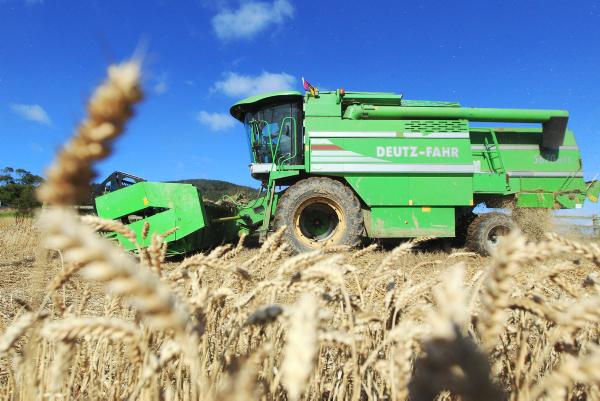
Weather conditions may not be ideal for harvesting, but the fire threat to the machine and the combine driver remains an annual challenge.
Fires that are started in and around the combine harvester, cause serious injuries and result in significant crop losses every year. If the dry weather of recent weeks returns as predicted by some, the conditions for machine fires will be more likely.
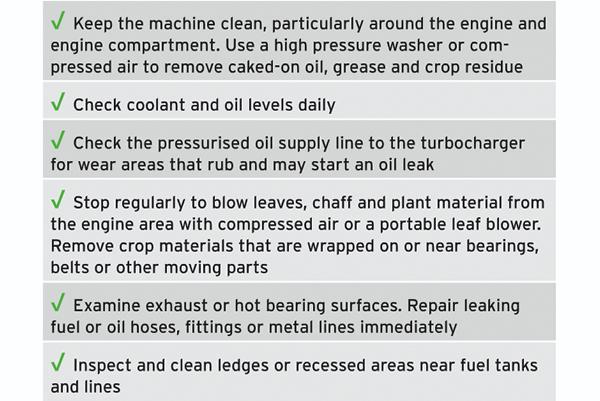
Most farmers are aware that the best way to prevent a combine fire is to keep the machine clean of possible fire-causing materials. The second way is to eliminate sources of heat that can lead to a fire. You need to pay special attention to the engine and engine compartment.
It is well recognised that the exhaust manifold and turbocharger are the ignition source for most combine harvester fires.
Other potential causes of fires include heat hotspots that are the result of failing bearings and wrapped plant residue around shafts and bearings. So you need to take time before you start harvesting to check out all working parts and clean crop residue from around the machine.
One of the best ways to prevent combine fires is to regularly blow any dry chaff, leaves and other material off the machine with compressed air.
Take time to clear away any wrapped crop materials from bearings, belts and other moving parts. Leaking fuel or oil hoses, fittings or metal lines should be replaced or repaired before continuing harvest.
There is a view that newer model combines can pose a greater fire risk than old models.
This is because they now have a greater use of synthetic materials such as shields, panels and fuel tanks that will burn quickly once a fire starts. This fire can quickly consume the machine.
||PIC2||
A smouldering fire in crop residue can easily spread to a fuel tank, hydraulic line or wiring harness and engulf the entire machine putting the driver’s life at risk.
Tips to reduce fire risk
Despite your best efforts and good machine maintenance, a fire on a tractor or combine can still occur. Smouldering fires in layers of dust may quickly and easily be extinguished with water.
For larger fires, the best source of protection for a combine is at least one fully charged dry-chemical type fire extinguisher. It is good advice and a cheap form of insurance to have two extinguishers on the machine in case one fails or loses pressure. You should keep one in the combine cab and the other at a point where it can be reached from the ground.
If a fire starts on the combine, the best advice is to quickly shut off the engine, grab an extinguisher, get out, and get help.
Older machines with primarily steel construction could often be saved with a fire extinguisher. New model machines with poly tanks, panels and shields, can quickly ignite beyond the capacity of a fire extinguisher.
The key message is, if in doubt, don’t risk your life for the machine, move away and call for help. And finally, have you checked your fire extinguishers lately?





SHARING OPTIONS