



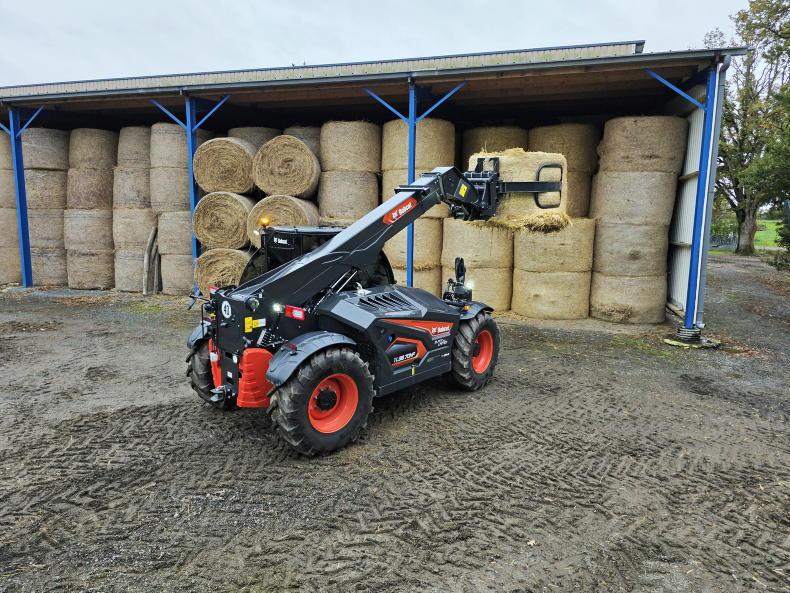
At a press event at the home of Bobcat telehandlers in France, Bobcat unveiled a new black limited edition version of its V-Drive telehandlers, which will be showcased to the public for the first time at Agritechnica next week.
The event took place close to Pontchâteau, in the west of France. This was where Joseph Sambron built his first compact loader back in 1958, before building the current-day factory in 1963.
The production of telescopic handlers commenced on the site in the early 1980s under the Sambron brand and was then acquired by the Fayat Group.
In 2000, FDI Sambron was acquired by the American corporation, Ingersoll-Rand, which also owned the Bobcat brand. Consequently, FDI Sambron transformed into Bobcat France.
In 2007, Bobcat was acquired by the South Korean group, Doosan, and continues to operate as part of the Doosan Bobcat EMEA company. Today, Pontchâteau continues to be the home of Bobcat telehandlers, with all of the company’s telehandlers manufactured here.
The 15,500sq m factory and warehouse boasts over 400 employees. In 2023, the French factory achieved an impressive milestone, when it manufactured its 111,000th machine. Out of this figure, around 30,000 of the machines have been Bobcat telehandlers.
Limited edition
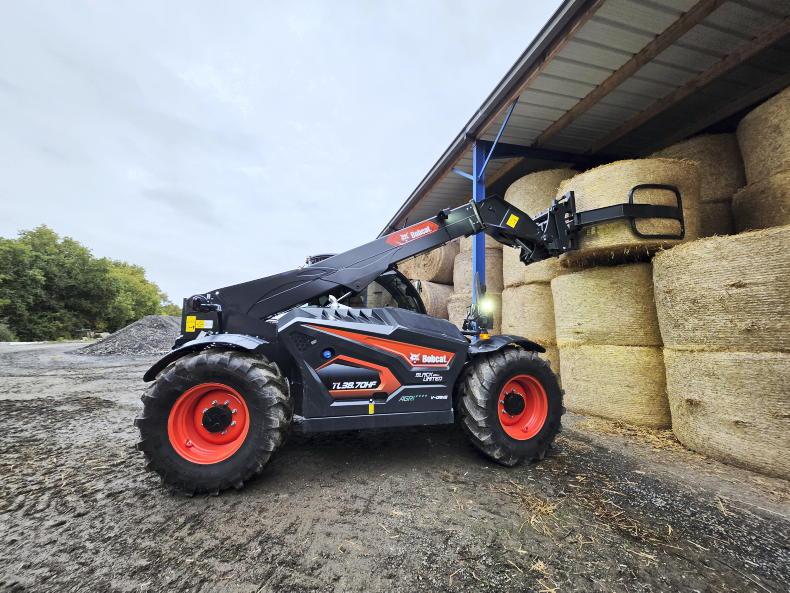
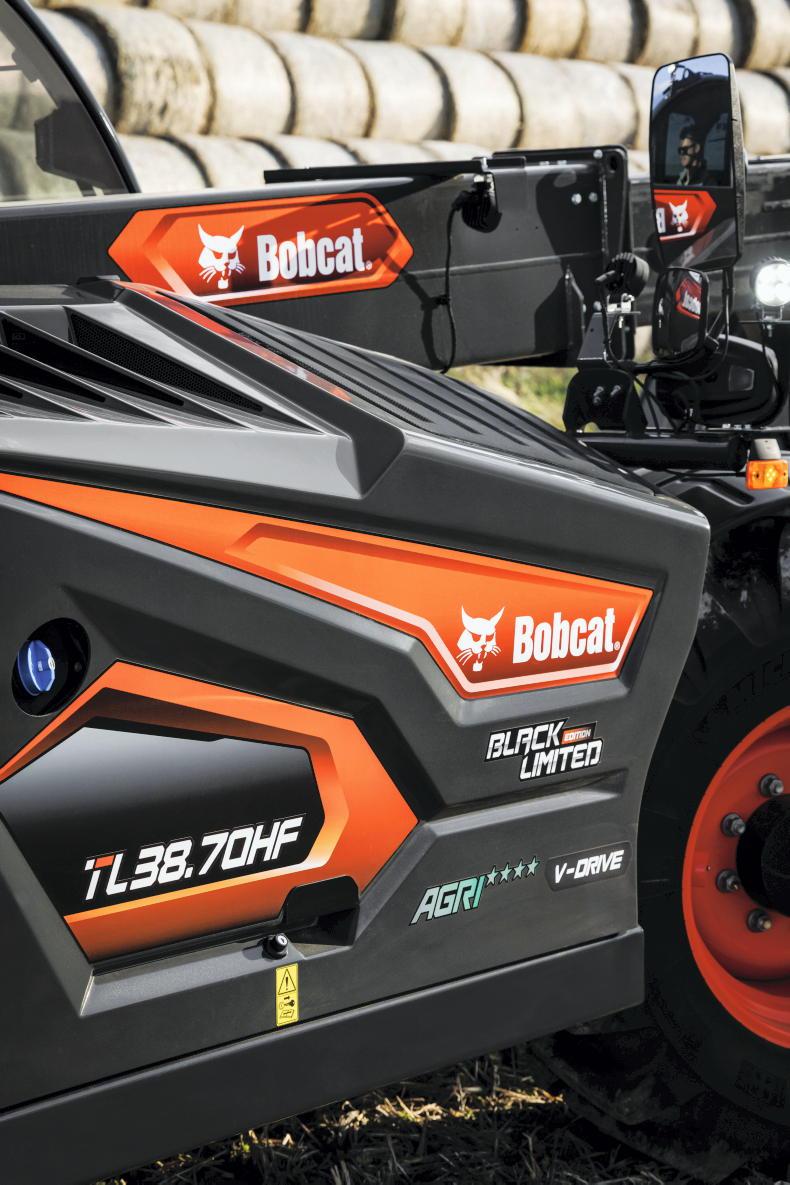
Bobcat’s new black limited edition V-Drive telehandlers are limited to the firm’s TL38.70HF and TL43.80HF V-Drive telehandler models.
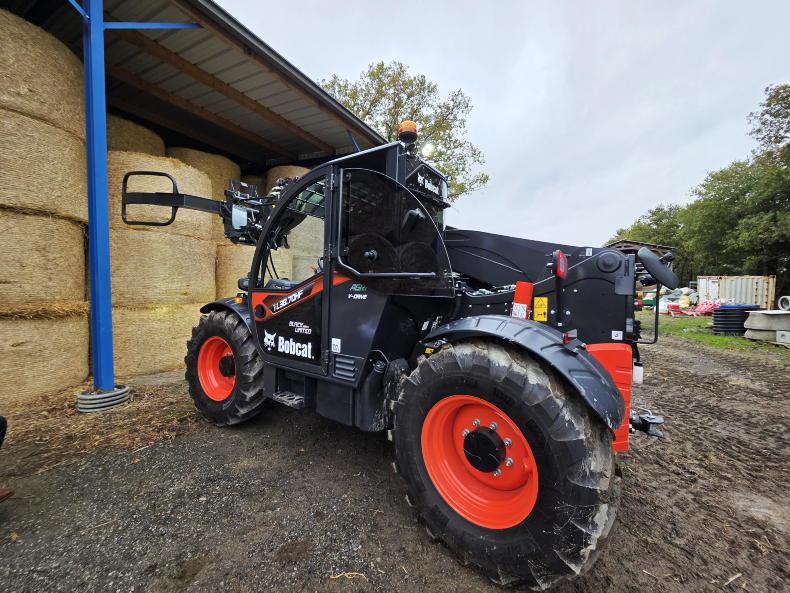
The manufacturer has said that only 50 black limited edition models have been scheduled for production, making each unit sought after. The collectable models are based on the firm’s AGRI 4 specification, which is essentially its top-spec offering.
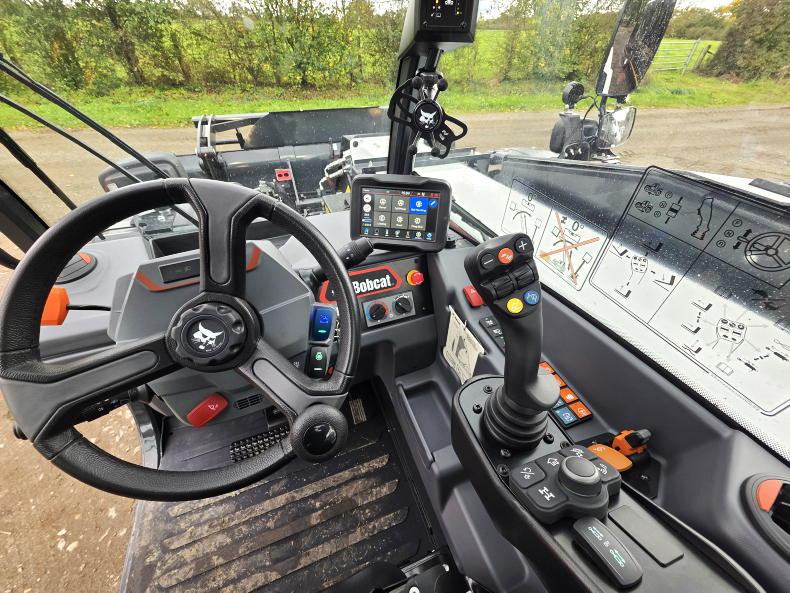
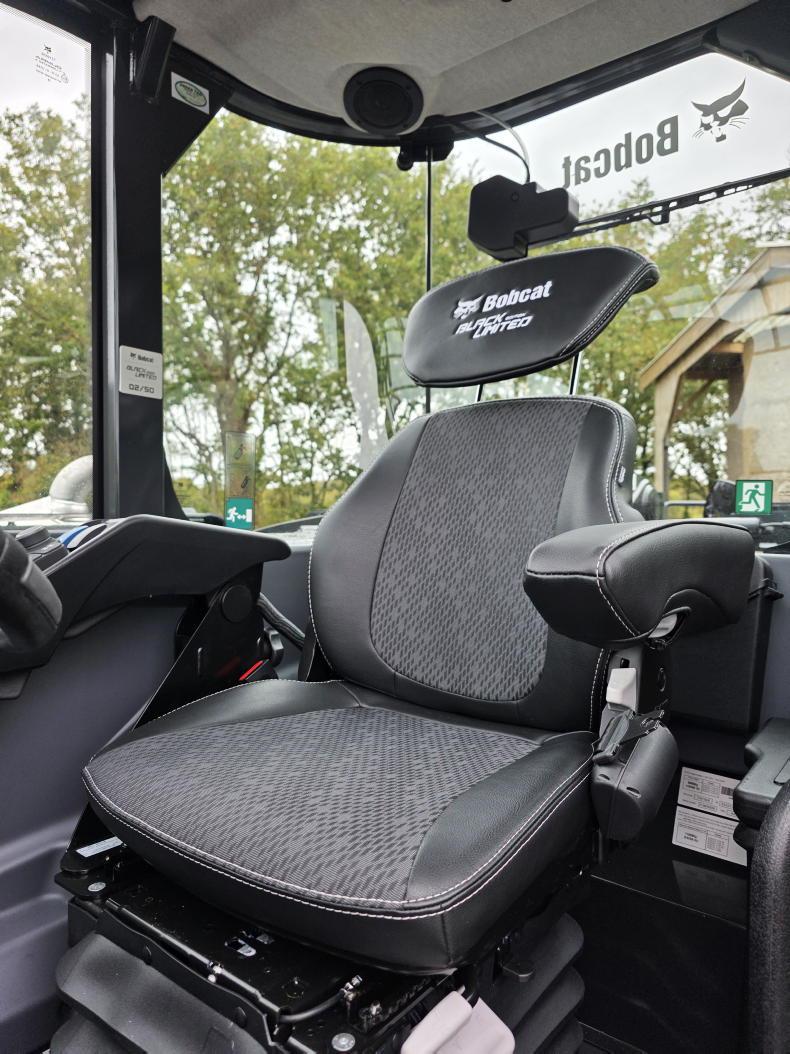
The premium models will feature black exterior colouring (on the bonnet and boom), all-black patterned cloth and leather seat covers with signature-edition branding, and individually numbered plates in each cab.
New transmission
In May this year, Bobcat introduced its new ‘V-Drive’ continuous transmission. The limited edition models will only be available with this transmission. Using dual hydraulic motors in series, the new V-Drive transmission allows the operator to drive from 0 to 40km/h without the need to change gears.
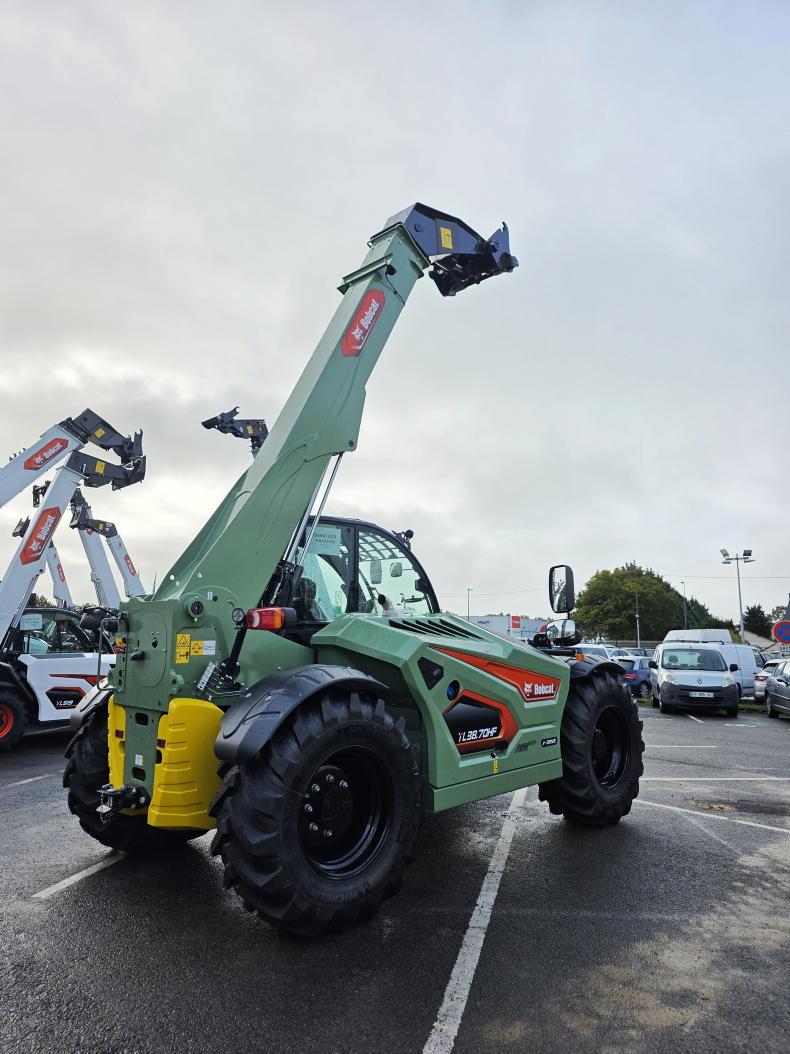
The manufacturer says it was designed to offer the highest comfort and peace of mind, removing any jolts when moving speed ranges. With the new V-Drive models, the Turtle (up to 20km/h) and Rabbit (up to 40km/h) hydrostatic speed ranges are still available and are always selectable through the joystick.
With the new transmission, Bobcat says noise levels have been reduced. Among the main changes made, the hydraulic motor has been suspended with four rubber mounts, resulting in a decrease in vibrations of 60%. The hydraulic tank has also been redesigned resulting in a higher capacity (70l instead of 59l in the current transmission).
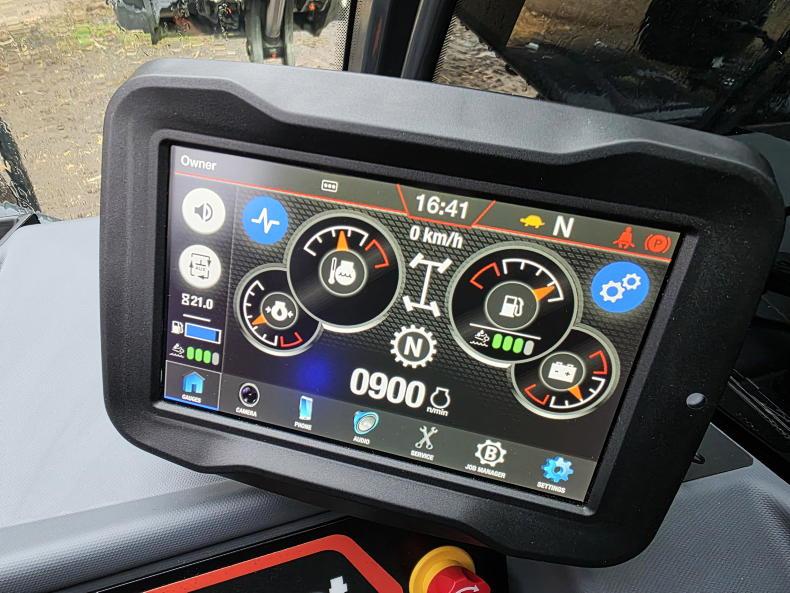
Based on the most popular options, the V-Drive premium models feature a 40km/h top speed, Alliance 460/70R24 tyres, fan inverter with manual and auto modes, a seven-inch touch display (Bluetooth radio with microphone), a hand throttle and flex drive.
Smart functions available as standard in the base models include limiting the maximum speed in the field or on the road.
Meanwhile, the new stop-start feature automatically stops the engine when idle. By pressing down on the throttle pedal or through a movement of the joystick, the engine fires up once again. Interestingly, Bobcat said that from its research, it claims that in agricultural use, this feature will reduce the hours on the machine’s odometer by 20-25%. Cruise control allows the operator to maintain speed without using the throttle pedal. We asked Bobcat whether or not a 50km/h telehandler was in its plan – it said that the idea was spoke about internally, but it doesn’t see a customer demand for the option at present.
Machine IQ features
Bobcat has also introduced an optional remote engine disable/enable function via its Machine IQ telematics platform, which is available across its range of telehandlers.
This feature lets customers remotely start or stop their machine’s engine using either the owner portal or the Machine IQ mobile app. With just a few clicks, operators can shut down equipment, helping to deter theft and support fast machine recovery. Since its launch in 2019, more than 30,000 Bobcat Machine IQ-connected units have been sold across Europe. The platform provides customers and dealers with near real-time access to machine data.
First drive
On a farm close to the factory, Irish Farmers Journal was given the opportunity to drive the new limited-edition V-Drive telehandler.
We tried out both the TL38.70HF and the larger TL43.80HF. Inside the cab, Bobcat has upped its game, offering a spacious cab with good visibility, limiting the amount of clutter and the number of buttons on the console. For sure, the outer black styling and premium interior finish was notable, but it was the machine’s cab layout, ease of utilising its smart features and sheer smoothness that really impressed.
On the road, the machine topped out at over 40km/h, with a very smooth transition through to top speed. Small features, such as the cruise control option, lead you to believe that a machine driver played a key role in designing the machine.
In the yard, we found that the operator would quickly learn, and actually use the smart functions.
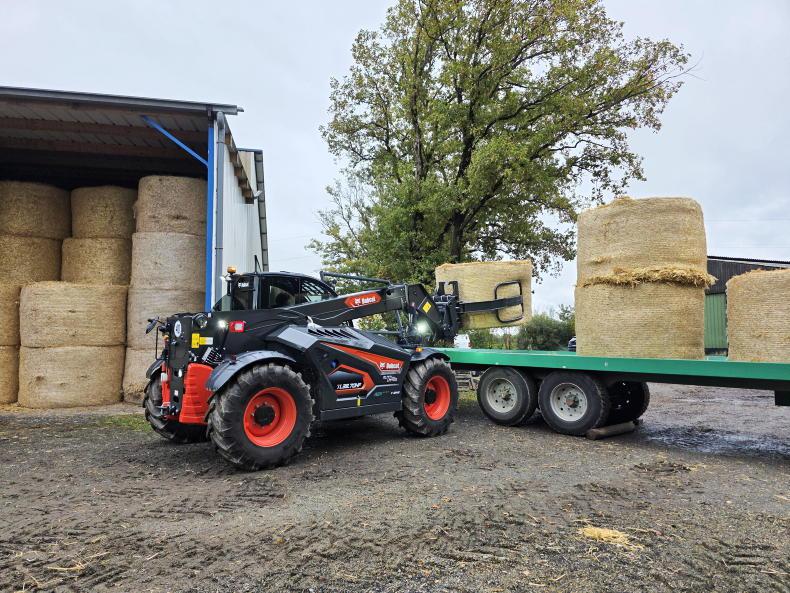
Whether this be the setting of minimum and maximum height restrictions for unloading a trailer and stacking bales in a shed, or just the bucket shake function, it was simple. Bobcat spent a lot of time planning the control layout, and has really hit the nail on the head.
Bobcat build telehandlers for Massey Ferguson
Bobcat build four ranges of telehandlers. Its agricultural range has 10 modes, with its construction, waste recycling, rotary and landscaping ranges making up the remainder. In total, it offers 35 models of telehandlers. Within its agricultural offering, the range is broken down into its super compact, compact range and large range.
In its agricultural offering, Bobcat also builds machines for Massey Ferguson, and has been doing so since 1996. This agreement accounts for 15-20% of the firm’s current production. The core of these machines is the same, with some colour changes, cladding changes, some slight layout differentials and a different shuttle used, the same as what is common place in the Massey Ferguson tractor range.
Of all telehandler production, Bobcat exports around 80%, meaning 20% of units are sold across its home market in France. The US is its biggest market, accounting for 30% of production. The factory has an annual production capacity of 4,000 machines.
However, based on the current subdued European market demand and the significant US tariffs, production is currently running at 2,400 to 2,500 machines per year.
The factory is currently building 13-14 machines daily, down from 19 machines this time last year. All machines are built to order, meaning no machines are built for stock.
Factory production
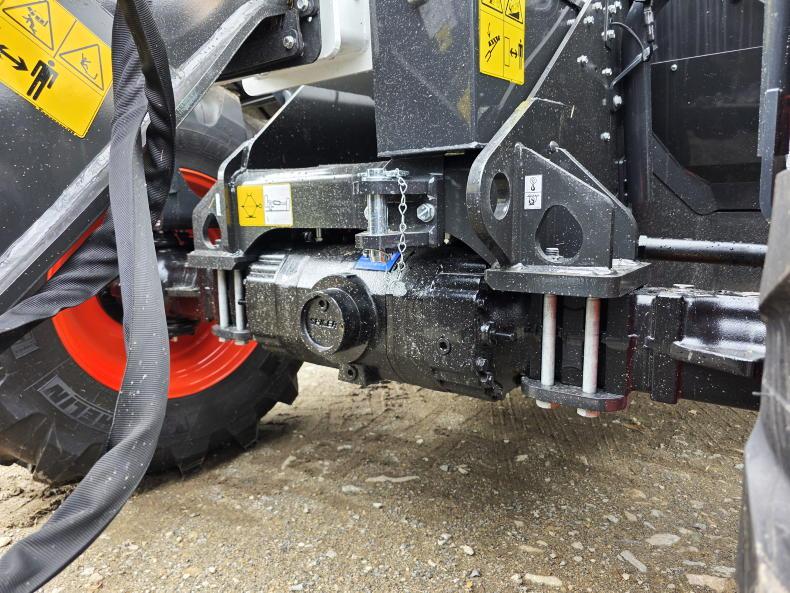
The majority of Bobcat’s telehandlers feature its own engine, which is built in South Korea. Machines destined for less-regulated countries are powered by Perkins engines. The mechanical transmission, shafts and axles are sourced from Dana Spicer, while the hydraulics are Bosch Rexroth. The V-Drive transmission is built by Lindner. All Bobcat telehandlers use two versions of the same cab.
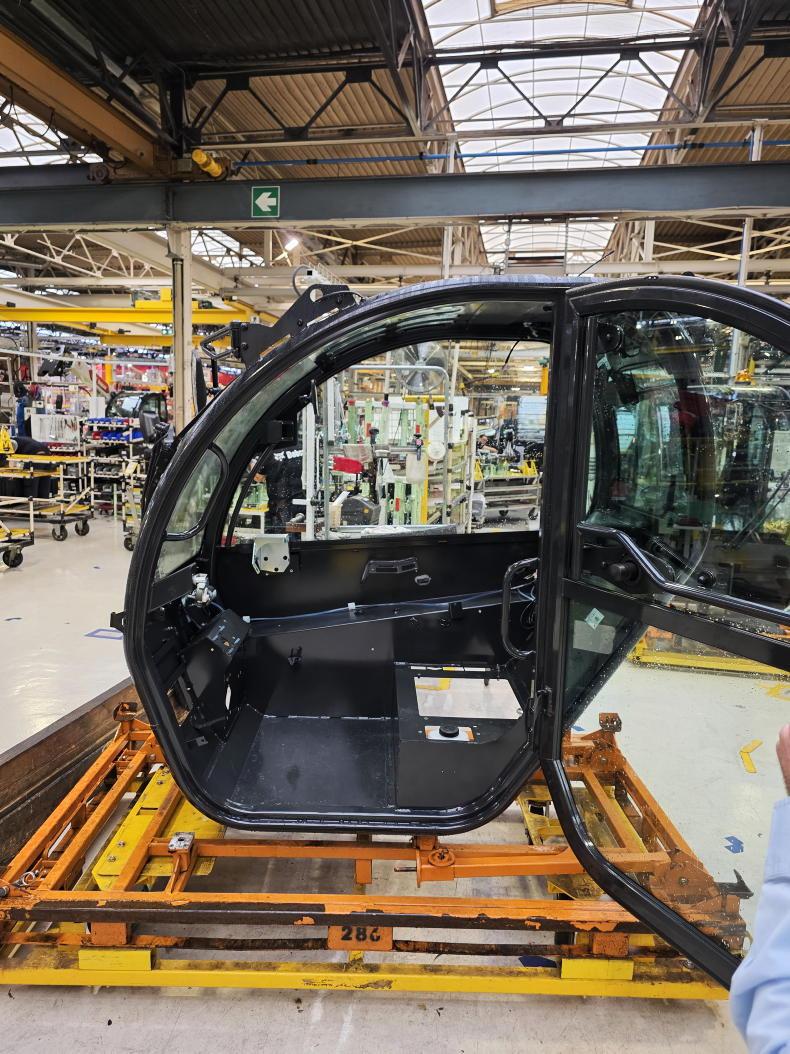
The cab frame and glass are purchased from a French supplier situated 200km from the factory, and the cab is then kitted out in-house.
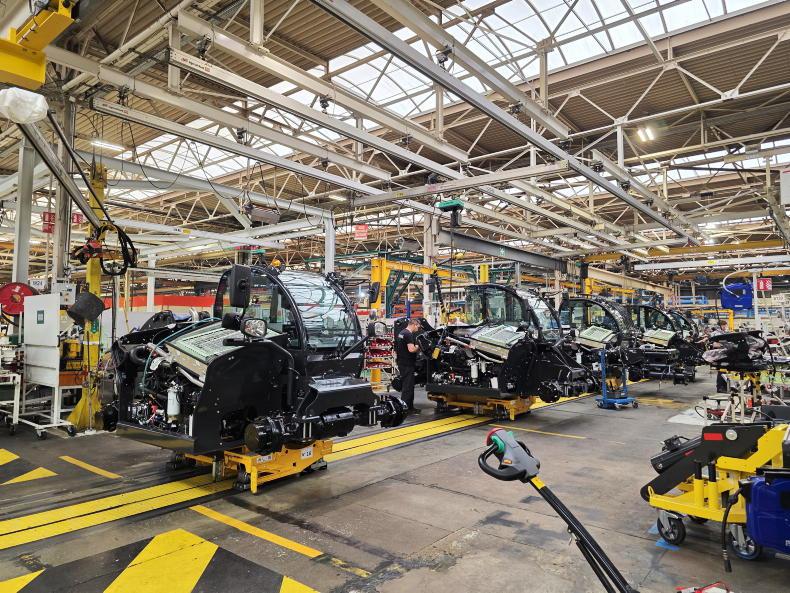
The factory is split into three areas- welding, painting and assembly. No steel is cut in-house. In fact, Bobcat actually buys in the steel from Sweden, cut to length. The steel is folded accordingly, and manually tack welded, before welding robots finish the job.
All steel is sand blasted, prior to painting. The steel is heated, primed, dried and painted with high-quality two-pack paint – it is not powder coated. Although the uptake is usually only around one machine per week, the machine colour can be customised.
Bobcat uses 5,000 parts which are sourced from 250 suppliers, the majority of which are European. As all telehandlers are built to order, components required for a specific machine are assembled into kit trolleys. These kit trolleys can be seen across the factory and contain the exact number of components during assembly.
Similar to other factories the Irish Farmers Journal has previously visited was the sequence in which machines were built. It wasn’t a case of the same models being assembled in a row. Instead, it was from one extreme to another in terms of spec and size.
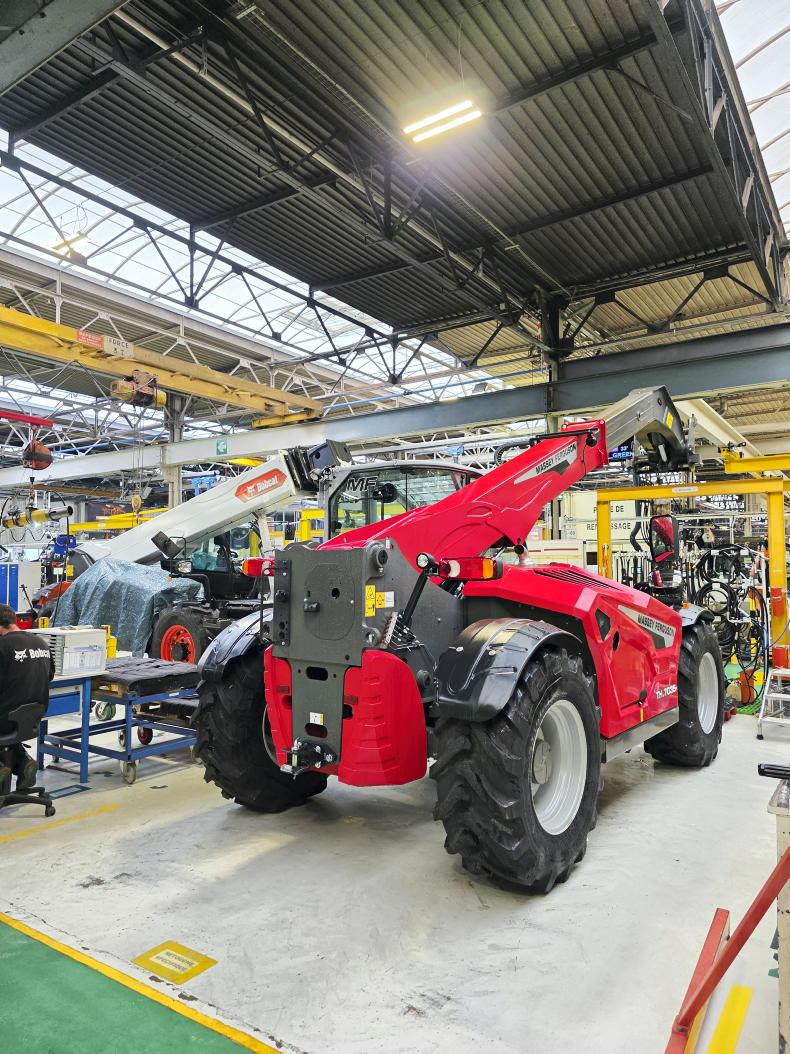
This is for smooth operation of the assembly line from a labour perspective. The final piece in the puzzle is quality checks. Factory personnel spend two hours with each assembled telehandler, running through all machine cycles.
Bobcat is owned by the Doosan Group. Founded in 1896, the Doosan Corporation is based in South Korea. It employs over 40,000 people in 38 countries. The firm has over 100 global entities which contributed to a $13bn turnover in 2024.
Bobcat’s roots trace back to 1958, when the Melroe Manufacturing Company introduced a compact loader that evolved into the world’s first skid-steer loader. This company soon became Bobcat. Bobcats extensive lineup includes loaders, excavators, telehandlers, compact tractors, material handling equipment and a range of attachments.
See more below:



SHARING OPTIONS