



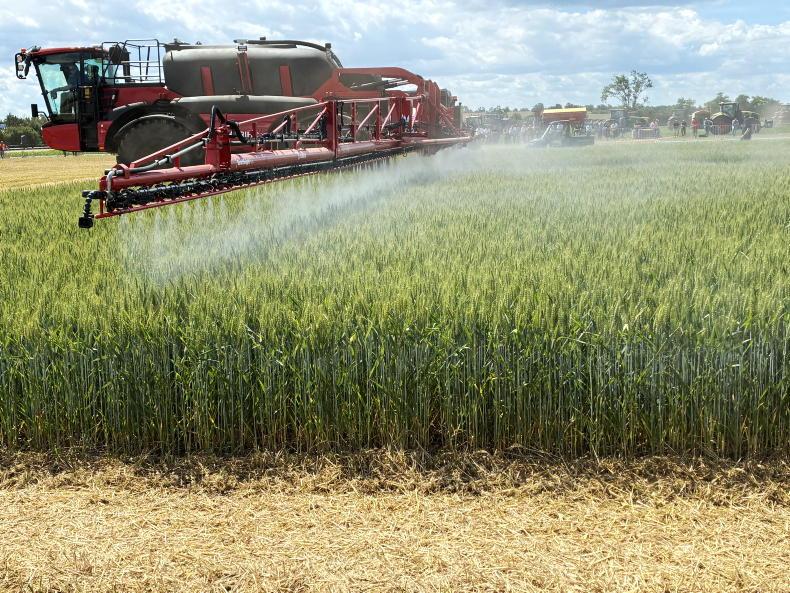
Apart from sprayers, the DLG Feldtage 2026 event in Germany had a great array of weed control methods, from mechanical weeding to laser systems. These alternatives have serious disadvantages, in terms of cost and effectiveness, compared to spray-based systems, so why are we interested?
There are many reasons. Weeds, pathogens which cause disease and pests are evolving to become resistant to the pesticides we use. While this is a normal development, it is happening more easily with modern pesticides, which are safer to health and the environment, and it is occurring in more critical species. This includes blackgrass, Italian ryegrass in cereals and blight in potatoes.
Also, there are fewer new pesticides being registered, as development and registration become more difficult and expensive. In addition, organic growers need viable alternatives to labour-intensive and menial, manual weeding.
But the path to alternatives is not easy with the only certainty being that development will continue. The rush to invest in alternatives by technology funds for high-tech ideas and by the machinery industry for inter-row mechanical weeding companies, is unlikely to yield quick returns.
This area is a relatively ‘slow burn’ that will require continued investment and, more importantly, research support.
A full suite of conventional sprayers with all the latest control technology was on view in the test arena and also on commercial stands. The test arena had four specific areas (similar to the Teagasc/Irish Farmers Journal Crops and Technology 2025), which allowed spectators and the commentary team to evaluate:
Most of the sprayers had the technology to perform well in all of these tests. Height sensors on the booms kept the nozzle height constant in most cases.
However, the suspension of some of the sprayers was challenged a little on the bumpy track, where forward/backward whipping of the boom (known as yaw) would have impacted on application evenness at the boom outer sections.
Both pulsing nozzles (PWM) and rapid switching nozzles were visually coping with the curve – however, a precise measurement rig would be needed to determine how effective they were.
There were differences in the spot spraying, however, some hitting the patches spot-on, while others clearly missed the patches indicating a need for a ‘ground truthing’ check system to be built into commercial systems.
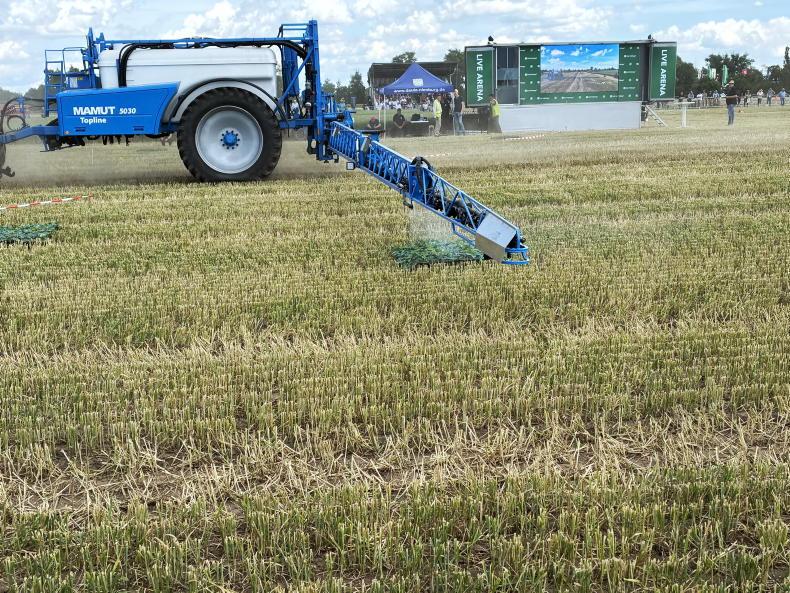
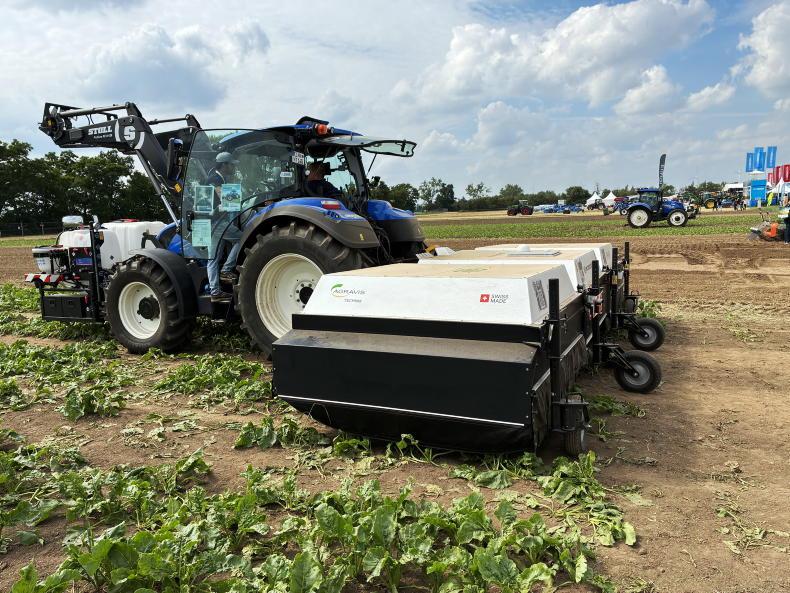
In the robotic/technology area, both high-precision spot sprayers and laser weeders were demonstrated. The high-precision sprayers consist of a hooded canopy, typically about 6m wide, which houses a bright light and camera system that captures high-resolution images of the weeds/plants.
It then uses an AI system to instantly identify and accurately position the weeds, which are then individually sprayed with herbicide by fast solenoid nozzles at spacings of just 4cm.
There are a number of these sprayers available now.
Where targets are more easily identified and where crop safe selective herbicides are used (eg dock control in grassland), a simpler set-up without hood or lights can suffice.
These can greatly reduce the amount of herbicides needed to control docks.
Laser weeders are currently the ‘great hope’ in precision weed control.
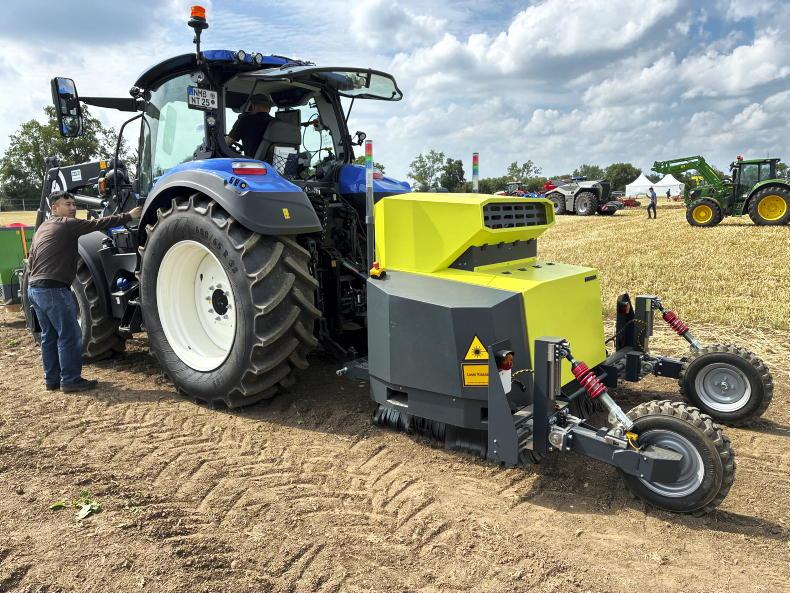
The weed identification element of these units is similar to that in the high-precision sprayer mentioned above (hooded section with lights and camera sensors), but the identified plants are then targeted with laser energy to effectively burn the plant.
This differs from the direct electrical energy contact system used in Ireland to desiccate potatoes, for example, which cannot target individual plants.
At the moment, cost, complexity and speed are major constraints for high-precision spot-spraying and, particularly, for laser weeding. They are currently marketed to growers of high-value organic crops. However, if the availability of effective herbicides continues to decline, with further development, they may have broader application in the future.
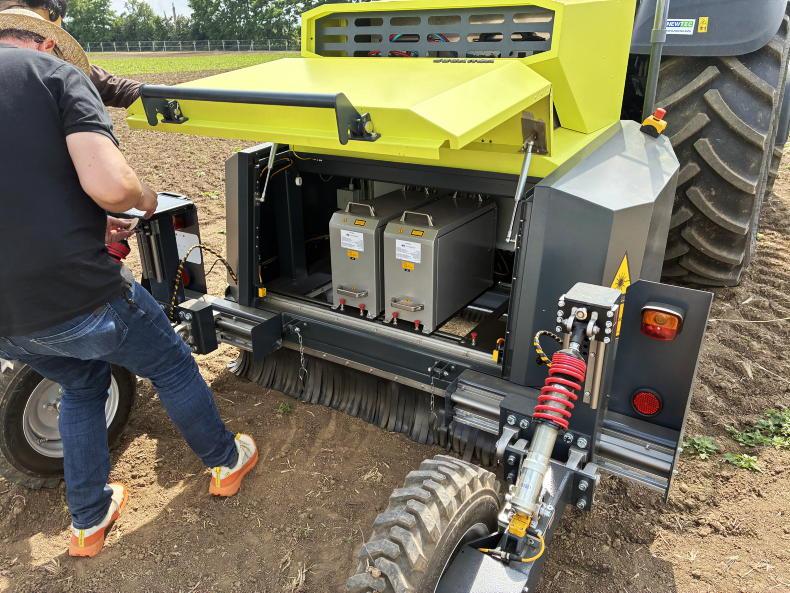
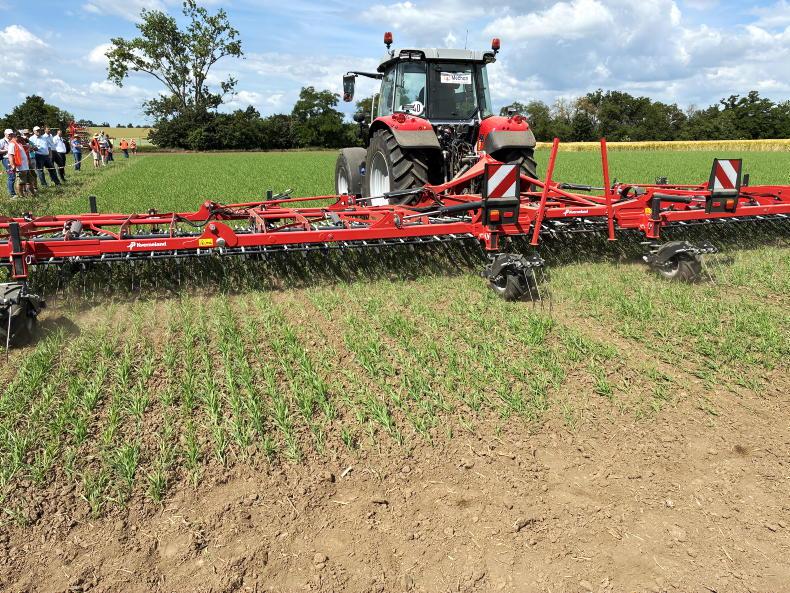
Mechanical crop-weeding demonstrations were carried out in two crops. Maize (25 to 35cm tall) was used to demonstrate auto-steering, inter-row weeders. A very late-sown barley crop at early tillering stage was used to demonstrate tine weeders.
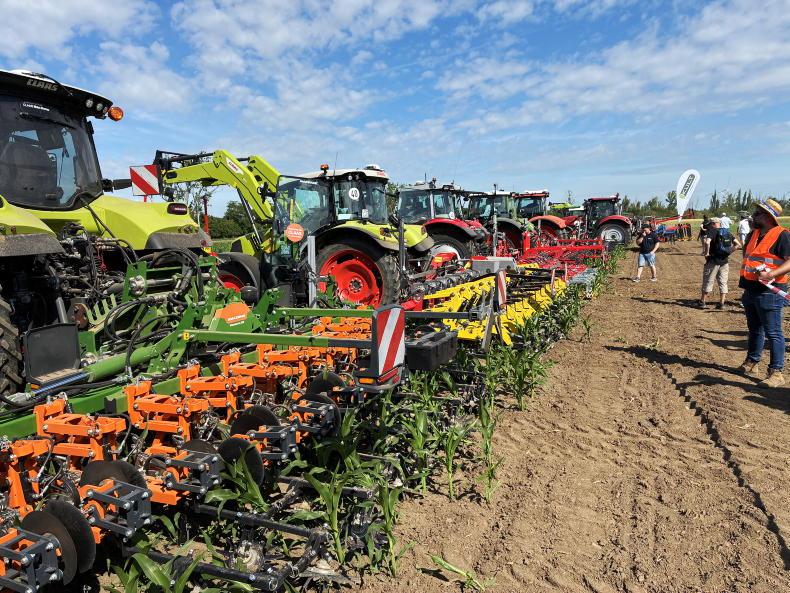
In the row-crop section, all machines used cameras to guide the weeders down the rows. The different makes showed different cultivation tools, but most had one or two vertical tines in the non-crop area, with either horizontal finger wheels or vertical serrated discs working closest to the crop plants. The individual models differed in frame design, the individual hoeing units and their cultivation elements, and in the ease of adjustment of the hoeing elements.
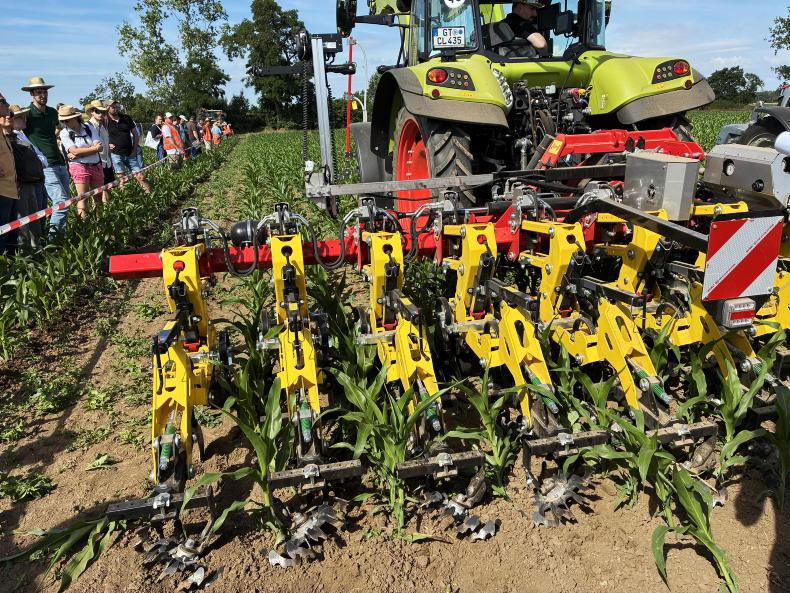
For optimal weeding, these elements would be adjusted when changing fields/crops so rapid adjustment might increase the chance of the operator doing it.
The manufacturers who exhibited included: Amazone, APV, Einbok, Horsch, Kubota (Kverneland), Kult (Fyeld), Treffler and Garford.
In the barley section, simple tine weeders were used without steering systems. These weeders varied in tine type and the pressure adjustment system that was used. Machines were demonstrated by APV, Horsch, Kverneland, Dickson, Kuhn, Lemken and Pottinger.
Overall, while the demonstrations allowed attendees to see the machines’ features and operation, both crops were very clean. To gauge effectiveness, it would be useful to see crops that had weed challenges that had been weeded weeks earlier. It is probably easier to operate a mechanical weeder in drier climates than Ireland’s. Frequent wet weather would make optimum timing difficult.



SHARING OPTIONS