As harvest 2026 was the final year of widespread free weed resistance testing through the DAFM-funded EVOLVE grass weed research project at Oak Park, a high number of suspected grass and broad-leaved weed samples have been submitted for testing.
So far, 145 suspected field samples have been received/collected, with spring wild oats accounting for almost half (48%) followed by Italian ryegrass (23%) and annual meadow grass (7%). The remaining samples included blackgrass, canary grass, bromes and some broad-leaved weeds, including groundsel.
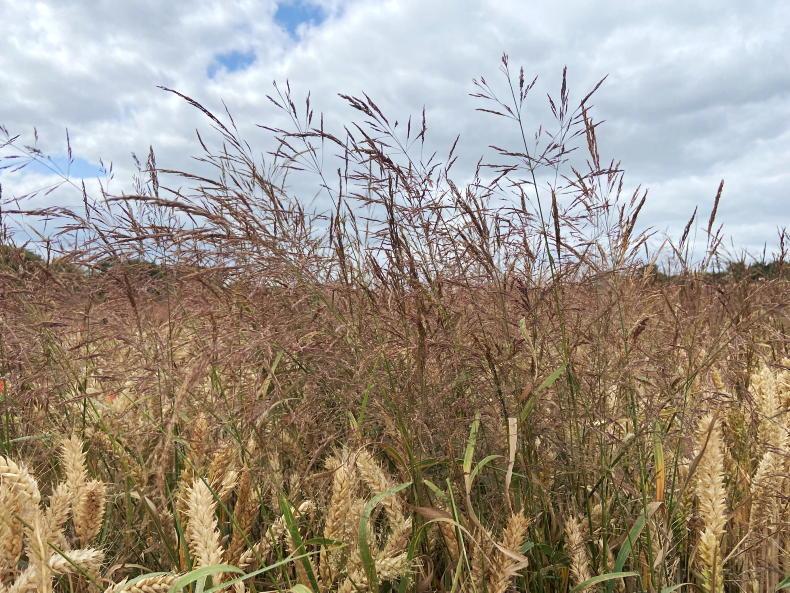
Interestingly, a population of loose silky bent (Apera spica-venti) was also collected for testing. This winter-germinating annual grass weed is particularly problematic in Germany, Denmark, Poland and the Czech Republic, where crop rotations are dominated by autumn-sown crops. Some populations have also been reported in the UK. Resistance to both ACCase (eg, Axial) and ALS (eg, Pacifica) herbicides has been documented.
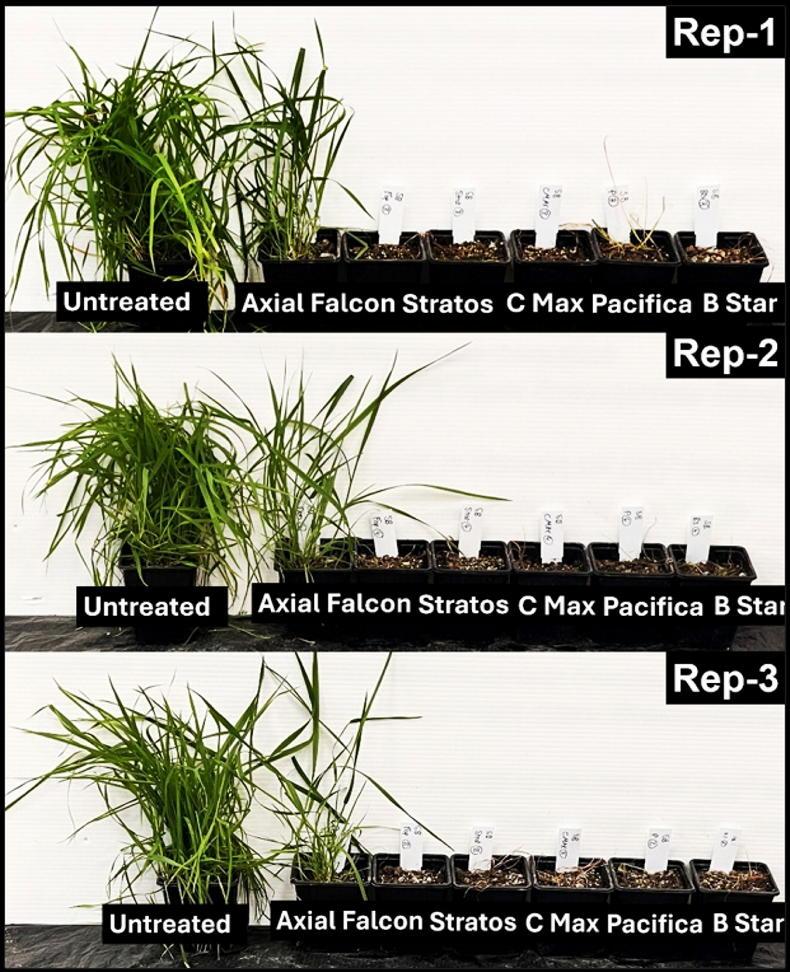
In Ireland, the species occurs on very few farms but can pose control challenges. The suspected population came from a winter wheat field in Co Louth. Plants at the two- to four-leaf stage were sprayed with ACCase and ALS herbicides at their recommended label rates (Figure 1). Axial failed to control the population, while the other herbicides tested remained effective. Metabolic resistance is suspected, and further investigations are ongoing.
This finding highlights the risks of relying solely on herbicides without an integrated approach to weed control.
Comprehensive testing of submitted samples has begun, with results reported directly to the growers/advisers who submitted them. Italian ryegrass samples are being screened first, including tests with glyphosate and propyzamide (Kerb) herbicides, alongside ACCase and ALS herbicides.