Costs and returns
As fieldwork wraps up, it is a great time to sit down on some of the wet days and get your books in order. Get crop records up to date first and make sure you are ready for inspections. Have product rates, PCS numbers, water rates and spraying dates, and growth stages recorded.
Next go to income from grain and straw. Calculate your yields from each field, where possible, and examine what went well and what could have gone better. What crop has performed best and what crop struggled? What varieties performed best. What crops produced the most straw and had you an easy sale for all of this straw? Does it make sense to chop some more straw next year on some crops? What income did you receive from grain and straw? Did you receive more money for feed barley than malting barley? Did you receive more money for roasting barley or high-value feed barley than standard feed barley?
Once you have your crop records in order, you can then work on your crop costs and returns. Calculate all of your costs – seed, fertiliser, diesel, plant protection, haulage, machinery maintenance, contractor charges, net wrap, glyphosate. If you spent it, it needs to be in the variable costs. You can then calculate your margin over variable costs.
You then need to examine how this stacks up once fixed costs are taken away. Land rental will be a major cost for many. Insurance, electricity, consultancy fees, the list goes on. Add in your scheme payments, BISS, CRISS and see what your bottom line is. Hedge cutting, land drainage and maintenance all need to be in the mix.
This will take a good bit of time, but it is essential that all farmers are carefully examining their income and profit on-farm. It is essential you are maximising your income by growing the most profitable crops, making use of schemes like the Straw Incorporation Measure, the Protein Aid Measure, ACRES and the EIP, which allows some farmers to be paid for growing cover crops.
Yield Watch
On the tillage pages this week we have the final results from the Yield Watch series. It is a good example of examining the use of inputs on a farm. The inputs, costs, yield and income are all detailed in the page and in the video, which is well worth a watch if you missed Tillage Day when the results were revealed.
Oilseed rape
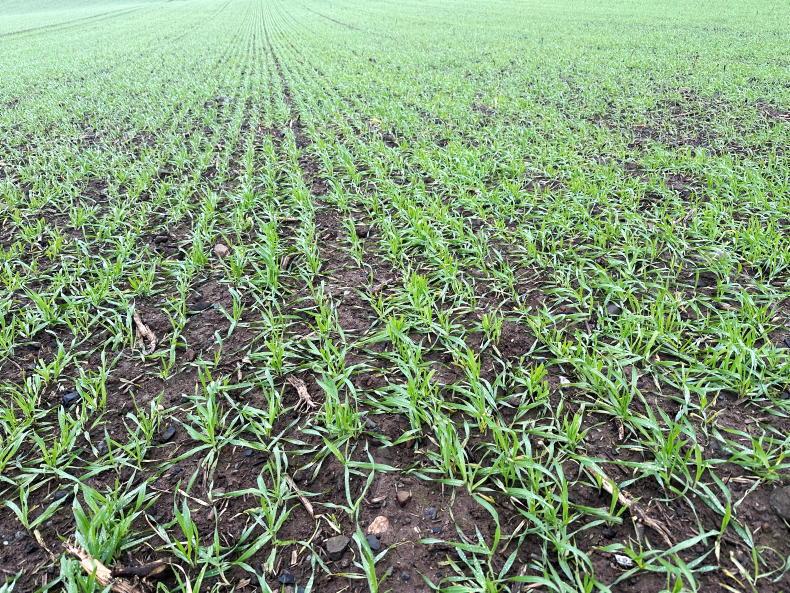
Crops are thick and some have been wondering would weed control with Astrokerb be as good and if the spray can get down. It should be fine, according to the trade. It works best in slow growth, at soil temperatures under 10°C. Astrokerb gives some good grass weed control, but partners are needed in bad blackgrass situations, for example.
ITLUS
A reminder that the Irish Tillage and land Use Winter Conference is on 3 December. You should register for the conference by emailing itlussec50@gmail.com by Friday, 20 November. Tickets are €50 for members, €80 for non-members and €30 for student non-members.