Cars that are powered by battery electric systems are becoming more mainstream now, as manufacturers focus on the hatchback models that are tailored to family driving.
Part of that acceptability relates to the apparent value; electric cars haven’t got much more expensive, it’s more the fact that traditional petrol and diesel engine cars have increased in price.
Family values of space and affordability are important when it comes to choices and that’s why this week I compared two relatively new battery electric cars, the Kia EV3 and the Škoda Elroq, which I have recently driven. Both cars are aimed at the family market based around a five-door hatchback design, where accessibility and boot space are also important.
The Kia EV3 was the first of these cars that I drove, and I was instantly impressed by its modern clean design lines on the inside. There is a true feeling that you are driving a modern car in the EV3, while depending on your perspective, that can mean too much of a plastic look.
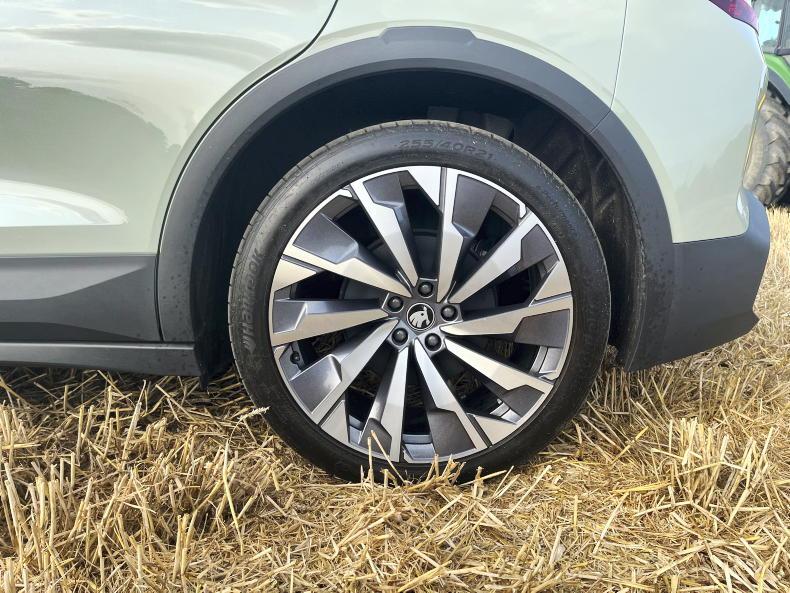
The Skoda Elroq sits on Hankook Ventus 235/45R22 tyres on big rims, to give the car stature.
More recently, I took the new Škoda Elroq for a longer test drive, and while the Timiano green colour of the car was an instant hit, the more spacious feel left the lasting impression on me. The Elroq is part of the new Škoda image, and the car came with large wheels to give it a strong stature on the road.
This is clearly a bigger car than the EV3 and the specifications prove this out including 950mm rear legroom that was especially noticeable. The extra length of the car has allowed Škoda to also deliver greater boot space; that’s so obvious when the rear seats are folded down for longer loads.
The other measurable bits that are also important include the range from both of the electric cars and the entry price. Both cars have similar size battery options, the Kia EV3 has a slight edge when it comes to driving range on a fully charged battery.
Battery charge times are similar whether it’s a fast charge or a longer overnight home charge. Both have charge sockets on the driver’s side which means that you may have to use a different strategy for some motorway fast-charging points. The EV3 has a neat under front bonnet storage area for the charging cables, while the cables are stored in the boot of the Elroq.
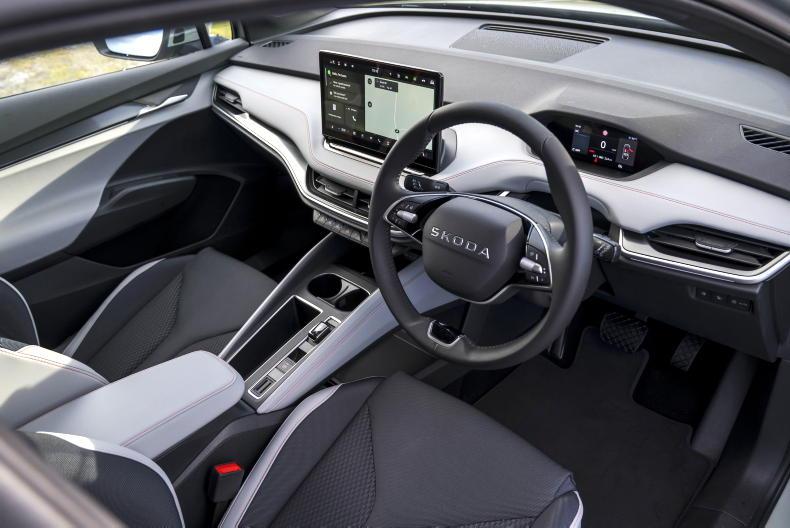
The dash of the Skoda Elroq includes a smaller screen behind the steering wheel and a larger floating infotainment screen in the centre built around a modern layout.
Both cars are very easy to drive and offer eco driving settings to maximise your driving range. The EV3 system defaulted to normal driving all of the time, while the Elroq held the eco setting throughout my test drive. Resetting is easy, but you have to remember to do it in the EV3.
I found instant ease at setting the cruise control system on the EV3 for motorway driving, while that of the Elroq system was more traditional than I had expected. That meant a bit of searching about, but only once.
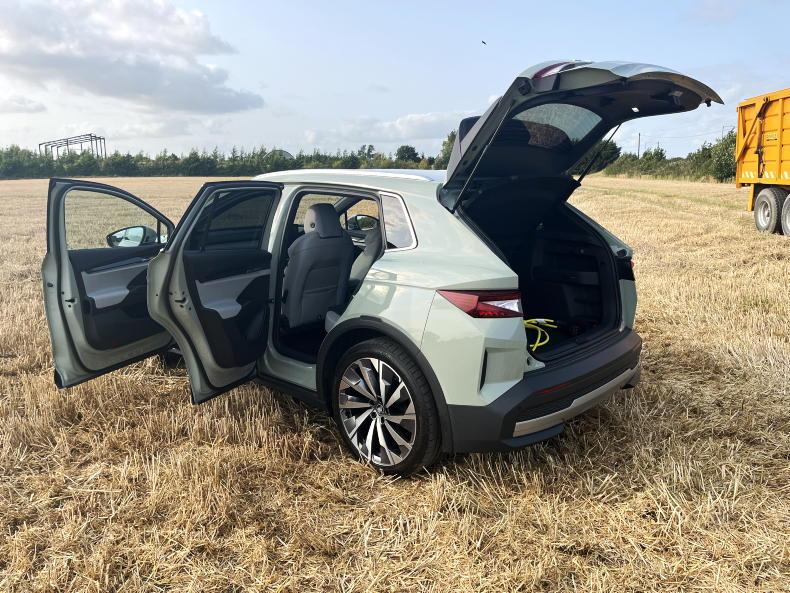
The Skoda Elroq is a spacious mid-size car with 470 litres of boot space that extends to 1580 litres with the rear sets folded. There is a fidgety handle to boot for closing that difficult to see lasting too long.
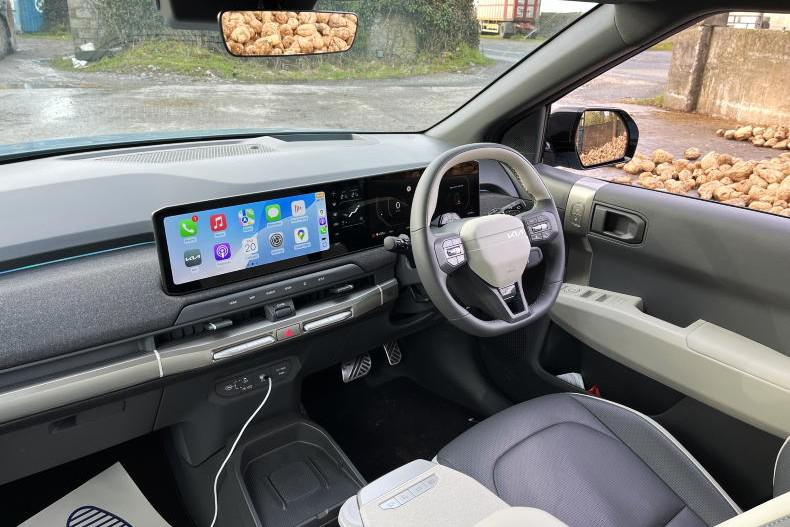
The transmission controls are different in that the EV3 uses a stalk on the steering wheel and the Elroq has a neat stubby controller in the centre console between the front seats. These designs mean a slightly less cluttered area between the front seats in the EV3 than in the Elroq.
The other noticeable interior differences for the driver are that the EV3 has a wide dash screen running across the front of the car that incorporates the infotainment screen. The Elroq has a smaller screen for the basic driving information and a separate floating screen for the other stuff. It’s very much a matter of choice.
In terms of performance, battery drive systems deliver fast acceleration, so driving can be considered to be something that you no longer compare. These are fast cars to accelerate with the heavier Škoda Elroq being slightly quicker than the Kia EV3.
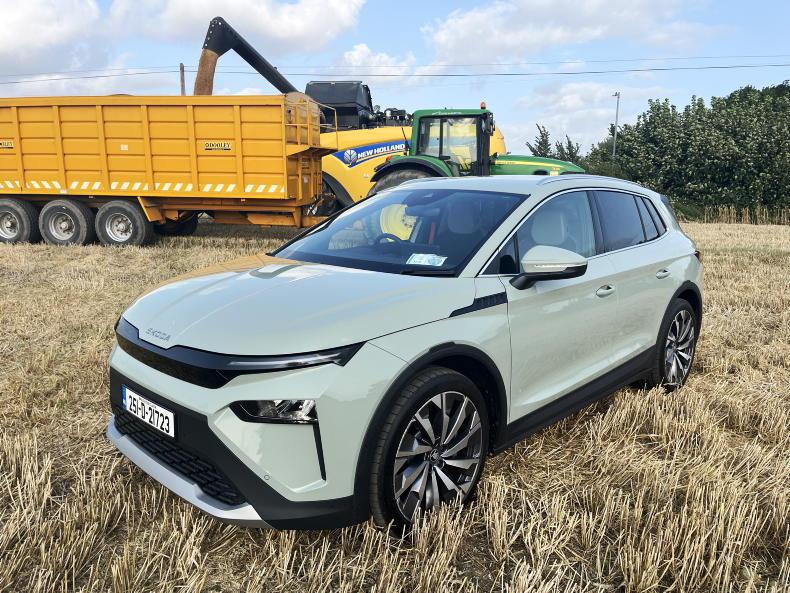
The Timiano green colour for the Skoda Elroq test car was an additional attractive feature while entry prices start at €36,545 or £31,500 in N. Ireland.
The interior space differences are an important feature. The rear legroom for the Škoda Elroq won me over, along with the wider feel to the car. These features made the Elroq a more sizeable car than I had originally thought.
Both cars offer a host of modern safety features, while the Kia EV3 has a five-star Euro NCAP rating, the Škoda Elroq has not been independently safety rated as yet.
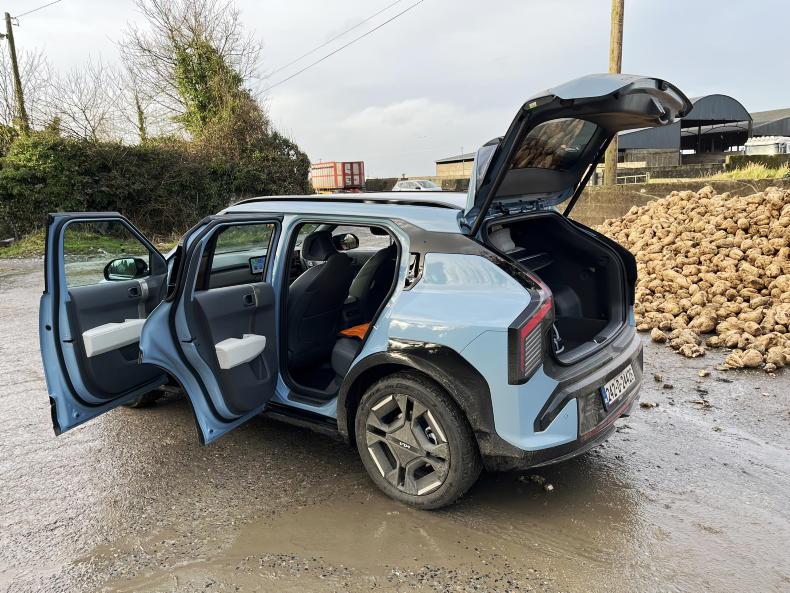
The Kia EV3 is a more compact car with similar boot space to the Skoda Elroq until you fold the rear seats.
Entry prices start at €36,545 or £31,500 NI for the Škoda Elroq, while the entry Kia EV3 is marginally more expensive at €36,790 or £32,995 NI. Kia offers a seven-year warranty for the EV3 compared with three years for the Škoda, while both offer an eight-year battery-life warranty.
Of the two cars, the The Škoda Elroq won me over for a combination of space, comfort and practicality coupled with impressive battery range. I drove this car over 700km across a range of driving conditions and the battery range was regularly at over 440km, so range was never an issue and fast charging took no longer than a coffee stop recharge.
Cars that are powered by battery electric systems are becoming more mainstream now, as manufacturers focus on the hatchback models that are tailored to family driving.
Part of that acceptability relates to the apparent value; electric cars haven’t got much more expensive, it’s more the fact that traditional petrol and diesel engine cars have increased in price.
Family values of space and affordability are important when it comes to choices and that’s why this week I compared two relatively new battery electric cars, the Kia EV3 and the Škoda Elroq, which I have recently driven. Both cars are aimed at the family market based around a five-door hatchback design, where accessibility and boot space are also important.
The Kia EV3 was the first of these cars that I drove, and I was instantly impressed by its modern clean design lines on the inside. There is a true feeling that you are driving a modern car in the EV3, while depending on your perspective, that can mean too much of a plastic look.
The Skoda Elroq sits on Hankook Ventus 235/45R22 tyres on big rims, to give the car stature.
More recently, I took the new Škoda Elroq for a longer test drive, and while the Timiano green colour of the car was an instant hit, the more spacious feel left the lasting impression on me. The Elroq is part of the new Škoda image, and the car came with large wheels to give it a strong stature on the road.
This is clearly a bigger car than the EV3 and the specifications prove this out including 950mm rear legroom that was especially noticeable. The extra length of the car has allowed Škoda to also deliver greater boot space; that’s so obvious when the rear seats are folded down for longer loads.
The other measurable bits that are also important include the range from both of the electric cars and the entry price. Both cars have similar size battery options, the Kia EV3 has a slight edge when it comes to driving range on a fully charged battery.
Battery charge times are similar whether it’s a fast charge or a longer overnight home charge. Both have charge sockets on the driver’s side which means that you may have to use a different strategy for some motorway fast-charging points. The EV3 has a neat under front bonnet storage area for the charging cables, while the cables are stored in the boot of the Elroq.
The dash of the Skoda Elroq includes a smaller screen behind the steering wheel and a larger floating infotainment screen in the centre built around a modern layout.
Both cars are very easy to drive and offer eco driving settings to maximise your driving range. The EV3 system defaulted to normal driving all of the time, while the Elroq held the eco setting throughout my test drive. Resetting is easy, but you have to remember to do it in the EV3.
I found instant ease at setting the cruise control system on the EV3 for motorway driving, while that of the Elroq system was more traditional than I had expected. That meant a bit of searching about, but only once.
The Skoda Elroq is a spacious mid-size car with 470 litres of boot space that extends to 1580 litres with the rear sets folded. There is a fidgety handle to boot for closing that difficult to see lasting too long.
The transmission controls are different in that the EV3 uses a stalk on the steering wheel and the Elroq has a neat stubby controller in the centre console between the front seats. These designs mean a slightly less cluttered area between the front seats in the EV3 than in the Elroq.
The other noticeable interior differences for the driver are that the EV3 has a wide dash screen running across the front of the car that incorporates the infotainment screen. The Elroq has a smaller screen for the basic driving information and a separate floating screen for the other stuff. It’s very much a matter of choice.
In terms of performance, battery drive systems deliver fast acceleration, so driving can be considered to be something that you no longer compare. These are fast cars to accelerate with the heavier Škoda Elroq being slightly quicker than the Kia EV3.
The Timiano green colour for the Skoda Elroq test car was an additional attractive feature while entry prices start at €36,545 or £31,500 in N. Ireland.
The interior space differences are an important feature. The rear legroom for the Škoda Elroq won me over, along with the wider feel to the car. These features made the Elroq a more sizeable car than I had originally thought.
Both cars offer a host of modern safety features, while the Kia EV3 has a five-star Euro NCAP rating, the Škoda Elroq has not been independently safety rated as yet.
The Kia EV3 is a more compact car with similar boot space to the Skoda Elroq until you fold the rear seats.
Entry prices start at €36,545 or £31,500 NI for the Škoda Elroq, while the entry Kia EV3 is marginally more expensive at €36,790 or £32,995 NI. Kia offers a seven-year warranty for the EV3 compared with three years for the Škoda, while both offer an eight-year battery-life warranty.
Of the two cars, the The Škoda Elroq won me over for a combination of space, comfort and practicality coupled with impressive battery range. I drove this car over 700km across a range of driving conditions and the battery range was regularly at over 440km, so range was never an issue and fast charging took no longer than a coffee stop recharge.








SHARING OPTIONS