With the huge rise in SUV sales, you might think that people carriers are a thing of the past. Not so, in my opinion, as many families need space, value and low running costs for those years when school and sports runs are part of everyday commuting life. And then along comes the new Kia PV5.
While it may not be the prettiest of people carrier cars from the outside, there is simply no doubting that it represents an answer to space and value for those families that need that combination.
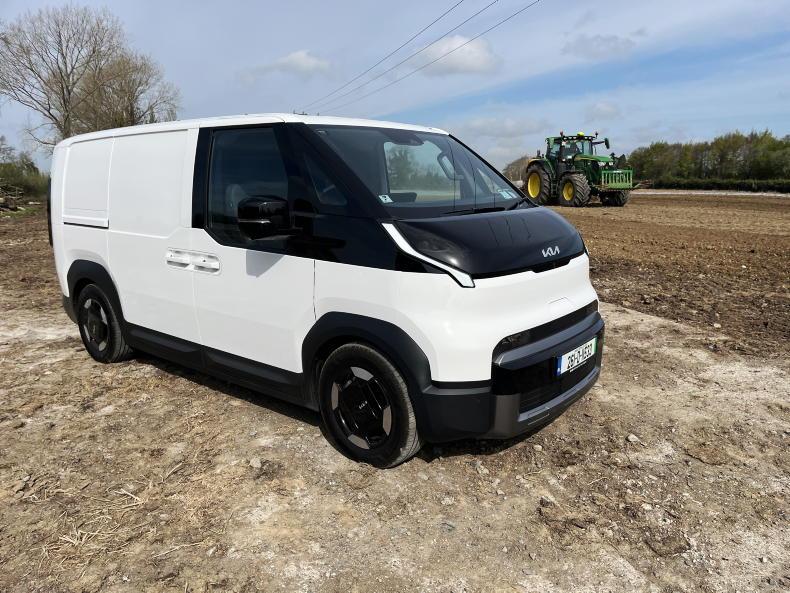
This is a fully electric vehicle that is now available in two formats: as a spacious, five-seat people carrier or as a more simple white van.
The external van shape of the new Kia PV5 gives strong hints to its commercial vehicle background.
Was it conceived as a car or a van, that remains a question? What is not in doubt about this new car is that as a modern people carrier, it ticks lots of boxes.
I’ve had the two versions of the PV5 on the roads in recent weeks, the PV5 Passenger version followed by the commercial Cargo van. With over 1,250km driven, I’ve come away well impressed to the point that I think many people could live with the PV5 in either format.
While it’s not stylishly beautiful on the outside, when you are looking from the inside out there’s a different view.
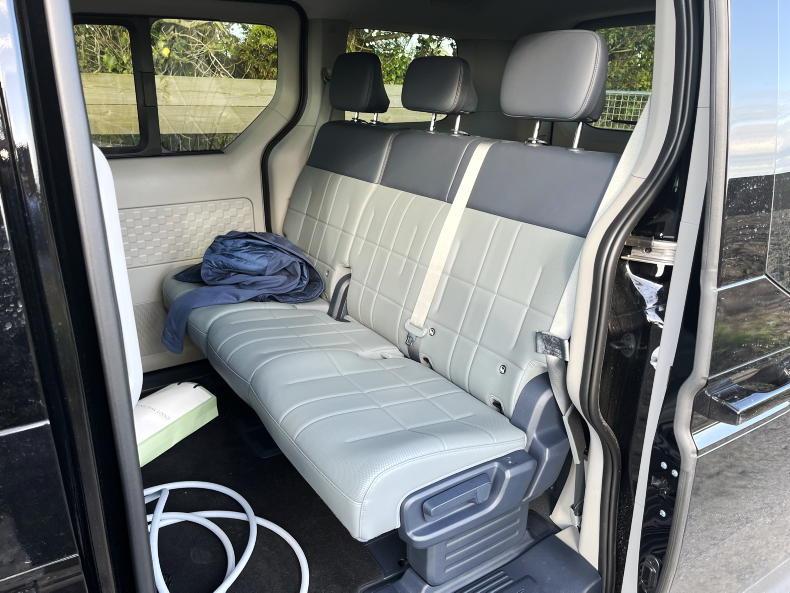
There is seating for three in the rear of the Passenger Kia PV5, but just ISO-Fix attachments.
The PV5 looks big in a van sense when compared with the car, but in reality, its footprint is only marginally longer than that of a Toyota RAV4 or a Volkswagen Tiguan. Despite this appearance of size, the Kia PV5 has a tight 5.5 metre turning circle so it’s very manoeuvrable.
The high seat position means a slight entry climb and once up there there’s good seat adjustment to enhance the view over a less-than-cluttered dash area.
You’ll quickly get comfortable behind the wheel, and the twin display screens, one smaller 7.2 inch one behind the steering wheel and the other larger 12.9 inch and more centrally mounted, are easy to navigate.
There is little in the way on non-touch screen adjustments while the steering wheel side buttons are easy to get used to. You require a little more concentration to make adjustment to the heating and cooling controls, and that limits adjustments on the move.
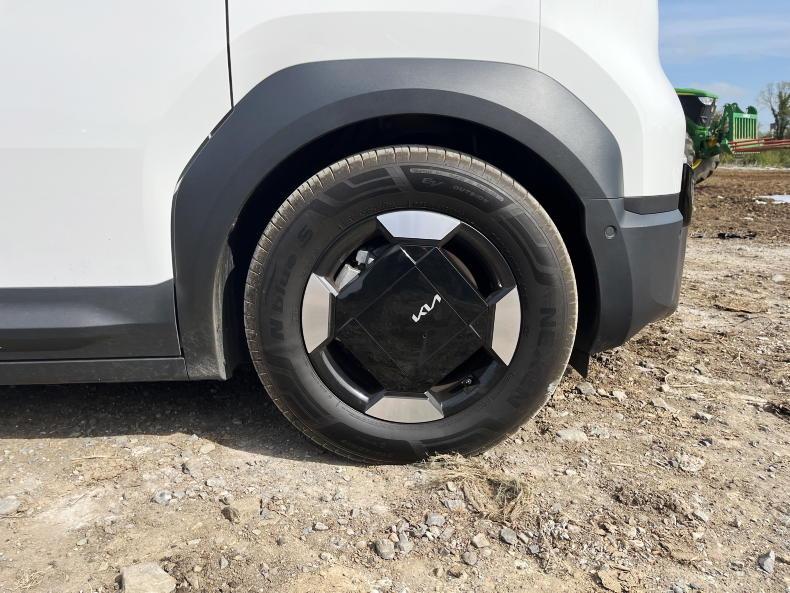
Both the Passenger and Cargo versions of the Kia PV5 came on relatively small 215/65 R16 Nexen tyres.
Whether you are driving the Passenger or Cargo versions of the Kia PV5, the controls are the same.
There’s a small stubby lever to the side of the steering wheel to start the vehicle and it’s also used to operate the transmission. After that, it’s pedal movement all the way and the car or van is responsive, but not particularly fast, in terms of acceleration.
Kia has the option of a long-range 71.2kW battery for the PV5 and this gives a rated range of 416km on a full charge.
Out on the road that was not achieved and once on motorways, even cruising at a calm 100km/hour, the range drops significantly, even though it is better than some of the competition. This is a relatively heavy car, weighing in at 2.6 tonnes, so for me the range of 359km was achievable across a range of driving conditions.
Charge points
Charging on the move can be reliably fast at motorway charge points. What also helps Kia battery electric vehicle (BEV) owners is that the Kia Charge card system enables Kia customers to easily charge their vehicle at public locations with a one-stop charging solution and a single charging card.
Using the Kia Charge card offers fixed price public charging of just €0.50 per kW, over 5,000 charging points in Ireland, providing cost clarity to EV drivers.
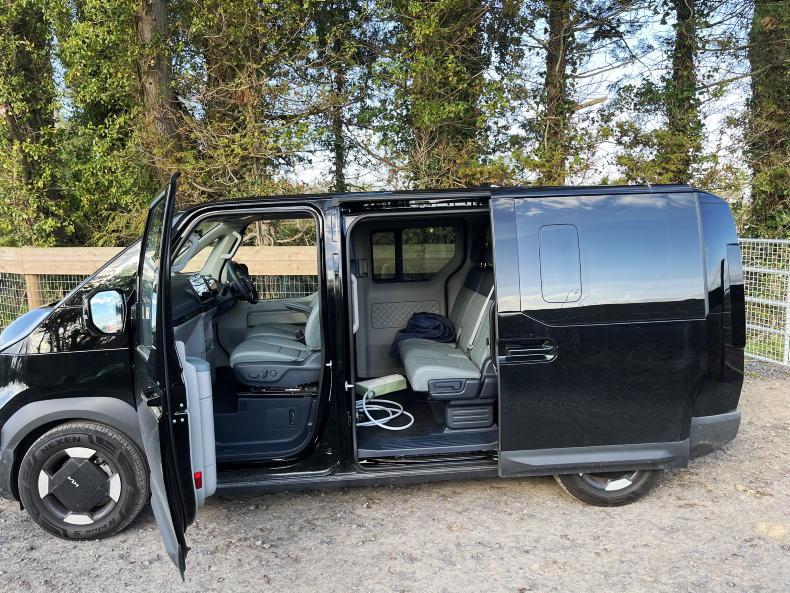
The rear doors for both the Passenger and Cargo versions of the Kia PV5 are sliding on each side with hug boot space.
The longer range PV5 passenger car or people carrier is well priced at €42,550 or £35,995 in N Ireland. You’ll not get much in the line of a spacious electric car with 1,500kg towing ability and a huge boot for that price among the any of the competition.
If a BEV is possibly your new choice as a family car, then the Kia PV5 is worth a more serious second look. There will be a seven-seat version available shortly for an additional €1,000 and even after that extra row of seats there’s still a sizeable boot.
There are some extras that might be worth including such electric sliding doors and rear boot opening for the passenger version, but other than that, this is a very complete and spacious car with a high level of specification.
The PV5 has a full 2025 Euro NCAP four-star rating, which is a high standard and covers both versions.
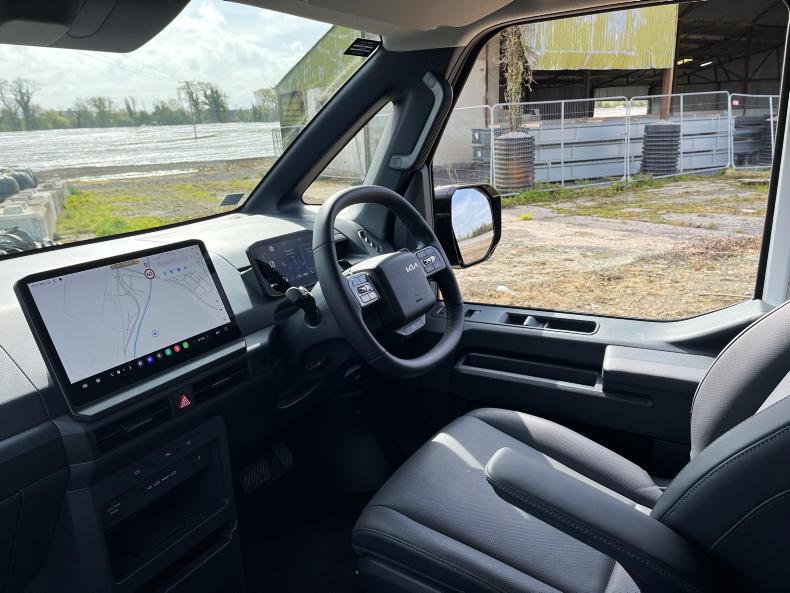
The dash layout of the Kia PV5 is simple and uncluttered, while heating controls are touchscreen.
In summary, the Kia PV5 offers lots of answers at a reasonably affordable level.
With all that space, it offers keener pricing and much more space than the likes of the top selling Hyundai Tucson or Toyota RAV4, as long as you can live with that van-like look.
With the huge rise in SUV sales, you might think that people carriers are a thing of the past. Not so, in my opinion, as many families need space, value and low running costs for those years when school and sports runs are part of everyday commuting life. And then along comes the new Kia PV5.
While it may not be the prettiest of people carrier cars from the outside, there is simply no doubting that it represents an answer to space and value for those families that need that combination.
This is a fully electric vehicle that is now available in two formats: as a spacious, five-seat people carrier or as a more simple white van.
The external van shape of the new Kia PV5 gives strong hints to its commercial vehicle background.
Was it conceived as a car or a van, that remains a question? What is not in doubt about this new car is that as a modern people carrier, it ticks lots of boxes.
I’ve had the two versions of the PV5 on the roads in recent weeks, the PV5 Passenger version followed by the commercial Cargo van. With over 1,250km driven, I’ve come away well impressed to the point that I think many people could live with the PV5 in either format.
While it’s not stylishly beautiful on the outside, when you are looking from the inside out there’s a different view.

There is seating for three in the rear of the Passenger Kia PV5, but just ISO-Fix attachments.
The PV5 looks big in a van sense when compared with the car, but in reality, its footprint is only marginally longer than that of a Toyota RAV4 or a Volkswagen Tiguan. Despite this appearance of size, the Kia PV5 has a tight 5.5 metre turning circle so it’s very manoeuvrable.
The high seat position means a slight entry climb and once up there there’s good seat adjustment to enhance the view over a less-than-cluttered dash area.
You’ll quickly get comfortable behind the wheel, and the twin display screens, one smaller 7.2 inch one behind the steering wheel and the other larger 12.9 inch and more centrally mounted, are easy to navigate.
There is little in the way on non-touch screen adjustments while the steering wheel side buttons are easy to get used to. You require a little more concentration to make adjustment to the heating and cooling controls, and that limits adjustments on the move.

Both the Passenger and Cargo versions of the Kia PV5 came on relatively small 215/65 R16 Nexen tyres.
Whether you are driving the Passenger or Cargo versions of the Kia PV5, the controls are the same.
There’s a small stubby lever to the side of the steering wheel to start the vehicle and it’s also used to operate the transmission. After that, it’s pedal movement all the way and the car or van is responsive, but not particularly fast, in terms of acceleration.
Kia has the option of a long-range 71.2kW battery for the PV5 and this gives a rated range of 416km on a full charge.
Out on the road that was not achieved and once on motorways, even cruising at a calm 100km/hour, the range drops significantly, even though it is better than some of the competition. This is a relatively heavy car, weighing in at 2.6 tonnes, so for me the range of 359km was achievable across a range of driving conditions.
Charge points
Charging on the move can be reliably fast at motorway charge points. What also helps Kia battery electric vehicle (BEV) owners is that the Kia Charge card system enables Kia customers to easily charge their vehicle at public locations with a one-stop charging solution and a single charging card.
Using the Kia Charge card offers fixed price public charging of just €0.50 per kW, over 5,000 charging points in Ireland, providing cost clarity to EV drivers.

The rear doors for both the Passenger and Cargo versions of the Kia PV5 are sliding on each side with hug boot space.
The longer range PV5 passenger car or people carrier is well priced at €42,550 or £35,995 in N Ireland. You’ll not get much in the line of a spacious electric car with 1,500kg towing ability and a huge boot for that price among the any of the competition.
If a BEV is possibly your new choice as a family car, then the Kia PV5 is worth a more serious second look. There will be a seven-seat version available shortly for an additional €1,000 and even after that extra row of seats there’s still a sizeable boot.
There are some extras that might be worth including such electric sliding doors and rear boot opening for the passenger version, but other than that, this is a very complete and spacious car with a high level of specification.
The PV5 has a full 2025 Euro NCAP four-star rating, which is a high standard and covers both versions.

The dash layout of the Kia PV5 is simple and uncluttered, while heating controls are touchscreen.
In summary, the Kia PV5 offers lots of answers at a reasonably affordable level.
With all that space, it offers keener pricing and much more space than the likes of the top selling Hyundai Tucson or Toyota RAV4, as long as you can live with that van-like look.
SHARING OPTIONS