Anyone who started their driving career in the 1970s or before, probably drove a Renault 4 at some stage. It was a hugely popular car and van back in those days.
My first memory of driving a Renault 4 was during my year at Athenry Agricultural College, where its off-road ability was regularly put to the test. Many of these early Renault 4 models were assembled in Wexford.
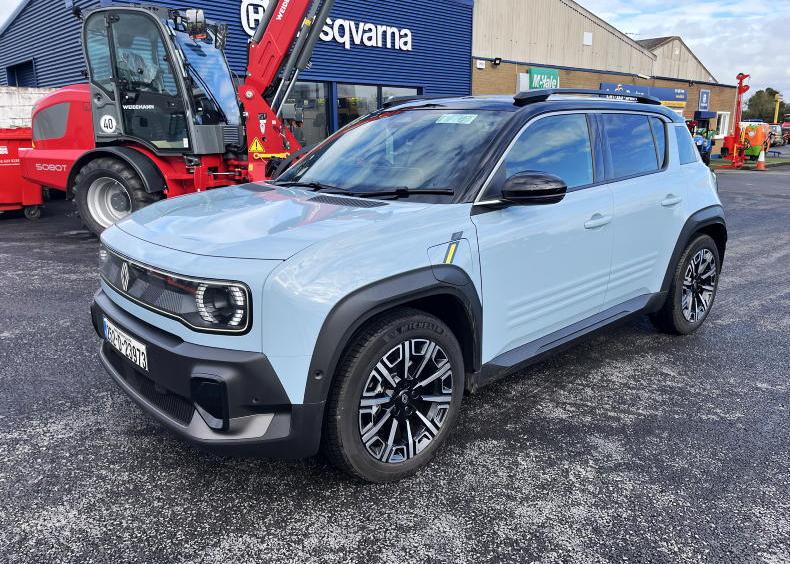
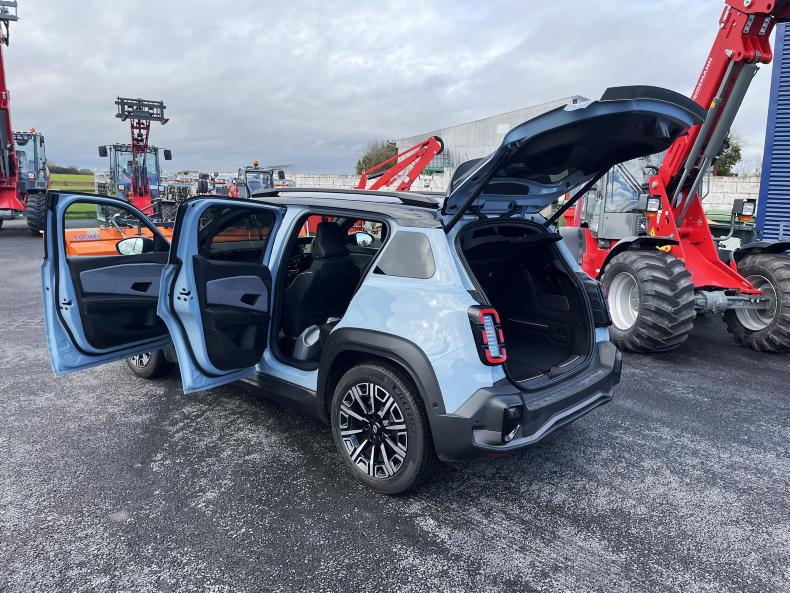
Half a century later and the Renault 4 re-appears; this time the re-invented version is only available as a battery electric car (BEV) with a design that has some hints to its past. When I first saw the car back in December 2025, I knew that I would enjoy a test drive in the new Renault 4 and I was not disappointed.
I found it easy to get comfortable in the new Renault 4, with seats that are a far cry from the shaky steel frame seats of the 1970s. This is a more solid car, there’s less sway on the corners and it feels very secure on the road. That should come as no surprise because when you include a modern battery pack in the new generation Renault 4, it weighs in at over 800kg heavier that the 1970s version.
For me, the styling is what gave me a good first impression, with big 18-inch wheels giving a combination of a high road stance and good ground clearance for rural roads.
Despite this, I felt that it was a pity that the designers didn’t include even a stubby transmission lever placed high in the centre of the dash, in memory of the original Renault 4. I had expected that it would be a relatively easy feature to design into the car with the use of all the modern drive by wire technology that you expect.
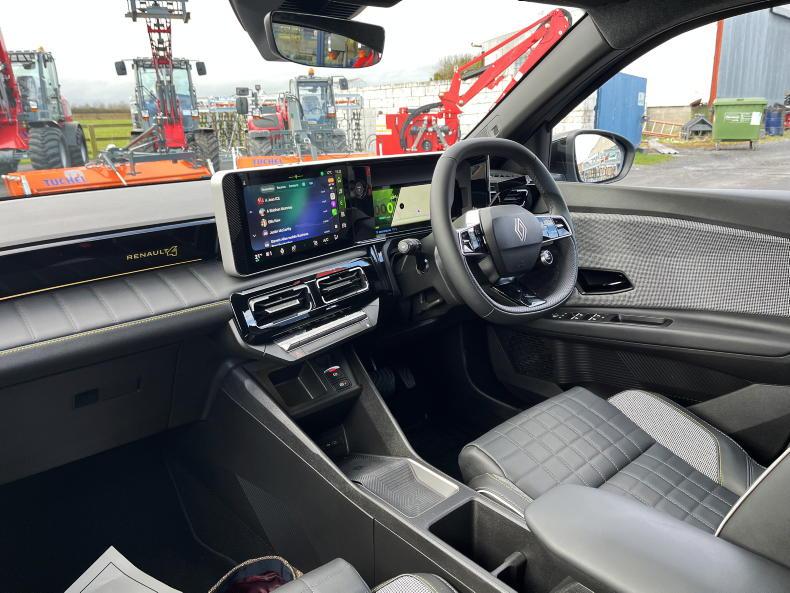
The new Renault 4 design means a slightly cluttered right-hand side of the steering wheel with transmission lever, wiper controls and radio all on three separate stalks.
Out on the road, the car performed very well with smooth and fast acceleration. The battery pack is competitive in size terms with much of the competition and delivered a range that was near to the 410km factory rating. This converts to a rated economy level of 15.6kWh/100km, which would be considered to be a good level of battery economy.
There are four transmission settings: Eco, Comfort, Sport and Personal. I drove in Eco and the car’s system held the setting, so I didn’t have to remember to reset it each time I drove the car, that I liked. I also used the Renault 4’s regenerative braking system that allows for one-pedal driving and also helped me achieve a good level of battery range over an 800km driving test.
There are three specification levels, Evolution, Techno and Iconic – the Iconic version that I drove has the maximum level of equipment.
Entry Evolution versions are well-equipped with the likes of a seven-inch driver display and openR link 10-inch multimedia system with radio, wireless smartphone replication compatible with Apple CarPlay and Android Auto, height and depth-adjustable multi-function grained steering wheel, cruise control, auto air conditioning, rear parking sensors and rear-view camera.
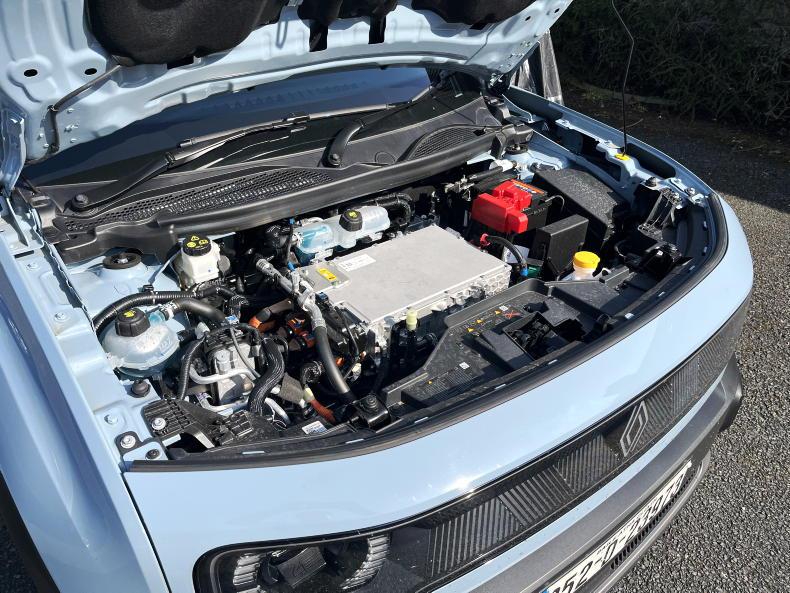
Under the front bonnet of the new Renault 4 is the power pack control system to replace the 845cc petrol engine of the past that delivered 34bhp.
I found the Apple CarPlay system to be a little sporadic and when working the large centre screen was excellent. The car’s wireless phone charging was also a little erratic at times.
Heater controls are by means of tactile buttons and I liked that.
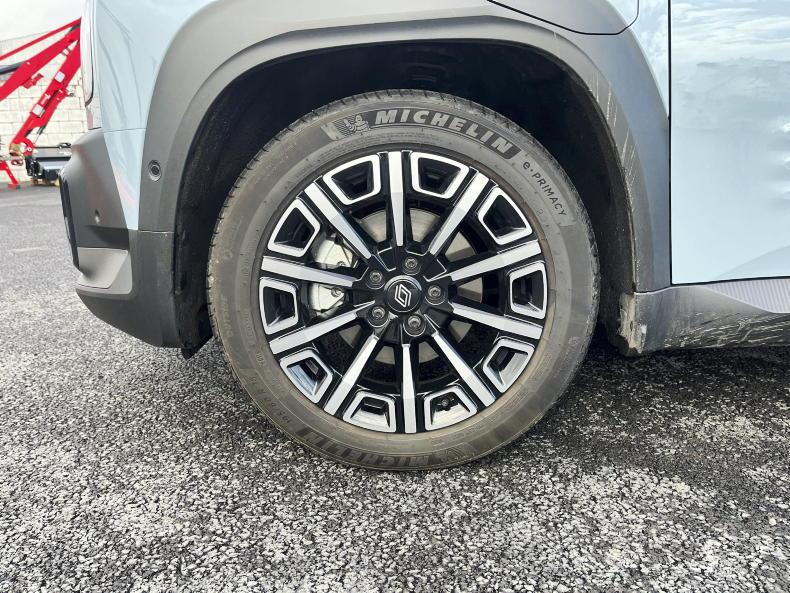
The test car came on large 18 inch alloy wheels with 195/60 R18 Michelin tyres to give the car a great road stance.
There is a wide dash that’s clear to use and view with a seven-inch driver display behind the steering wheel and openR link 10-inch screen with Google built-in to let you take advantage of real-time navigation with Google Maps. This allows you to plan your electric journeys, use voice control with Google Assistant and gives access over 50 apps, including Waze and Amazon Music, via Google Play. The official Renault avatar is on board the Renault 4, so you simply talk to Reno, and it can provide an AI version of the answer.
The Renault 4 comes with up to 32 advanced driver assistance systems and includes up to seven airbags, and two Isofix child seat fittings.
Despite this and Renault’s impressive safety equipment, the Renault 4 achieved only four-star Euro NCAP rating, mainly because some the safety kit is not included in the entry-level Evolution model.
There are two battery power levels available, and I drove the higher output 52kW version.
Entry prices for this model start at €29,995 or £27,195 in Northern Ireland, which is relatively competitive for this spacious and attractive small SUV.
This car has big wheels and higher stance than more acclaimed Renault 5 and in a quirky way I prefer it because I found it a better driving position for me.
Kia’s new EV2 provides fresh competition
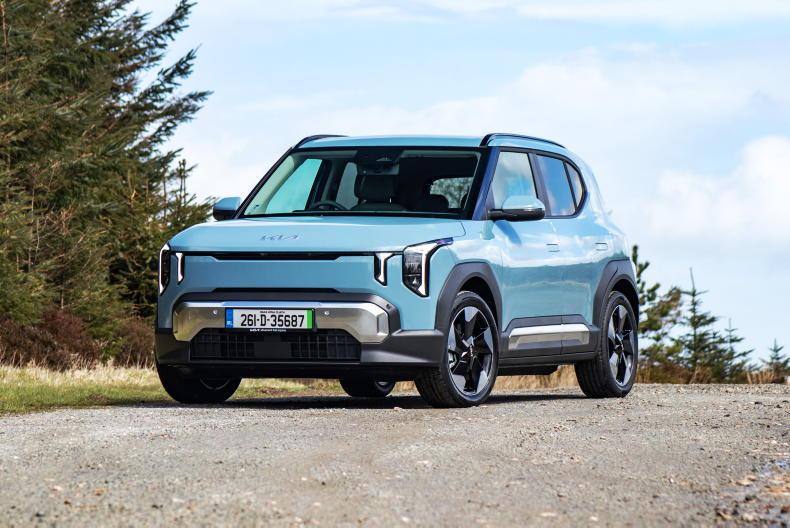
Kia’s new EV2 is a new car to compete in the small battery electric vehicle market. This small new Kia has a choice of 42.2kWh or 61.0kWh battery options and a rated range of up to 453km. The longer-range version of the car has impressive standard equipment and pricing starts from €31,940.

Kia
Anyone who started their driving career in the 1970s or before, probably drove a Renault 4 at some stage. It was a hugely popular car and van back in those days.
My first memory of driving a Renault 4 was during my year at Athenry Agricultural College, where its off-road ability was regularly put to the test. Many of these early Renault 4 models were assembled in Wexford.
Half a century later and the Renault 4 re-appears; this time the re-invented version is only available as a battery electric car (BEV) with a design that has some hints to its past. When I first saw the car back in December 2025, I knew that I would enjoy a test drive in the new Renault 4 and I was not disappointed.
I found it easy to get comfortable in the new Renault 4, with seats that are a far cry from the shaky steel frame seats of the 1970s. This is a more solid car, there’s less sway on the corners and it feels very secure on the road. That should come as no surprise because when you include a modern battery pack in the new generation Renault 4, it weighs in at over 800kg heavier that the 1970s version.
For me, the styling is what gave me a good first impression, with big 18-inch wheels giving a combination of a high road stance and good ground clearance for rural roads.
Despite this, I felt that it was a pity that the designers didn’t include even a stubby transmission lever placed high in the centre of the dash, in memory of the original Renault 4. I had expected that it would be a relatively easy feature to design into the car with the use of all the modern drive by wire technology that you expect.
The new Renault 4 design means a slightly cluttered right-hand side of the steering wheel with transmission lever, wiper controls and radio all on three separate stalks.
Out on the road, the car performed very well with smooth and fast acceleration. The battery pack is competitive in size terms with much of the competition and delivered a range that was near to the 410km factory rating. This converts to a rated economy level of 15.6kWh/100km, which would be considered to be a good level of battery economy.
There are four transmission settings: Eco, Comfort, Sport and Personal. I drove in Eco and the car’s system held the setting, so I didn’t have to remember to reset it each time I drove the car, that I liked. I also used the Renault 4’s regenerative braking system that allows for one-pedal driving and also helped me achieve a good level of battery range over an 800km driving test.
There are three specification levels, Evolution, Techno and Iconic – the Iconic version that I drove has the maximum level of equipment.
Entry Evolution versions are well-equipped with the likes of a seven-inch driver display and openR link 10-inch multimedia system with radio, wireless smartphone replication compatible with Apple CarPlay and Android Auto, height and depth-adjustable multi-function grained steering wheel, cruise control, auto air conditioning, rear parking sensors and rear-view camera.

Under the front bonnet of the new Renault 4 is the power pack control system to replace the 845cc petrol engine of the past that delivered 34bhp.
I found the Apple CarPlay system to be a little sporadic and when working the large centre screen was excellent. The car’s wireless phone charging was also a little erratic at times.
Heater controls are by means of tactile buttons and I liked that.

The test car came on large 18 inch alloy wheels with 195/60 R18 Michelin tyres to give the car a great road stance.
There is a wide dash that’s clear to use and view with a seven-inch driver display behind the steering wheel and openR link 10-inch screen with Google built-in to let you take advantage of real-time navigation with Google Maps. This allows you to plan your electric journeys, use voice control with Google Assistant and gives access over 50 apps, including Waze and Amazon Music, via Google Play. The official Renault avatar is on board the Renault 4, so you simply talk to Reno, and it can provide an AI version of the answer.
The Renault 4 comes with up to 32 advanced driver assistance systems and includes up to seven airbags, and two Isofix child seat fittings.
Despite this and Renault’s impressive safety equipment, the Renault 4 achieved only four-star Euro NCAP rating, mainly because some the safety kit is not included in the entry-level Evolution model.
There are two battery power levels available, and I drove the higher output 52kW version.

Entry prices for this model start at €29,995 or £27,195 in Northern Ireland, which is relatively competitive for this spacious and attractive small SUV.
This car has big wheels and higher stance than more acclaimed Renault 5 and in a quirky way I prefer it because I found it a better driving position for me.
Kia’s new EV2 provides fresh competition
Kia’s new EV2 is a new car to compete in the small battery electric vehicle market. This small new Kia has a choice of 42.2kWh or 61.0kWh battery options and a rated range of up to 453km. The longer-range version of the car has impressive standard equipment and pricing starts from €31,940.

Kia
SHARING OPTIONS