Any casual observer can now see that the Irish car market is changing, there is now a significant move to battery electric vehicles (BEVs). The BEV market share has risen from 15% to 22% year-on-year from January to April, boosted by high oil prices and uncertainty in world politics.
In parallel with this, there has been the strong growth in the new car market share of a new generation of Chinese-manufactured cars. These cars are no longer the poor relation, more typically they are now setting the pace in terms of BEV range and new levels of luxury and technology. Traditional car manufacturers are now struggling technically and financially to keep pace.
Less than 10 years ago, many of these Chinese car brands were unknown. In some cases, Chinese car manufacturers have rekindled other historic brand names with cars that their originators never could have dreamt of. The British MG is a good example of this, now under Chinese ownership, with its British legacy confined to the history books.
When we look at the Irish car market for the first four months of 2026, we can see the impact that the Chinese cars are making. All are distributed by Irish-owned importer/distributors. BYD has taken the market by storm, backed by one of Ireland’s longest-established car importers, Motor Distributors Ltd.
Other, more established manufacturers are also building their cars in China. These include Honda and Volvo, to name but a few. Overall, the pure Chinese brands have grown their market share to 5.69% from 2.99% for the first four months of 2026 (Table 1). That converts to 4,265 new Chinese brand cars entering our roads in 2026 and many more are due to come. One Chinese car, the BYD Seal U is now ranked in 15th place in Ireland, with sales of 1,061 units for the first four months of 2026.
The reason is clear, when it comes to BEVs, Chinese manufacturers have the edge. They simply have invested in battery technology and are now leading the field. Others complain that the Chinese government has given incentives to Chinese car companies, but let’s be honest European and American car companies have had government handouts with similar incentives for more than 20 years; they just failed to invest in the BEV technology on time. The Stellantis choice has been to buy into Leapmotor, another Chinese brand.
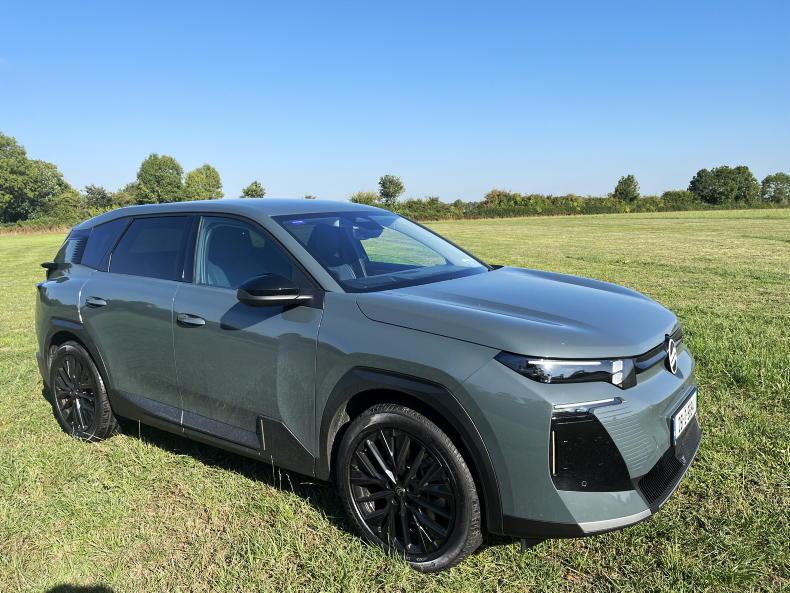
Drive two relatively new cars such as the Polestar 4 and the Xpeng G6, as I have done in recent weeks, and the technology and range advantage is obvious. Polestar positions itself at the higher end of the market, with its Swedish design and Volvo connections; Xpeng has less notions.

The Polestar 4 is a very impressive car to drive, entry prices have dropped to €56,490 or £55,750 N Ireland, to make it more competitive.

The Polestar 4 has a big car feel to it, with great rear legroom and a large boot.

The uncluttered dash on the Polestar 4 has strong hints of Swedish design but too much reliance on the screen for adjustments.
Modern
The Polestar 4 is a truly modern high-tech car that’s very well-built and delivers fast acceleration in a smooth flow with almost silent driving apart from the one pesky fly that got caught behind the wing mirror on the motorway. While the Swedish design is the message, the car is built in China and owned by Chinese car brand Geely, the Volvo prent company.
What a car, with full length glass roof and no rear window, it uses a camera type rear-view system in its place. That part took a little getting used to, but this is a beautiful car to drive, well-balanced and well-designed.
There is an abundance of technology in the Polestar 4 – so if that frightens you be cautious but not dismissive. Setting up the car takes minutes and in reality, you rarely make significant changes other than to the heating. I used the Google drive system along with my Apple CarPlay just to evaluate the difference. With the Polestar, I could see myself opting for the Google option very quickly with simple and clear voice controls.
Polestar is imported by the OHM Group which also imports the Jaguar Land Rover range, plus DAF and MAN trucks among other brands. Entry prices for this Polestar 4 Business Edition start from €58,690 for the single-motor long-range version that will reliably give over 550km driving range on a full charge. There’s a slightly different and more affordable appeal to the Xpeng G6 while its performance cannot match that of the Polestar 4. Its smaller battery means lower range, while in both cases, the car’s rated range figures were close to being achievable.
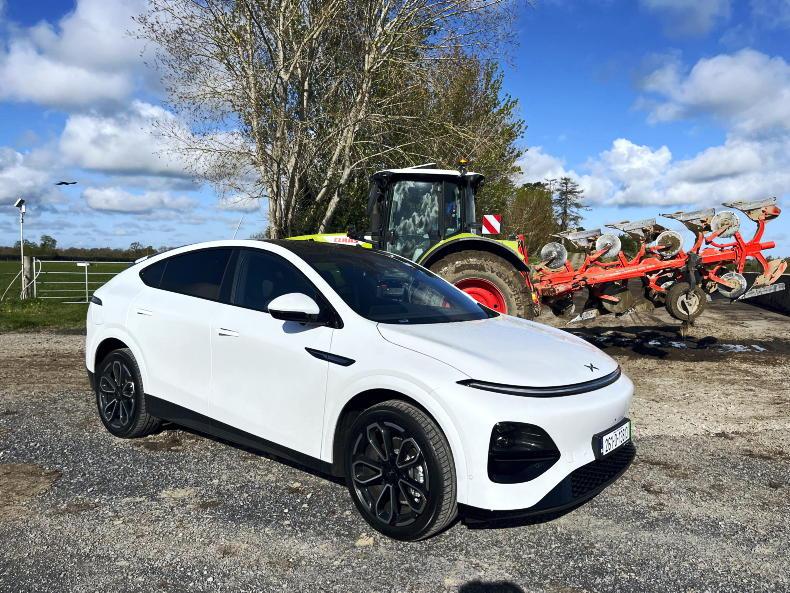
The Xpeng G6 is more of a Coupé SUV and doesn’t have that luxury feel that exudes from the Polestar 4, it’s seen as a more practical option. It is €10,000 more affordable than the Polestar 4, with starting prices from €42,000, or £39,990 in Northern Ireland. You can opt for a longer-range version to add 50km to your drive, but it will cost you an extra €7,500.
The rear-wheel-drive standard and long-range versions are powered by a single rear-mounted electric motor with 0-100km/h times rated at 6.9 seconds and 6.7 seconds respectively. G6 comes with a large panoramic glass roof, electric adjustable, heated and leatherette-covered seats, that includes ventilated front seats, a heated steering wheel, four USB ports, two 50W induction charging points for smartphones and a 960W audio system with 18 speakers.

The Polestar 4 comes on large Pirelli Zero E 255/50 R20 to give it an impressive road stance and minimum road noise.

The dash of the Xpeng G6 is again dominated by a large central screen with minimal tactile button adjustments.

The Xpeng G6 used frameless doors with a large capacity hatchback boot.
Mistaken
The Xpeng G6 will be easily mistaken for a Tesla Model Y, no matter where you go, and it is equally affordable. The German-built Model Y is Tesla’s best-selling car in Ireland, so the Xpeng G6 is slowly catching up currently with almost half its market share and growing.
Chinese car brands are delivering BEV range at a critical time in the world fuel supplies. The BYD range has now overtaken Tesla in world BEV sales. Get used to them as they now blend modern petrol engines with hybrid drives to break diesel range barriers and now there are luxury options that deliver a new and quality driving experience.
Any casual observer can now see that the Irish car market is changing, there is now a significant move to battery electric vehicles (BEVs). The BEV market share has risen from 15% to 22% year-on-year from January to April, boosted by high oil prices and uncertainty in world politics.
In parallel with this, there has been the strong growth in the new car market share of a new generation of Chinese-manufactured cars. These cars are no longer the poor relation, more typically they are now setting the pace in terms of BEV range and new levels of luxury and technology. Traditional car manufacturers are now struggling technically and financially to keep pace.
Less than 10 years ago, many of these Chinese car brands were unknown. In some cases, Chinese car manufacturers have rekindled other historic brand names with cars that their originators never could have dreamt of. The British MG is a good example of this, now under Chinese ownership, with its British legacy confined to the history books.
When we look at the Irish car market for the first four months of 2026, we can see the impact that the Chinese cars are making. All are distributed by Irish-owned importer/distributors. BYD has taken the market by storm, backed by one of Ireland’s longest-established car importers, Motor Distributors Ltd.
Other, more established manufacturers are also building their cars in China. These include Honda and Volvo, to name but a few. Overall, the pure Chinese brands have grown their market share to 5.69% from 2.99% for the first four months of 2026 (Table 1). That converts to 4,265 new Chinese brand cars entering our roads in 2026 and many more are due to come. One Chinese car, the BYD Seal U is now ranked in 15th place in Ireland, with sales of 1,061 units for the first four months of 2026.
The reason is clear, when it comes to BEVs, Chinese manufacturers have the edge. They simply have invested in battery technology and are now leading the field. Others complain that the Chinese government has given incentives to Chinese car companies, but let’s be honest European and American car companies have had government handouts with similar incentives for more than 20 years; they just failed to invest in the BEV technology on time. The Stellantis choice has been to buy into Leapmotor, another Chinese brand.
Drive two relatively new cars such as the Polestar 4 and the Xpeng G6, as I have done in recent weeks, and the technology and range advantage is obvious. Polestar positions itself at the higher end of the market, with its Swedish design and Volvo connections; Xpeng has less notions.

The Polestar 4 is a very impressive car to drive, entry prices have dropped to €56,490 or £55,750 N Ireland, to make it more competitive.

The Polestar 4 has a big car feel to it, with great rear legroom and a large boot.

The uncluttered dash on the Polestar 4 has strong hints of Swedish design but too much reliance on the screen for adjustments.
Modern
The Polestar 4 is a truly modern high-tech car that’s very well-built and delivers fast acceleration in a smooth flow with almost silent driving apart from the one pesky fly that got caught behind the wing mirror on the motorway. While the Swedish design is the message, the car is built in China and owned by Chinese car brand Geely, the Volvo prent company.
What a car, with full length glass roof and no rear window, it uses a camera type rear-view system in its place. That part took a little getting used to, but this is a beautiful car to drive, well-balanced and well-designed.
There is an abundance of technology in the Polestar 4 – so if that frightens you be cautious but not dismissive. Setting up the car takes minutes and in reality, you rarely make significant changes other than to the heating. I used the Google drive system along with my Apple CarPlay just to evaluate the difference. With the Polestar, I could see myself opting for the Google option very quickly with simple and clear voice controls.
Polestar is imported by the OHM Group which also imports the Jaguar Land Rover range, plus DAF and MAN trucks among other brands. Entry prices for this Polestar 4 Business Edition start from €58,690 for the single-motor long-range version that will reliably give over 550km driving range on a full charge. There’s a slightly different and more affordable appeal to the Xpeng G6 while its performance cannot match that of the Polestar 4. Its smaller battery means lower range, while in both cases, the car’s rated range figures were close to being achievable.
The Xpeng G6 is more of a Coupé SUV and doesn’t have that luxury feel that exudes from the Polestar 4, it’s seen as a more practical option. It is €10,000 more affordable than the Polestar 4, with starting prices from €42,000, or £39,990 in Northern Ireland. You can opt for a longer-range version to add 50km to your drive, but it will cost you an extra €7,500.
The rear-wheel-drive standard and long-range versions are powered by a single rear-mounted electric motor with 0-100km/h times rated at 6.9 seconds and 6.7 seconds respectively. G6 comes with a large panoramic glass roof, electric adjustable, heated and leatherette-covered seats, that includes ventilated front seats, a heated steering wheel, four USB ports, two 50W induction charging points for smartphones and a 960W audio system with 18 speakers.

The Polestar 4 comes on large Pirelli Zero E 255/50 R20 to give it an impressive road stance and minimum road noise.

The dash of the Xpeng G6 is again dominated by a large central screen with minimal tactile button adjustments.

The Xpeng G6 used frameless doors with a large capacity hatchback boot.
Mistaken
The Xpeng G6 will be easily mistaken for a Tesla Model Y, no matter where you go, and it is equally affordable. The German-built Model Y is Tesla’s best-selling car in Ireland, so the Xpeng G6 is slowly catching up currently with almost half its market share and growing.
Chinese car brands are delivering BEV range at a critical time in the world fuel supplies. The BYD range has now overtaken Tesla in world BEV sales. Get used to them as they now blend modern petrol engines with hybrid drives to break diesel range barriers and now there are luxury options that deliver a new and quality driving experience.
SHARING OPTIONS