



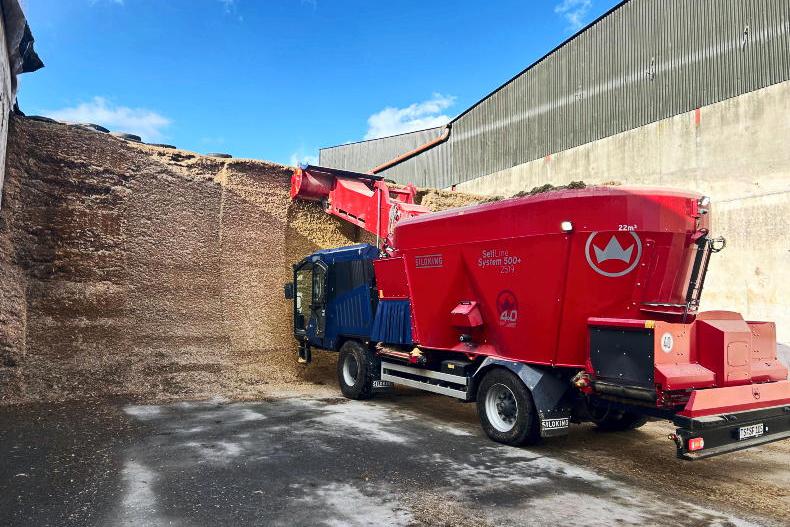
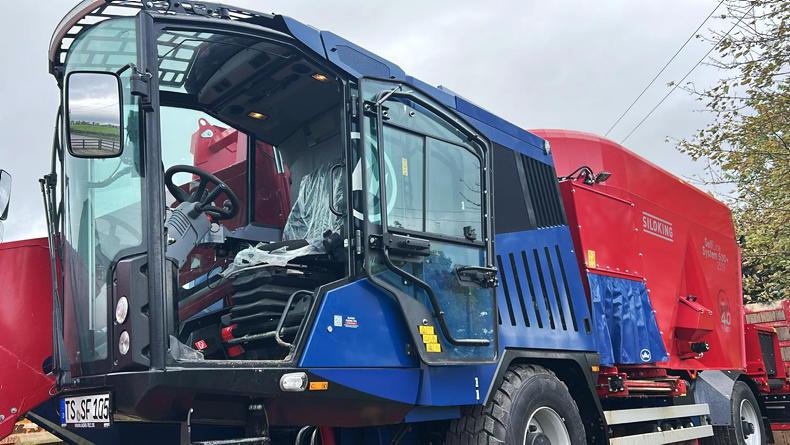
The Kverneland Group Ireland has recently embarked on a countrywide demonstration tour with a Siloking SelfLine 4.0 System 500+ 2519, which is a mid-range self-propelled diet feeder offering.
This particular series is available from 19-27m³, with the demonstration machine being a 22m3 unit, and is the first and only self-propelled Siloking diet feeder in the country.
The firm’s self-propelled offering starts with the entry level 13m³ machine, and ranges up to the flagship 32m³ machine, designed for farms with 1,000-plus head of livestock, which is shod on a three-axle chassis.
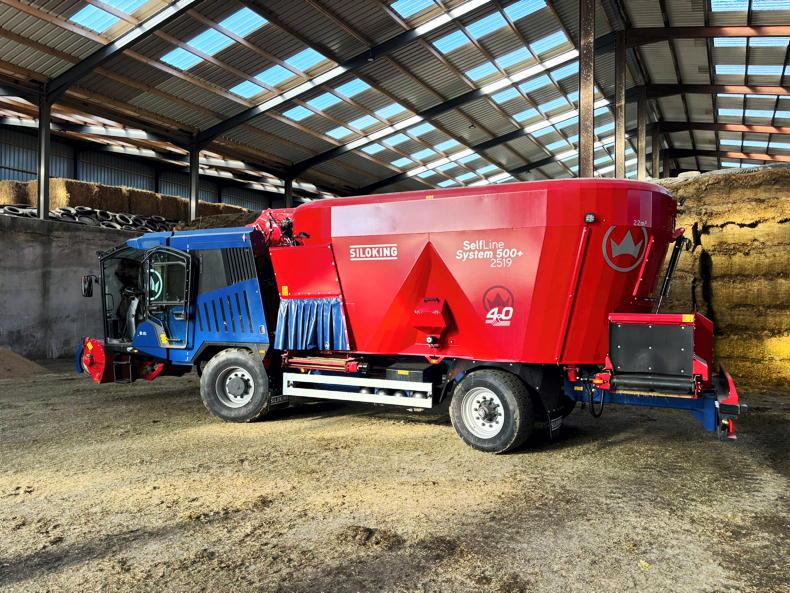
Based in Bavaria in Germany, Siloking is renowned for manufacturing diet feeders. With 430 employees and over 30,000 machines under its belt, the manufacturer is present in more than 50 countries across the world. The manufacturer’s offering extends to include nine trailed feeders and six self-propelled feeders, in addition to one completely electric self-propelled feeder.
Loading the feeder
Up front is a two-metre-wide milling head which is equipped with 58 knives. Combined with the centrally positioned, 700mm-wide conveying channel, Siloking says it achieves a high loading capacity with maximum preservation of the feed structure at the same time.
The milling head is designed to collect a wide variety of feeds precisely from the ground. It says the cranked knives on the milling head drum are coated with tungsten carbide on both sides and can be turned over when worn.
The milling head is made of Silonox, while the replaceable scraping bar is made of Hardox. Silonox is a hard-wearing stainless-steel alloy, which is acid-resistant.
The centrally positioned conveying channel is supported by one ram on each side. Once the hopper is loaded, the operator can reverse the loading conveyor belt, if need be, to remove any feed that may have been collected in excess, such as concentrates.
Tub feeder
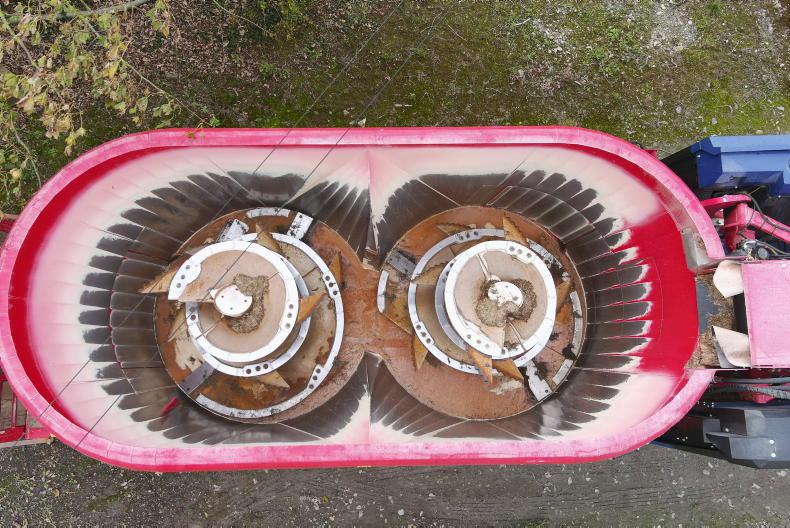
Siloking says that the size of the mixing hopper and the mixing auger is important for a homogeneous mix. In order to achieve short mixing times and optimal preservation of the feed structure, it says each model has its own hopper that is matched in shape, height and width.
Siloking explained that its edged hopper design slows down the feed in its circular movement and supports vertical mixing, even with low filling levels. It says the conical hopper shape reduces the power requirement and makes it possible to load and mix simultaneously.
The manufacturer pointed out that the planetary gearbox has been exclusively developed for use in Siloking feed mixers.
Designed for performance under maximum load, this gearbox with four planets with gear reduction levels has been designed with a maximum torque of 52,000Nm. The gearbox is fully oil-lubricated for simple maintenance.
The speed of the turbo auger can be pre-programmed in three different modes; low speed (17-25rpm) for gentle mixing, medium speed (20-40rpm) for quick cutting of long-fibre feed and high speed (55rpm) for complete residual emptying. The different modes are selected by pushing a button, even during the mixing process.
To protect against foreign materials in the feed, the feeder is optionally equipped with a heavy-duty magnet, which is placed at the bottom of the mixing auger.
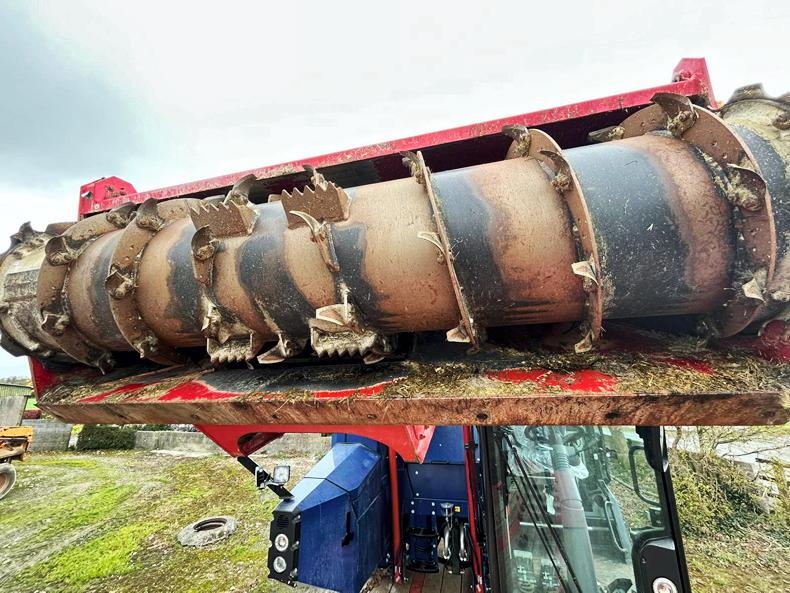
Flat and adjustable scraping bars on the mixing auger and the turbo flight are designed for complete collection of fine feed components, from the bottom of the hopper. Siloking says this is designed to offer precise mixing, even if concentrates are loaded first and allows for adding fine feed components any time.
These wear-resistant scraping bars are made of hard wearing Silonox. In comparison to the S355 steel normally used in the mixing hopper, Siloking says the durability factor of Silonox is over three times greater. The augers in the self-propelled range are edge lined with Silonox as standard, or the auger can be upgraded and completely lined with Silonox, which the manufacturer says offers a 21mm theoretical total thickness of the augers.
Feed discharge
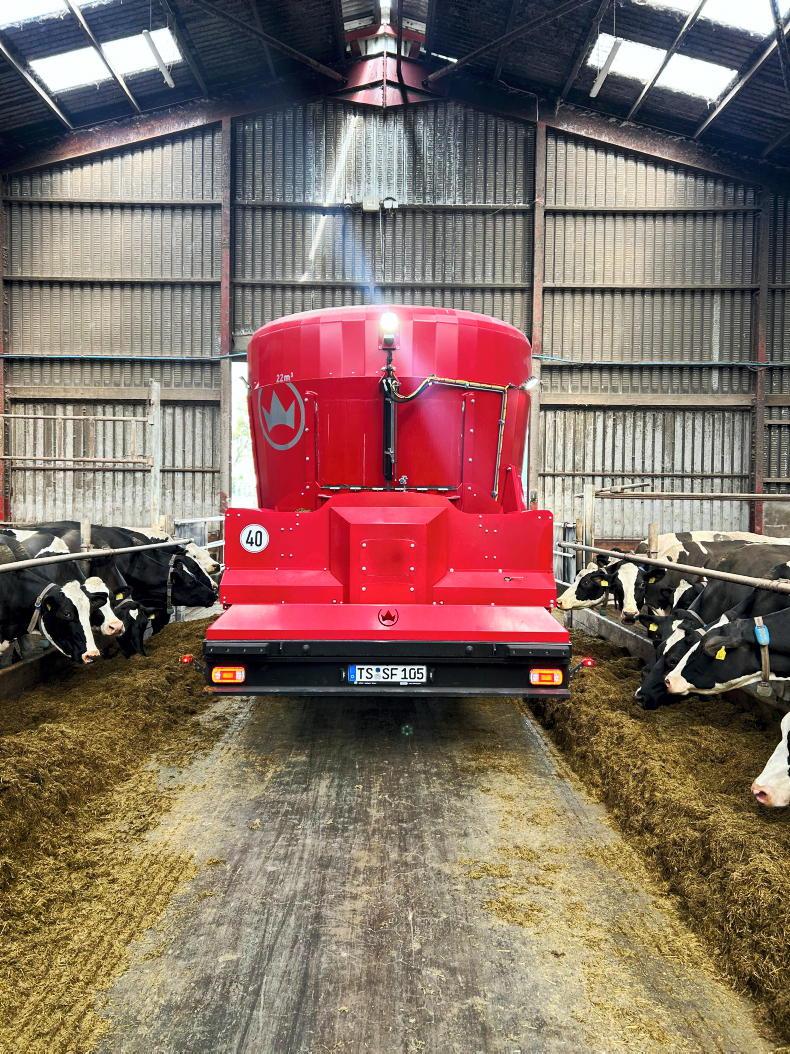
As expected, Siloking offers a wide range of different conveyor belts and discharge openings for regular feeding up to trough feeding. The demonstration machine comes equipped with a feed-out door on the left-hand side of the machine and a rear cross conveyer, which allows feeding on both sides.
The side discharge door on the left-hand side features a hydraulically controllable forage discharge flap. Controlled from the cab, it offers an extension of the standard discharge, but when folded, it doesn’t affect the vehicle width.
Engine and drive unit
The Siloking SelfLine 4.0 is powered by a 252hp six-cylinder Volvo engine, which is married up to a hydrostatic transmission. The engine now features service intervals of 1,000 hours.
When designing the drive, Siloking noted that its motto was ‘short distances equal high efficiency’. This simple formula describes the concept of the drive unit (engine and hydraulics) of the SelfLine 4.0 self-propelled range. It says the central arrangement of the drive unit with a short distance to the hydraulics results a minimised oil quantity.
All units of the SelfLine 4.0 range – such as the loading unit, mixing unit and drive unit – are hydraulically driven. Siloking prides itself in the low requirement of the system, noting its hydraulic system only requires 140 litres (Compact/Premium) or 250 litres (System 300+ /500+/1000+) of hydraulic oil. This is due to the central positioning of the drive unit (engine and hydraulic pumps).
Behind the cab sits a large single-surface radiator. The manufacturer says the modules for oil, water and charge air are arranged next to one another instead of behind one another, to form a large-scale radiator unit. All models have an automatic reversing device for radiator cleaning.
Cab
The cab features a seven-inch display which provides the driver with all the required information regarding operating conditions as well as loading and unloading functions.
Control is carried out via push buttons or a rotary wheel. It is also possible to select the different modes (driving mode, loading mode, unloading mode, climate control mode, system mode) via the quick-selection buttons in the armrest.
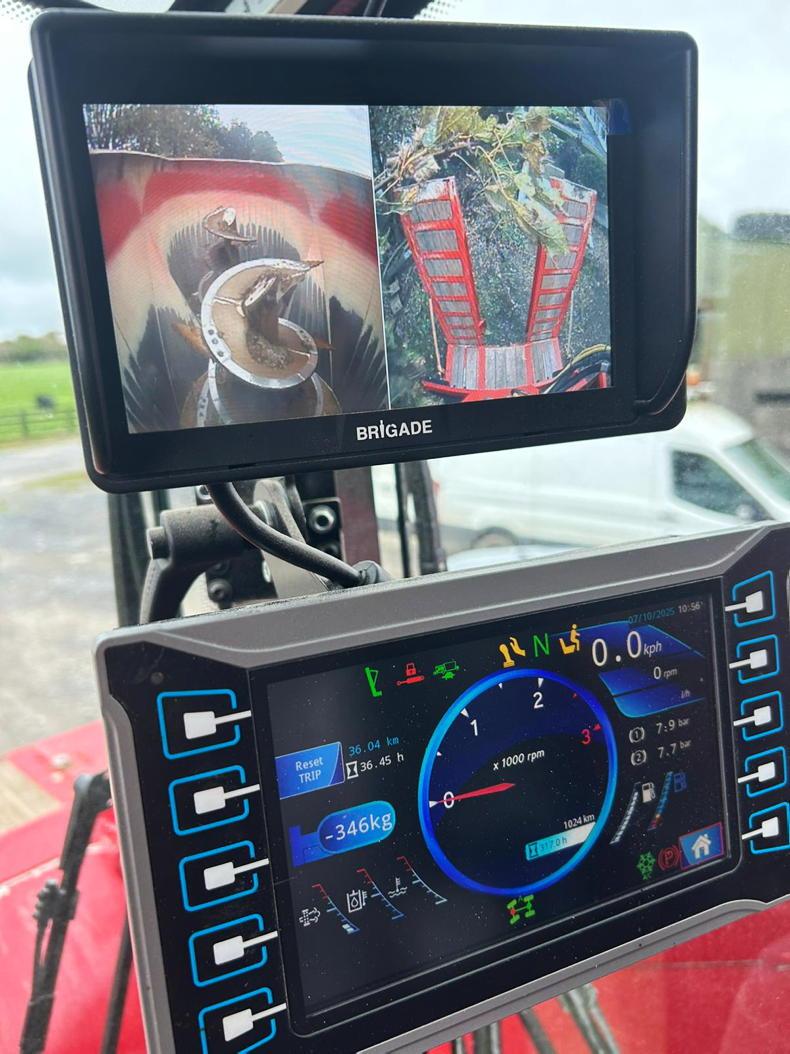
The terminal, with functional keys for both the machine and the weighing system, shows all the information about the data weighing system in the display along with the engine data. It is also possible to adapt ration settings and to set automatic functions of the mixing unit here. Mixing functions can be set or adjusted both via the feeding management software included as standard and via the terminal.
Cab features include a seat with air suspension, a multifunctional armrest, good all-round visibility and a forward-inclined windscreen which offers more space.
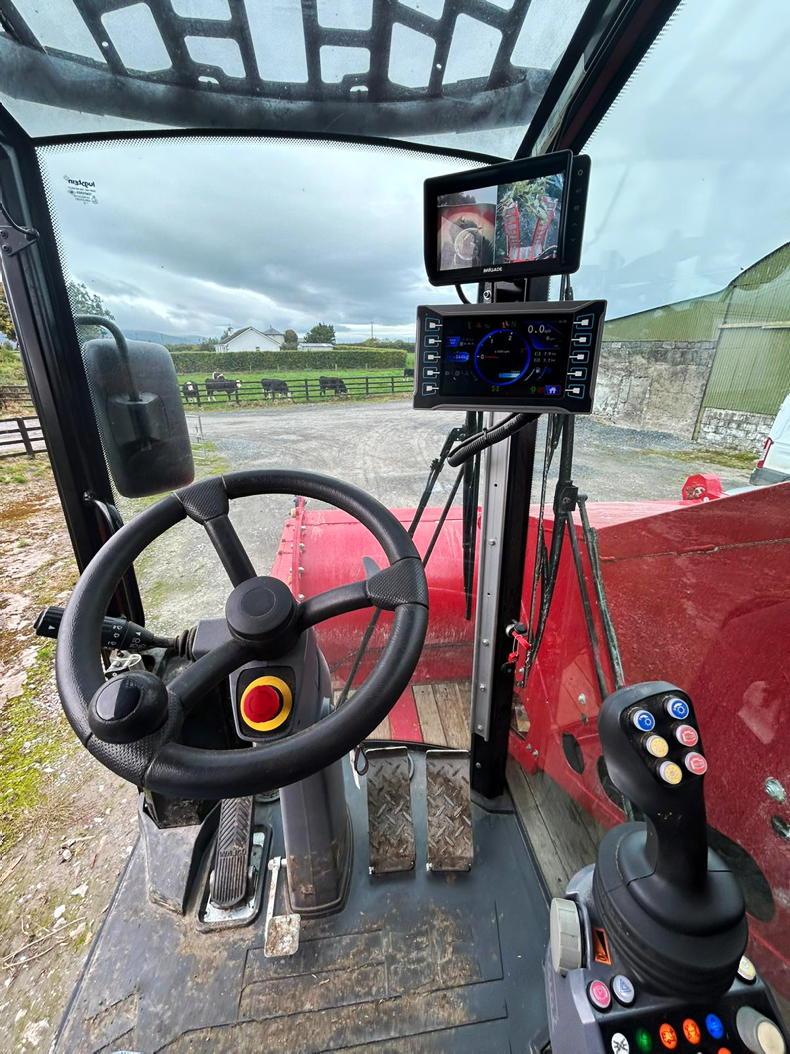
A wide-opening door combined with a low entry level height offer easy access into the cab. A roof panel with a protective grille allows for good visibility upwards.
Software and running gear
Siloking Data is the system specially developed by Siloking for combining feeding program and machine control. It includes the free use of the web-based feeding management software for controlling and documenting rations, feed quantities, feed costs, mixing precision and more parameters.
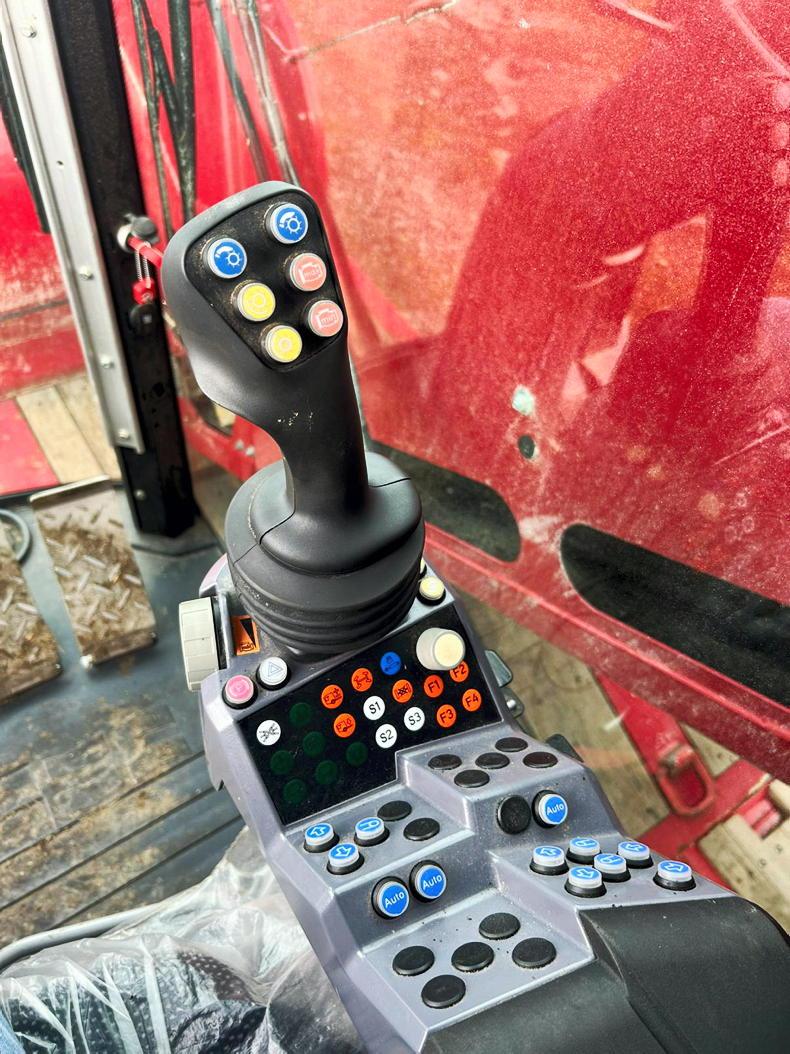
With the SelfLine range, all feeding data is presented on one terminal in the cab.
The range comes with a telematics option, which allows the owner to have an overview of the current machine data, such as activity, consumption and temperature, at any place and at any time.
With the error management, machine errors are reported immediately. Key feeding data is also sent regularly.
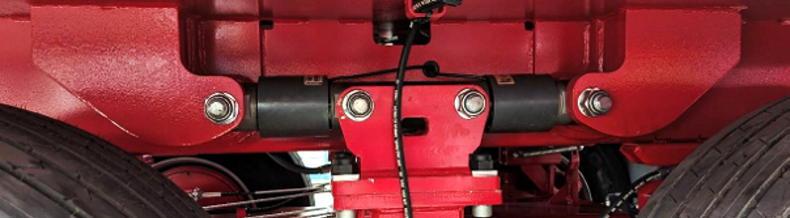
In the Farm Manager app dashboard, machine running times are broken down into times of activity and inactivity, and daily starting and ending times are displayed. A map function shows the location of the machine and can track its movement in real time. The chassis are designed for use on farms with difficult ground conditions. The machines are equipped with four-wheel steering as standard, which in turn offers a turning radius of 8.5m.
When driving on roads, the machine switches to front-wheel steering. The machine can be equipped with optional four-wheel drive.
The system 500+ range is available in four speed versions; 20, 25, 40 and 50km/h. Due to the machines height, the standard feed discharge is around one metre high and with additional conveyor belts, feeding into high troughs is simple.
For use on several farms involving road travel, the System 500+ model range is equipped with external air-operated drum brakes as standard.
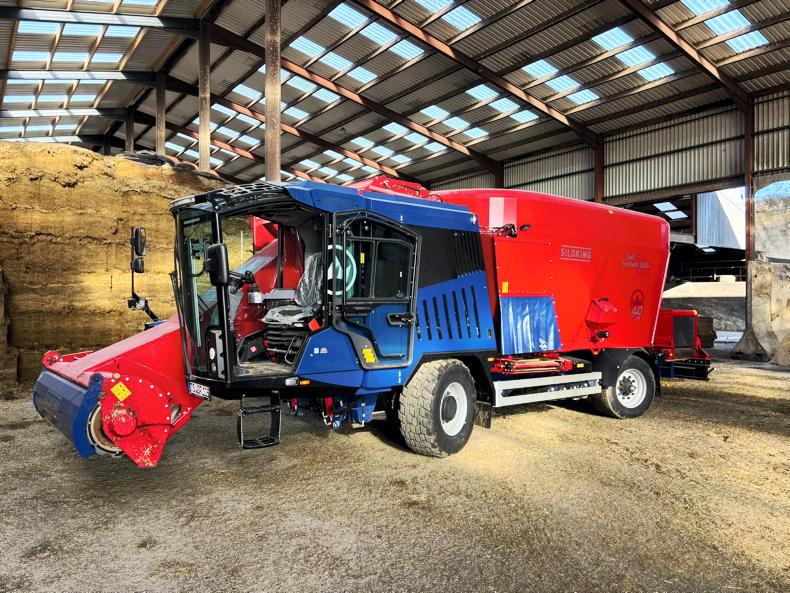
Derryduff Farms – based just outside Dungiven, Co Derry – was the first to take delivery of the demonstration machine when it first landed in Ireland. Irish Farmers Journal caught up with operator Ryan Bond, who spent a week operating the machine, to get his thoughts.
“My first impressions was that the machine was very big, but it didn’t take long to get used to it,” he said. “It took a few hours the first morning to get my head around the control setup, and it was very straightforward after that.
“We are running several mixes on the farm at the minute, including silage, whole crop, meal, minerals and straw. We run a trailed diet feeder here on the farm, and the first thing I noticed was how quick you will feed out with the Siloking self-propelled machine, which is down to the fact you are feeding out using the discharge door and the rear cross conveyer. It will feed out twice as quick.
“Between loading all the different ingredients, the loading process probably takes 15 to 20 minutes. Once the last of the feed has been loaded, the mix is pretty much ready to feed out within minutes. We found the mix quality to be very consistent.
“Our current system involves the tractor and diet feeder parked stationary, with the mixer running. We use a telehandler to run around to the different silos etc, and bring the feed to the mixer. With the self-propelled machine, the feeder goes to the silos, and the yard is being kept very clean. It also offers a much better system for taking silage from the silos, leaving behind a very clean pit face in comparison to a shear grab,” Ryan added.
“Our silos are 11ft high with forage, and it was taking maybe 15 or 20 seconds to cut a three to four inch cut from top to bottom.
“Overall, we were very impressed with the feeder, its mix quality and how easy it was to get it around the yard once we got used to it.”



SHARING OPTIONS