




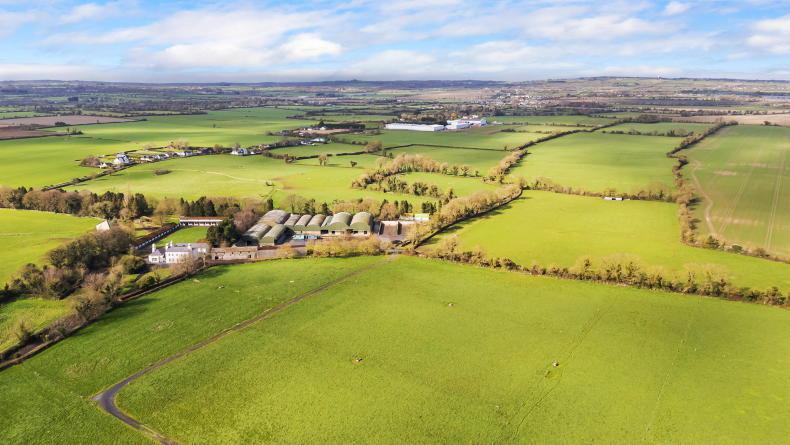
There are a number of different systems available, all of which can work well. But the chute and penning that accompany the gate must be properly designed. Here, I feature a set-up on the farm of Andrew and Jennifer Claxton near Dungarvan, Co Waterford.
Milking of the 300 cows herd is done by Andrew, Jennifer and daughter Sarah with relief help from Farm Relief Services (FRS).
The Claxtons went for an ATL drafting gate, supplied by Collins Agri, Co Limerick. Installation of the system, the drafting chute and the pen, which have been in place for 12 months, was done by Waterford Farm Relief Services.
Picture one
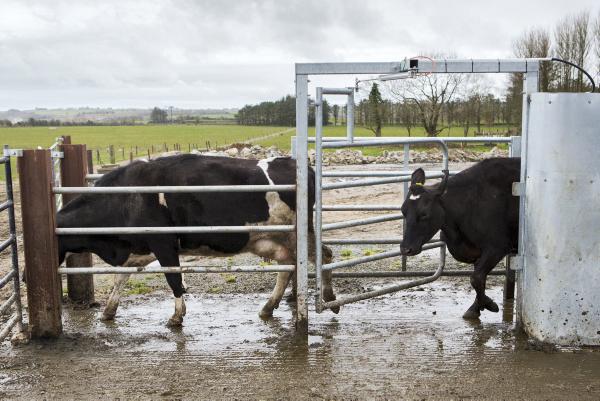
Here, we see drafting working well. One cow has exited the chute and is making her way to join the others who have stopped at the water trough on the way back to the shed.
The next cow has been drafted out but – as far as she is concerned – is continuing to follow the one in front. This will bring her over to the other side of the drafting pen, avoiding clutter at the drafting gate. Two cows drafted out earlier are already there.
The next cow has approached the drafting gate and has been identified. She is not selected for drafting and, therefore, triggered the sensors to close the gate, sending her out to join the herd. The gate is closing ahead of her.
Where a drafting chute is set up on a greenfield site, it is possible to have drafted cows always walk in the same direction as the other cows. Where it’s installed in an existing yard set-up, then a compromise on layout is usually required. A more fundamental point is that the herd should use the chute twice a day, every day, making it part of the routine, as is the case here.
The drafting pen is capable of comfortably holding 30 cows, which is a good match for the Claxtons’ 300-cow herd.
Picture two
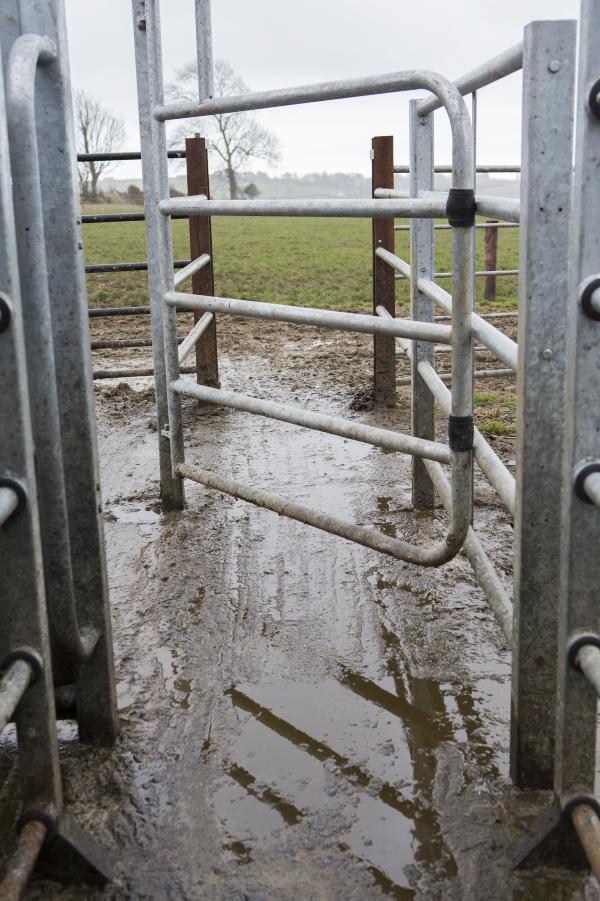
This drafting system features just one gate on the chute. It must be able to identify the cows early enough to allow the gate to move ahead of them. The section of chute leading to the gate must be long enough to control the approach of the cows to the gate. This section is 3m long.
The gate does not automatically return to the closed position after drafting out a cow. Instead, it remains open until triggered to close by another cow. It is set for one movement per cow and this has advantages.
If the gate was set to close after drafting, if one “target” animal were to follow another, that would require the gate to close after drafting the first and to immediately reopen for the second – that’s two movements. This could increase the likelihood of the second animal not being drafted correctly.
Here, the first animal has exited the yard. Although the next cow is close behind, the antennae has identified her and opened the gate to draft her out. We can see that the gate was able to do so in time. The gate is set to open/close in two seconds. It can be set to swing more quickly but that could frighten a nervous animal.
Meanwhile, other drafting systems feature two gates with the first, approach gate used to keep an animal back, while the one in front is identified and dealt with.
Picture three
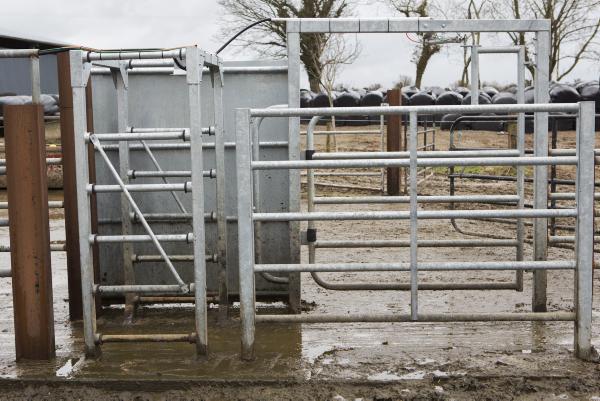
A chute will be made 26 to 31in wide, depending on cow type. Holes were drilled in the yard slab for the 8x4in pillars, which are buried 18in deep. Most of the chute length is three-rail. There are rubber stoppers on the gate to prevent dents and reduce noise at impact points. These can be soft rubber hose, fixed on by jubilee clips.
Picture four
The ladder-like bars are the system’s antennae. There are antennae racks at each side of the chute and overhead – three in all. The fixed barrier nearest the camera is five-rail to keep heads in and ensure no jumping by a nervous animal. On the other side is the gate.
Also, on the far side is a large metal panel which acts as a shield. It prevents a cow already drafted into the pen from putting her head too near the antennae and triggering it to open the gate.
Picture five
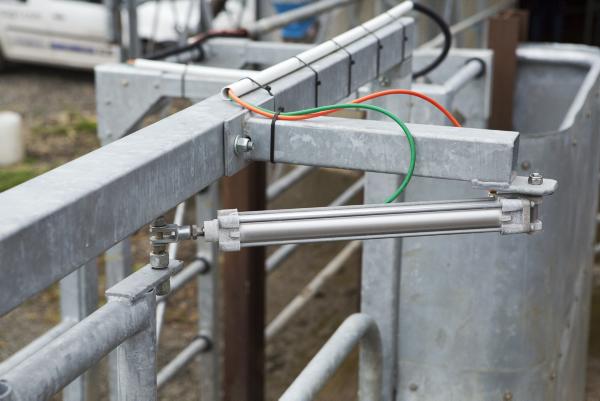
The gate is open and closed by this double-acting air ram. Some gates are powered by vacuum. This one works by air pressure supplied by the parlour’s air compressor and tank. That makes it independent of the milking machine’s vacuum pump. Exhaust valves on the ram can be adjusted to set the speed of the gate.
Picture six
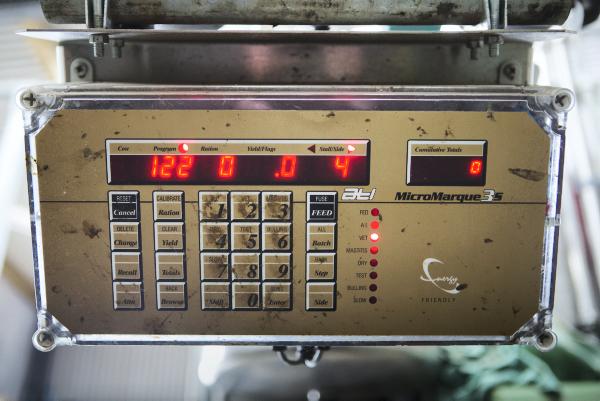
To draft out cows, the animal’s tag number is keyed into the control unit. Cows can be keyed in for up to six different programmes, depending on what procedure the farmer wants to carry out, and the cows will be drafted accordingly.
For example, cows flagged for AI will be drafted out after milking the next morning. Their numbers will be automatically dropped from the system at 11am, so they won’t be drafted out after the afternoon milking or again the next day. In contrast, cows flagged for veterinary procedure, e.g. hoof paring, can be keyed in over a number of days in advance and then drafted out on the day the vet comes. The control unit is installed in the parlour pit. It is designed to be waterproof although not power washer-proof. The unit is designed to be left continuously on and the trickle of electricity used generates enough heat to keep the electronics dry.
Picture seven
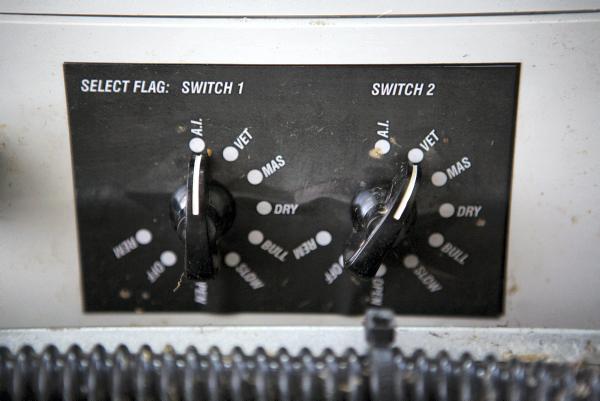
These switches select the pre-installed programmes, some intended to be used with herd management computer programmes. The programmes are:
The unit can operate two programmes, or flags, at the one time. This selector switchboard is usually placed in the parlour but near to the entrance/exit door.
The drafting gate works on the Allflex HDX ear tag and button tag. Each tag gives a unique reading to the receiver unit in the drafting gate, allowing the cow be identified.
Picture eight
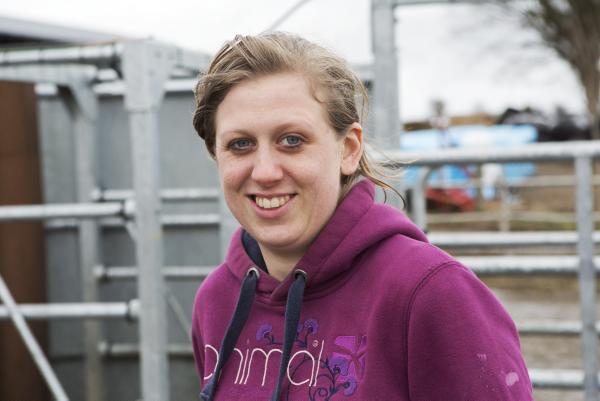
The system is working well, said Sarah Claxton. ‘‘Primarily, we use it to draft out cows for AI but now we are using it to batch cows for hoof care and other routines.”
She went for the ATL system for ease of use. “It works on the ear tag – we didn’t want to be watching for cows to put a transponder on the tail. We can concentrate on milking,” she said.
“With the numbers we’re milking you need to have drafting,” said Andrew.
“With 100 cows you’d need it. At AI time, you just enter the numbers and they are waiting for you after milking. You don’t have to then delete the numbers – they drop off.”
Once the cows got used to the chute, the system worked well, he said.
“I think it missed one cow last year out of the 290 that were artificially inseminated. That was the only time we had to go looking for a cow,” Andrew concluded.
The ATL Pagasus two-way gate seen here has a list price of €9,000, plus 23% VAT, supplied and fitted through Limerick-based Collins Agri. The three-way version is €10,000, plus VAT. Chutes and pens are erected by the farmer’s own local fitter. Costs are normally in the range of €75 to €100 per metre of length, depending on specification. The chute cost will be lower if it’s installed against an existing wall.
Liam Collins, of Collins Agri, told me that there is a lot of interest among dairy farmers for automation of all kinds to replace labour. The Pegasus gate can be linked in with milk metering and feeding to yield, he noted.



SHARING OPTIONS