


Frank Kennedy from Craanford, Co Wexford, has set about increasing his farm buildings to allow for an expansion of his dairy herd.
Frank currently runs 90 cows and hopes to go up to 115 in the coming years. One product he has opted for is the Dairypower Slurry Aeration system. This keeps slurry consistently agitated and always ready to spread.
This system has been around for a number of years now and is approved by the Department of Agriculture under the TAMS schemes.
The system is fully automatic and would typically run for three or four periods each day without any need for human intervention. Approximate cost of running the system is €1 per day.
The system has a number of benefits, including reduced safety risks from not allowing crust build-up and reducing hydrogen sulphate release.
The biggest point for Frank was the advantage of having slurry consistently ready so it can be spread as cattle move on from paddocks.
It also leads to every load of slurry having the same consistency of nutrients throughout the tank.
Frank has opted to put the system through the old tank as well as the new tank.
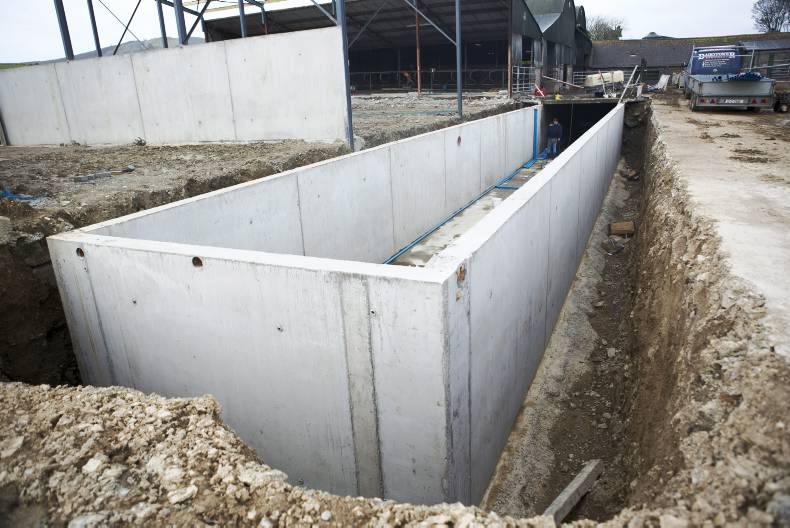
Picture 1
Here we see the new tank built by the construction team attaching on to the old tank. This increased what was a 145,000-gallon tank to 190,000 gallons. The tank is 75x12.5ft and sits in front of the new cubicle house being put up on the farm to hold a further 52 cow cubicles and 40 weanling cubicles.
For further peace of mind on slurry capacity, Frank chose to install a 210,000-gallon over-ground tank and this also incorporates the aeration system.
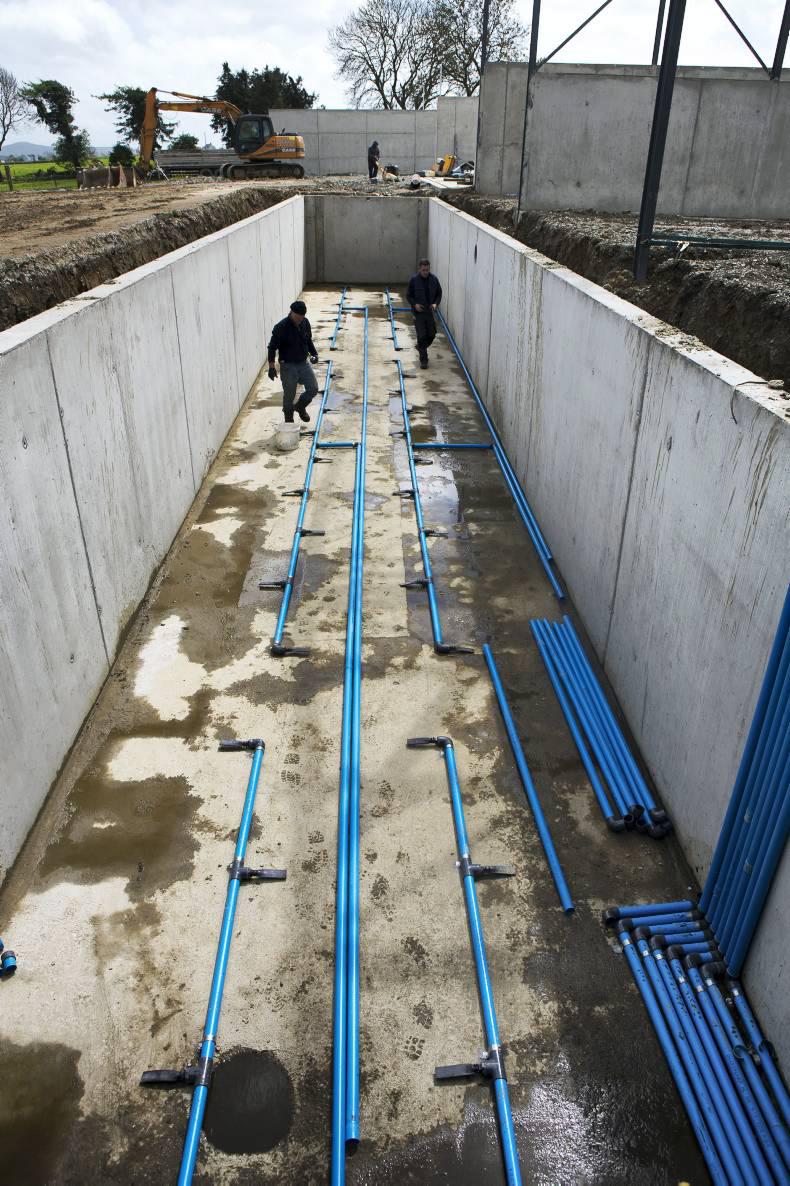
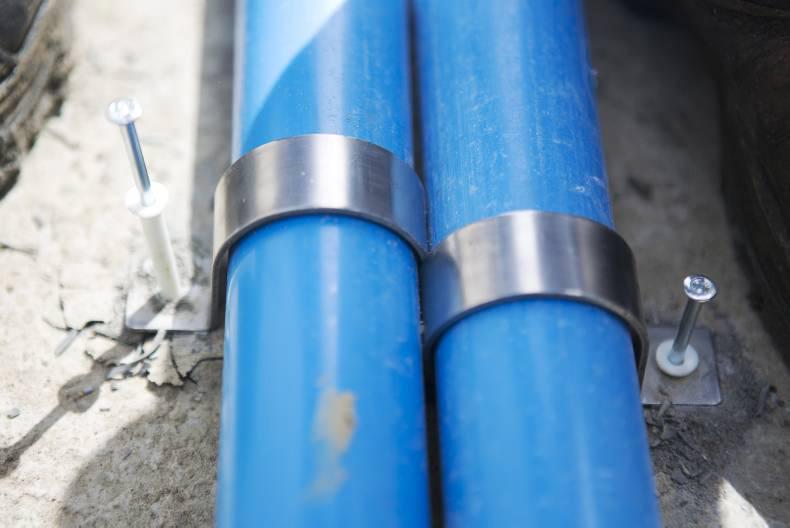
Pictures 2 and 3
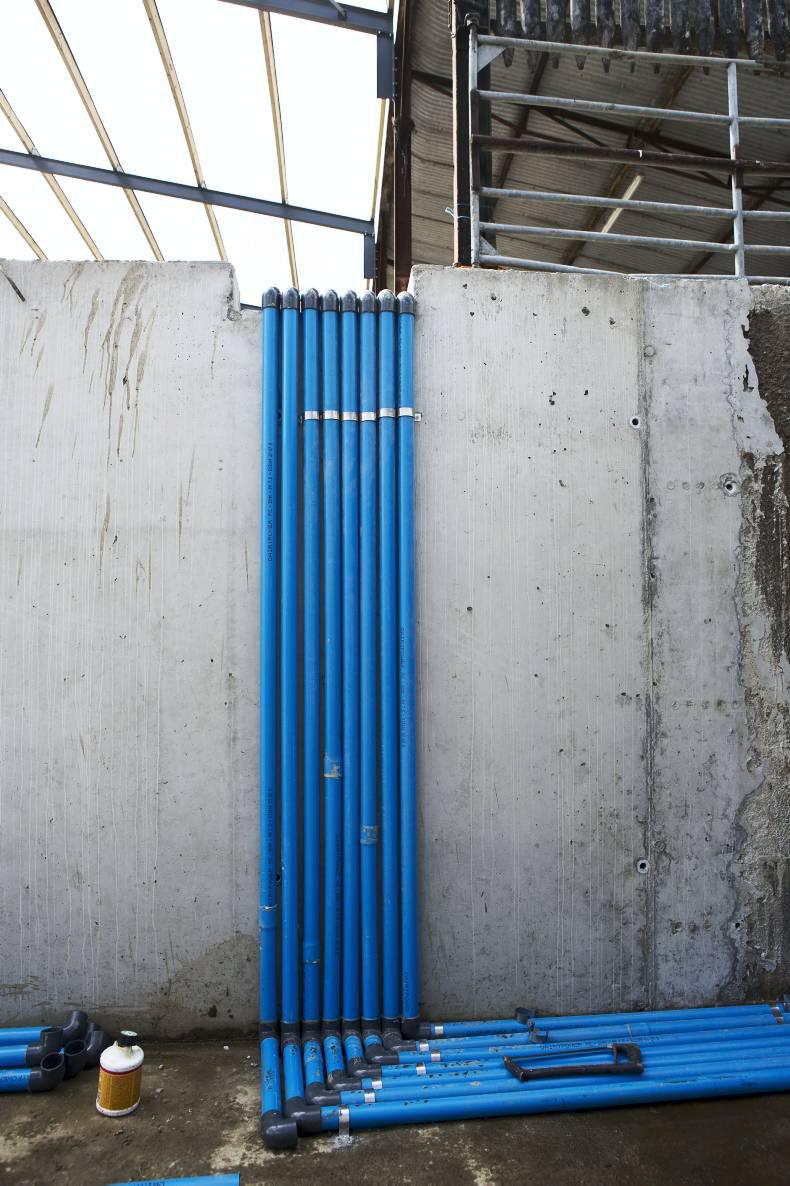
The installation of the system is relatively straightforward. Throughout the floor of the tanks, a network of piping is laid with non-return outlets. These pipes are 50mm class D uPVC which should neither corrode nor degrade, no matter what length of time they are submerged under slurry.
Each pipe is fixed to the floor using stainless steel brackets and stainless steel bolts. Again stainless steel is used to eliminate corrosion of materials.
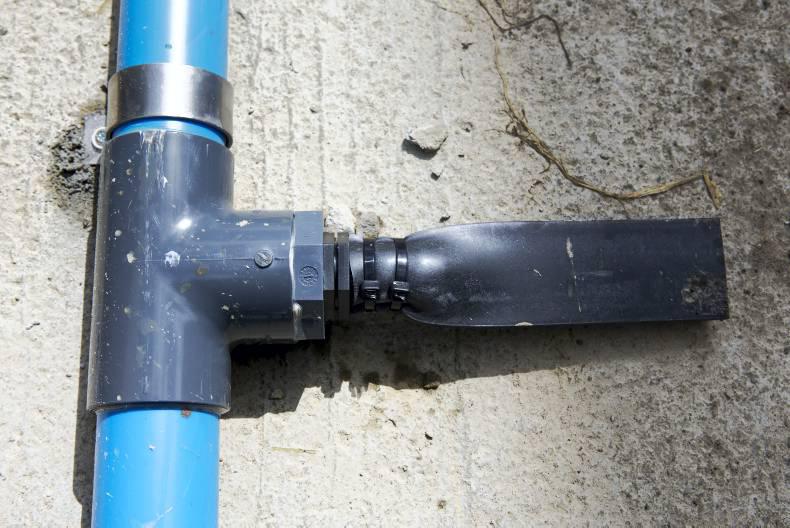
Picture 4
Attached to each of these supply pipes is an outlet branch. These are self-closing neoprene non-return outlet valves which open when the air is supplied from the pump. Approximately one of these outlets is attached per metre of pipe work.
Picture 5 and 6
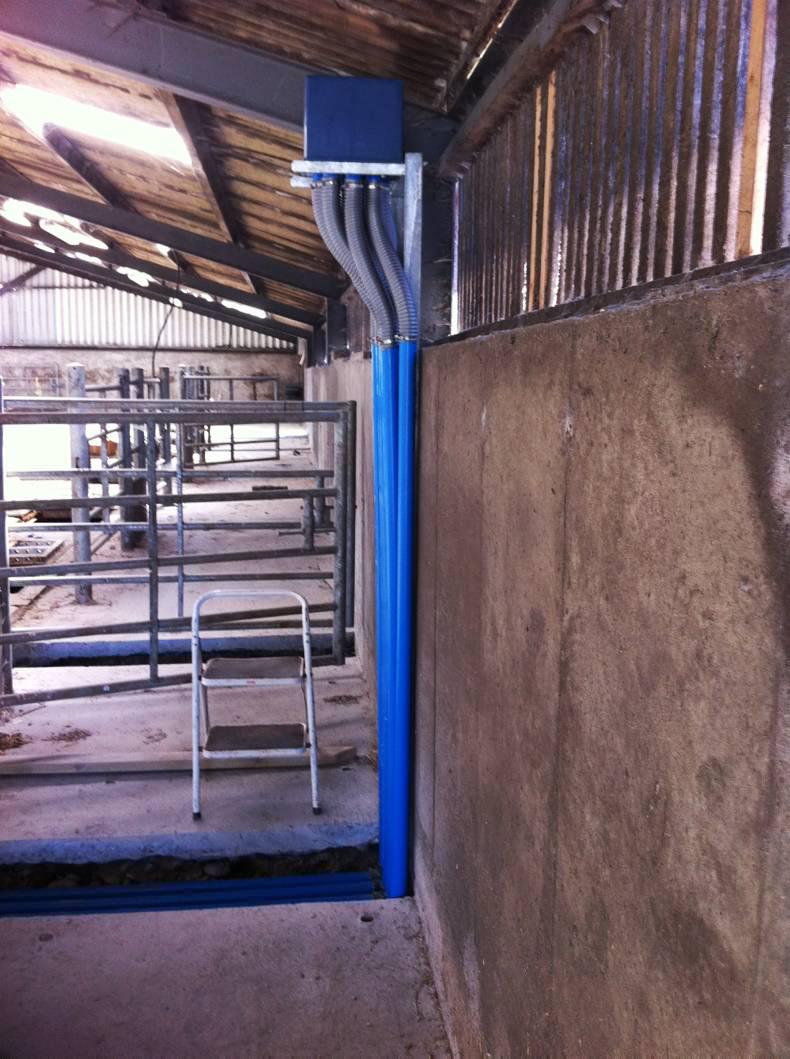
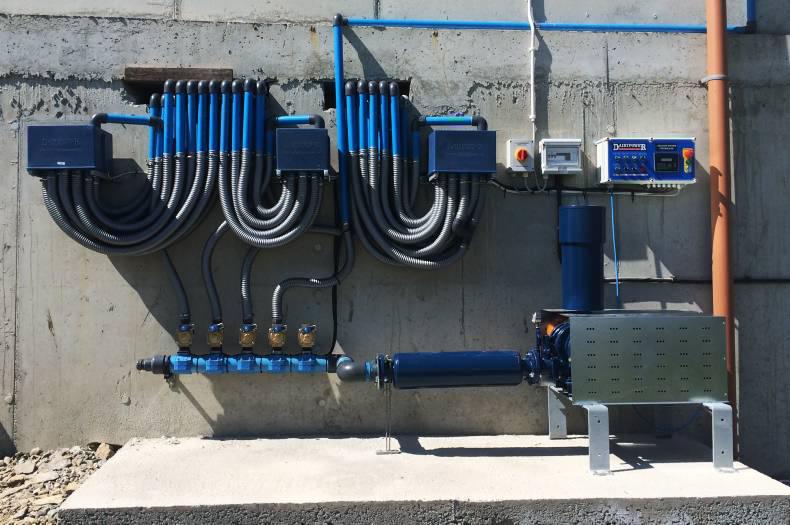
All pipes are brought out of the tank at one point and connected to the rotary valve (blue box pictured high up on the wall). This valve operates on 24 volts and works the blower pump.
The blower pump supplies air through a manifold to the rotary valve which in turn distributes air through the 50mm uPVC piping to an outlet branch which aerates a section of the slurry tank for a set period of time.
Picture 7
The drive unit system operates on a high-volume, low-pressure basis (5 bar) which will not disturb the animals. The drive unit is driven by a 3kW motor air pump. Some maintenance is needed for this equipment, such as oil and belt changes, but no maintenance is needed for all piping in the tanks. The control box has both a manual and automatic setting.
Approximate cost of the system on this job was €25,000.




SHARING OPTIONS