



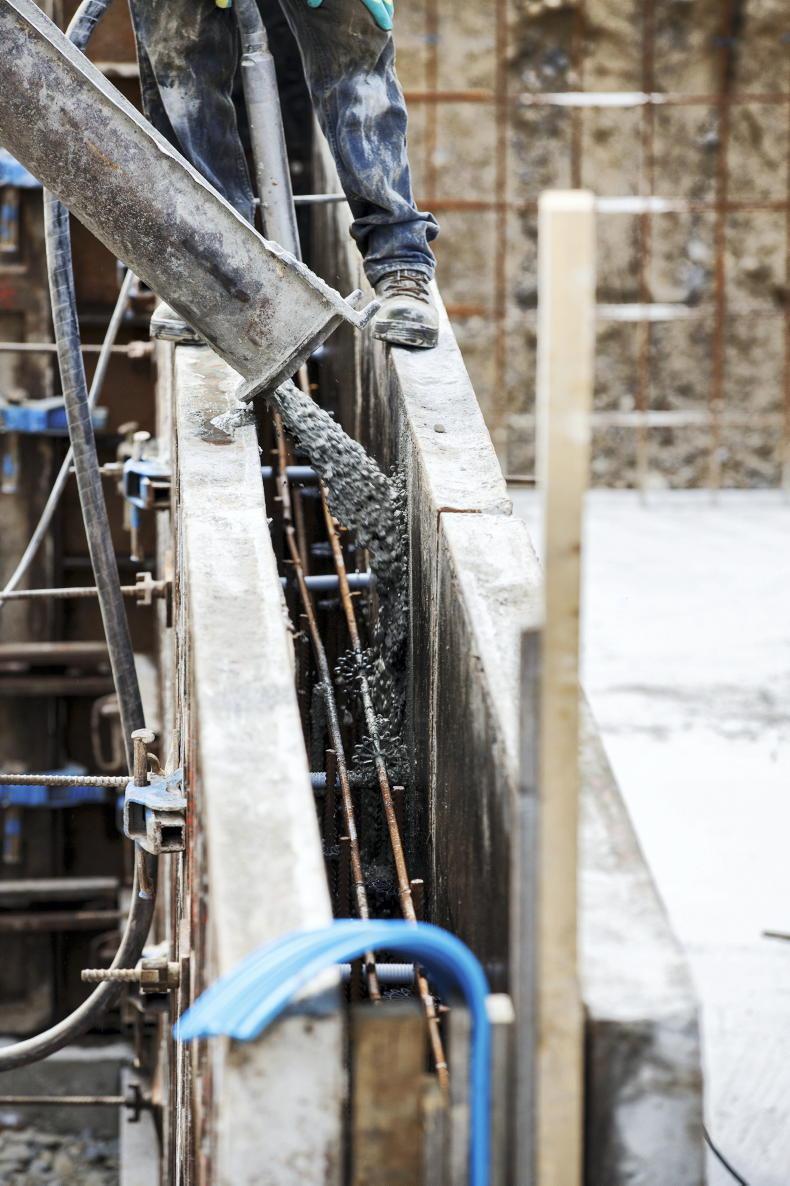
Farm maintenance, building, construction and demolition work are high-risk activities undertaken from time to time on farms. Agriculture and construction are the two most common sectors in which we see accidents and fatalities. Despite recent positive trends in reducing fatalities, workplace fatalities rose from 36 in 2024 to 58 in 2025, with agriculture again the most dangerous sector in which to work. The work-related fatality rate per 100,000 workers increased from 1.3 in 2024 to 2.1 in 2025, although the long-term trend remains downward.
The leading causes of fatalities were being hit or crushed by falling objects, incidents with machinery or vehicles, and falling from a height, while two other statistics that were highlighted by the HSA were:
The Farm Safety Partnership Advisory Committee, Construction Safety Partnership Advisory Committee, Department of Agriculture, Teagasc, Insurance Industry, and the Health and Safety Authority (HSA) have developed a guide to highlight some of the legal responsibilities of farmers (as a client) that they must follow when they plan to carry out construction work on their farm or in their home.
A farmer is considered to be a client under the Construction Regulations if they are getting construction works (project) done on their farm or on their home. The client (farmer) has a number of duties under these regulations, one being on the duty to make appointments when construction work is planned to be carried out.
Last year, there were 43 fatal accidents regarding the workplace. Of these, 20 were in the agriculture, forestry and fishery industry, with a further 11 deaths attributed to the construction sector, with both ranking as two of the most hazardous industries to be involved in for many years.
Benefits of making appointments for construction work on your farm
By not making an appointment, farmers are taking on the responsibility of the project safety themselves.
When to make written appointments
If there is more than one contractor involved in the project then a Project Supervisor Design Process (*PSDP) and/or a Project Supervisor Construction Stage (**PSCS) must be appointed. If the farmer carries out or helps with the construction work, then the farmer is considered to be a contractor. A PSDP or PSCS must be appointed in all cases where the work lasts longer than 30 working days or 500 person days.

Any works where there are particular risks associated with the project must involve an appointed PSCS and/or PSDP. Examples of such work include:
As a result, most projects on farms will require a PSDP or PSCS to be appointed. The appointments should be made before the construction work begins. Forms for appointing a PSDP or a PSCS for farm construction work can be obtained on the HAS website.
*Project Supervisor Design Process (PSDP) – organises cooperation between designers on the same project to ensure co-ordination of their activities about the design of the project.
**Project Supervisor Construction Stage (PSCS) – is responsible for managing and coordinating the construction phase safety and health issues on-site.
Preventing accidents
Even where a PSDP or PSCS is appointed, a client (farmer) can take steps to reduce the likelihood of accidents or injuries on construction projects, or the potential financial risk to the farmer/contractor should one exist. Before any work starts, the following should be checked or completed:
1. Farmers must request the contractor to confirm in writing that they are performing the role and responsibilities of Projects Supervisor Construction Stage (PSCS) as defined in the Construction Regulations 2013. The insurance details of the contractor should be checked to ensure that they have adequate cover to include:





SHARING OPTIONS