Representatives from ESB Networks relayed some key advice to farmers in attendance and the Irish Farmers Journal Health and Wellbeing walk held on Tullamore Farm recently. The series was supported by the Department of Agriculture, Food and the Marine.
Farmers posed questions to James Murphy (area manager Mullingar/ Tullamore), Claire Mulholland (Public safety manager) and Christy Corroon (continuity manager Mullingar/Tullamore ) with relevant and practical advice relayed by the trio.
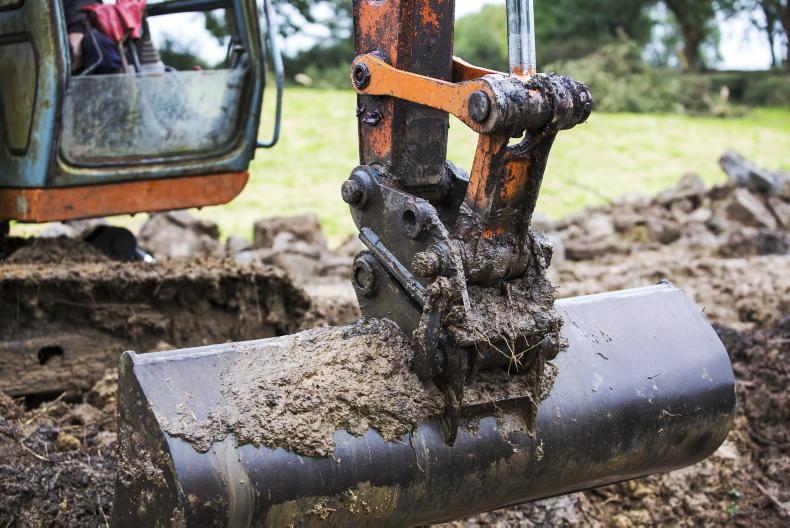
What should I do if I wish to find out about underground cables if I am doing a farm development and looking to dig out ground?
If you’re doing any digging at all, we would say plan early and engage with us early. We have dig@esb.ie as our email address or the helpline is 1800 372 757. If you contact us and let us know where you are doing the building and send a google maps image, we will get the maps out to you within 10 working days and that will show you exactly where the cables are. Obviously, the safest thing to do is to design your works around not going near the cables. If you do need to dig near the cables for any reason, come and talk to us and we will come out and ensure there is a safe system of work. There’s always a safe way to do it.
If you come in contact with an overhead line, what are the steps a person should take?
The first thing to say is that everyone else stay at least 10m away. That tractor could be live. Ring us immediately on our emergency number 1800 372 999.
The gardaí, the ambulance, the fire brigade – they can’t get rid of that electrical risk, we’re the only party that go out there and switch that power off.
If you ring us on that emergency number, it will go in to our call centre and they can remotely switch that [power] out as well.
For every event where it’s an emergency, the emergency number is the best one to call.
A recent example would be a guy out ploughing and he caught the pole with the plough and the pole fell across the tractor and the wires came down on top of the cab.
He sat in the cab and made the call and the control centre were able to switch out the line.
They can switch out the line but it’s a best guess – we have a location and we have an idea where you are and an idea of the line that’s feeding it but sit tight, we will have an NT on site as soon as we can.
It’s only the NT that can categorically say yes that line is dead. Your immediate reaction is to make the call, sit tight in the cab and wait.
For accidents where a stay is broken or pole has been cracked or lines sagging, it’s important to ring in .
Some people are afraid to ring in, in case they are penalised but if people don’t ring in it’s very hard to pinpoint it.
If you are in a tractor and the tyres start smoking and it looks like the tractor might go on fire, you may need to exit.
The cab could still be live, you need to try and get the door open without making contact with the outside and jump out, land on your two feet and then shuffle away.
When there’s a fault there’s step voltage on the ground. If you take a big step there could be 1,000 volts running through you whereas shuffling away there will be less.
What should you do if you come across downed wires?
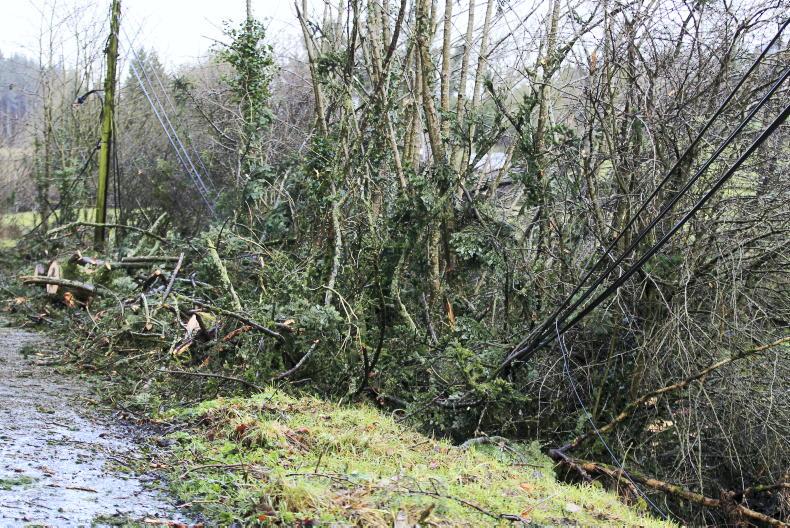
If you come across wires on the ground, for example if a tree has fallen, always treat them as live. We have had two incidences [locally] of livestock electrocuted through downed wires.
Depending on the line it is, we could have a 23o volt line or a 10,000 volt line but if a line is on the ground, it doesn’t mean that the line has been tripped out or switched out – it could be completely live, even if it isn’t smoking or sizzling. You may think ‘I’ll roll this up and get it out of the way’ but this should not been done under any circumstances.
Again, ring the emergency number 1800 372 999 and we will have someone out there within the hour to test it. Live cut offs on fencing can also be a hazard and make your fencing live. After high winds be vigilant on your farms for broken wires or broken poles.