



Many small problems can cause serious issues, including a refusal on payment, with regard to TAMS, as was highlighted by Teagasc TAMS specialist Seamus Nolan. He was speaking at a farm walk hosted by Patrick Rogers, Castleplunkett, Co Roscommon, with Patrick himself having availed of both fixed and mobile items under TAMS III, including a recently built five-bay dry/slatted cattle shed.
Paying for investments
“Be very aware that you are paying for the investment out of the correct bank account,’’ warned Nolan, “particularly in a house where there are two herd numbers.”
In the above case, a shared bank account cannot be used in relation to payments associated with TAMS, as questions will be raised regarding who is actually paying for the investment.
“If you pay for an investment out of a joint bank account [for an individual investment], that will be deemed 100% ineligible.’’
A personal account with the individual applicant’s name would have to be used for any and all payments. Investments under a registered farm partnership (RFP) or a limited company follow a similar trend, in that they must be paid out of the RFP or company account.
Cash was highlighted as a non-compliance issue as well, with a paper trail required for all investments, which included any deposits paid on investments.
“While cash might be king, it’s not the king when it comes to TAMS. Any payments made through cash would again be deemed ineligible.
Tax compliance of a building contractor undertaking the work is another issue that can periodically crop up, with builders requiring an up-to-date tax clearance cert in order for the farmer to be paid out their grant.
“Most contractors are registered on the Department system as customers of the Department; they will have the tax clearance cert, so you shouldn’t need to supply it.
“If they are missing one, or the builders tax clearance cert is out of date, they will come back to you (the farmer).’’
Hire purchase (HP) of machinery was also highlighted by Nolan as a reason for investments to be deemed 100% ineligible.
“You can get a loan for a machine from the bank, because in that case the bank will deposit the money into your account and the purchase of the machine will come from your account.
“If you purchase that machine through HP, the finance company pays that money to the supplier and it doesn’t go through your account. Questions arose from the crowd regarding payment to builders, with farmers noting that once all payment had been completed, it could be difficult to get contractors back to complete any snags.
Nolan reiterated that all payments had to be completed and receipted before submission of payments.
“No outstanding balances on invoices.”
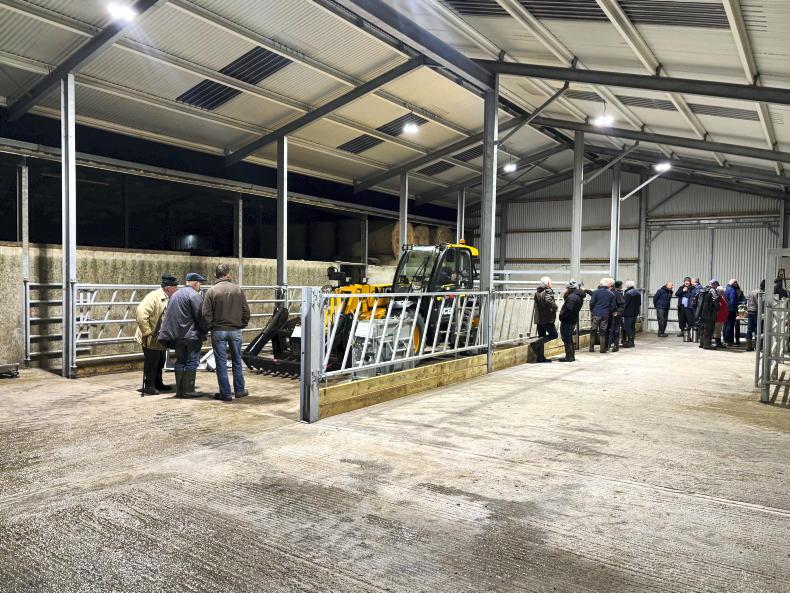
Rogers completed his new shed in 2025, with a two-bay slatted tank inset into a five-bay shed. Timeline on application was one of the topics of discussion, with Patrick highlighting to attendees the importance of giving themselves sufficient time to get investments applied for and completed. Farmers have 12 months from the date of approval in which to complete building work or purchase and install mobile items.
“Extensions are available, with one six-month extension granted provided there has been an effort to begin construction works,’’ noted Nolan. In the case of a slatted shed, evidence of such would be the completion of the tank element of the build. For a mobile item, a deposit would have to be paid and receipted as evidence.’’
Five to 10% of investments are inspected pre-approval, according to Nolan.
“If you are claiming on a shed like this, the Department may come out and measure it. People assume that the building is built as the drawing shows – they rarely are.
“If you claim for a shed that is 30ft wide [on the application] and they measure it as 29ft wide, that would be viewed as an overclaim."
Another issue raised was that farmers could be inspected for up to five years from the date of payment, not the date of submission of an application, to ensure that the building was still in your control, with Nolan noting that this can become an issue for farmers who are considering getting out of farming and leasing the farm, with clawback on payments taking place in that case.
Similarly, investments made for specific species, eg sheep sheds, required that enterprise to remain on-farm for a five-year period post-payment and must be used for their specified purpose.
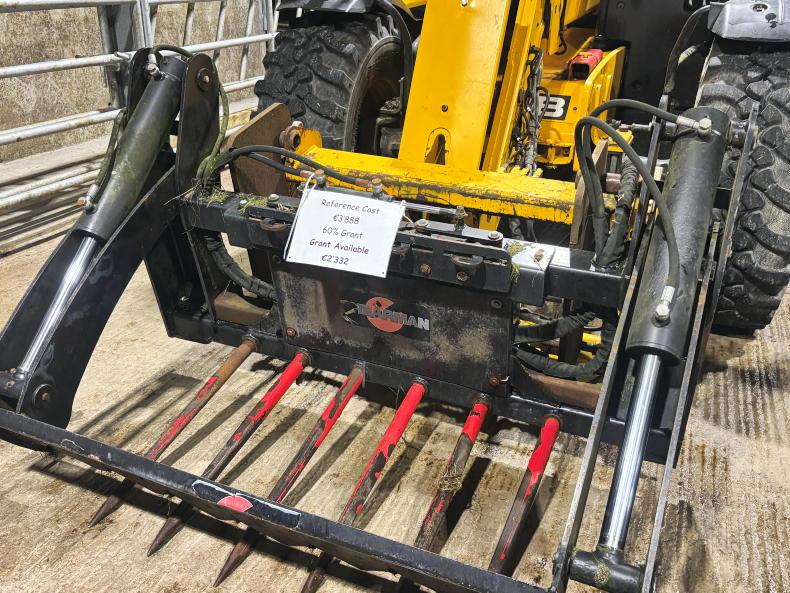
For mobile investments, such as a bale splitter, the item must remain on farm for the same five-year period.
Farmers could trade the machine in for a like-for-like machine, but cannot avail of grant aid on the second item.
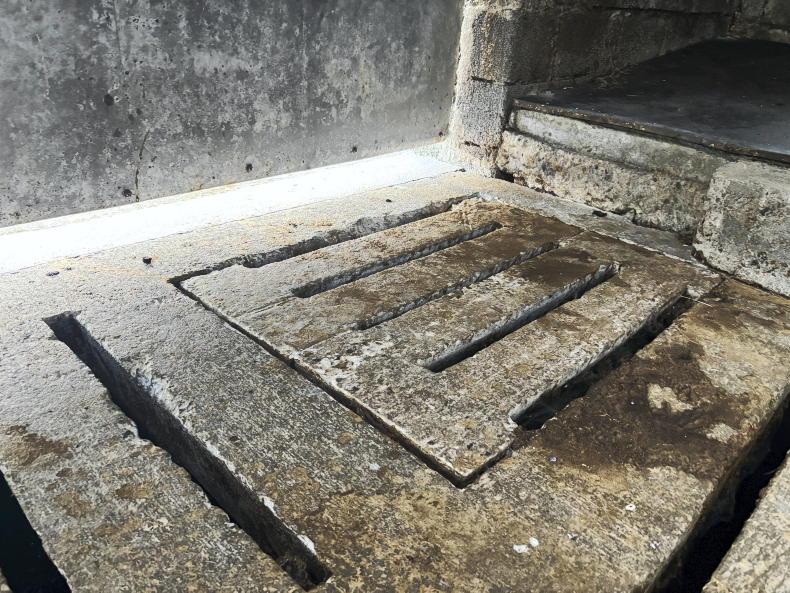
“Walls around a silo or in a mass concrete tank, you must submit what is a called a Card A. You must give the Department a minimum of five working days’ notice before you pour the concrete to allow them to inspect to ensure it is up to specification. Not submitting the Card A is an automatic 5% penalty,’’ noted Nolan. Farmers have been caught in the past on completing concrete work due to time constraints with the builder.
“If the Department is going to inspect you, they will make contact with you.
“If you don’t hear from them within those five days, you can continue on with the work.’’
Issues have been seen recorded in the past regarding farmers who submitted the Card A, had no inspection but receipts for the concrete supplied to the farm was less than five days after the Card A was submitted.
Teagasc adviser Colm Murray discussed issues surrounding internal agitation points. An older three-bay shed on the Rogers farm required slats to be replaced, with a suspended passage included.
There were no external agitation points in the shed, meaning any grant aid given would be limited to extending the tank to provide external agitation points before grant aid could be attained for the replacement of older slats.
With both items falling under the Farm Safety Capital Investment Scheme, all eligible applications are still being approved for these works, with no ranking and selection taking place.
Shared air space between sheds was also noted as an occurring issue, with Seamus Noland highlighting that even with sheds with external agitation points, sharing an air space with a shed with internal agitation points ruled it ineligible.
The two options available to farmers in this case was creating external agitation points in the adjoining shed or installing side cladding to prevent the shared air space, though this could have an adverse effect on ventilation.
The Irish Farmers Journal obtained the cut off marks for tranche 12 of TAMS III, with regard to ranking and selection contained in Table 1 (left).
The highest cut off marks exists for the schemes with the lowest % approvals, namely the DES (Dairy Equipment Scheme) and the SCIS (Solar Capital Investment Scheme), while the OCIS (Organic Capital Investment Scheme) also has a high cut off mark.
The main area in which organic farmers are likely gaining marks is through the volume area of ANC land, with positive marks awarded the greater the volume, eg more than 5ha but less than 10ha= 2.5 marks; more than 10ha but less than 20ha= five marks; more than 20ha but less than 30ha= 7.5 marks; and more than 30ha= 10 marks.
Farmers in any scheme that requires nutrient storage will attain 40 marks immediately, meaning all eligible applications for dung stores and slurry storage will be granted.






SHARING OPTIONS