


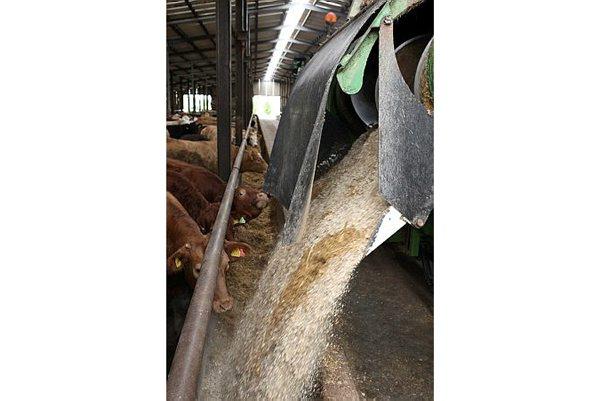
A reader contacted me recently asking what prices are available for renting out sheds and what exactly is involved. He was thinking of renting out his own shed.
While the conversation was short, I presume that for one reason or another, he doesn’t want to buy cattle and stock it himself. I spoke to a few farmers who have experience of renting sheds and they made the following points:
‘‘You have to get the money up front,’’ was the first thing I was told. ‘‘I look for a big lump sum to cover a minimum of two months; and I want it two weeks before the cattle arrive. You have to be brutal. He must pay in advance or else the cattle won’t be fed.’’
Prices vary widely but usually in the range of €1 to €1.80 per head per day, including silage. Price is towards the lower end for light stores which will eat less silage and towards the higher end for 500kg plus animals.
Silage should be tested for DMD and dry matter. ‘‘My silage is mostly from second and fourth year grasses. It has a DMD of 72 to 74 and dry matter of 26% to 28%. So, it’s high quality.’’
A 300kg animal will eat 24kg of silage per day. If silage is valued at €32/tonne or 3.2c/kg, the value of silage it eats is 77c/day. A 500kg animal on low meal will eat 50kg per day at a cost of €1.60. Cattle on high meal will eat far less silage per day.
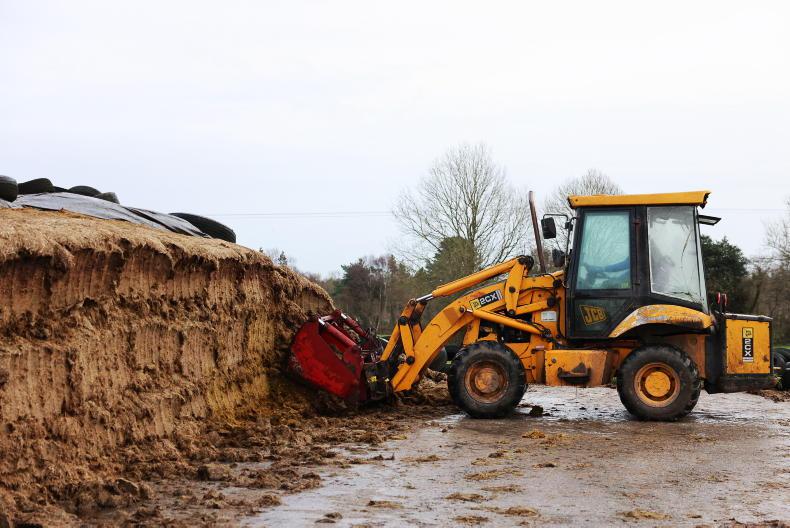
Another way of agreeing price is to set a price for the use of the shed and then charge separately for the amount of silage used. This can be done by measuring the pit to quantify how many tonnes are in it and at turn out to again measure to see how many tonnes were fed. A price per tonne can be agreed for the silage on day one.
‘‘Some farmers haven’t a clue. I’d say come and look at the silage; I’ll lift the cover off the silage pit for you. Some farmers want maintenance only; others want to drive the cattle on and will pay accordingly. If a farmer tells you to feed them any old stuff, you know he wants you to feed them for nothing.’’
Last year it was more beneficial to sell the silage direct from the yard. ‘‘That way, there is no hassle, and you are not tied to the yard and there is no griping after a beast goes down. You don’t have the benefit of the slurry, however.’’
Meals would be extra to the prices quoted above. If meals are to be fed, availability of a diet feeder is an advantage. ‘‘We have a good feed store so they can tip out nuts here if they want.’’
Some deals take into account water used. This is relevant where cattle are on a high allowance of meals, or on an ad-lib diet, and where water is billed by the local authority. There is a running cost to operating a well and this may need to be taken into account.
Slurry should be considered as part of the equation. ‘‘One hundred and twenty cattle in your shed for the winter will generate a considerable amount of slurry and the owner of the cattle just walks away from it.
As a rule of thumb, an adult animal will produce 1,000 gallons over a five-month winter with a nutrient value of €30.
‘‘A sensible farmer will come and look at the shed first. We wash it every year, even between the slats. It is very clean so the first impression is good — the shed is clean and well maintained.’’
The Department must be informed of bed and breakfast arrangements. ‘‘It is straightforward enough. Your cattle are transferred on to my herd number temporarily. It is a paper exercise. Obviously, there shouldn’t be any mixing of cattle. There should be no shed beside a shed or no pen beside a pen. I once had a Bord Bia quality inspection here while I had another farmer’s cattle in one of my sheds for the winter. There was no problem as they were in different sections in the yard.’’
Arrangements are simplest where the owner of the shed has no cattle in his yard.
It is beneficial to the owner of the cattle if the farmer providing the shed has stock experience and skills. ‘‘Animals will get sick. I wouldn’t leave a sick animal in the shed; I’d put it in a sick bay, on straw. If a vet were needed, I’d call him. These costs are on the owner. I could get his vet or mine, depending on what the owner wanted.’’
‘‘I studied the costs of renting out my shed and feeding the cattle silage only. It came to €1.80 per head per day, which is way over what anyone is willing to give. But that was the cost for a 450kg to 500kg animal that year, allowing €27/t value for the silage, use of the loader and feed wagon and something for your time. Remember, you’ll be out feeding those cattle over the Christmas.’’
That was not putting any value on the slurry but also not including any cost for the shed. ‘‘My shed is well written off the books at this stage. The running cost of having cattle in a shed over the winter, versus having it empty, are relatively small and mostly accounted for by wear on troughs, gates and barriers.’’
The issue of insurance should be considered. It is strongly advisable to inform your insurance company if you take cattle into your yard. That is necessary to ensure public liability cover is maintained. The owner may or may not consider taking out insurance on the cattle themselves.
A number of farmers have established a business renting out sheds every winter to meat companies to finish large numbers of cattle. In these cases, it may be advisable to go to a solicitor and draw up a legal contract. In some cases, payment is by monthly direct debit.
The use of a shed over winter, without supply of silage, is often priced at 25c to 60c per head per day with travel distance for feeding the key factor.




SHARING OPTIONS