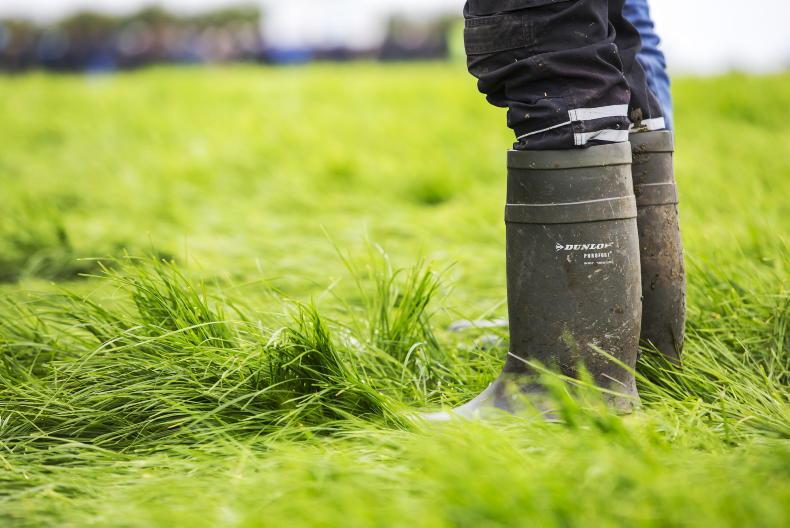
The project sought to switch farmers from spraying rushes to mulching and weed wiping them. \ Philip Doyle
ADVERTISEMENT
Mulching or weed wiping instead of spraying and training farmers on buffer zones are all measures driving a decline in the concentration of rush spray found in the Larah catchment in Co Cavan, the EPA Water Conference heard last Wednesday.
Integrated catchment manager with Uisce Éireann Lorraine Gaston explained that farmers participating in the catchment’s voluntary water protection project were provided with free environmental management plans and advice.
All farms which required pesticide storage units were provided with them, 14 farms received a mulching and weed wiping service and 15 farms received watercourse fencing with an alternative drinking source.
ADVERTISEMENT
Gaston said that the active ingredient in many rush sprays, MCPA, poses a higher risk to water quality than the targeted use of glyphosate in weed wipers, while mulching can help suppress the spread of rushes and stop the spread of seeds.
The Larah river’s MCPA load has reduced between 2022 and 2024, with 70% of farmers reporting to have changed the way they use pesticides.

Register for free to read this story and our free stories.
This content is available to digital subscribers and loyalty code users only. Sign in to your account, use the code or subscribe to get unlimited access.
The reader loyalty code gives you full access to the site from when you enter it until the following Wednesday at 9pm. Find your unique code on the back page of Irish Country Living every week.
CODE ACCEPTED
You have full access to the site until next Wednesday at 9pm.
CODE NOT VALID
Please try again or contact support.
Mulching or weed wiping instead of spraying and training farmers on buffer zones are all measures driving a decline in the concentration of rush spray found in the Larah catchment in Co Cavan, the EPA Water Conference heard last Wednesday.
Integrated catchment manager with Uisce Éireann Lorraine Gaston explained that farmers participating in the catchment’s voluntary water protection project were provided with free environmental management plans and advice.
All farms which required pesticide storage units were provided with them, 14 farms received a mulching and weed wiping service and 15 farms received watercourse fencing with an alternative drinking source.
Gaston said that the active ingredient in many rush sprays, MCPA, poses a higher risk to water quality than the targeted use of glyphosate in weed wipers, while mulching can help suppress the spread of rushes and stop the spread of seeds.
The Larah river’s MCPA load has reduced between 2022 and 2024, with 70% of farmers reporting to have changed the way they use pesticides.
If you would like to speak to a member of our team, please call us on 01-4199525.
Link sent to your email address
We have sent an email to your address. Please click on the link in this email to reset your password. If you can't find it in your inbox, please check your spam folder. If you can't find the email, please call us on 01-4199525.
ENTER YOUR LOYALTY CODE:
The reader loyalty code gives you full access to the site from when you enter it until the following Wednesday at 9pm. Find your unique code on the back page of Irish Country Living every week.
SHARING OPTIONS